
What Is the Difference Between Astrology and Astronomy?

Astrology and astronomy are often confused because both involve celestial bodies such as planets, stars and the Sun. However, they are fundamentally different fields with separate approaches and purposes. Astronomy is a scientific discipline that studies the universe, including celestial objects, their movements and physical properties. Astrology, on the other hand, is a traditional belief system that interprets the positions of celestial bodies in relation to human personality and life events. Although both have historical connections, their methods and conclusions differ considerably. Understanding these differences helps explain why one is recognised as a science while the other remains a cultural and spiritual practice.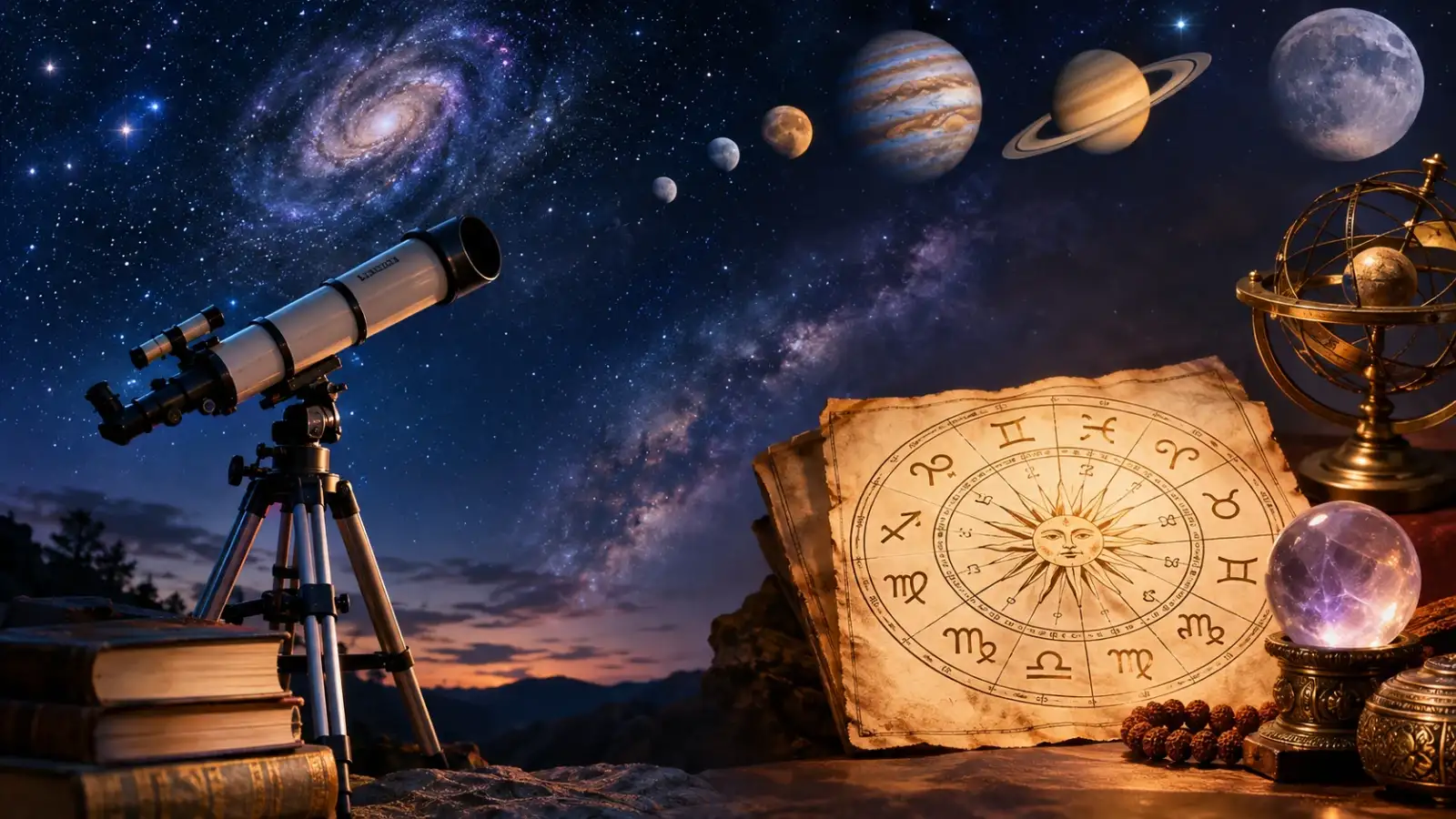
Astronomers use scientific methods, mathematical calculations, telescopes, satellites and space missions to investigate how the universe works. Their research helps explain the formation of stars, planetary movements, cosmic events and the evolution of galaxies.
In Vedic astrology , astrologers examine a person's date, time and place of birth to prepare a Kundli or birth chart. They interpret planetary placements, zodiac signs , houses and other astrological factors to discuss personality, relationships, career and different life experiences.
These interpretations are based on traditional beliefs and are not supported by established scientific evidence.
Astrology focuses on interpreting celestial arrangements in relation to human experiences. People often consult astrologers for horoscope readings, relationship compatibility, traditional remedies and guidance about important decisions.
For example, astronomers use calculations and observations to predict eclipses, study planetary orbits and investigate distant galaxies. Their findings can be checked and independently verified by other researchers.
Astrological interpretations, by contrast, have not demonstrated reliable predictive accuracy under controlled scientific testing.
Vedic astrology also uses 12 Rashis, along with 12 houses, nine Grahas and 27 Nakshatras. These elements are combined to interpret a person's birth chart and traditional planetary influences.
Astronomy does not use zodiac signs to predict personality or individual life events, although the zodiac is relevant to the historical naming and mapping of constellations and the apparent path of the Sun.
For instance, scientific research on Mars examines its surface, geological history and potential for past microbial life. Similarly, astronomers study the Sun to understand solar activity and its effects on Earth.
Astrology generally interprets planets through symbolic associations rather than examining their physical properties.
Over time, different cultures also developed systems that connected celestial movements with religious beliefs and human affairs. Scientific astronomy gradually developed into a separate discipline through improved observation, mathematics and experimentation.
Today, astronomy is an established scientific field, while astrology continues as a cultural and belief-based practice.
Scientists can calculate when many of these events will occur by studying the movements of celestial bodies. This information is useful for scientific research, space exploration and public observation.
Astrology may assign symbolic meanings to certain planetary arrangements, but these interpretations do not provide scientific explanations for the events.
Astrologers generally use birth details, planetary tables, astrological software and traditional interpretative systems to prepare horoscopes and Kundlis.
The difference lies not simply in the tools but in the methods used to reach conclusions.
Astrology is not considered a science because its claims about planetary positions influencing personality or predicting individual events have not been reliably demonstrated through scientific research.
People may still follow astrology for cultural, spiritual or personal reasons, but it should not be treated as a substitute for scientific knowledge or evidence-based advice.
However, their conclusions should be kept separate. Astronomy explains celestial phenomena through scientific evidence, whereas astrology offers traditional symbolic interpretations.
Astrology and astronomy may share an interest in planets, stars and other celestial bodies, but they serve very different purposes. Astronomy uses scientific research to understand the universe, while astrology interprets celestial arrangements through traditional beliefs about human life. Knowing the difference helps readers distinguish between evidence-based explanations and cultural interpretations. Both have played roles in human history, but only astronomy is recognised as a scientific discipline today.
1. What Is Astronomy ?
Astronomy is the scientific study of celestial objects and phenomena beyond Earth's atmosphere. It explores planets, stars, galaxies, black holes, comets and other components of the universe.Astronomers use scientific methods, mathematical calculations, telescopes, satellites and space missions to investigate how the universe works. Their research helps explain the formation of stars, planetary movements, cosmic events and the evolution of galaxies.
2. What Is Astrology ?
Astrology is a traditional system that studies the positions and movements of celestial bodies and interprets their supposed connections with human life.In Vedic astrology , astrologers examine a person's date, time and place of birth to prepare a Kundli or birth chart. They interpret planetary placements, zodiac signs , houses and other astrological factors to discuss personality, relationships, career and different life experiences.
These interpretations are based on traditional beliefs and are not supported by established scientific evidence.
3. Their Main Purpose Is Different
The primary purpose of astronomy is to understand the universe through observation, experimentation and scientific research. It seeks explanations for celestial phenomena and develops models that can be tested against evidence.Astrology focuses on interpreting celestial arrangements in relation to human experiences. People often consult astrologers for horoscope readings, relationship compatibility, traditional remedies and guidance about important decisions.
4. Astronomy Is Based on Scientific Evidence
Astronomy follows the scientific method. Researchers collect observations, develop hypotheses, test predictions and revise explanations when new evidence becomes available.For example, astronomers use calculations and observations to predict eclipses, study planetary orbits and investigate distant galaxies. Their findings can be checked and independently verified by other researchers.
Astrological interpretations, by contrast, have not demonstrated reliable predictive accuracy under controlled scientific testing.
5. Astrology Uses Zodiac Signs and Birth Charts
Zodiac signs and birth charts are central to many astrological traditions. In Western astrology, the zodiac is commonly divided into 12 signs associated with different personality characteristics and symbolic meanings.Vedic astrology also uses 12 Rashis, along with 12 houses, nine Grahas and 27 Nakshatras. These elements are combined to interpret a person's birth chart and traditional planetary influences.
Astronomy does not use zodiac signs to predict personality or individual life events, although the zodiac is relevant to the historical naming and mapping of constellations and the apparent path of the Sun.
6. Astronomy Studies the Physical Properties of Planets and Stars
Astronomers investigate the actual physical characteristics of celestial bodies. They study a planet's atmosphere, temperature, composition, gravity and orbital movement.For instance, scientific research on Mars examines its surface, geological history and potential for past microbial life. Similarly, astronomers study the Sun to understand solar activity and its effects on Earth.
Astrology generally interprets planets through symbolic associations rather than examining their physical properties.
7. The Two Fields Have Different Historical Roots
Astronomy and astrology have shared parts of their history. Ancient civilisations observed the movements of celestial bodies for practical purposes such as developing calendars, tracking seasons and planning agricultural activities.Over time, different cultures also developed systems that connected celestial movements with religious beliefs and human affairs. Scientific astronomy gradually developed into a separate discipline through improved observation, mathematics and experimentation.
Today, astronomy is an established scientific field, while astrology continues as a cultural and belief-based practice.
8. Astronomy Helps Explain Natural Events
Astronomy plays an important role in understanding events such as solar eclipses, lunar eclipses, meteor showers, planetary conjunctions and the appearance of comets.Scientists can calculate when many of these events will occur by studying the movements of celestial bodies. This information is useful for scientific research, space exploration and public observation.
Astrology may assign symbolic meanings to certain planetary arrangements, but these interpretations do not provide scientific explanations for the events.
9. Their Tools and Methods Are Different
Astronomers use advanced instruments such as optical telescopes, radio telescopes, space observatories, spectrometers and computer models. These tools help collect and analyse information about distant objects.Astrologers generally use birth details, planetary tables, astrological software and traditional interpretative systems to prepare horoscopes and Kundlis.
The difference lies not simply in the tools but in the methods used to reach conclusions.
10. Astronomy Is a Science, While Astrology Is a Belief System
The most important distinction is their scientific status. Astronomy is recognised as a natural science because its explanations are based on measurable observations, mathematical models and testable evidence.Astrology is not considered a science because its claims about planetary positions influencing personality or predicting individual events have not been reliably demonstrated through scientific research.
People may still follow astrology for cultural, spiritual or personal reasons, but it should not be treated as a substitute for scientific knowledge or evidence-based advice.
Can Astrology and Astronomy Be Studied Together?
Both subjects can be explored together from a historical and cultural perspective. Learning astronomy can help people understand the actual movements of planets, stars and other celestial objects, while studying astrology can provide insight into how different civilisations interpreted the night sky.However, their conclusions should be kept separate. Astronomy explains celestial phenomena through scientific evidence, whereas astrology offers traditional symbolic interpretations.
Astrology and astronomy may share an interest in planets, stars and other celestial bodies, but they serve very different purposes. Astronomy uses scientific research to understand the universe, while astrology interprets celestial arrangements through traditional beliefs about human life. Knowing the difference helps readers distinguish between evidence-based explanations and cultural interpretations. Both have played roles in human history, but only astronomy is recognised as a scientific discipline today.
Next Story