
Whale, Dolphin or Porpoise? Key Differences You Should Know

Whales, dolphins and porpoises all belong to a group of marine mammals called cetaceans. They live in oceans and, in some cases, rivers, breathe air through blowholes and give birth to live young. Despite these similarities, they differ in body shape, teeth, behaviour and communication.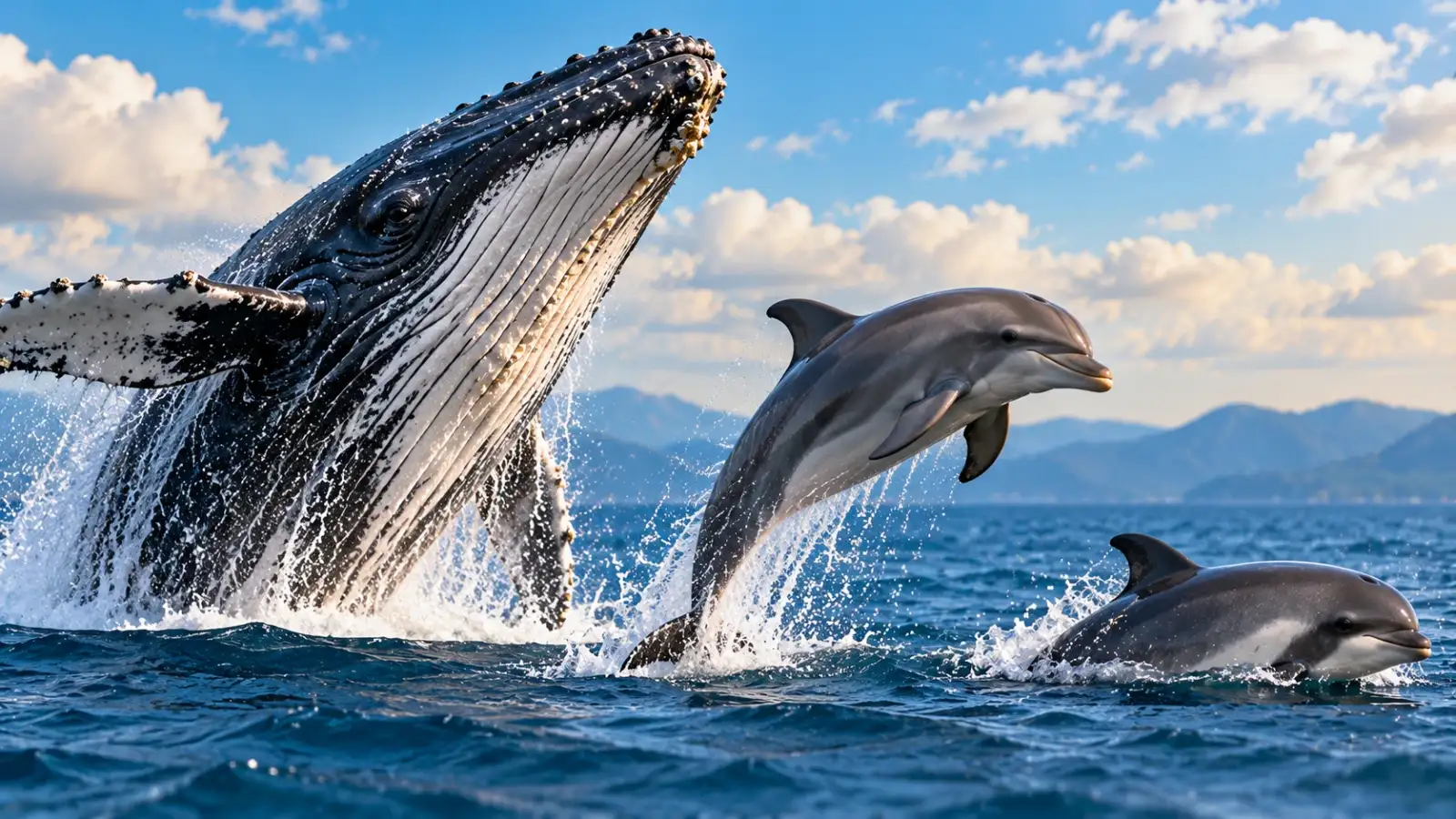
One common misconception is that dolphins are separate from whales. In fact, dolphins are a type of toothed whale. Porpoises are also toothed cetaceans, but they belong to a different family and have several distinctive features. Understanding these differences makes it easier to identify these fascinating animals and appreciate the roles they play in aquatic ecosystems.
Like other mammals, they breathe air using lungs, maintain a relatively stable body temperature and feed their young with milk. Their streamlined bodies and powerful tails help them swim efficiently.
Cetaceans are broadly divided into two groups: baleen whales and toothed whales .
Baleen whales, such as blue whales and humpback whales, have specialised plates in their mouths that filter small animals from seawater. Toothed whales have teeth and include sperm whales, killer whales, dolphins and porpoises.
This classification explains why an animal called a killer whale is actually the largest member of the dolphin family.
Large whale species can grow to extraordinary lengths. The blue whale, for example, is the largest animal known to have lived on Earth. Other whales, including humpback and fin whales, are also much larger than most dolphins.
Dolphins are generally smaller, with streamlined bodies suited to fast swimming and active hunting. Porpoises are usually compact and smaller than many dolphin species.
However, size alone cannot identify every cetacean. Some toothed whales are relatively small, while killer whales can grow considerably larger than many animals commonly called whales. Looking at the head, teeth, fins and overall body shape provides a more reliable identification.
Many dolphins have a prominent, elongated snout known as a beak. Bottlenose dolphins are a familiar example, with a clearly defined snout and a curved mouthline that can appear to form a smile.
Porpoises generally have shorter, blunter faces without a distinct elongated beak. Their heads tend to look more rounded.
Whales show a wider variety of head shapes. Baleen whales often have broad heads suited to filtering food from the water, while sperm whales have large, block-shaped heads. Some toothed whales have more pointed snouts.
These differences reflect the animals' evolutionary histories and feeding methods, rather than simply their size.
Baleen whales do not have functional teeth for feeding as adults. Instead, they use baleen plates to filter food such as krill and small fish from seawater. Depending on the species, they may take in large volumes of water and then push the water out through the plates, trapping their prey.
Toothed whales, including dolphins and porpoises, have teeth that help them catch prey. Dolphins generally have pointed, cone-shaped teeth suited to gripping fish, squid and other animals. They typically swallow their prey rather than chewing it in the way humans do.
Porpoises have smaller, spade-shaped teeth. Their diets vary by species but often include fish and squid.
Feeding strategies also differ among whale species. Some filter-feed on tiny marine organisms, while others hunt fish, squid or larger animals.
Dolphins often have a curved or hooked dorsal fin and a lean, streamlined body. Their shape supports agile movement and, in many species, rapid swimming.
Porpoises typically have a triangular dorsal fin, a shorter face and a stockier body. Some species have no prominent dorsal fin at all, so there are exceptions to the general pattern.
Whales vary considerably. Some have a dorsal fin, while others have a small ridge or no dorsal fin. Their bodies are often more robust, particularly in large baleen whale species.
All cetaceans use their horizontally flattened tail flukes to generate forward movement. Unlike fish, which generally move their tails from side to side, cetaceans move their tails up and down.
They produce a range of sounds, including clicks, whistles and pulsed sounds. These sounds help them communicate, coordinate behaviour and, in many toothed cetaceans, locate prey through echolocation.
Porpoises also use sound and echolocation, but their vocalisations differ from those of dolphins. Many porpoises produce high-frequency clicks and are less likely to produce the conspicuous whistles commonly associated with dolphins.
Whale communication varies widely between species. Humpback whales are known for their elaborate songs, while other whales use calls, pulses and low-frequency sounds to communicate over long distances.
It is important not to assume that every dolphin is highly social or that every whale behaves in the same way. Each species has its own patterns of communication and social interaction.
They produce sound pulses that travel through the water and bounce off objects. By interpreting the returning echoes, the animals can gather information about the location, distance and characteristics of nearby objects.
This ability is especially useful for dolphins and porpoises searching for prey. It also helps many toothed whales navigate and hunt in low-light environments.
Baleen whales are not known to use the same echolocation system as toothed whales. They rely on other senses and behaviours suited to their feeding strategies.
Echolocation should not be confused with ordinary communication. Although some sounds may serve more than one purpose, locating an object through returning echoes is a distinct biological process.
Many whale species travel through open oceans, while others use coastal waters or particular feeding and breeding grounds. Some undertake long migrations between colder feeding areas and warmer breeding regions.
Dolphins are found in tropical, temperate and cooler waters. Many live in coastal areas, while others spend most of their lives offshore. River dolphins inhabit certain freshwater river systems, although these species face serious threats from habitat changes and human activity.
Porpoises are often associated with coastal or shelf waters, and many prefer cooler regions. However, their distribution varies by species.
Habitat also influences their behaviour and diet. A dolphin living near a coast may feed on different prey from an offshore species, while a river dolphin faces challenges unlike those encountered by ocean-dwelling cetaceans.
Accidental capture in fishing gear, collisions with vessels, underwater noise, chemical pollution and habitat degradation can affect their survival. Climate change can also alter the distribution of prey and the conditions of the environments in which they live.
Some species have recovered through conservation measures, while others remain threatened or endangered. The risks are not identical for every animal, and effective protection depends on understanding each species' habitat, behaviour and population status.
People can help by supporting responsible wildlife tourism, avoiding disturbance to marine mammals and reducing waste that may reach rivers and oceans. Boat operators and coastal communities also play an important role in protecting these animals and their habitats.
These are general differences, not absolute rules. Some species have unusual features that do not fit the typical description.
Recognising these differences helps us understand marine biodiversity more clearly. It also reminds us that protecting aquatic animals requires attention to the needs of individual species, not just the broader group to which they belong.
One common misconception is that dolphins are separate from whales. In fact, dolphins are a type of toothed whale. Porpoises are also toothed cetaceans, but they belong to a different family and have several distinctive features. Understanding these differences makes it easier to identify these fascinating animals and appreciate the roles they play in aquatic ecosystems.
1. Whales, Dolphins and Porpoises Belong to the Same Animal Group
The first thing to understand is that whales, dolphins and porpoises are not completely separate groups. They are all cetaceans, a group of mammals that have adapted to life in water.Like other mammals, they breathe air using lungs, maintain a relatively stable body temperature and feed their young with milk. Their streamlined bodies and powerful tails help them swim efficiently.
Cetaceans are broadly divided into two groups: baleen whales and toothed whales .
Baleen whales, such as blue whales and humpback whales, have specialised plates in their mouths that filter small animals from seawater. Toothed whales have teeth and include sperm whales, killer whales, dolphins and porpoises.
This classification explains why an animal called a killer whale is actually the largest member of the dolphin family.
2. Whales Are Generally Larger, but There Are Exceptions
Size is one of the easiest ways to distinguish many whales from dolphins and porpoises, although it is not a perfect rule.Large whale species can grow to extraordinary lengths. The blue whale, for example, is the largest animal known to have lived on Earth. Other whales, including humpback and fin whales, are also much larger than most dolphins.
Dolphins are generally smaller, with streamlined bodies suited to fast swimming and active hunting. Porpoises are usually compact and smaller than many dolphin species.
However, size alone cannot identify every cetacean. Some toothed whales are relatively small, while killer whales can grow considerably larger than many animals commonly called whales. Looking at the head, teeth, fins and overall body shape provides a more reliable identification.
3. Their Faces Have Noticeable Differences
The shape of the head is one of the most useful clues when comparing dolphins and porpoises.Many dolphins have a prominent, elongated snout known as a beak. Bottlenose dolphins are a familiar example, with a clearly defined snout and a curved mouthline that can appear to form a smile.
Porpoises generally have shorter, blunter faces without a distinct elongated beak. Their heads tend to look more rounded.
Whales show a wider variety of head shapes. Baleen whales often have broad heads suited to filtering food from the water, while sperm whales have large, block-shaped heads. Some toothed whales have more pointed snouts.
These differences reflect the animals' evolutionary histories and feeding methods, rather than simply their size.
4. Their Teeth and Feeding Methods Are Different
The mouths of these animals reveal another important distinction.Baleen whales do not have functional teeth for feeding as adults. Instead, they use baleen plates to filter food such as krill and small fish from seawater. Depending on the species, they may take in large volumes of water and then push the water out through the plates, trapping their prey.
Toothed whales, including dolphins and porpoises, have teeth that help them catch prey. Dolphins generally have pointed, cone-shaped teeth suited to gripping fish, squid and other animals. They typically swallow their prey rather than chewing it in the way humans do.
Porpoises have smaller, spade-shaped teeth. Their diets vary by species but often include fish and squid.
Feeding strategies also differ among whale species. Some filter-feed on tiny marine organisms, while others hunt fish, squid or larger animals.
5. Dolphins and Porpoises Have Different Fins and Body Shapes
A look at the dorsal fin, the fin along the back, can help distinguish many dolphins from porpoises.Dolphins often have a curved or hooked dorsal fin and a lean, streamlined body. Their shape supports agile movement and, in many species, rapid swimming.
Porpoises typically have a triangular dorsal fin, a shorter face and a stockier body. Some species have no prominent dorsal fin at all, so there are exceptions to the general pattern.
Whales vary considerably. Some have a dorsal fin, while others have a small ridge or no dorsal fin. Their bodies are often more robust, particularly in large baleen whale species.
All cetaceans use their horizontally flattened tail flukes to generate forward movement. Unlike fish, which generally move their tails from side to side, cetaceans move their tails up and down.
6. Dolphins Are Usually More Vocal and Social
Dolphins are known for their complex communication and often social lifestyles. Many species live in groups called pods, although group size and social behaviour vary considerably.They produce a range of sounds, including clicks, whistles and pulsed sounds. These sounds help them communicate, coordinate behaviour and, in many toothed cetaceans, locate prey through echolocation.
Porpoises also use sound and echolocation, but their vocalisations differ from those of dolphins. Many porpoises produce high-frequency clicks and are less likely to produce the conspicuous whistles commonly associated with dolphins.
Whale communication varies widely between species. Humpback whales are known for their elaborate songs, while other whales use calls, pulses and low-frequency sounds to communicate over long distances.
It is important not to assume that every dolphin is highly social or that every whale behaves in the same way. Each species has its own patterns of communication and social interaction.
7. Echolocation Helps Many of Them Navigate Underwater
Water can limit visibility, particularly in deep or murky environments. Many toothed cetaceans overcome this challenge through echolocation.They produce sound pulses that travel through the water and bounce off objects. By interpreting the returning echoes, the animals can gather information about the location, distance and characteristics of nearby objects.
This ability is especially useful for dolphins and porpoises searching for prey. It also helps many toothed whales navigate and hunt in low-light environments.
Baleen whales are not known to use the same echolocation system as toothed whales. They rely on other senses and behaviours suited to their feeding strategies.
Echolocation should not be confused with ordinary communication. Although some sounds may serve more than one purpose, locating an object through returning echoes is a distinct biological process.
8. They Live in Different Habitats
Whales, dolphins and porpoises occupy a wide range of aquatic environments.Many whale species travel through open oceans, while others use coastal waters or particular feeding and breeding grounds. Some undertake long migrations between colder feeding areas and warmer breeding regions.
Dolphins are found in tropical, temperate and cooler waters. Many live in coastal areas, while others spend most of their lives offshore. River dolphins inhabit certain freshwater river systems, although these species face serious threats from habitat changes and human activity.
Porpoises are often associated with coastal or shelf waters, and many prefer cooler regions. However, their distribution varies by species.
Habitat also influences their behaviour and diet. A dolphin living near a coast may feed on different prey from an offshore species, while a river dolphin faces challenges unlike those encountered by ocean-dwelling cetaceans.
9. All Three Groups Face Threats From Human Activities
Despite their differences, whales, dolphins and porpoises face several similar conservation challenges.Accidental capture in fishing gear, collisions with vessels, underwater noise, chemical pollution and habitat degradation can affect their survival. Climate change can also alter the distribution of prey and the conditions of the environments in which they live.
Some species have recovered through conservation measures, while others remain threatened or endangered. The risks are not identical for every animal, and effective protection depends on understanding each species' habitat, behaviour and population status.
People can help by supporting responsible wildlife tourism, avoiding disturbance to marine mammals and reducing waste that may reach rivers and oceans. Boat operators and coastal communities also play an important role in protecting these animals and their habitats.
Quick Comparison: Whales vs Dolphins vs Porpoises
| Feature | Whales | Dolphins | Porpoises |
| Classification | Includes baleen and toothed cetaceans | A family of toothed cetaceans | A separate family of toothed cetaceans |
| Body size | Ranges from relatively small to enormous | Usually small to medium, with some large species | Usually small and compact |
| Head shape | Varies widely by species | Often has a distinct beak | Usually short and blunt |
| Teeth | Baleen whales have baleen; toothed whales have teeth | Usually pointed, cone-shaped teeth | Spade-shaped teeth |
| Dorsal fin | May be large, small or absent | Often curved or hooked | Often triangular |
| Communication | Varies by species, including songs and calls | Clicks, whistles and other sounds | Often high-frequency clicks |
| Feeding | Filtering or hunting, depending on the group | Commonly hunts fish and squid | Commonly hunts fish and squid |
Why Understanding These Differences Matters
Whales, dolphins and porpoises share a common evolutionary background, but their bodies and behaviours reflect different ways of living underwater. Baleen whales filter-feed, many toothed whales hunt using echolocation, dolphins often have prominent beaks and curved dorsal fins, and porpoises generally have shorter faces and spade-shaped teeth.Recognising these differences helps us understand marine biodiversity more clearly. It also reminds us that protecting aquatic animals requires attention to the needs of individual species, not just the broader group to which they belong.
Next Story