
10 Indian Destinations That Look Beautiful as Summer Gives Way to Autumn

India does not experience autumn in quite the same dramatic way as countries famous for their vast maple forests and brilliant fall foliage. Instead, the season arrives gradually.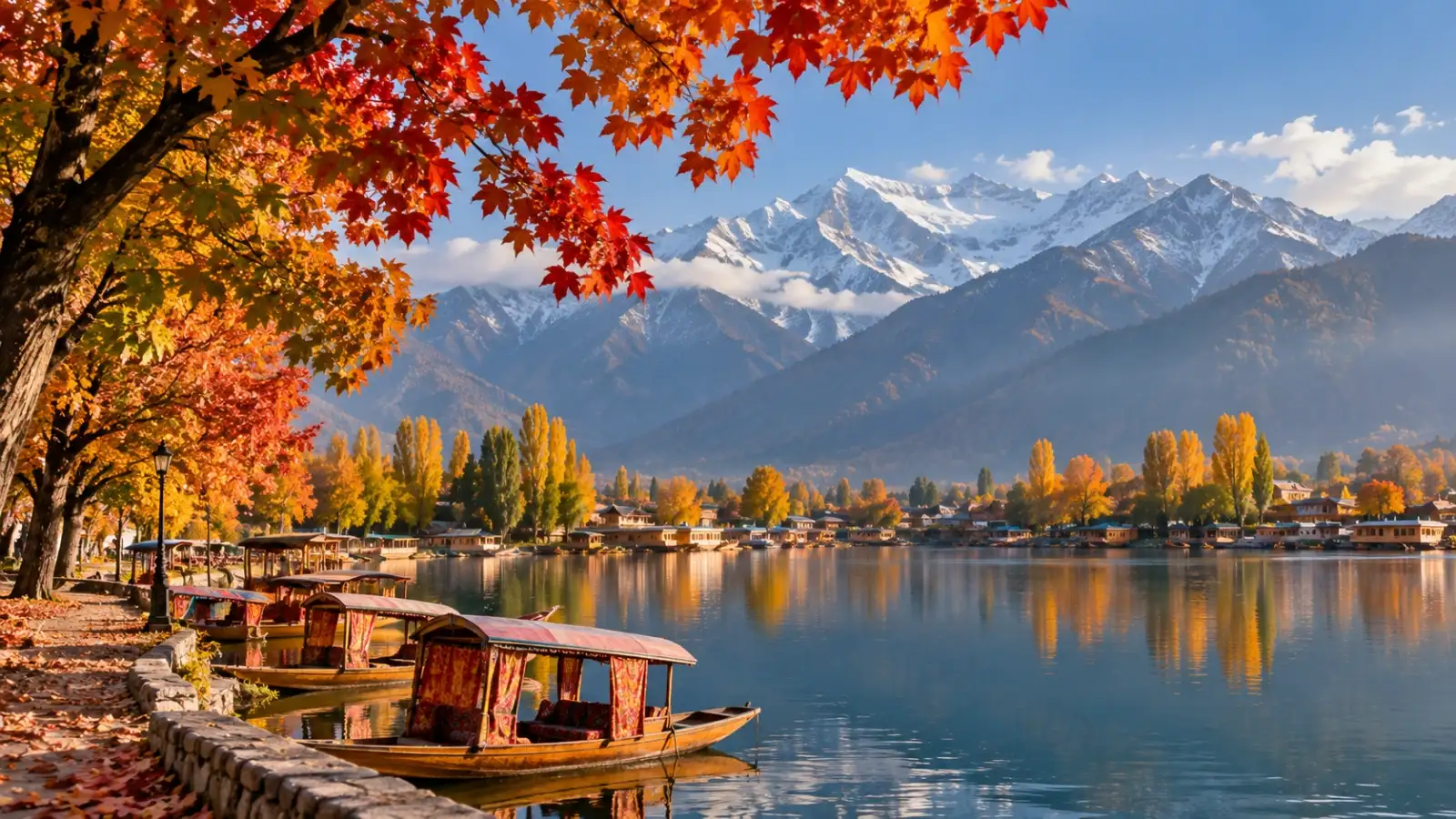
The monsoon begins to retreat, mornings become cooler, skies often turn clearer and trees in the mountains slowly exchange their summer greens for shades of yellow, gold and orange.
The first signs are easiest to spot in the Himalayan regions and other high-altitude landscapes. In some places, the change begins around late September, while the strongest autumn colours usually develop during October and November. The exact timing varies with altitude, weather and the type of vegetation found in each region.
If you want to experience that seasonal transition rather than wait for winter, these destinations are worth considering.
As temperatures begin to fall, the foliage around Srinagar and other parts of the valley gradually moves from green towards yellow, amber, orange and deeper red. The transformation is especially noticeable around historic gardens and roads lined with mature trees.
October is generally more associated with the classic autumn landscape, while September still retains much of its summer greenery. By October, clearer skies and cooler temperatures can make the valley feel noticeably different.
For a first taste of autumn, explore Srinagar's Mughal gardens, Dal Lake surroundings and the older parts of the city before travelling deeper into the valley.
The appeal is not just the foliage. Autumn arrives alongside a quieter atmosphere, cooler evenings and a gradual transition towards winter.
The valley becomes increasingly attractive from late September onwards, with the landscape gradually taking on golden and orange tones. Himachal tourism sources also identify autumn as an important season across the state, with September to November bringing changing foliage and cooler conditions.
The valley's forested surroundings, mountain villages and river landscapes make the seasonal change easy to appreciate without having to search for a particular monument or viewpoint.
Late September can still feel like a transition period, while October generally brings a stronger autumn character.
It is a destination where slow walks and quiet mornings can be more rewarding than trying to fill every hour with sightseeing.
The valley is surrounded by mountains, forests and apple orchards, while nearby Mukhwa offers an additional cultural stop. Uttarakhand Tourism specifically lists September and October among the best periods to visit Harsil.
The seasonal appeal comes from the combination of cooler air, changing vegetation and the increasingly crisp mountain atmosphere.
Harsil is also a good option for travellers who want to experience a Himalayan village rather than a busy commercial hill station.
The higher reaches can become considerably colder as the season progresses, so the destination is best approached as a transition into winter rather than an extended summer escape.
The region is known for high mountains, apple-growing areas, traditional villages and valleys such as Sangla. During autumn, the landscape gradually moves away from the bright greens of summer towards warmer shades.
Himachal Tourism highlights autumn festivals and changing landscapes in Kinnaur, including the Fullaich festival, where flowers gathered from the hills are offered to local deities before celebrations begin.
Kalpa is particularly appealing if you want mountain views combined with traditional architecture and village scenery.
September can still retain plenty of green, but as the season advances, the atmosphere becomes cooler and the first signs of winter start appearing at higher elevations.
Rather than dense forests turning orange, the region is defined by stark mountain landscapes, high-altitude villages, monasteries and clear skies. Himachal Tourism identifies June to October as the broader visiting season and notes that July, August and September are particularly suitable for exploring the valleys because of their relatively dry conditions.
By September and October, the landscape begins moving towards the colder months.
The experience here is less about colourful foliage and more about witnessing the end of the high-altitude travel season. Clear mountain light, dry landscapes and increasingly cold mornings create a distinctly autumnal atmosphere.
If your idea of autumn includes dramatic mountains rather than forests of changing leaves, Spiti offers something very different.
The state experiences considerable climatic variation because of its dramatic differences in elevation. According to Sikkim Tourism, October to mid-December is its recognised autumn period, with crisp conditions and clearer Himalayan views.
This makes autumn a particularly interesting time for travellers who want to combine scenery with mountain culture.
Gangtok can serve as a base for exploring the region, while places such as Pelling and other mountain settlements provide views towards the Himalayas.
The changing season also creates a different atmosphere around monasteries, tea gardens and mountain roads.
Sikkim may not offer autumn foliage on the same scale as Kashmir, but its clear skies and changing mountain light make the seasonal transition highly photogenic.
The landscape is already dramatic, but September and October can bring golden tones to areas with vegetation, particularly around river valleys and villages.
Ladakh Tourism specifically identifies September and October as its autumn season, highlighting golden landscapes, clear skies and photography opportunities.
The season also represents the gradual closing of the warmer travel window before winter takes over.
Travellers can explore monasteries, high-altitude villages and mountain roads while experiencing cooler temperatures and clearer skies.
However, this is a high-altitude destination, so preparation matters. The weather can change quickly and temperatures drop substantially as autumn progresses.
The surrounding forests and valleys begin changing as the season moves into October. The cooler weather also makes walking, sightseeing and outdoor activities more comfortable than during the warmer months.
Himachal Tourism specifically lists Kullu's September to November period as suitable for trekking, climbing, sightseeing and river rafting, while the wider state enters its autumn season from September.
Kullu also becomes culturally interesting around its famous Dussehra celebrations, when the valley fills with religious and cultural activity.
For travellers who want autumn scenery without travelling to an extremely remote destination, the Manali-Kullu region is a practical choice.
The town sits against the Dhauladhar range and is surrounded by oak and conifer forests. As summer gives way to cooler conditions, the surrounding landscape begins taking on a different character.
Himachal Tourism includes Dharamshala among its autumn destinations and describes the region's wooded setting and mountain backdrop.
McLeod Ganj, Dharamkot and nearby villages can be explored at a slower pace during this period.
The biggest attraction is the combination of changing mountain weather, forest scenery and Himalayan views.
If you prefer a destination with cafés, accommodation options and established tourist infrastructure, Dharamshala can be easier to plan than some of the more remote locations on this list.
The town sits in a valley surrounded by mountains and is known for its temples, traditional architecture and long cultural history.
Autumn provides a pleasant setting for exploring the old town before colder winter conditions arrive.
Rather than travelling here solely to photograph changing leaves, consider Chamba for the complete seasonal experience. Walk through the historic areas, visit its temples and explore the surrounding landscape as the greenery begins to change.
The destination is particularly suited to travellers who prefer combining nature with local culture.
The Ministry of Tourism describes autumn as a season that generally begins around the end of September and continues into November.
In Kashmir, the defining feature can be the changing chinar foliage.
In Himachal Pradesh, forests and valleys gradually develop golden and crimson tones. Himachal Tourism itself describes the autumn landscape as a shift towards rich golden and crimson colours.
In Ladakh, the season is more about golden landscapes and exceptionally clear skies.
In Sikkim, clearer Himalayan views become one of the biggest attractions.
That means travellers should not expect one identical version of autumn everywhere.
For stronger foliage, October is generally the safer choice. Kashmir's classic chinar colours become increasingly prominent during October, while destinations such as Sikkim officially identify October to mid-December as their autumn period.
November can bring even stronger colours in some areas, but it also comes with colder temperatures and an increasing possibility of winter conditions at higher elevations.
So if you want that brief moment when the monsoon has faded but winter has not yet arrived, late September and October offer some of the most interesting seasonal travel opportunities in northern and Himalayan India.
The monsoon begins to retreat, mornings become cooler, skies often turn clearer and trees in the mountains slowly exchange their summer greens for shades of yellow, gold and orange.
The first signs are easiest to spot in the Himalayan regions and other high-altitude landscapes. In some places, the change begins around late September, while the strongest autumn colours usually develop during October and November. The exact timing varies with altitude, weather and the type of vegetation found in each region.
If you want to experience that seasonal transition rather than wait for winter, these destinations are worth considering.
1. Kashmir
Kashmir is one of India's most distinctive autumn destinations, particularly because of its famous chinar trees.As temperatures begin to fall, the foliage around Srinagar and other parts of the valley gradually moves from green towards yellow, amber, orange and deeper red. The transformation is especially noticeable around historic gardens and roads lined with mature trees.
October is generally more associated with the classic autumn landscape, while September still retains much of its summer greenery. By October, clearer skies and cooler temperatures can make the valley feel noticeably different.
For a first taste of autumn, explore Srinagar's Mughal gardens, Dal Lake surroundings and the older parts of the city before travelling deeper into the valley.
The appeal is not just the foliage. Autumn arrives alongside a quieter atmosphere, cooler evenings and a gradual transition towards winter.
2. Tirthan Valley, Himachal Pradesh
Tirthan Valley is a particularly good choice if you want autumn without the atmosphere of a major hill station.The valley becomes increasingly attractive from late September onwards, with the landscape gradually taking on golden and orange tones. Himachal tourism sources also identify autumn as an important season across the state, with September to November bringing changing foliage and cooler conditions.
The valley's forested surroundings, mountain villages and river landscapes make the seasonal change easy to appreciate without having to search for a particular monument or viewpoint.
Late September can still feel like a transition period, while October generally brings a stronger autumn character.
It is a destination where slow walks and quiet mornings can be more rewarding than trying to fill every hour with sightseeing.
3. Harsil, Uttarakhand
Harsil is one of Uttarakhand's quieter Himalayan destinations and becomes particularly appealing during the September to October transition.The valley is surrounded by mountains, forests and apple orchards, while nearby Mukhwa offers an additional cultural stop. Uttarakhand Tourism specifically lists September and October among the best periods to visit Harsil.
The seasonal appeal comes from the combination of cooler air, changing vegetation and the increasingly crisp mountain atmosphere.
Harsil is also a good option for travellers who want to experience a Himalayan village rather than a busy commercial hill station.
The higher reaches can become considerably colder as the season progresses, so the destination is best approached as a transition into winter rather than an extended summer escape.
4. Kinnaur, Himachal Pradesh
Kinnaur offers a more dramatic version of the Himalayan seasonal change.The region is known for high mountains, apple-growing areas, traditional villages and valleys such as Sangla. During autumn, the landscape gradually moves away from the bright greens of summer towards warmer shades.
Himachal Tourism highlights autumn festivals and changing landscapes in Kinnaur, including the Fullaich festival, where flowers gathered from the hills are offered to local deities before celebrations begin.
Kalpa is particularly appealing if you want mountain views combined with traditional architecture and village scenery.
September can still retain plenty of green, but as the season advances, the atmosphere becomes cooler and the first signs of winter start appearing at higher elevations.
5. Lahaul and Spiti, Himachal Pradesh
Autumn arrives differently in Lahaul and Spiti.Rather than dense forests turning orange, the region is defined by stark mountain landscapes, high-altitude villages, monasteries and clear skies. Himachal Tourism identifies June to October as the broader visiting season and notes that July, August and September are particularly suitable for exploring the valleys because of their relatively dry conditions.
By September and October, the landscape begins moving towards the colder months.
The experience here is less about colourful foliage and more about witnessing the end of the high-altitude travel season. Clear mountain light, dry landscapes and increasingly cold mornings create a distinctly autumnal atmosphere.
If your idea of autumn includes dramatic mountains rather than forests of changing leaves, Spiti offers something very different.
6. Sikkim
Sikkim's autumn arrives with a noticeable improvement in mountain visibility.The state experiences considerable climatic variation because of its dramatic differences in elevation. According to Sikkim Tourism, October to mid-December is its recognised autumn period, with crisp conditions and clearer Himalayan views.
This makes autumn a particularly interesting time for travellers who want to combine scenery with mountain culture.
Gangtok can serve as a base for exploring the region, while places such as Pelling and other mountain settlements provide views towards the Himalayas.
The changing season also creates a different atmosphere around monasteries, tea gardens and mountain roads.
Sikkim may not offer autumn foliage on the same scale as Kashmir, but its clear skies and changing mountain light make the seasonal transition highly photogenic.
7. Ladakh
Ladakh experiences one of India's most visually striking autumn transitions.The landscape is already dramatic, but September and October can bring golden tones to areas with vegetation, particularly around river valleys and villages.
Ladakh Tourism specifically identifies September and October as its autumn season, highlighting golden landscapes, clear skies and photography opportunities.
The season also represents the gradual closing of the warmer travel window before winter takes over.
Travellers can explore monasteries, high-altitude villages and mountain roads while experiencing cooler temperatures and clearer skies.
However, this is a high-altitude destination, so preparation matters. The weather can change quickly and temperatures drop substantially as autumn progresses.
8. Manali and Kullu
Manali and Kullu offer a more accessible introduction to autumn in Himachal Pradesh.The surrounding forests and valleys begin changing as the season moves into October. The cooler weather also makes walking, sightseeing and outdoor activities more comfortable than during the warmer months.
Himachal Tourism specifically lists Kullu's September to November period as suitable for trekking, climbing, sightseeing and river rafting, while the wider state enters its autumn season from September.
Kullu also becomes culturally interesting around its famous Dussehra celebrations, when the valley fills with religious and cultural activity.
For travellers who want autumn scenery without travelling to an extremely remote destination, the Manali-Kullu region is a practical choice.
9. Dharamshala
Dharamshala provides another relatively accessible way to experience the beginning of autumn.The town sits against the Dhauladhar range and is surrounded by oak and conifer forests. As summer gives way to cooler conditions, the surrounding landscape begins taking on a different character.
Himachal Tourism includes Dharamshala among its autumn destinations and describes the region's wooded setting and mountain backdrop.
McLeod Ganj, Dharamkot and nearby villages can be explored at a slower pace during this period.
The biggest attraction is the combination of changing mountain weather, forest scenery and Himalayan views.
If you prefer a destination with cafés, accommodation options and established tourist infrastructure, Dharamshala can be easier to plan than some of the more remote locations on this list.
10. Chamba
Chamba is another Himachali destination where the transition towards autumn can be combined with culture and heritage.The town sits in a valley surrounded by mountains and is known for its temples, traditional architecture and long cultural history.
Autumn provides a pleasant setting for exploring the old town before colder winter conditions arrive.
Rather than travelling here solely to photograph changing leaves, consider Chamba for the complete seasonal experience. Walk through the historic areas, visit its temples and explore the surrounding landscape as the greenery begins to change.
The destination is particularly suited to travellers who prefer combining nature with local culture.
What Does Autumn Actually Look Like in India?
It is worth remembering that autumn does not arrive uniformly across the country.The Ministry of Tourism describes autumn as a season that generally begins around the end of September and continues into November.
In Kashmir, the defining feature can be the changing chinar foliage.
In Himachal Pradesh, forests and valleys gradually develop golden and crimson tones. Himachal Tourism itself describes the autumn landscape as a shift towards rich golden and crimson colours.
In Ladakh, the season is more about golden landscapes and exceptionally clear skies.
In Sikkim, clearer Himalayan views become one of the biggest attractions.
That means travellers should not expect one identical version of autumn everywhere.
The Best Time to Plan the Trip
If your main priority is the earliest signs of seasonal change, late September can be a good starting point, particularly in higher Himalayan areas.For stronger foliage, October is generally the safer choice. Kashmir's classic chinar colours become increasingly prominent during October, while destinations such as Sikkim officially identify October to mid-December as their autumn period.
November can bring even stronger colours in some areas, but it also comes with colder temperatures and an increasing possibility of winter conditions at higher elevations.
So if you want that brief moment when the monsoon has faded but winter has not yet arrived, late September and October offer some of the most interesting seasonal travel opportunities in northern and Himalayan India.
Next Story