
10 Lesser-Known Heritage Towns Near Delhi for a Different Weekend Escape

Delhi is surrounded by places where history has survived in a surprisingly ordinary setting.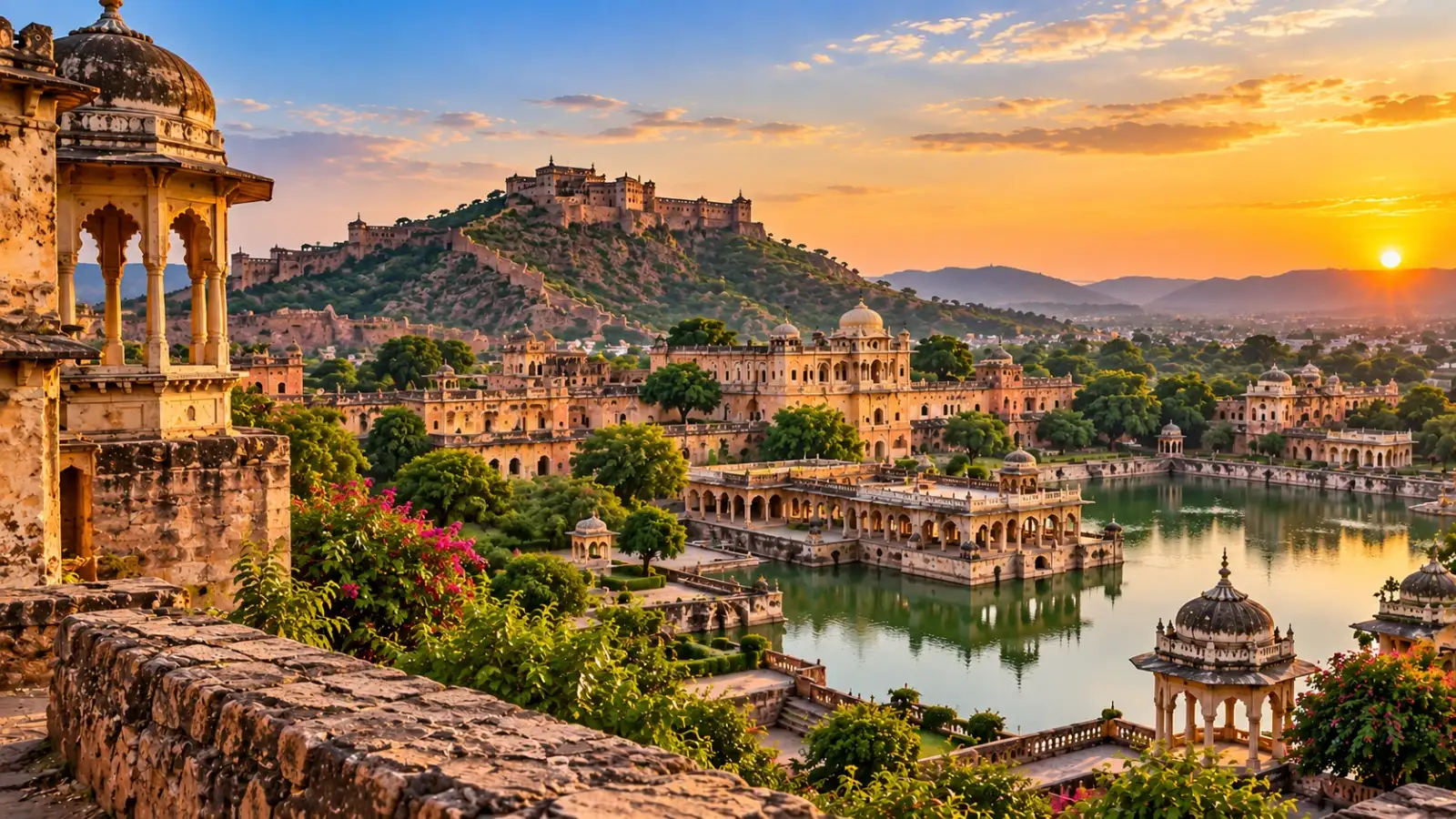
A short drive away from the capital, old gateways still mark town entrances, centuries-old havelis line narrow streets and forgotten palaces sit beside modern markets. Yet many of these places receive only a fraction of the attention given to destinations such as Jaipur, Agra or Udaipur.
That makes them particularly interesting for travellers who want a heritage experience without following the most obvious tourist circuit.
From Mughal-era towns in Haryana to the painted havelis of Shekhawati and royal settlements in Rajasthan, these smaller destinations offer a different way to explore North India's architectural history.
The town contains an unusually dense collection of historic structures, including the Jal Mahal, Tripolia Gateway, Chor Gumbad and several old tombs, baolis and gateways. Haryana's archaeology department lists numerous protected heritage sites in and around Narnaul.
The Jal Mahal is particularly striking. Built during the reign of Akbar in 1590 to 1591, the palace was constructed alongside a large water tank and reflects a blend of Indian and Persian architectural influences.
Another interesting stop is Birbal Ka Chhatta, a five-storey complex associated with Rai-i-Rayan Mukand Dass, the Diwan of Narnaul during Shah Jahan's reign.
For anyone interested in medieval architecture, Narnaul offers a remarkable amount to explore in a relatively compact area.
Established in 1732 by Faujdar Khan during the Mughal period, Farrukhnagar developed around the salt trade and later declined as commercial routes changed.
Its most recognisable monument is the Sheesh Mahal.
The palace was built in the 18th century and received its name from the mirror work incorporated into its interiors. The surrounding old town also retains historic gateways, a baoli and Jama Masjid.
What makes Farrukhnagar interesting is its scale. Instead of visiting one isolated monument, you can walk through a historic settlement where the architecture is still connected to everyday town life.
It is particularly practical for a short heritage outing from Delhi and Gurugram.
Located north of Bharatpur, this historic town was associated with the Jat rulers of Bharatpur and became known for its palaces, gardens, fountains and fortifications. Rajasthan Tourism describes Deeg as a garden town with an impressive fort surrounded by moats and gateways.
The palace complex is the main attraction.
Its architecture brings together Rajput and Mughal influences, while gardens, water channels and fountains give the complex an unusual character.
Deeg works particularly well for travellers who enjoy architecture but want something different from the standard Rajasthan itinerary.
You can also combine it with Bharatpur for an overnight trip, creating a route that mixes royal history with the region's famous wetlands.
The town is known for its fort and havelis. Rajasthan Tourism notes that Dundlod Fort was built in 1750 and combines Rajput and Mughal architectural elements.
The real attraction, however, is the town's architectural texture.
Old merchant mansions, painted façades, courtyards and decorative details reflect the wealth generated by trading families in the Shekhawati region.
Dundlod can also be combined with nearby Mandawa, Nawalgarh or other Shekhawati settlements for a longer heritage circuit.
It is the kind of destination where simply walking through the old streets can become part of the sightseeing.
The town developed in the 18th century and became associated with wealthy merchant families who built elaborate havelis and baolis. The result is a remarkable concentration of painted buildings within a relatively small settlement.
The Mandawa Fort is another major landmark and has been restored as a heritage hotel.
But the real pleasure of visiting Mandawa is not simply entering one fort. It is walking through the town and noticing frescoes, carved entrances, old courtyards and faded murals on buildings that are still surrounded by everyday life.
The town offers a different side of Rajasthan, one shaped as much by merchant wealth as by royal power.
Located in Bulandshahr district, the settlement is known for its mud fort and rural surroundings. The historic fort dates back to the 18th century and parts of it have been adapted into heritage accommodation.
The experience here is less about ticking off a long list of monuments and more about slowing down.
Visitors can explore the fort, spend time around the surrounding countryside and experience a setting that feels considerably removed from Delhi despite the relatively short journey.
Kuchesar is particularly suited to travellers who want heritage combined with a rural atmosphere rather than a conventional sightseeing-heavy weekend.
The town is home to Khetri Mahal, an 18th-century palace also known as the Wind Palace. Rajasthan Tourism highlights its distinctive open architectural design and unusual flow of air through the structure.
Khetri also has an important connection with Swami Vivekananda.
The Fateh Bilas Palace, now associated with the Ramakrishna Mission, was once the residence of the ruler of Khetri. The Ramakrishna Mission notes that Vivekananda stayed at the palace during visits to the town and maintained a close relationship with Raja Ajit Singh.
This combination of palace architecture, Shekhawati history and Vivekananda's connection gives Khetri a character that is quite different from the region's better-known destinations.
Rajasthan Tourism describes it as a small city known for decorated havelis, shrines, chhatris and its distinctive red sandstone architecture. The town is also surrounded by a quieter rural landscape.
Its historic buildings are particularly interesting because they reflect several layers of architectural influence.
Karauli works well for travellers who prefer atmospheric streets, old walls and local culture over crowded sightseeing spots.
The journey is longer than some of the Haryana options on this list, so it makes more sense as an overnight trip rather than a rushed day excursion.
The town itself deserves more attention.
Its heritage includes the Alwar City Palace, Bala Quila and Moosi Maharani Ki Chhatri, while Siliserh Lake adds a scenic element to the surrounding landscape. Incredible India describes Alwar as a heritage-rich city with Rajput and Islamic architectural influences.
The city also provides easy access to other historic attractions in the region, including Neemrana and Tijara.
For travellers from Delhi, Alwar can therefore function as a base for exploring several smaller heritage sites rather than being treated as a single sightseeing stop.
Neemrana Fort is a 15th-century palace built in 1464 and later restored as a heritage resort. It sits among the Aravalli hills and has become one of the more accessible heritage escapes from Delhi because of its location along the Delhi-Jaipur highway.
Nearby, the Neemrana Baori offers a completely different glimpse into the region's architectural history.
The stepwell was designed as a major water-harvesting structure, with a deep sequence of steps leading towards the water source. Incredible India notes that the structure could involve nearly 200 steps during dry conditions and continues to represent the region's traditional approach to water management.
This combination makes Neemrana more interesting than a simple fort stay.
Narnaul reveals the architectural history of medieval Haryana. Farrukhnagar shows how trade once shaped entire settlements. Deeg demonstrates the grandeur of the Bharatpur kingdom, while Mandawa and Dundlod preserve the distinctive painted architecture of Shekhawati.
Kuchesar offers a rural fort experience, Khetri connects architecture with the story of Swami Vivekananda, and Karauli retains the atmosphere of a quieter royal town.
Even places such as Alwar and Neemrana can feel different when explored beyond their most famous attractions.
The biggest appeal of these destinations is that history has not always been separated from everyday life. Old gateways stand beside markets, historic houses sit among modern buildings and centuries-old structures continue to form part of the landscape.
For Delhi travellers looking for a different weekend, that combination can be more rewarding than simply visiting another crowded tourist centre.
A short drive away from the capital, old gateways still mark town entrances, centuries-old havelis line narrow streets and forgotten palaces sit beside modern markets. Yet many of these places receive only a fraction of the attention given to destinations such as Jaipur, Agra or Udaipur.
That makes them particularly interesting for travellers who want a heritage experience without following the most obvious tourist circuit.
From Mughal-era towns in Haryana to the painted havelis of Shekhawati and royal settlements in Rajasthan, these smaller destinations offer a different way to explore North India's architectural history.
1. Narnaul, Haryana
Narnaul is one of those places that can completely change the way you think about Haryana's heritage.The town contains an unusually dense collection of historic structures, including the Jal Mahal, Tripolia Gateway, Chor Gumbad and several old tombs, baolis and gateways. Haryana's archaeology department lists numerous protected heritage sites in and around Narnaul.
The Jal Mahal is particularly striking. Built during the reign of Akbar in 1590 to 1591, the palace was constructed alongside a large water tank and reflects a blend of Indian and Persian architectural influences.
Another interesting stop is Birbal Ka Chhatta, a five-storey complex associated with Rai-i-Rayan Mukand Dass, the Diwan of Narnaul during Shah Jahan's reign.
For anyone interested in medieval architecture, Narnaul offers a remarkable amount to explore in a relatively compact area.
2. Farrukhnagar, Haryana
It is easy to drive past Farrukhnagar without realising how much history sits inside this small town.Established in 1732 by Faujdar Khan during the Mughal period, Farrukhnagar developed around the salt trade and later declined as commercial routes changed.
Its most recognisable monument is the Sheesh Mahal.
The palace was built in the 18th century and received its name from the mirror work incorporated into its interiors. The surrounding old town also retains historic gateways, a baoli and Jama Masjid.
What makes Farrukhnagar interesting is its scale. Instead of visiting one isolated monument, you can walk through a historic settlement where the architecture is still connected to everyday town life.
It is particularly practical for a short heritage outing from Delhi and Gurugram.
3. Deeg, Rajasthan
Deeg feels different from the better-known royal cities of Rajasthan.Located north of Bharatpur, this historic town was associated with the Jat rulers of Bharatpur and became known for its palaces, gardens, fountains and fortifications. Rajasthan Tourism describes Deeg as a garden town with an impressive fort surrounded by moats and gateways.
The palace complex is the main attraction.
Its architecture brings together Rajput and Mughal influences, while gardens, water channels and fountains give the complex an unusual character.
Deeg works particularly well for travellers who enjoy architecture but want something different from the standard Rajasthan itinerary.
You can also combine it with Bharatpur for an overnight trip, creating a route that mixes royal history with the region's famous wetlands.
4. Dundlod, Rajasthan
Dundlod is a strong choice for travellers who want to experience Shekhawati's famous painted architecture without spending the entire trip in a larger tourist centre.The town is known for its fort and havelis. Rajasthan Tourism notes that Dundlod Fort was built in 1750 and combines Rajput and Mughal architectural elements.
The real attraction, however, is the town's architectural texture.
Old merchant mansions, painted façades, courtyards and decorative details reflect the wealth generated by trading families in the Shekhawati region.
Dundlod can also be combined with nearby Mandawa, Nawalgarh or other Shekhawati settlements for a longer heritage circuit.
It is the kind of destination where simply walking through the old streets can become part of the sightseeing.
5. Mandawa, Rajasthan
Mandawa is better known than some of the towns on this list, but it still deserves more attention from Delhi travellers looking beyond conventional weekend destinations.The town developed in the 18th century and became associated with wealthy merchant families who built elaborate havelis and baolis. The result is a remarkable concentration of painted buildings within a relatively small settlement.
The Mandawa Fort is another major landmark and has been restored as a heritage hotel.
But the real pleasure of visiting Mandawa is not simply entering one fort. It is walking through the town and noticing frescoes, carved entrances, old courtyards and faded murals on buildings that are still surrounded by everyday life.
The town offers a different side of Rajasthan, one shaped as much by merchant wealth as by royal power.
6. Kuchesar, Uttar Pradesh
Kuchesar offers something particularly appealing for a short break from Delhi.Located in Bulandshahr district, the settlement is known for its mud fort and rural surroundings. The historic fort dates back to the 18th century and parts of it have been adapted into heritage accommodation.
The experience here is less about ticking off a long list of monuments and more about slowing down.
Visitors can explore the fort, spend time around the surrounding countryside and experience a setting that feels considerably removed from Delhi despite the relatively short journey.
Kuchesar is particularly suited to travellers who want heritage combined with a rural atmosphere rather than a conventional sightseeing-heavy weekend.
7. Khetri, Rajasthan
Khetri is one of the more unusual heritage destinations in the Shekhawati region.The town is home to Khetri Mahal, an 18th-century palace also known as the Wind Palace. Rajasthan Tourism highlights its distinctive open architectural design and unusual flow of air through the structure.
Khetri also has an important connection with Swami Vivekananda.
The Fateh Bilas Palace, now associated with the Ramakrishna Mission, was once the residence of the ruler of Khetri. The Ramakrishna Mission notes that Vivekananda stayed at the palace during visits to the town and maintained a close relationship with Raja Ajit Singh.
This combination of palace architecture, Shekhawati history and Vivekananda's connection gives Khetri a character that is quite different from the region's better-known destinations.
8. Karauli, Rajasthan
Karauli has the atmosphere of an old royal town without the scale of Rajasthan's major tourist centres.Rajasthan Tourism describes it as a small city known for decorated havelis, shrines, chhatris and its distinctive red sandstone architecture. The town is also surrounded by a quieter rural landscape.
Its historic buildings are particularly interesting because they reflect several layers of architectural influence.
Karauli works well for travellers who prefer atmospheric streets, old walls and local culture over crowded sightseeing spots.
The journey is longer than some of the Haryana options on this list, so it makes more sense as an overnight trip rather than a rushed day excursion.
9. Alwar, Rajasthan
Alwar is not exactly unknown, but it is often treated simply as a stopover for Sariska.The town itself deserves more attention.
Its heritage includes the Alwar City Palace, Bala Quila and Moosi Maharani Ki Chhatri, while Siliserh Lake adds a scenic element to the surrounding landscape. Incredible India describes Alwar as a heritage-rich city with Rajput and Islamic architectural influences.
The city also provides easy access to other historic attractions in the region, including Neemrana and Tijara.
For travellers from Delhi, Alwar can therefore function as a base for exploring several smaller heritage sites rather than being treated as a single sightseeing stop.
10. Neemrana, Rajasthan
Neemrana is probably the most recognisable name on this list, but its heritage story goes beyond the famous fort hotel.Neemrana Fort is a 15th-century palace built in 1464 and later restored as a heritage resort. It sits among the Aravalli hills and has become one of the more accessible heritage escapes from Delhi because of its location along the Delhi-Jaipur highway.
Nearby, the Neemrana Baori offers a completely different glimpse into the region's architectural history.
The stepwell was designed as a major water-harvesting structure, with a deep sequence of steps leading towards the water source. Incredible India notes that the structure could involve nearly 200 steps during dry conditions and continues to represent the region's traditional approach to water management.
This combination makes Neemrana more interesting than a simple fort stay.
Why These Towns Are Worth Exploring
The heritage around Delhi is much broader than the usual list of famous monuments.Narnaul reveals the architectural history of medieval Haryana. Farrukhnagar shows how trade once shaped entire settlements. Deeg demonstrates the grandeur of the Bharatpur kingdom, while Mandawa and Dundlod preserve the distinctive painted architecture of Shekhawati.
Kuchesar offers a rural fort experience, Khetri connects architecture with the story of Swami Vivekananda, and Karauli retains the atmosphere of a quieter royal town.
Even places such as Alwar and Neemrana can feel different when explored beyond their most famous attractions.
The biggest appeal of these destinations is that history has not always been separated from everyday life. Old gateways stand beside markets, historic houses sit among modern buildings and centuries-old structures continue to form part of the landscape.
For Delhi travellers looking for a different weekend, that combination can be more rewarding than simply visiting another crowded tourist centre.
Next Story