
10 Small Indian Islands Where Life Still Moves Slowly

India has no shortage of destinations where travellers go looking for beaches, mountains, forests and dramatic landscapes. But some of the country's islands offer something less obvious and, for many visitors, more valuable: a completely different relationship with time.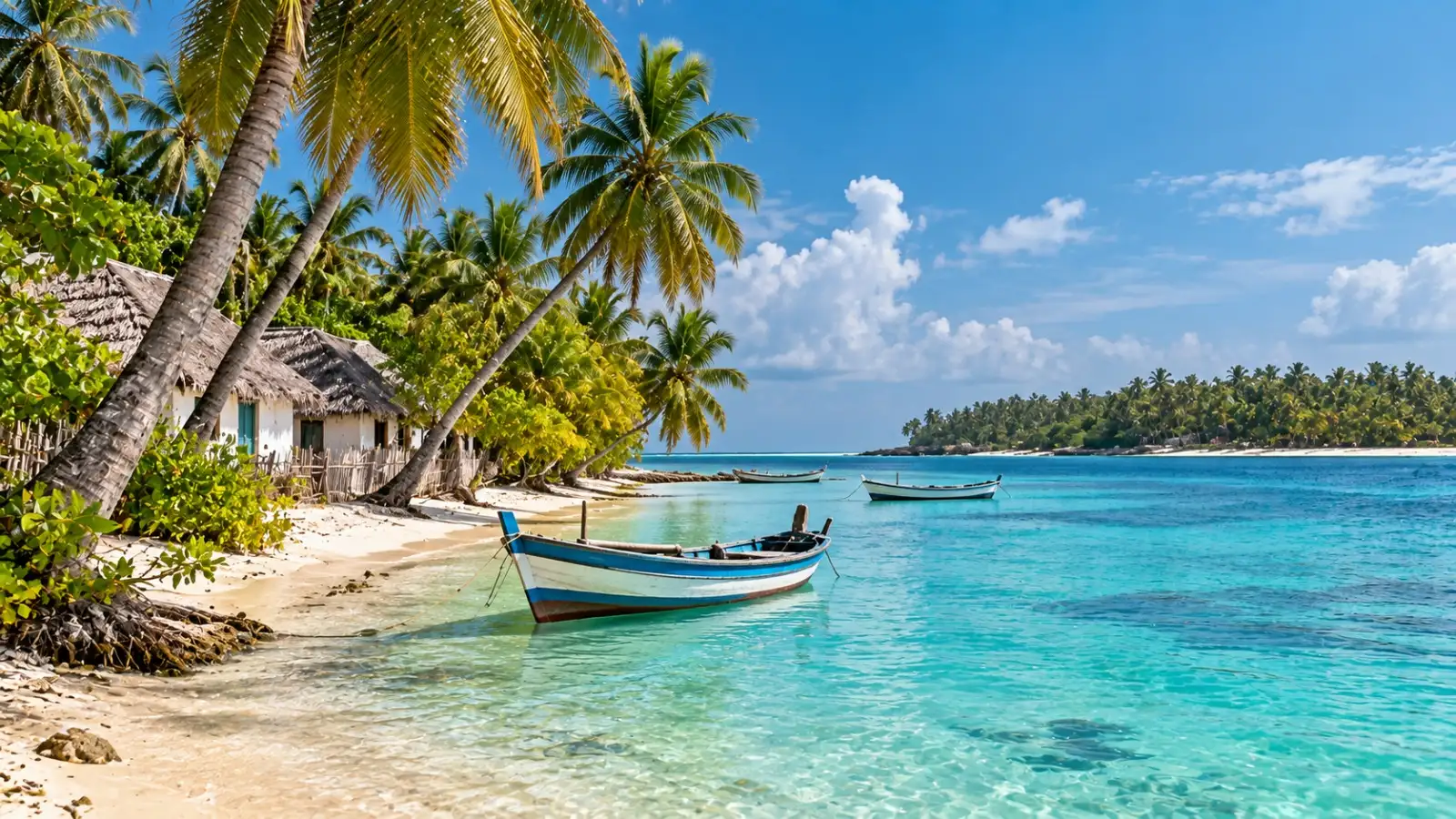
On these islands, the distances are smaller, the communities are often closely connected and the sea influences everything from transport to livelihoods. A short journey may involve a boat rather than a highway, while an afternoon can be spent walking along a village road instead of moving between a long list of tourist attractions.
That does not mean people living on these islands have no work, responsibilities or modern lifestyles. They do. The difference is that geography creates a different setting for everyday life. With limited land, smaller settlements and varying access to the mainland, the rhythm can feel considerably less frantic than life in India's major cities.
From the coral islands of Lakshadweep to the river island of Majuli and the forested islands of the Andaman archipelago, these are places where the journey itself can become part of the experience.
The villages, known as Avah, are an important part of everyday life. Houses are arranged along streets, village houses serve as community spaces and traditional boats remain an important part of the island's maritime culture. Walking through these areas gives visitors a sense of how closely community life is connected with the landscape.
Minicoy also has a large lagoon, coconut groves, beaches and an old lighthouse built in 1885. The island's relatively small size means that the surroundings never feel far away, creating an experience where a walk through a village, a visit to the coast and time beside the lagoon can all become part of the same unhurried day.
The island is particularly suited to travellers who prefer exploring slowly. Instead of treating every stop as a separate sightseeing destination, visitors can cycle or travel along small roads, stop near the coast and spend time simply observing the surroundings.
This is one of the reasons smaller islands can feel different from conventional holidays. The attraction is not always a spectacular monument or a packed itinerary. Sometimes it is the opportunity to spend several hours in one small area without feeling that you are missing something elsewhere.
The island is home to important satras such as Auniati and Samaguri, where traditions involving music, performance, masks and religious practices continue to attract visitors. The annual Raas celebrations also bring together elements of Assamese cultural life and storytelling.
What makes Majuli particularly interesting for slow travellers is that the landscape itself becomes part of the experience. Ferry crossings, village roads, fields, waterways and traditional institutions create a journey that cannot be rushed easily. You are not simply moving from one attraction to another. You are watching an entire landscape unfold gradually.
Lakshadweep officially consists of 36 islands, including ten inhabited islands, with a total land area of only around 32 square kilometres. The administration describes remoteness as one of the characteristics that contributes to the appeal of the islands.
That remoteness changes how visitors experience distance. There is less of the constant movement associated with a mainland holiday. A morning can involve a walk near the lagoon, an afternoon beside the coast and an evening spent watching the light change over the water.
The day does not necessarily need to be filled with activities to feel complete.
The island has mosques, residential areas, coconut trees, beaches and a distinctive local landscape. The Lakshadweep administration identifies Kavaratti as the most developed island in the territory, while also highlighting its cultural and natural attractions.
For visitors, the relatively compact setting means that the landscape is always close. The sea is not something reserved for a special excursion. It forms part of the backdrop to ordinary life.
This is one of the subtle differences between island travel and city travel. Nature does not necessarily require a separate trip. It is already part of the neighbourhood.
Despite being an important gateway, Agatti retains the visual character associated with small island communities. The narrow strip of land is surrounded by turquoise water, coral formations and lagoons, while coconut trees and local settlements occupy much of the available space.
The geography itself encourages a slower experience. There simply is not the same scale of road network or urban development that visitors encounter in a large mainland destination.
Once away from the airport, the landscape quickly reminds you that this is a small island surrounded by a vast ocean.
The attraction here is not necessarily the number of things to see. It is the amount of space available to slow down and observe them.
Mangrove ecosystems, forest landscapes and coastal habitats reward patience. A walk becomes more interesting when there is no pressure to finish it quickly, while a nature excursion can become an opportunity to understand the environment rather than simply photograph it.
This makes Rangat an example of how slow travel can be based on observation rather than entertainment.
The area provides a useful contrast with the better-known tourist centres of the Andamans. Instead of arriving with a long list of famous attractions, visitors can spend more time exploring the landscape, observing local life and travelling through quieter stretches of the islands.
Such destinations can initially appear less exciting to travellers accustomed to packed itineraries. But that is precisely where their character lies.
When there are fewer distractions competing for attention, ordinary details become more noticeable. A road through greenery, a fishing boat near the shore or a quiet village can become part of the travel experience rather than merely something passed on the way to a major attraction.
Lakshadweep's official tourism information highlights the remoteness of its islands and the way the surrounding lagoons and coral reefs shape their character.
On an island as small as Bangaram, the surrounding sea becomes impossible to ignore. There are no sprawling city neighbourhoods or long highways to separate visitors from the coast.
The result is a holiday experience where the environment dictates the pace. There may be swimming, snorkelling and other activities, but there is also considerable space for doing very little.
The Lakshadweep administration identifies Bitra as the smallest of the inhabited islands, with a population of 271 according to the 2011 Census. Fishing and coconut-related activities are among the traditional occupations found across the territory.
A place this small naturally creates a different sense of scale. The distances that seem insignificant on a mainland map can have an entirely different meaning when the whole community exists within a tiny island environment.
For a visitor, the experience is less about conventional sightseeing and more about understanding how a small community has adapted to its surroundings.
The difference comes largely from geography.
A small island has physical boundaries that cannot be ignored. Roads eventually end. Supplies may depend on ships. Travel between islands can depend on boats or aircraft. Weather can affect movement, particularly during the monsoon.
Lakshadweep's official transport information, for example, notes that ships from Kochi can take between 14 and 18 hours depending on the island, while inter-island connections can also vary by season and conditions.
These limitations naturally encourage planning and patience.
Fishing, transport, weather, tourism and food can all be connected to the ocean. In Minicoy, tuna fishing remains an important part of the island's economy and heritage, while traditional boats and village organisations continue to form part of its cultural identity.
This relationship changes the way time is experienced.
A boat cannot simply be treated like a taxi that appears whenever required. Weather matters. Sea conditions matter. Distance matters. The ocean establishes its own timetable, and communities have to work around it.
In Delhi, Mumbai or Bengaluru, a journey of only a few kilometres can consume a significant part of the day. Traffic, congestion and long roads can turn short distances into lengthy commutes.
On a small island, the same concept of distance often feels completely different.
A village, beach, lagoon or market may be close enough to reach without a long journey. That does not mean island transport is always effortless, but the compact geography can make everyday movement feel less overwhelming.
This is especially noticeable in places such as Minicoy, where village roads run through a narrow island landscape surrounded by coconut groves and the lagoon.
On these islands, you may spend an hour walking instead of driving. You may sit beside the water without immediately reaching for your phone. You may talk to a local resident, watch fishing boats return or simply observe how a village changes from morning to evening.
The experience becomes less about completing a checklist and more about noticing the place.
That is particularly relevant in destinations such as Majuli, where traditional culture, river landscapes and village life are closely intertwined.
Tourism is developing. Connectivity is improving. Young people travel for education and employment. Digital technology has reached even remote communities, and new businesses have emerged around tourism and hospitality.
Lakshadweep, for example, has been developing tourism infrastructure while continuing to promote its marine environment and individual island cultures.
That makes the future of these destinations particularly interesting.
The challenge is not simply attracting more tourists. It is finding a way to accommodate visitors without removing the very characteristics that make these islands feel different.
It can be the feeling of having nowhere urgent to be.
On Minicoy, village life and fishing traditions remain closely connected with the sea. In Majuli, ferries and river landscapes form part of the journey. In Lakshadweep, the narrow geography means that the lagoon and ocean are never far from everyday life. In the Andamans, quieter settlements and forested landscapes provide an alternative to the more commercial tourist circuit.
These places are not slower because their people have rejected modern life. They are slower because geography creates a different framework for living and travelling.
For visitors accustomed to traffic, crowded streets, constant notifications and tightly packed schedules, that difference can be surprisingly powerful.
Sometimes the luxury is not a five-star hotel or an expensive experience.
Sometimes it is simply having enough time to watch the sea change colour before deciding what to do next.
On these islands, the distances are smaller, the communities are often closely connected and the sea influences everything from transport to livelihoods. A short journey may involve a boat rather than a highway, while an afternoon can be spent walking along a village road instead of moving between a long list of tourist attractions.
That does not mean people living on these islands have no work, responsibilities or modern lifestyles. They do. The difference is that geography creates a different setting for everyday life. With limited land, smaller settlements and varying access to the mainland, the rhythm can feel considerably less frantic than life in India's major cities.
From the coral islands of Lakshadweep to the river island of Majuli and the forested islands of the Andaman archipelago, these are places where the journey itself can become part of the experience.
1. Minicoy, Lakshadweep
Minicoy is one of India's most distinctive island communities. Located at the southern end of Lakshadweep, it is physically separated from the northern group and has developed a cultural identity that is noticeably different from the other islands. The island is known for its organised village communities, traditional dances, colourful boats and long association with tuna fishing.The villages, known as Avah, are an important part of everyday life. Houses are arranged along streets, village houses serve as community spaces and traditional boats remain an important part of the island's maritime culture. Walking through these areas gives visitors a sense of how closely community life is connected with the landscape.
Minicoy also has a large lagoon, coconut groves, beaches and an old lighthouse built in 1885. The island's relatively small size means that the surroundings never feel far away, creating an experience where a walk through a village, a visit to the coast and time beside the lagoon can all become part of the same unhurried day.
2. Shaheed Dweep, Andaman and Nicobar Islands
Shaheed Dweep, formerly known as Neil Island, is one of the Andaman Islands where the experience can feel more relaxed than the busier tourist centres. Its compact landscape includes beaches, villages, agricultural areas and coconut plantations, creating a setting where there is little need to spend hours travelling between attractions.The island is particularly suited to travellers who prefer exploring slowly. Instead of treating every stop as a separate sightseeing destination, visitors can cycle or travel along small roads, stop near the coast and spend time simply observing the surroundings.
This is one of the reasons smaller islands can feel different from conventional holidays. The attraction is not always a spectacular monument or a packed itinerary. Sometimes it is the opportunity to spend several hours in one small area without feeling that you are missing something elsewhere.
3. Majuli, Assam
Majuli offers an entirely different interpretation of island life because it is a river island in the Brahmaputra rather than a tropical island surrounded by the sea. Its landscape is closely connected with Assamese culture, agriculture, village communities and the Vaishnavite satra tradition. Incredible India describes Majuli as a place where traditional practices and cultural heritage remain deeply woven into everyday life.The island is home to important satras such as Auniati and Samaguri, where traditions involving music, performance, masks and religious practices continue to attract visitors. The annual Raas celebrations also bring together elements of Assamese cultural life and storytelling.
What makes Majuli particularly interesting for slow travellers is that the landscape itself becomes part of the experience. Ferry crossings, village roads, fields, waterways and traditional institutions create a journey that cannot be rushed easily. You are not simply moving from one attraction to another. You are watching an entire landscape unfold gradually.
4. Kalpeni, Lakshadweep
Kalpeni is one of the inhabited islands of Lakshadweep and forms part of the archipelago's distinctive coral-and-lagoon landscape. The island is associated with beaches, shallow lagoons and marine activities, but its appeal also lies in the relatively small scale of its surroundings.Lakshadweep officially consists of 36 islands, including ten inhabited islands, with a total land area of only around 32 square kilometres. The administration describes remoteness as one of the characteristics that contributes to the appeal of the islands.
That remoteness changes how visitors experience distance. There is less of the constant movement associated with a mainland holiday. A morning can involve a walk near the lagoon, an afternoon beside the coast and an evening spent watching the light change over the water.
The day does not necessarily need to be filled with activities to feel complete.
5. Kavaratti, Lakshadweep
Kavaratti is the administrative headquarters of Lakshadweep and one of its more developed islands. Yet the word "headquarters" should not create an image of a large, crowded mainland city. Kavaratti remains a compact island surrounded by lagoons and the Arabian Sea.The island has mosques, residential areas, coconut trees, beaches and a distinctive local landscape. The Lakshadweep administration identifies Kavaratti as the most developed island in the territory, while also highlighting its cultural and natural attractions.
For visitors, the relatively compact setting means that the landscape is always close. The sea is not something reserved for a special excursion. It forms part of the backdrop to ordinary life.
This is one of the subtle differences between island travel and city travel. Nature does not necessarily require a separate trip. It is already part of the neighbourhood.
6. Agatti, Lakshadweep
Agatti is one of the most accessible islands in Lakshadweep because it has the archipelago's only airport. Flights from Kochi connect travellers to the island, while onward boat and other connections provide access to parts of the archipelago depending on season and conditions.Despite being an important gateway, Agatti retains the visual character associated with small island communities. The narrow strip of land is surrounded by turquoise water, coral formations and lagoons, while coconut trees and local settlements occupy much of the available space.
The geography itself encourages a slower experience. There simply is not the same scale of road network or urban development that visitors encounter in a large mainland destination.
Once away from the airport, the landscape quickly reminds you that this is a small island surrounded by a vast ocean.
7. Rangat, Andaman and Nicobar Islands
Rangat offers a different side of the Andaman Islands, one that is less focused on the familiar combination of resorts and major beaches. The region is surrounded by forests, mangroves, coastal areas and small settlements, making it particularly interesting for travellers who enjoy nature and quieter surroundings.The attraction here is not necessarily the number of things to see. It is the amount of space available to slow down and observe them.
Mangrove ecosystems, forest landscapes and coastal habitats reward patience. A walk becomes more interesting when there is no pressure to finish it quickly, while a nature excursion can become an opportunity to understand the environment rather than simply photograph it.
This makes Rangat an example of how slow travel can be based on observation rather than entertainment.
8. Mayabunder, Andaman and Nicobar Islands
Mayabunder is another northern Andaman destination where the experience is shaped more by forests, coastal scenery and small settlements than by large-scale tourism.The area provides a useful contrast with the better-known tourist centres of the Andamans. Instead of arriving with a long list of famous attractions, visitors can spend more time exploring the landscape, observing local life and travelling through quieter stretches of the islands.
Such destinations can initially appear less exciting to travellers accustomed to packed itineraries. But that is precisely where their character lies.
When there are fewer distractions competing for attention, ordinary details become more noticeable. A road through greenery, a fishing boat near the shore or a quiet village can become part of the travel experience rather than merely something passed on the way to a major attraction.
9. Bangaram, Lakshadweep
Bangaram presents another side of Lakshadweep, with its small-island setting and striking lagoon landscape. Unlike the larger inhabited islands, it is particularly associated with tourism and the experience of staying in a remote tropical environment.Lakshadweep's official tourism information highlights the remoteness of its islands and the way the surrounding lagoons and coral reefs shape their character.
On an island as small as Bangaram, the surrounding sea becomes impossible to ignore. There are no sprawling city neighbourhoods or long highways to separate visitors from the coast.
The result is a holiday experience where the environment dictates the pace. There may be swimming, snorkelling and other activities, but there is also considerable space for doing very little.
10. Bitra, Lakshadweep
Bitra is one of the smallest inhabited islands in Lakshadweep and offers an especially strong example of how different life can feel when a community exists on a very limited piece of land.The Lakshadweep administration identifies Bitra as the smallest of the inhabited islands, with a population of 271 according to the 2011 Census. Fishing and coconut-related activities are among the traditional occupations found across the territory.
A place this small naturally creates a different sense of scale. The distances that seem insignificant on a mainland map can have an entirely different meaning when the whole community exists within a tiny island environment.
For a visitor, the experience is less about conventional sightseeing and more about understanding how a small community has adapted to its surroundings.
Why island life can feel slower
It is easy to romanticise island living and imagine that everyone spends their days sitting beside the sea without deadlines. The reality is much more complicated. Island residents work, study, operate businesses, manage households and deal with the same financial and personal responsibilities found elsewhere in India.The difference comes largely from geography.
A small island has physical boundaries that cannot be ignored. Roads eventually end. Supplies may depend on ships. Travel between islands can depend on boats or aircraft. Weather can affect movement, particularly during the monsoon.
Lakshadweep's official transport information, for example, notes that ships from Kochi can take between 14 and 18 hours depending on the island, while inter-island connections can also vary by season and conditions.
These limitations naturally encourage planning and patience.
The sea becomes part of everyday life
On the mainland, the sea can be something people visit for a holiday. On small islands, it is often part of the basic structure of life.Fishing, transport, weather, tourism and food can all be connected to the ocean. In Minicoy, tuna fishing remains an important part of the island's economy and heritage, while traditional boats and village organisations continue to form part of its cultural identity.
This relationship changes the way time is experienced.
A boat cannot simply be treated like a taxi that appears whenever required. Weather matters. Sea conditions matter. Distance matters. The ocean establishes its own timetable, and communities have to work around it.
Small distances can change an entire day
One of the biggest differences between island life and metropolitan life is the amount of time spent travelling.In Delhi, Mumbai or Bengaluru, a journey of only a few kilometres can consume a significant part of the day. Traffic, congestion and long roads can turn short distances into lengthy commutes.
On a small island, the same concept of distance often feels completely different.
A village, beach, lagoon or market may be close enough to reach without a long journey. That does not mean island transport is always effortless, but the compact geography can make everyday movement feel less overwhelming.
This is especially noticeable in places such as Minicoy, where village roads run through a narrow island landscape surrounded by coconut groves and the lagoon.
The real attraction is not doing less
Slow travel is sometimes misunderstood as simply having fewer activities. In reality, it is about changing the relationship between the traveller and the destination.On these islands, you may spend an hour walking instead of driving. You may sit beside the water without immediately reaching for your phone. You may talk to a local resident, watch fishing boats return or simply observe how a village changes from morning to evening.
The experience becomes less about completing a checklist and more about noticing the place.
That is particularly relevant in destinations such as Majuli, where traditional culture, river landscapes and village life are closely intertwined.
These islands are changing too
None of these places should be imagined as completely untouched worlds frozen in another era.Tourism is developing. Connectivity is improving. Young people travel for education and employment. Digital technology has reached even remote communities, and new businesses have emerged around tourism and hospitality.
Lakshadweep, for example, has been developing tourism infrastructure while continuing to promote its marine environment and individual island cultures.
That makes the future of these destinations particularly interesting.
The challenge is not simply attracting more tourists. It is finding a way to accommodate visitors without removing the very characteristics that make these islands feel different.
When the journey becomes the destination
The most memorable thing about India's smaller islands may not always be a particular beach or landmark.It can be the feeling of having nowhere urgent to be.
On Minicoy, village life and fishing traditions remain closely connected with the sea. In Majuli, ferries and river landscapes form part of the journey. In Lakshadweep, the narrow geography means that the lagoon and ocean are never far from everyday life. In the Andamans, quieter settlements and forested landscapes provide an alternative to the more commercial tourist circuit.
These places are not slower because their people have rejected modern life. They are slower because geography creates a different framework for living and travelling.
For visitors accustomed to traffic, crowded streets, constant notifications and tightly packed schedules, that difference can be surprisingly powerful.
Sometimes the luxury is not a five-star hotel or an expensive experience.
Sometimes it is simply having enough time to watch the sea change colour before deciding what to do next.
Next Story