
5 Traditional Diwali Recipes That Bring Every Celebration to Life

Every Diwali kitchen has its own rhythm, the pressure cooker hissing in one corner, a kadhai of hot oil in another, someone's grandmother directing traffic from a chair. The sweets and snacks that come out of that kitchen are not decoration. They are the festival itself, edible and passed hand to hand.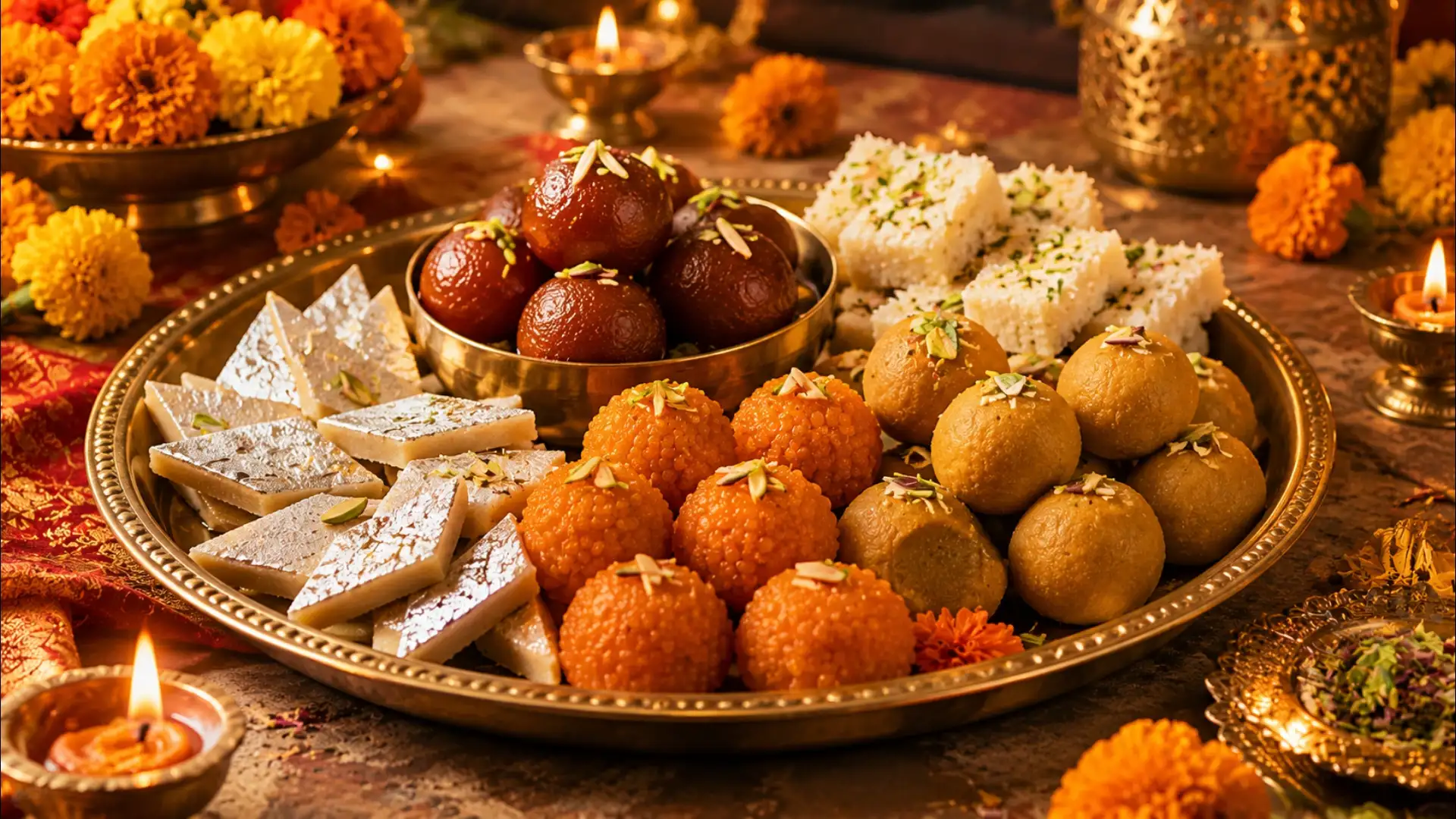
That roasting step cannot be rushed, under-roasted besan tastes raw and gritty; over-roasted turns bitter. Once off the heat, powdered sugar and a pinch of cardamom go in. The mixture is shaped into rounds while still warm enough to hold together. Cooled, they firm up into the dense, melt-on-the-tongue texture that makes besan ladoo the ladoo people reach for first.
The oil temperature matters: too cool and the chakli absorbs oil and turns soft; too hot and the outside browns before the inside cooks through. A well-fried chakli is audibly crisp and holds its spiral without crumbling. It keeps for two weeks in an airtight tin, which is why Maharashtrian households make it in large batches at the start of the week before Diwali.
Rolled thin between sheets of butter paper and cut into diamonds while still warm, it sets into the firm, fudge-like texture that distinguishes a well-made katli from a grainy one. The silver vark pressed on top is edible and traditional; it is also entirely optional. The taste does not change.
They fry on the lowest possible heat, rolling continuously, until they are a deep mahogany brown all the way through. The syrup is a simple one-string sugar syrup flavoured with cardamom and a few strands of saffron. The fried balls go into warm syrup, not hot, and are left for at least an hour before serving. The syrup soaks inward as they cool, which is why gulab jamun served too soon tastes sweet only on the outside.
What these five recipes share is the principle that the best Diwali food is made in advance, improves with a day of rest, and travels well in a dabba. The festival is about giving things away. Food that holds its texture and flavour for several days is food that can actually be shared.
Besan Ladoo, The One That Starts Everything
Roasting besan in ghee is the smell that signals Diwali has properly begun. The gram flour goes into a heavy-bottomed pan with a generous pour of desi ghee and stays on low heat, stirred continuously, until it shifts from pale yellow to a deep gold and the raw smell disappears into something nutty and warm.That roasting step cannot be rushed, under-roasted besan tastes raw and gritty; over-roasted turns bitter. Once off the heat, powdered sugar and a pinch of cardamom go in. The mixture is shaped into rounds while still warm enough to hold together. Cooled, they firm up into the dense, melt-on-the-tongue texture that makes besan ladoo the ladoo people reach for first.
Chakli, Maharashtra's Spiral That Travels Everywhere
Chakli is rice flour, urad dal flour, sesame seeds, cumin, and a little butter worked into a stiff dough with warm water. The dough goes into a chakli press fitted with a star-shaped disc and is piped directly into hot oil in tight spirals.The oil temperature matters: too cool and the chakli absorbs oil and turns soft; too hot and the outside browns before the inside cooks through. A well-fried chakli is audibly crisp and holds its spiral without crumbling. It keeps for two weeks in an airtight tin, which is why Maharashtrian households make it in large batches at the start of the week before Diwali.
You may also like
- 4 horror stories by author Sudhanshu Rai one cannot afford to miss this Halloween
- Delicious and Nutritious Flax Seed Laddu Recipe for Winter Wellness
- Delicious Sabudana Vada Recipe for Winter Snacking
- A Kerala passenger received ₹1 less on his cancelled train ticket and sued IRCTC; two years later, the consumer court ordered the railway corporation to pay ₹3,100 in compensation.
- BEL Recruitment 2026: Applications for BEL Probationary Engineer posts have begun; check full details..
Kaju Katli, The Silver-Leafed Square Everyone Saves for Gifting
Kaju katli requires two things: cashews ground to a fine powder without releasing their oil, and a sugar syrup brought to exactly the right consistency. The cashew powder goes into a one-string sugar syrup, the stage where a drop pulled between two fingers forms a single thread, and is stirred over low heat until the mixture pulls away from the sides of the pan and forms a smooth dough.Rolled thin between sheets of butter paper and cut into diamonds while still warm, it sets into the firm, fudge-like texture that distinguishes a well-made katli from a grainy one. The silver vark pressed on top is edible and traditional; it is also entirely optional. The taste does not change.
Gulab Jamun, The Syrup-Soaked One That Needs No Introduction
The classic version uses khoya, reduced whole milk, kneaded with a small amount of maida and a pinch of baking soda into a soft dough. The dough is rolled into smooth balls with no cracks, because a crack opens in hot oil and the ball falls apart.They fry on the lowest possible heat, rolling continuously, until they are a deep mahogany brown all the way through. The syrup is a simple one-string sugar syrup flavoured with cardamom and a few strands of saffron. The fried balls go into warm syrup, not hot, and are left for at least an hour before serving. The syrup soaks inward as they cool, which is why gulab jamun served too soon tastes sweet only on the outside.
Mathri, The Flaky Disc That Belongs on Every Tray
Mathri is North India's answer to the question of what to put out that is not sweet. Maida, a generous amount of ghee rubbed in until the flour resembles breadcrumbs, ajwain, black pepper, and enough water to bring it together into a stiff dough, stiff enough that it does not puff in oil. Rolled into thick rounds and pricked all over with a fork to prevent ballooning, they fry on medium heat until pale gold and completely dry-looking. The colour is deceptive: mathri does not brown the way bread does. The test is the sound, a finished mathri taps hollow. Stored in a tin, it stays crisp for ten days and pairs with pickle, with tea, and with nothing at all.What these five recipes share is the principle that the best Diwali food is made in advance, improves with a day of rest, and travels well in a dabba. The festival is about giving things away. Food that holds its texture and flavour for several days is food that can actually be shared.






Loving Newspoint? Download the app now
