
Champawat Travel Guide: 10 Hidden Gems to Explore in Uttarakhand

Uttarakhand is home to famous mountain destinations such as Nainital, Mussoorie and Rishikesh, but the state has many quieter places that deserve attention. Champawat is one of them. Located in the eastern part of Uttarakhand, this historic hill district combines mountain landscapes, ancient temples, forests and traditional Kumaoni culture.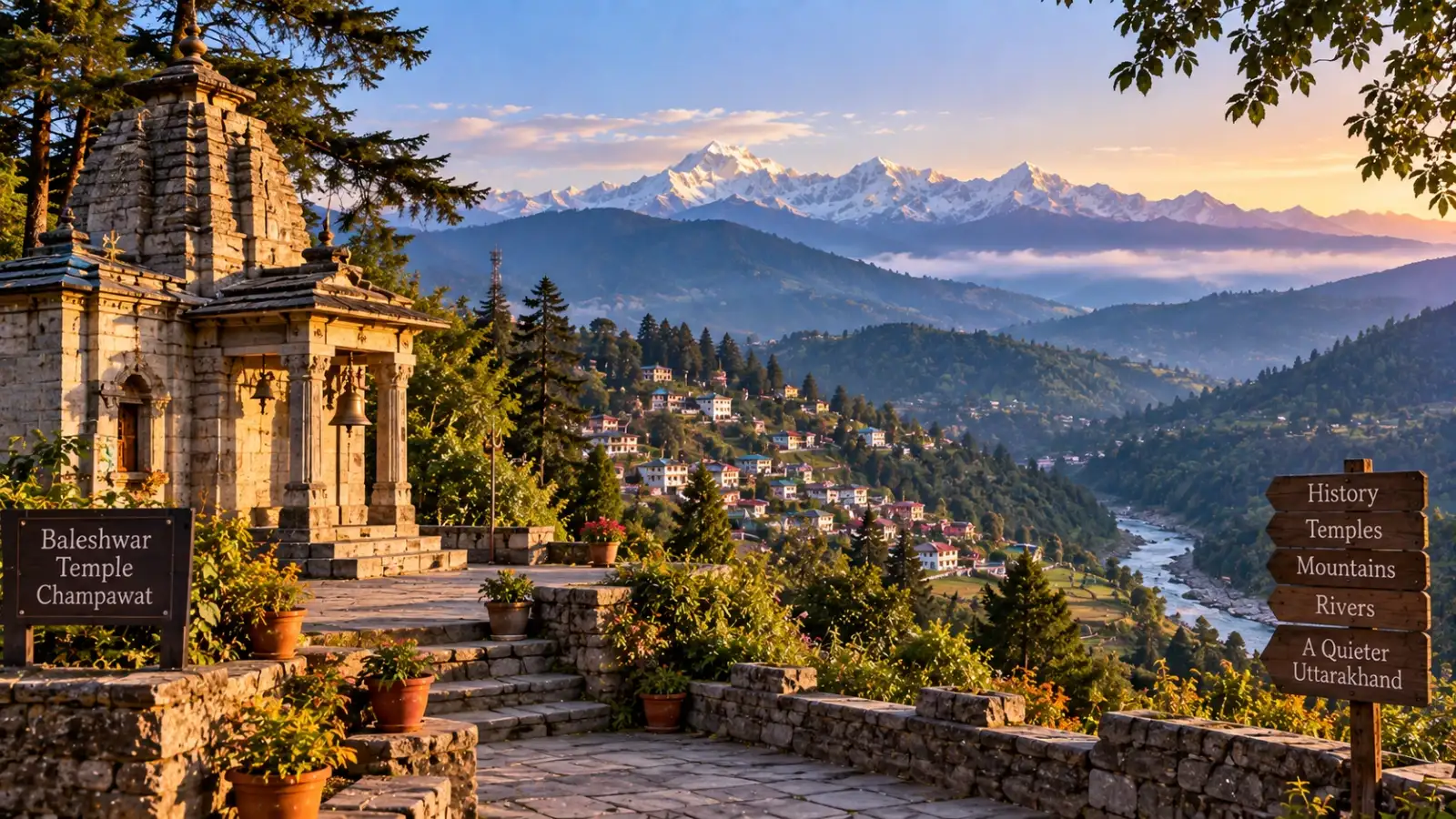
Champawat may not have the same tourist recognition as the state's better-known hill stations, but that is exactly what makes it interesting. There are fewer crowded streets, fewer commercial attractions and more opportunities to experience the region at a relaxed pace.
For travellers who enjoy history, nature and peaceful mountain journeys, Champawat offers a refreshing alternative to the usual Uttarakhand itinerary.
Historical remains and temples around the area provide reminders of this past. Exploring Champawat therefore feels different from visiting a destination that is known only for scenery. The mountains here are closely connected with stories of kingdoms, religious traditions and local communities.
For history lovers, this combination makes Champawat particularly rewarding.
The structure reflects the craftsmanship associated with the region's historic temples. Unlike some of the more heavily visited religious sites in Uttarakhand, the atmosphere here can feel relatively calm.
Visitors interested in architecture should take time to observe the stone details rather than simply treating the temple as a quick sightseeing stop.
The journey towards such smaller temples can be just as interesting as the destination. Roads and paths pass through mountain landscapes, villages and forested stretches, giving travellers a closer look at everyday life in the region.
The journey involves a combination of road travel and walking, making it an experience that requires some preparation. The surrounding landscape adds another dimension to the visit, with hills and valleys creating a dramatic backdrop.
Travellers should check local conditions and temple arrangements before planning a visit, especially during busy pilgrimage periods.
Its quiet character makes it ideal for travellers who prefer nature walks and slow mornings over busy sightseeing. The area also has old colonial-era buildings, adding a historical layer to the landscape.
For photographers, the combination of forests, mountain views and old architecture creates plenty of interesting scenes.
Its relatively relaxed atmosphere makes it suitable for travellers who want to spend time exploring rather than constantly moving between tourist attractions.
The journey between Champawat and Lohaghat is itself scenic, with mountain roads revealing changing views along the way.
The river and surrounding valleys provide a striking contrast to the forested mountain slopes. In areas where visitors can safely access the river landscape, it can be a memorable part of a Champawat journey.
As with all mountain and river destinations, visitors should follow local safety advice and avoid entering the water in unfamiliar areas.
Local dishes may include preparations based on lentils, grains, seasonal vegetables and regional spices. Eating at a small local establishment or homestay can be a more rewarding experience than relying entirely on familiar restaurant menus.
The region is particularly appealing to travellers who enjoy observing nature rather than looking for highly developed tourist attractions.
Early mornings can be especially beautiful, when the hills are quieter and the changing light creates layers of colour across the landscape.
Instead, travellers can spend time exploring historic temples, walking around villages, visiting nearby hill destinations and enjoying local food. A flexible itinerary also allows visitors to adapt to changing mountain weather and road conditions.
This slower approach makes Champawat particularly appealing for travellers who want a break from the crowded holiday circuit.
The district also provides an opportunity to explore Kumaoni culture through food, architecture and everyday village life. Travellers who take the time to look beyond the main roads may find some of the most memorable experiences in simple moments.
For anyone planning a trip through Uttarakhand and looking for something beyond the familiar destinations, Champawat offers an appealing mix of history, temples, forests, mountain views and local culture.
It is a place where the journey can be just as important as the destination, and where slowing down allows the landscape and its stories to become the real attraction.
Champawat may not have the same tourist recognition as the state's better-known hill stations, but that is exactly what makes it interesting. There are fewer crowded streets, fewer commercial attractions and more opportunities to experience the region at a relaxed pace.
For travellers who enjoy history, nature and peaceful mountain journeys, Champawat offers a refreshing alternative to the usual Uttarakhand itinerary.
1. A Town With an Ancient Past
Champawat has an important place in the history of Kumaon. The region was once associated with the Chand dynasty, which ruled parts of Kumaon for several centuries.Historical remains and temples around the area provide reminders of this past. Exploring Champawat therefore feels different from visiting a destination that is known only for scenery. The mountains here are closely connected with stories of kingdoms, religious traditions and local communities.
For history lovers, this combination makes Champawat particularly rewarding.
2. The Beautiful Baleshwar Temple
Baleshwar Temple is one of Champawat's most significant heritage attractions. Dedicated primarily to Lord Shiva, the temple complex is known for its traditional stone architecture and intricate carvings.The structure reflects the craftsmanship associated with the region's historic temples. Unlike some of the more heavily visited religious sites in Uttarakhand, the atmosphere here can feel relatively calm.
Visitors interested in architecture should take time to observe the stone details rather than simply treating the temple as a quick sightseeing stop.
3. Kranteshwar Mahadev Temple
Another important religious site in the region is Kranteshwar Mahadev Temple. Situated amid the hills, the temple offers both spiritual significance and scenic surroundings.The journey towards such smaller temples can be just as interesting as the destination. Roads and paths pass through mountain landscapes, villages and forested stretches, giving travellers a closer look at everyday life in the region.
4. Purnagiri Temple and Its Spiritual Landscape
Purnagiri Temple is one of the major pilgrimage destinations associated with the wider Champawat region. Located on a hill near the Kali River, the temple attracts devotees throughout the year.The journey involves a combination of road travel and walking, making it an experience that requires some preparation. The surrounding landscape adds another dimension to the visit, with hills and valleys creating a dramatic backdrop.
Travellers should check local conditions and temple arrangements before planning a visit, especially during busy pilgrimage periods.
5. Abbott Mount for Peaceful Mountain Views
Abbott Mount is one of the most appealing places to explore around Champawat. Located amid forests, this small hill retreat is known for its peaceful atmosphere and views of the surrounding Himalayan landscape.Its quiet character makes it ideal for travellers who prefer nature walks and slow mornings over busy sightseeing. The area also has old colonial-era buildings, adding a historical layer to the landscape.
For photographers, the combination of forests, mountain views and old architecture creates plenty of interesting scenes.
6. Lohaghat Adds More to the Journey
Lohaghat is another scenic destination in the Champawat district and can easily be included in a wider trip. The town is surrounded by hills and forests and has a strong connection with the cultural and religious traditions of the Kumaon region.Its relatively relaxed atmosphere makes it suitable for travellers who want to spend time exploring rather than constantly moving between tourist attractions.
The journey between Champawat and Lohaghat is itself scenic, with mountain roads revealing changing views along the way.
7. The Kali River Creates a Dramatic Landscape
The Kali River forms an important part of the landscape around eastern Uttarakhand. It also marks sections of the international boundary between India and Nepal.The river and surrounding valleys provide a striking contrast to the forested mountain slopes. In areas where visitors can safely access the river landscape, it can be a memorable part of a Champawat journey.
As with all mountain and river destinations, visitors should follow local safety advice and avoid entering the water in unfamiliar areas.
8. Vanishing Traditions Can Still Be Seen
Champawat is a useful destination for travellers interested in Kumaoni culture. Traditional homes, local food, agricultural practices and village festivals offer glimpses into ways of life that are closely connected to the mountains.Local dishes may include preparations based on lentils, grains, seasonal vegetables and regional spices. Eating at a small local establishment or homestay can be a more rewarding experience than relying entirely on familiar restaurant menus.
9. Forests Make It Ideal for Nature Lovers
Much of the charm of Champawat comes from its natural surroundings. Forested hills cover large parts of the landscape, creating opportunities for birdwatching, photography and peaceful walks.The region is particularly appealing to travellers who enjoy observing nature rather than looking for highly developed tourist attractions.
Early mornings can be especially beautiful, when the hills are quieter and the changing light creates layers of colour across the landscape.
10. It Is a Destination for Unhurried Travel
Champawat works best when explored slowly. Trying to cover every attraction in a single day would miss the point.You may also like
- Sania Mirza has a tennis table in her kitchen: 7 celebrities who turned unusual spaces into fun zones
- Meet the Bengaluru entrepreneur who worked through Sundays - until 4 months in ICU changed everything
- WhatsApp Will No Longer Work on These Phones! Is Your Device on the List?
- Skin Care Tips: Are you worried about blemishes on your face? Use alum in this way to reap the benefits
- No Hostels in 71 out of 91 DU Colleges; Thousands of Students Face Hardship
Instead, travellers can spend time exploring historic temples, walking around villages, visiting nearby hill destinations and enjoying local food. A flexible itinerary also allows visitors to adapt to changing mountain weather and road conditions.
This slower approach makes Champawat particularly appealing for travellers who want a break from the crowded holiday circuit.
Why Champawat Deserves More Attention
Champawat's greatest attraction is the way different experiences come together. It has history without feeling like an open-air museum, mountains without the heavy commercialisation of major hill stations and religious sites surrounded by natural beauty.The district also provides an opportunity to explore Kumaoni culture through food, architecture and everyday village life. Travellers who take the time to look beyond the main roads may find some of the most memorable experiences in simple moments.
A Different Side of Uttarakhand
Champawat may not dominate travel lists, but that does not make it less fascinating. In fact, its quieter character is one of its strongest qualities.For anyone planning a trip through Uttarakhand and looking for something beyond the familiar destinations, Champawat offers an appealing mix of history, temples, forests, mountain views and local culture.
It is a place where the journey can be just as important as the destination, and where slowing down allows the landscape and its stories to become the real attraction.






Loving Newspoint? Download the app now
