
Shatapavali: The Indian Tradition of Walking 100 Steps After Dinner

In many Indian homes, dinner was never quite the last thing that happened before sleep. There was always a short walk first, around the courtyard, down the lane, or just a few slow rounds of the terrace. Elders called it shatapavali, a Sanskrit word that breaks into shata, meaning a hundred, and pavali, meaning steps. A hundred steps. That was the prescription.The habit is old enough to appear in Ayurvedic texts, and its logic has been passed down less as a rule than as a quiet expectation. You finished eating, you waited a few minutes, and then you walked. The question of why was rarely answered in full, it was simply what one did.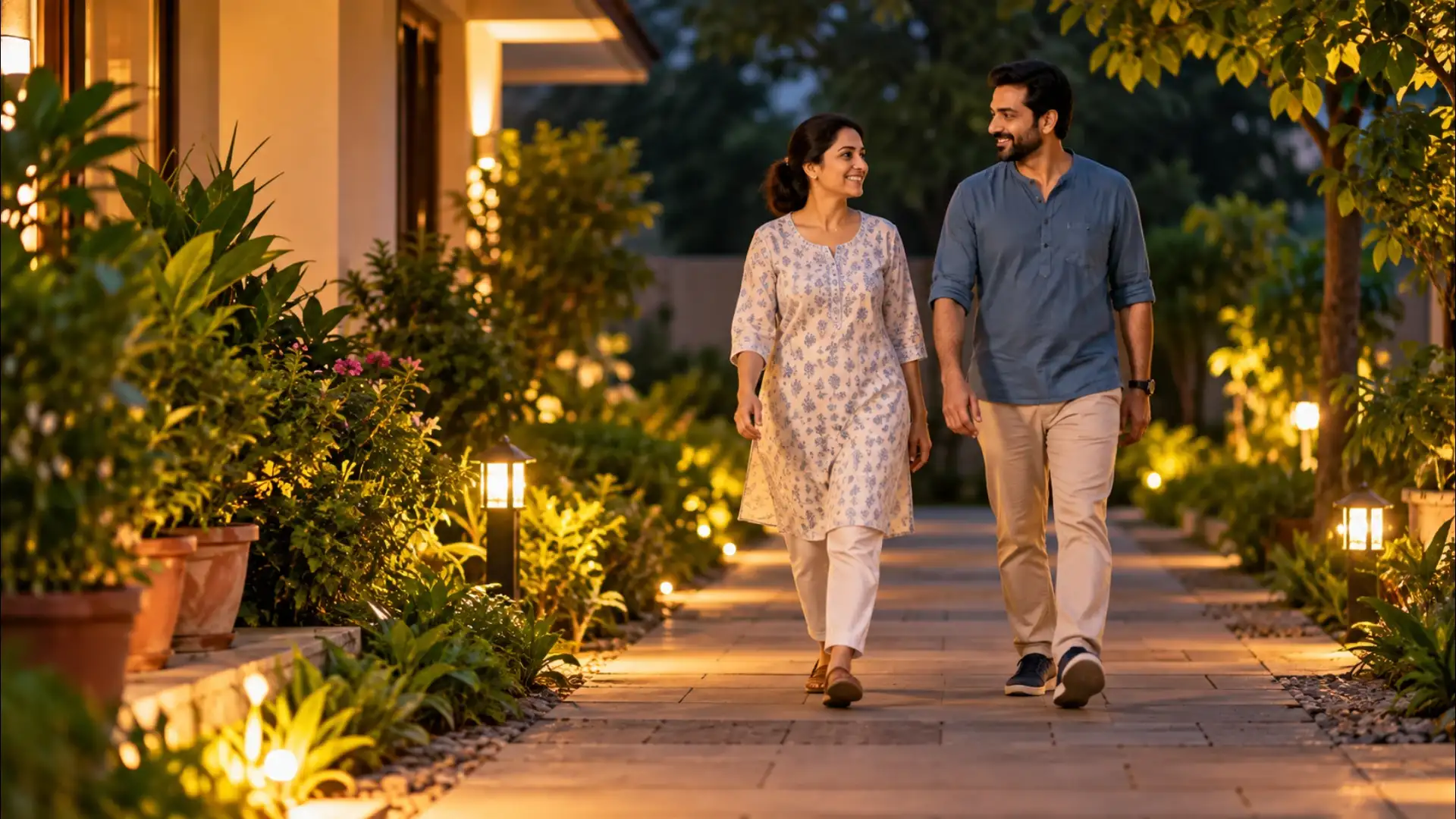

What the Name Actually Means
Shatapavali is not a precise medical term. It is a folk description of a practice: take about a hundred steps after your evening meal. The number was never meant literally. It signals brevity, not a brisk walk for exercise, not a stroll that stretches into the night, but something short enough to count if you wanted to. The Sanskrit root shata appears in other compounds too, always carrying the sense of a round, sufficient number rather than an exact one. In different parts of India the practice carries different names and slightly different forms. In some households it was done barefoot on the ground. In others it was paired with a slow recitation or a moment of quiet. The walk itself was the constant.What Ayurveda Says About It
Ayurvedic texts place digestion at the centre of health, and they describe the period immediately after eating as one that demands care. The classical advice, found in texts like the Ashtanga Hridayam, recommends against lying down immediately after a meal and suggests gentle movement instead. The reasoning is tied to the concept of agni, the digestive fire, which is understood to need the right conditions to process food properly. Shatapavali is framed in this tradition as a way of supporting digestion without straining it. The walk is short by design. Vigorous exercise after eating was considered harmful, it diverts the body's energy and disrupts the digestive process. A gentle hundred steps, by contrast, was thought to help move food through the stomach without interfering with the work already underway. Ayurveda also distinguishes between the qualities of different meals. The evening meal, typically the heaviest of the day in many Indian households, was seen as the one most likely to sit heavily without some encouragement to move.You may also like
- Psychology says people who preserve old newspapers, greeting cards and even cinema tickets may have a deeper emotional connection with the past, finding it difficult to part with objects that hold memories of people, places and moments they never want to forget
- Fig Wasps and Figs: The Pollination Deal That Binds Two Species Forever
- Who is Shri Swami Shashwat Acharya Ji Maharaj? Meet Vrindavan's 19-year-old 'Gen Z Baba' taking social media by storm
- What Happens to a Grassland's Nutrient Cycle Without Large Grazers
- 3 Peter Drucker Questions That Clarify Any Job You Are Unsure About
The Physical Logic Behind the Walk
Set tradition aside for a moment and the walk still makes sense on its own terms. After a meal, the stomach is working to break down food and move it along. Lying down immediately can slow that process and, for some people, encourage acid to travel upward. A short walk keeps the body upright and gently active, which supports the natural movement of the digestive tract. The pace matters. Shatapavali was never a power walk. It was slow, conversational, almost meditative. That pace is exactly what the body can sustain without pulling blood flow away from the gut toward the muscles. The walk does not demand much. It simply keeps things moving. There is also something to be said for what the walk is not. It is not screen time. It is not the immediate collapse into sleep. It is a few minutes of transition between the meal and the rest of the evening, a pause that the body, and perhaps the mind, seems to benefit from.What the Ritual Did for the Household
In joint families and in neighbourhoods where houses opened onto shared lanes, shatapavali was also a social act. Families walked together. Neighbours joined them for the walk. Conversations happened that would not have found a moment otherwise. The walk created a natural interval between dinner and sleep, and in that interval, the day was processed as much as the food. Courtyards in traditional Indian homes were not decorative. They were functional spaces for this kind of movement, sheltered from the street, open to the sky, large enough for a few slow rounds. The architecture assumed the habit. As homes became smaller and streets became louder, the courtyard walk became a terrace walk, then a corridor walk, then, for many families, nothing at all. The habit thinned out with the spaces that had held it.Why It Still Makes Sense
Shatapavali does not require a courtyard or a quiet lane. It requires only a few minutes and the willingness to move before sitting back down. The hundred steps can happen anywhere, around a living room, along a building corridor, on a balcony. The number was always symbolic anyway. What the tradition understood, and what the body still responds to, is that the transition from eating to resting is not instantaneous. The walk is the transition. It is short enough to ask almost nothing of you and long enough to do something quiet and useful in return.





Loving Newspoint? Download the app now
