
Quiet Himalayan Towns Where Mountain Life Still Feels Unhurried

The Himalayas are home to some of India's most famous holiday destinations, but the mountains extend far beyond Shimla, Manali and Mussoorie.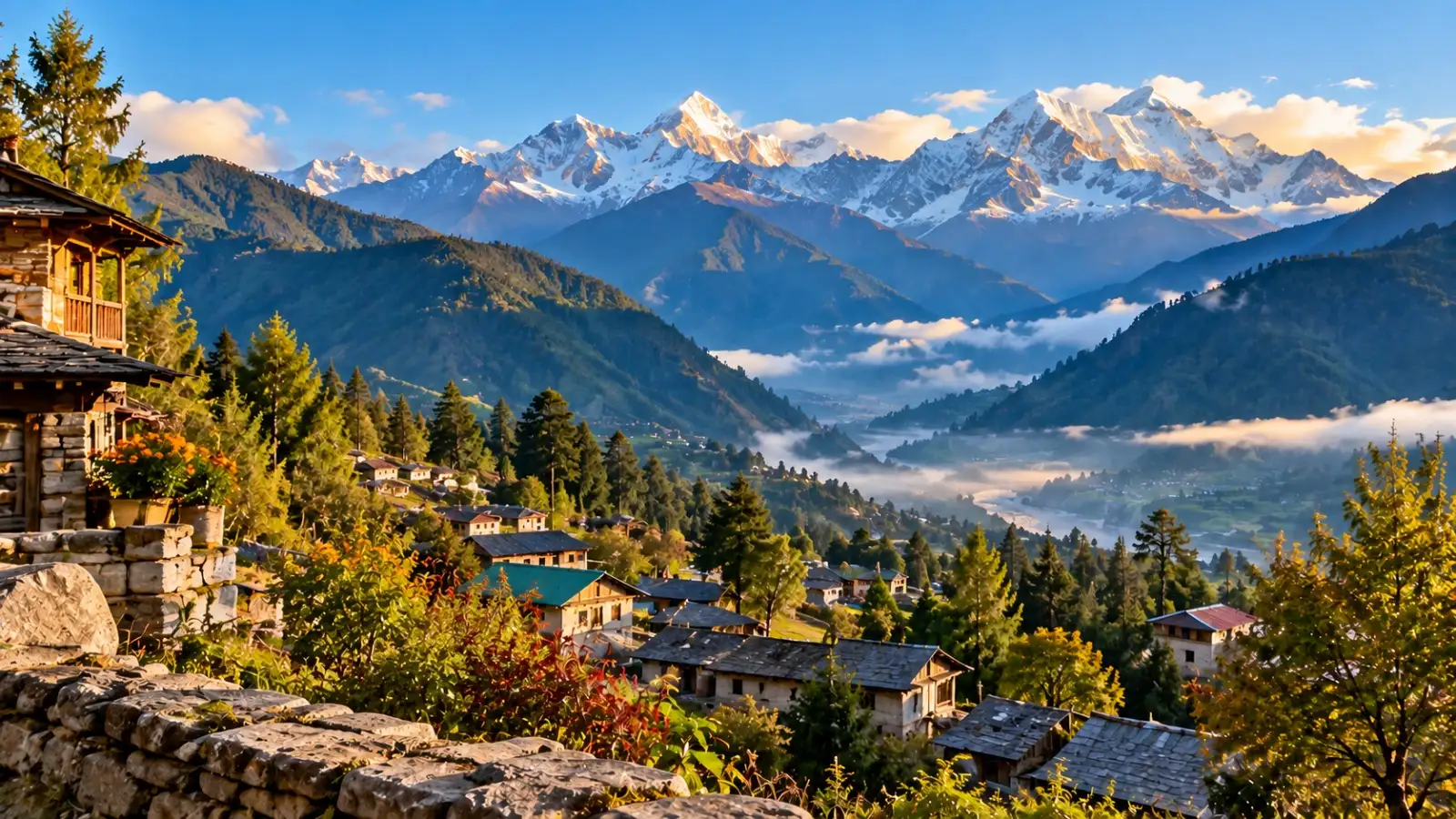
Scattered across Himachal Pradesh and Uttarakhand are smaller towns and villages where forests still dominate the landscape, traditional homes sit alongside mountain roads and daily life moves at a slower pace. Some are beginning to appear on travellers' radar, but they remain considerably quieter than India's best-known hill stations.
These destinations are not necessarily places with no tourists. Instead, they offer a different kind of Himalayan experience, one centred on nature, village life, mountain views and slower travel.
The town is close to Gangotri and has long been connected with pilgrimage routes, but it offers a much calmer atmosphere than larger Himalayan tourist centres. Uttarakhand Tourism describes Harsil as a hidden Himalayan hamlet known for its orchards, traditional houses and surrounding mountain scenery.
A leisurely walk through the village, time beside the river and visits to nearby settlements can make the journey feel more about the landscape than sightseeing.
Harsil is particularly appealing to travellers who want to experience the quieter side of the Garhwal Himalayas.
The destination is also known for forests, tea gardens and walking trails. India's official tourism portal describes it as a peaceful Himalayan hamlet away from the busiest hill-station circuit.
There is little pressure to fill the day with activities here. Watching the mountains change colour around sunrise and sunset, walking through tea plantations or simply spending time in the surrounding villages can be enough.
For travellers looking for a slower Kumaoni experience, Chaukori provides a very different atmosphere from crowded Nainital.
Himachal Pradesh Tourism has specifically highlighted Janjehli as a destination with hidden rural charm under its ‘Nai Raahein Nai Manzilein’ initiative, which aims to bring attention to lesser-known destinations across the state.
The appeal here is the absence of a conventional hill-station atmosphere. Instead of busy shopping streets and large tourist complexes, visitors encounter mountain villages, walking routes and open landscapes.
It is a good option for travellers who want to spend more time outdoors and less time moving between crowded attractions.
Located in Kinnaur, the town is known for views towards the Kinner Kailash range and its traditional atmosphere. Himachal Tourism notes its distinctive temples, Buddhist monastery and mountain setting.
The best way to experience Kalpa is without rushing. Explore the older parts of the settlement, observe traditional architecture and spend time looking across the mountains.
The surrounding Kinnaur landscape adds to the sense that you have travelled deep into the Himalayas.
The town is better known among trekkers and mountain travellers than among conventional holiday crowds. It serves as a base for routes towards areas including the Milam and Ralam glaciers, while the Khalia Top trek provides another popular mountain experience.
Beyond trekking, Munsiyari offers opportunities to explore local culture and mountain communities.
The journey to reach it is part of the experience. By the time travellers arrive, the landscape has already changed dramatically from the plains and larger towns below.
Himachal Tourism describes Churah as a less-travelled and lesser-known valley where rural life, local customs, festivals and temples remain important parts of the landscape.
The region is not designed around conventional tourism. That is precisely what gives it character.
Visitors can explore villages, mountain roads and forested surroundings while experiencing a slower rhythm of life. The area is particularly suitable for travellers who prefer cultural and rural experiences over busy tourist attractions.
The official Incredible India portal describes Kanatal as an offbeat Himalayan stopover, with attractions including the Kodia Jungle, Surkhanda Devi Temple and views around the Tehri region.
A visit can include forest walks, time in the surrounding villages and a trip towards the Tehri reservoir.
Kanatal is becoming more visible among weekend travellers, but it still offers a noticeably slower experience than many of Uttarakhand's heavily visited hill stations.
Its landscape is particularly suited to travellers who prefer walking, fishing, photography and quiet days rather than packed sightseeing schedules.
The surrounding valleys provide opportunities to explore rural Himachal at a slower pace. The destination also works well for travellers interested in simple homestays and local food.
Barot may not have the grand attractions associated with Shimla or Manali, but its natural setting is exactly what makes it appealing.
Located at around 3,662 metres, the village is known for its small lake, Buddhist monastery and high-altitude surroundings. Himachal Tourism identifies Nako as one of Kinnaur's picturesque hamlets, although it has become increasingly known among travellers exploring the region.
The landscape here is drier and more rugged than the heavily forested mountains found elsewhere in Himachal Pradesh.
Nako is therefore ideal for travellers looking for a Himalayan experience that feels closer to the high-altitude landscapes of the Trans-Himalaya.
The surrounding region combines forests, old settlements, temples and mountain scenery. It is particularly interesting for travellers who want to combine nature with local history.
Rather than functioning as a conventional holiday resort, Lohaghat feels more like a mountain town where visitors can slow down and explore the surrounding region at their own pace.
Its location also makes it useful as a base for exploring lesser-known parts of eastern Kumaon.
Some are already gaining popularity, while others are being actively promoted by state tourism authorities. What separates them from major Himalayan hotspots is the scale and pace of tourism.
There are fewer large commercial centres, fewer packed attractions and, in many places, more opportunities to interact with local communities.
The experience is therefore less about completing a sightseeing checklist and more about spending time in the mountains.
Spring can bring flowers and clear mountain views, while summer is generally popular for escaping the heat of the plains. Autumn often offers crisp weather and good visibility. Winter can bring snow to higher destinations but may also create road and access challenges.
Monsoon travel requires additional caution, particularly in Uttarakhand and Himachal Pradesh, where heavy rainfall can affect roads and travel plans.
Before travelling, check local weather, road conditions and accommodation availability rather than relying solely on a fixed seasonal itinerary.
That does not necessarily mean they should be avoided.
Instead, it is a reminder that the character of a destination can change as tourism grows. The small homestay, quiet village road and uncrowded viewpoint that make these places appealing today may eventually become part of a much larger tourism circuit.
For now, these Himalayan towns offer something increasingly valuable, the chance to experience the mountains at a slower pace.
Scattered across Himachal Pradesh and Uttarakhand are smaller towns and villages where forests still dominate the landscape, traditional homes sit alongside mountain roads and daily life moves at a slower pace. Some are beginning to appear on travellers' radar, but they remain considerably quieter than India's best-known hill stations.
These destinations are not necessarily places with no tourists. Instead, they offer a different kind of Himalayan experience, one centred on nature, village life, mountain views and slower travel.
1. Harsil , Uttarakhand
Set along the Bhagirathi River in Uttarkashi district, Harsil is surrounded by mountains, pine forests and apple orchards.The town is close to Gangotri and has long been connected with pilgrimage routes, but it offers a much calmer atmosphere than larger Himalayan tourist centres. Uttarakhand Tourism describes Harsil as a hidden Himalayan hamlet known for its orchards, traditional houses and surrounding mountain scenery.
A leisurely walk through the village, time beside the river and visits to nearby settlements can make the journey feel more about the landscape than sightseeing.
Harsil is particularly appealing to travellers who want to experience the quieter side of the Garhwal Himalayas.
2. Chaukori , Uttarakhand
Chaukori sits in the Kumaon region and offers expansive views of Himalayan peaks, including Panchachuli and Nanda Devi on clear days.The destination is also known for forests, tea gardens and walking trails. India's official tourism portal describes it as a peaceful Himalayan hamlet away from the busiest hill-station circuit.
There is little pressure to fill the day with activities here. Watching the mountains change colour around sunrise and sunset, walking through tea plantations or simply spending time in the surrounding villages can be enough.
For travellers looking for a slower Kumaoni experience, Chaukori provides a very different atmosphere from crowded Nainital.
3. Janjehli, Himachal Pradesh
Hidden in Mandi district, Janjehli is surrounded by forested hills and rural landscapes.Himachal Pradesh Tourism has specifically highlighted Janjehli as a destination with hidden rural charm under its ‘Nai Raahein Nai Manzilein’ initiative, which aims to bring attention to lesser-known destinations across the state.
The appeal here is the absence of a conventional hill-station atmosphere. Instead of busy shopping streets and large tourist complexes, visitors encounter mountain villages, walking routes and open landscapes.
It is a good option for travellers who want to spend more time outdoors and less time moving between crowded attractions.
4. Kalpa, Himachal Pradesh
Kalpa is no longer an unknown destination, but it still retains a quieter character compared with some of Himachal's major tourist centres.Located in Kinnaur, the town is known for views towards the Kinner Kailash range and its traditional atmosphere. Himachal Tourism notes its distinctive temples, Buddhist monastery and mountain setting.
The best way to experience Kalpa is without rushing. Explore the older parts of the settlement, observe traditional architecture and spend time looking across the mountains.
The surrounding Kinnaur landscape adds to the sense that you have travelled deep into the Himalayas.
5. Munsiyari, Uttarakhand
Munsiyari lies in Pithoragarh district at an elevation of around 2,298 metres and is surrounded by the Panchachuli peaks.The town is better known among trekkers and mountain travellers than among conventional holiday crowds. It serves as a base for routes towards areas including the Milam and Ralam glaciers, while the Khalia Top trek provides another popular mountain experience.
Beyond trekking, Munsiyari offers opportunities to explore local culture and mountain communities.
The journey to reach it is part of the experience. By the time travellers arrive, the landscape has already changed dramatically from the plains and larger towns below.
6. Churah Valley, Himachal Pradesh
For travellers who genuinely want to move away from Himachal's mainstream tourist circuit, Churah Valley in Chamba district is worth considering.Himachal Tourism describes Churah as a less-travelled and lesser-known valley where rural life, local customs, festivals and temples remain important parts of the landscape.
The region is not designed around conventional tourism. That is precisely what gives it character.
Visitors can explore villages, mountain roads and forested surroundings while experiencing a slower rhythm of life. The area is particularly suitable for travellers who prefer cultural and rural experiences over busy tourist attractions.
7. Kanatal, Uttarakhand
Kanatal sits away from the better-known crowds of Mussoorie and offers a combination of forests, orchards and mountain scenery.The official Incredible India portal describes Kanatal as an offbeat Himalayan stopover, with attractions including the Kodia Jungle, Surkhanda Devi Temple and views around the Tehri region.
A visit can include forest walks, time in the surrounding villages and a trip towards the Tehri reservoir.
Kanatal is becoming more visible among weekend travellers, but it still offers a noticeably slower experience than many of Uttarakhand's heavily visited hill stations.
8. Barot, Himachal Pradesh
Barot is a small mountain settlement in the Mandi region surrounded by forests and the Uhl River.Its landscape is particularly suited to travellers who prefer walking, fishing, photography and quiet days rather than packed sightseeing schedules.
The surrounding valleys provide opportunities to explore rural Himachal at a slower pace. The destination also works well for travellers interested in simple homestays and local food.
Barot may not have the grand attractions associated with Shimla or Manali, but its natural setting is exactly what makes it appealing.
9. Nako, Himachal Pradesh
High in Kinnaur, Nako offers a dramatically different Himalayan landscape.Located at around 3,662 metres, the village is known for its small lake, Buddhist monastery and high-altitude surroundings. Himachal Tourism identifies Nako as one of Kinnaur's picturesque hamlets, although it has become increasingly known among travellers exploring the region.
The landscape here is drier and more rugged than the heavily forested mountains found elsewhere in Himachal Pradesh.
Nako is therefore ideal for travellers looking for a Himalayan experience that feels closer to the high-altitude landscapes of the Trans-Himalaya.
10. Lohaghat, Uttarakhand
Lohaghat in Champawat district offers a quieter alternative to some of Uttarakhand's more established hill destinations.The surrounding region combines forests, old settlements, temples and mountain scenery. It is particularly interesting for travellers who want to combine nature with local history.
Rather than functioning as a conventional holiday resort, Lohaghat feels more like a mountain town where visitors can slow down and explore the surrounding region at their own pace.
Its location also makes it useful as a base for exploring lesser-known parts of eastern Kumaon.
Why These Himalayan Towns Still Feel Different
The biggest attraction of these places is not necessarily the absence of tourists.Some are already gaining popularity, while others are being actively promoted by state tourism authorities. What separates them from major Himalayan hotspots is the scale and pace of tourism.
There are fewer large commercial centres, fewer packed attractions and, in many places, more opportunities to interact with local communities.
The experience is therefore less about completing a sightseeing checklist and more about spending time in the mountains.
The Best Time to Explore Them Depends on the Destination
The Himalayas change dramatically with the seasons.Spring can bring flowers and clear mountain views, while summer is generally popular for escaping the heat of the plains. Autumn often offers crisp weather and good visibility. Winter can bring snow to higher destinations but may also create road and access challenges.
You may also like
- TOI UP Transformation Dialogues: How eastern UP is building a stronger healthcare future
- Government's major plan for UPI: Subsidies could end once banks start earning revenue from MDR..
- Gold kept at home is now being pledged for profit rather than out of necessity... that is why people are eagerly taking gold loans..
- Beware of apps promising instant cash! Know the truth about APR and data privacy before borrowing..
- “You should not discipline children too much”: Arshad Warsi on one big mistake many parents make while raising their kids
Monsoon travel requires additional caution, particularly in Uttarakhand and Himachal Pradesh, where heavy rainfall can affect roads and travel plans.
Before travelling, check local weather, road conditions and accommodation availability rather than relying solely on a fixed seasonal itinerary.
Go Before You Expect the Mountains to Stay the Same
Places such as Chaukori, Harsil, Janjehli and Munsiyari are increasingly being discovered by travellers searching for alternatives to India's busiest hill stations.That does not necessarily mean they should be avoided.
Instead, it is a reminder that the character of a destination can change as tourism grows. The small homestay, quiet village road and uncrowded viewpoint that make these places appealing today may eventually become part of a much larger tourism circuit.
For now, these Himalayan towns offer something increasingly valuable, the chance to experience the mountains at a slower pace.






Loving Newspoint? Download the app now
