
5 Health Benefits of Pumpkin Seeds Worth Knowing

A handful of pumpkin seeds weighs almost nothing. Roasted and salted, they disappear between meals without ceremony. What most people do not realise is that those same seeds pack more magnesium per gram than most nuts, more zinc than many animal foods by weight, and a fat profile that nutritionists consider genuinely useful rather than incidental.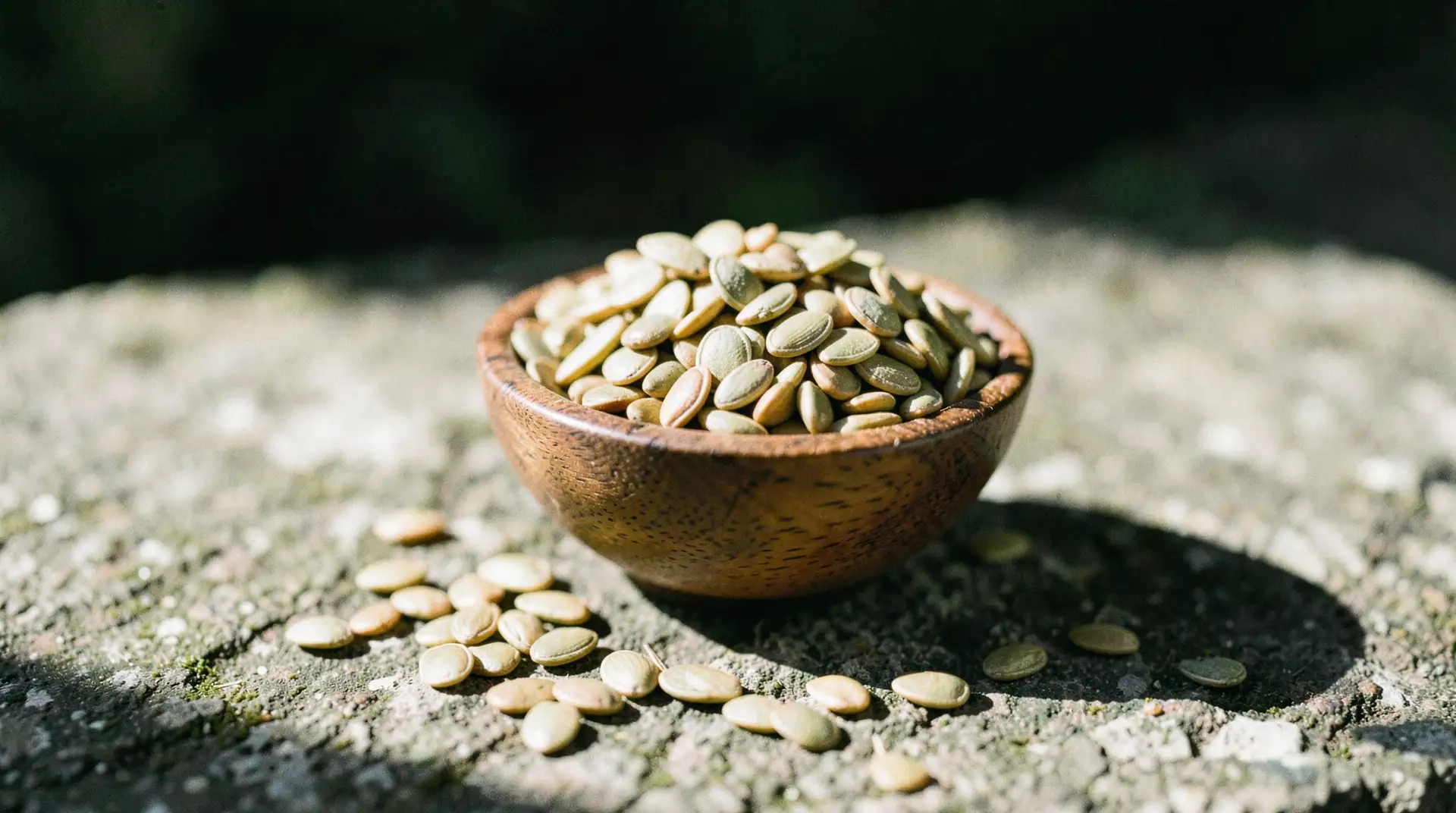
Pumpkin seeds deliver it in a concentrated form. A small daily portion, roughly a palmful, contributes meaningfully to the daily requirement without requiring a supplement or a dietary overhaul. The mechanism is straightforward: the seed's flesh is dense with the mineral, and roasting does not strip it the way boiling vegetables strips water-soluble vitamins.
The zinc in plant foods comes with phytates, compounds that can reduce absorption, so eating the seeds with a source of vitamin C or alongside a fermented food improves how much the body actually takes up. Sprouting the seeds before eating them reduces phytate content further, though plain roasted seeds still contribute usefully.
Eating a small portion in the evening, particularly alongside a carbohydrate, may support the conversion pathway because carbohydrates help tryptophan cross into the brain more efficiently. This is not a sedative effect and it does not work in a single night. What it offers is a consistent dietary input into a system that sleep researchers consider genuinely important for sleep architecture over time.
Pumpkin seed oil, cold-pressed and used as a finishing oil rather than a cooking oil, concentrates these fats and is used in parts of Central Europe as a traditional food with a long track record. The whole seed delivers the same fats alongside fibre and protein, which makes it a more complete food than the oil alone.
Oxidative stress, when free radical production outpaces the body's ability to neutralise them, is linked to cellular ageing and chronic inflammation. Eating a varied diet with multiple antioxidant sources, of which pumpkin seeds are one, supports the body's own defence systems. No single food carries this alone; the seed is a useful piece of a broader pattern.
The five benefits here do not require a new diet or a specialised product. They come from a seed available in most kirana stores and supermarkets, eaten as it is or stirred into dal, sprinkled on curd, or added to a simple trail mix. The nutritional density is already there. The only thing missing, for most people, is the habit.
They Are One of the Richest Plant Sources of Magnesium
Magnesium is involved in over three hundred enzyme reactions in the body, muscle contraction, nerve signalling, blood pressure regulation, and the conversion of food into energy among them. Most Indian diets run low on it, because the mineral is lost during the milling of grains and is absent from most refined foods.Pumpkin seeds deliver it in a concentrated form. A small daily portion, roughly a palmful, contributes meaningfully to the daily requirement without requiring a supplement or a dietary overhaul. The mechanism is straightforward: the seed's flesh is dense with the mineral, and roasting does not strip it the way boiling vegetables strips water-soluble vitamins.
The Zinc Content Supports Immunity and Wound Healing
Zinc is the mineral the immune system runs on. It drives the production and activity of white blood cells, supports the skin's barrier function, and plays a role in how quickly small wounds close. Pumpkin seeds are among the better plant-based sources of zinc available in an ordinary Indian kitchen, better than most legumes and comparable to sesame.The zinc in plant foods comes with phytates, compounds that can reduce absorption, so eating the seeds with a source of vitamin C or alongside a fermented food improves how much the body actually takes up. Sprouting the seeds before eating them reduces phytate content further, though plain roasted seeds still contribute usefully.
Tryptophan in the Seeds Connects to Sleep Quality
Tryptophan is an amino acid the body cannot make on its own. It is the raw material the body uses to produce serotonin, and serotonin is the precursor to melatonin, the hormone that governs the sleep-wake cycle. Pumpkin seeds contain tryptophan in meaningful amounts.Eating a small portion in the evening, particularly alongside a carbohydrate, may support the conversion pathway because carbohydrates help tryptophan cross into the brain more efficiently. This is not a sedative effect and it does not work in a single night. What it offers is a consistent dietary input into a system that sleep researchers consider genuinely important for sleep architecture over time.
The Fat Profile Is Dominated by Unsaturated Fats
Roughly eighty percent of the fat in pumpkin seeds is unsaturated, a mix of oleic acid, the same fat that dominates olive oil, and linoleic acid, an omega-6 fatty acid. The ratio is different from most nuts but the direction is the same: these are fats that do not raise LDL cholesterol the way saturated fats do, and that contribute to the fat-soluble vitamin absorption the body needs.Pumpkin seed oil, cold-pressed and used as a finishing oil rather than a cooking oil, concentrates these fats and is used in parts of Central Europe as a traditional food with a long track record. The whole seed delivers the same fats alongside fibre and protein, which makes it a more complete food than the oil alone.
They Contain Antioxidants That Protect Cells From Oxidative Stress
Pumpkin seeds contain vitamin E and several carotenoids, including lutein and zeaxanthin, the same compounds found in leafy greens and associated with eye health. These act as antioxidants, meaning they neutralise free radicals, the unstable molecules produced during normal metabolism and accelerated by pollution, smoking, and UV exposure.Oxidative stress, when free radical production outpaces the body's ability to neutralise them, is linked to cellular ageing and chronic inflammation. Eating a varied diet with multiple antioxidant sources, of which pumpkin seeds are one, supports the body's own defence systems. No single food carries this alone; the seed is a useful piece of a broader pattern.
The five benefits here do not require a new diet or a specialised product. They come from a seed available in most kirana stores and supermarkets, eaten as it is or stirred into dal, sprinkled on curd, or added to a simple trail mix. The nutritional density is already there. The only thing missing, for most people, is the habit.
Next Story