
Why Some Himalayan Villages Are Empty in Winter But Lively in Summer

India's Himalayan villages do not all follow the same calendar.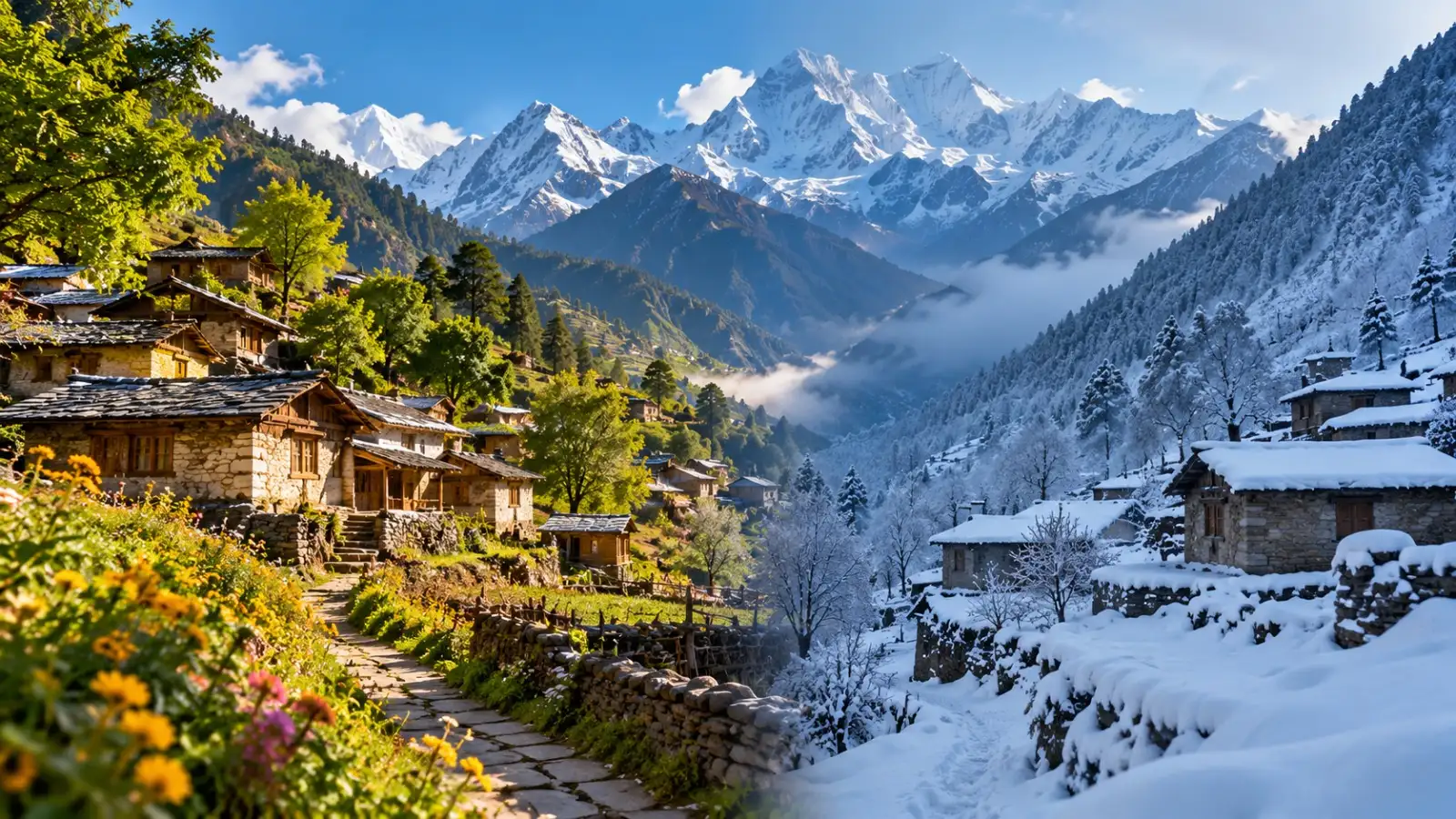
Some settlements that appear lively during the warmer months can become remarkably quiet once winter arrives. Houses may remain locked, village lanes can fall silent and even familiar mountain trails may see very little activity.
This does not necessarily mean that these villages are abandoned.
In many high-altitude parts of the Himalayas, seasonal movement has been part of community life for generations. People have traditionally moved between higher summer settlements and lower winter locations depending on snowfall, temperatures, grazing conditions, agriculture and access to essential services. Official Uttarakhand documents still record seasonal movement among communities in high Himalayan areas.
The result is a fascinating seasonal rhythm in which the same village can have two very different personalities.
As elevation increases, temperatures fall and winters become considerably harsher. Snow can block roads, freeze water sources and make farming or livestock activities difficult.
In Lahaul, for example, Himachal Pradesh Tourism notes that heavy snow can cut off road connectivity for several months, while winter temperatures can fall dramatically below summer levels.
For residents of very high settlements, staying through such conditions may historically have been impractical.
Moving to a lower settlement during the coldest months was therefore not simply a lifestyle choice. It was a way of adapting to the mountain environment.
Higher valleys become accessible again. Pastures turn green, agricultural activity resumes and roads gradually reopen.
This is one reason some Himalayan villages suddenly appear much more active during late spring and summer.
The Uttarakhand Climate Responsive document describes traditional seasonal movement among Bhotiyas , with people moving to high-altitude villages and pastures during roughly May to October before returning to lower areas for winter.
In some communities, this seasonal movement is closely connected with livestock.
Summer provides access to higher grazing areas, while winter pushes people and animals towards lower elevations where conditions are less severe.
Farmers have to make the most of the months when temperatures and soil conditions allow crops to grow.
The Uttarakhand Tribal Welfare Department notes that Bhotiyas traditionally grow crops such as barley, buckwheat and potatoes during the summer months.
This creates a natural seasonal cycle.
Summer is the period for cultivation, livestock movement, local trade and other activities that depend on accessible high-altitude terrain.
Winter, by contrast, can become a period of retreat to lower areas.
A government publication on traditional practices in Uttarakhand records examples of communities moving between high and lower settlements during winter. It notes that residents of Bagori in Uttarkashi, for example, traditionally move towards Dunda during winter to escape the extreme cold around the Gangotri region.
Historically, seasonal movement could involve entire household economies rather than simply individuals travelling for work.
People moved with animals, agricultural activities, trade goods and household possessions.
In some Himalayan communities, this created a network of summer and winter settlements connected by seasonal routes.
High-altitude meadows become useful when snow melts and vegetation returns. During winter, those same areas can become inaccessible.
A study hosted by the Ministry of Tribal Affairs describes similar seasonal movements among Himalayan pastoral communities. Bakarwal and Gaddi groups traditionally move towards higher grazing areas during warmer months and descend to lower regions as winter approaches.
The pattern is sometimes described as transhumance, meaning the seasonal movement of people and livestock between different elevations.
It is an old adaptation to mountain geography.
The situation varies enormously according to elevation, infrastructure, road access and the community involved.
Some settlements remain inhabited throughout the year. Others may have only a small number of residents during the harshest months. In still others, traditional seasonal migration has declined as people have settled permanently in lower towns.
Modern roads, schools, hospitals, government services and employment opportunities have changed the old pattern considerably.
Uttarakhand's official material notes that some communities that once moved seasonally are now more settled, even though seasonal livestock movement continues in certain areas.
So the quiet winter appearance of a village can have several explanations.
Employment has become an equally important factor.
Young people may move to towns or cities for education, government employment, private-sector jobs or other opportunities. Some families may maintain a connection with their ancestral village while spending most of the year elsewhere.
This creates a second kind of seasonal emptiness.
A village may have fewer residents in winter not only because of snow, but because younger generations have moved away permanently or semi-permanently.
This is one reason the demographic story of Himalayan villages is more complicated than a simple summer-to-winter migration cycle.
The warmer months are generally more accessible for travelling through many Himalayan regions. Roads reopen, trekking routes become usable and accommodation businesses can operate more consistently.
Himachal Pradesh Tourism describes summer as a major period for visiting the state's mountains and notes the popularity of outdoor activities during this season.
Uttarakhand has also historically experienced a strong seasonal tourism pattern. A Prime Minister's Office release on winter tourism noted that tourist numbers traditionally rise sharply during March, April, May and June before falling substantially later in the year.
That means a village can appear especially lively in summer because both residents and visitors are present.
The same lanes that were filled with people during summer can become quiet. Shops may close temporarily. Fields lie dormant beneath cold weather, while snow can cover rooftops, paths and surrounding slopes.
For outsiders, this silence can look mysterious.
For local communities, however, it can simply be another part of the annual mountain calendar.
The village has not necessarily disappeared. Its residents may simply be spending the season somewhere more suitable.
Some seasonal settlements are becoming year-round communities because roads and services have improved. Elsewhere, migration away from remote villages has contributed to depopulation.
At the same time, governments are trying to encourage tourism and economic activity in remote areas.
The winter tourism programme at Harsil in Uttarakhand, for instance, has explicitly focused on reducing the strong seasonal nature of tourism and encouraging visitors during winter as well.
This could gradually change the way some mountain settlements experience winter.
A high-altitude settlement can be busy with farming, livestock, festivals, trade and tourism during the warmer months and almost silent after winter arrives.
That rhythm is shaped by geography first, but also by centuries of adaptation.
Snow closes roads. Meadows disappear beneath winter conditions. Crops stop growing. Livestock needs to move. Families follow work and education opportunities.
Then, as the mountains open again, people return.
The village wakes up once more.
For travellers, understanding this seasonal cycle is important. A place that looks vibrant in June may have very limited services in January. Roads, accommodation, weather and local accessibility can change dramatically with the season.
The silence of a Himalayan winter village, therefore, is not necessarily a sign that life has vanished. In many places, it is simply life following a much older mountain timetable.
Some settlements that appear lively during the warmer months can become remarkably quiet once winter arrives. Houses may remain locked, village lanes can fall silent and even familiar mountain trails may see very little activity.
This does not necessarily mean that these villages are abandoned.
In many high-altitude parts of the Himalayas, seasonal movement has been part of community life for generations. People have traditionally moved between higher summer settlements and lower winter locations depending on snowfall, temperatures, grazing conditions, agriculture and access to essential services. Official Uttarakhand documents still record seasonal movement among communities in high Himalayan areas.
The result is a fascinating seasonal rhythm in which the same village can have two very different personalities.
1. The mountains decide when people can stay
Altitude has a major influence on everyday life in the Himalayas.As elevation increases, temperatures fall and winters become considerably harsher. Snow can block roads, freeze water sources and make farming or livestock activities difficult.
In Lahaul, for example, Himachal Pradesh Tourism notes that heavy snow can cut off road connectivity for several months, while winter temperatures can fall dramatically below summer levels.
For residents of very high settlements, staying through such conditions may historically have been impractical.
Moving to a lower settlement during the coldest months was therefore not simply a lifestyle choice. It was a way of adapting to the mountain environment.
2. Summer brings people back uphill
Once the snow begins to retreat, the equation changes.Higher valleys become accessible again. Pastures turn green, agricultural activity resumes and roads gradually reopen.
This is one reason some Himalayan villages suddenly appear much more active during late spring and summer.
The Uttarakhand Climate Responsive document describes traditional seasonal movement among Bhotiyas , with people moving to high-altitude villages and pastures during roughly May to October before returning to lower areas for winter.
In some communities, this seasonal movement is closely connected with livestock.
Summer provides access to higher grazing areas, while winter pushes people and animals towards lower elevations where conditions are less severe.
3. It is also connected to farming
Agriculture in high Himalayan settlements follows a short growing season.Farmers have to make the most of the months when temperatures and soil conditions allow crops to grow.
The Uttarakhand Tribal Welfare Department notes that Bhotiyas traditionally grow crops such as barley, buckwheat and potatoes during the summer months.
This creates a natural seasonal cycle.
Summer is the period for cultivation, livestock movement, local trade and other activities that depend on accessible high-altitude terrain.
Winter, by contrast, can become a period of retreat to lower areas.
4. Some villages were built around seasonal movement
The idea of people having more than one settlement may sound unusual to visitors, but it has deep roots in parts of the Himalayas.A government publication on traditional practices in Uttarakhand records examples of communities moving between high and lower settlements during winter. It notes that residents of Bagori in Uttarkashi, for example, traditionally move towards Dunda during winter to escape the extreme cold around the Gangotri region.
Historically, seasonal movement could involve entire household economies rather than simply individuals travelling for work.
People moved with animals, agricultural activities, trade goods and household possessions.
In some Himalayan communities, this created a network of summer and winter settlements connected by seasonal routes.
5. Livestock plays a major role
For pastoral communities, the movement is closely tied to the availability of grass.High-altitude meadows become useful when snow melts and vegetation returns. During winter, those same areas can become inaccessible.
A study hosted by the Ministry of Tribal Affairs describes similar seasonal movements among Himalayan pastoral communities. Bakarwal and Gaddi groups traditionally move towards higher grazing areas during warmer months and descend to lower regions as winter approaches.
The pattern is sometimes described as transhumance, meaning the seasonal movement of people and livestock between different elevations.
It is an old adaptation to mountain geography.
6. Winter does not always mean complete abandonment
It is important not to assume that every Himalayan village becomes completely empty.The situation varies enormously according to elevation, infrastructure, road access and the community involved.
Some settlements remain inhabited throughout the year. Others may have only a small number of residents during the harshest months. In still others, traditional seasonal migration has declined as people have settled permanently in lower towns.
Modern roads, schools, hospitals, government services and employment opportunities have changed the old pattern considerably.
Uttarakhand's official material notes that some communities that once moved seasonally are now more settled, even though seasonal livestock movement continues in certain areas.
So the quiet winter appearance of a village can have several explanations.
7. Modern jobs have changed the pattern
Seasonal migration today is not always about surviving the weather.Employment has become an equally important factor.
Young people may move to towns or cities for education, government employment, private-sector jobs or other opportunities. Some families may maintain a connection with their ancestral village while spending most of the year elsewhere.
This creates a second kind of seasonal emptiness.
A village may have fewer residents in winter not only because of snow, but because younger generations have moved away permanently or semi-permanently.
This is one reason the demographic story of Himalayan villages is more complicated than a simple summer-to-winter migration cycle.
8. Summer also brings tourism
Tourism adds another layer to the seasonal transformation.The warmer months are generally more accessible for travelling through many Himalayan regions. Roads reopen, trekking routes become usable and accommodation businesses can operate more consistently.
Himachal Pradesh Tourism describes summer as a major period for visiting the state's mountains and notes the popularity of outdoor activities during this season.
Uttarakhand has also historically experienced a strong seasonal tourism pattern. A Prime Minister's Office release on winter tourism noted that tourist numbers traditionally rise sharply during March, April, May and June before falling substantially later in the year.
That means a village can appear especially lively in summer because both residents and visitors are present.
9. Winter can create a completely different landscape
When the last visitors leave and many residents move downhill, the character of a high-altitude village changes.The same lanes that were filled with people during summer can become quiet. Shops may close temporarily. Fields lie dormant beneath cold weather, while snow can cover rooftops, paths and surrounding slopes.
For outsiders, this silence can look mysterious.
For local communities, however, it can simply be another part of the annual mountain calendar.
The village has not necessarily disappeared. Its residents may simply be spending the season somewhere more suitable.
10. The cycle is slowly changing
Climate change, improved connectivity, tourism, education and changing employment patterns are all influencing traditional Himalayan lifestyles.Some seasonal settlements are becoming year-round communities because roads and services have improved. Elsewhere, migration away from remote villages has contributed to depopulation.
At the same time, governments are trying to encourage tourism and economic activity in remote areas.
The winter tourism programme at Harsil in Uttarakhand, for instance, has explicitly focused on reducing the strong seasonal nature of tourism and encouraging visitors during winter as well.
This could gradually change the way some mountain settlements experience winter.
A village with two seasonal identities
The most interesting thing about these Himalayan villages is that their apparent emptiness does not tell the whole story.A high-altitude settlement can be busy with farming, livestock, festivals, trade and tourism during the warmer months and almost silent after winter arrives.
That rhythm is shaped by geography first, but also by centuries of adaptation.
Snow closes roads. Meadows disappear beneath winter conditions. Crops stop growing. Livestock needs to move. Families follow work and education opportunities.
Then, as the mountains open again, people return.
The village wakes up once more.
For travellers, understanding this seasonal cycle is important. A place that looks vibrant in June may have very limited services in January. Roads, accommodation, weather and local accessibility can change dramatically with the season.
The silence of a Himalayan winter village, therefore, is not necessarily a sign that life has vanished. In many places, it is simply life following a much older mountain timetable.
Next Story