
10 Hidden Places in Delhi That Most Visitors Never See

Delhi is usually introduced through its grand monuments, crowded markets and famous historical sites. The Red Fort, India Gate, Qutub Minar and Humayun's Tomb are obvious choices for a first visit, but they only reveal one part of the capital.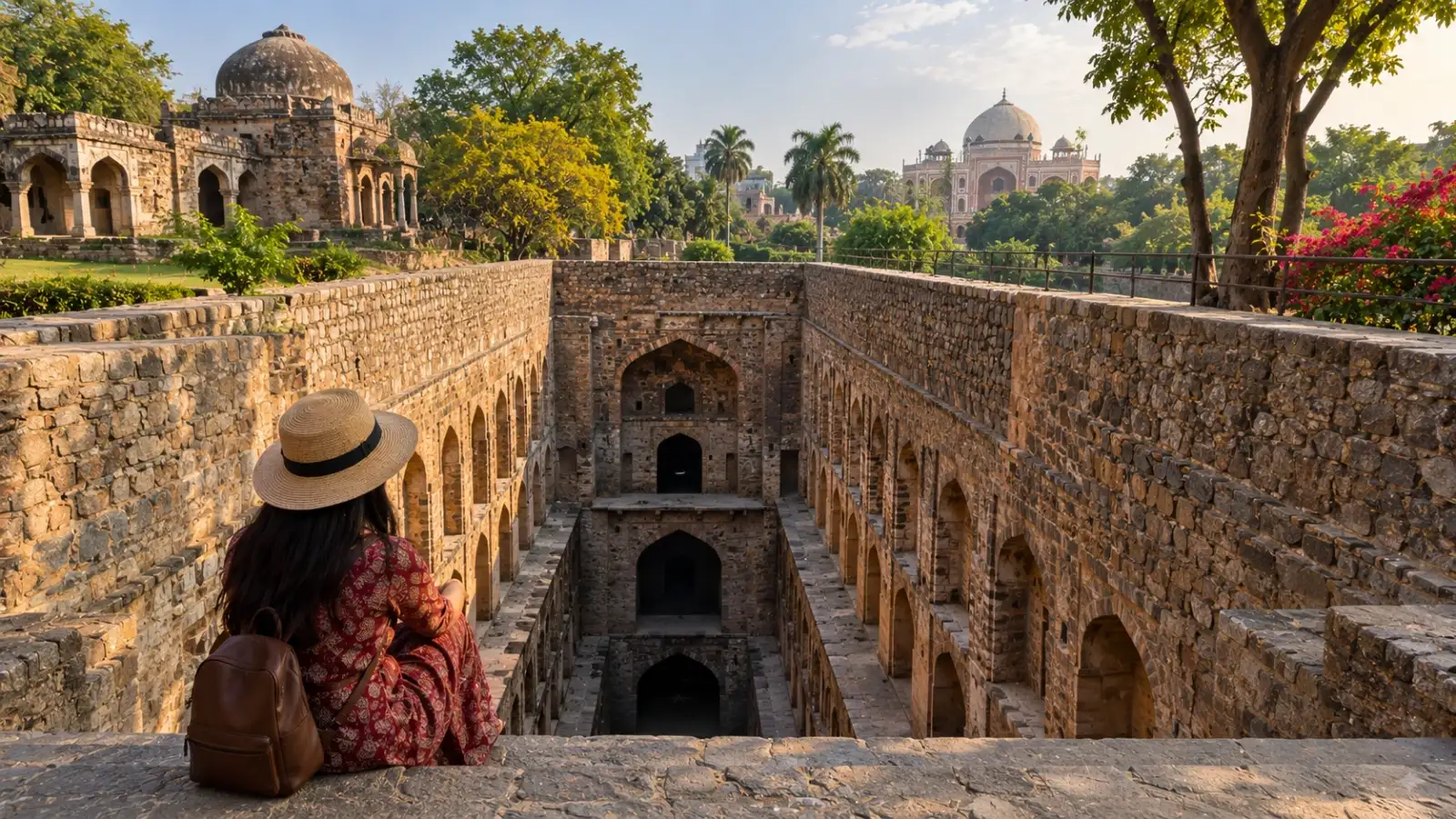
Beyond these well-known attractions is another Delhi filled with quiet tombs, old villages, historic neighbourhoods, gardens, stepwells and unusual architectural details. Some places are hidden behind busy roads, while others sit in neighbourhoods that visitors often pass without realising what lies nearby.
Exploring these lesser known places in Delhi can make a trip feel slower and more personal. You may find yourself walking through a centuries-old settlement in the morning and sitting beside a peaceful lake or garden later in the day.
If you want to discover a different side of Delhi, these places are worth adding to your itinerary.
The site includes tombs, mosques, stepwells and other remains from different periods of Delhi's history. One of its best-known structures is Jamali Kamali, associated with the 16th century.
What makes the area interesting is the way historic buildings sit among trees and pathways rather than being separated from the landscape. You can spend time walking between structures instead of simply arriving at one monument, taking a photograph and leaving.
The park is particularly enjoyable when you want a break from the noise and traffic of central Delhi.
Its exact origins are uncertain, although the present structure is generally associated with the medieval period and was rebuilt during the Tughlaq-era period.
The contrast between the old stone architecture and the modern buildings around it is what makes the place special. From the busy streets outside, it is easy to forget that such a distinctive historic space is nearby.
A short visit is enough to see the structure, but taking a moment to study its arches and repeating steps reveals the craftsmanship behind it.
It sits close to Humayun's Tomb, making it easy to combine the two during the same outing.
The nursery is especially appealing to people who enjoy gardens and architecture. Historic structures are surrounded by greenery rather than standing alone, creating a peaceful environment for walking.
Early morning is a good time to explore, particularly if you want to enjoy the gardens before the heat and crowds build up.
The historic complex overlooks a large water tank and includes the remains of buildings from the Delhi Sultanate period. The combination of old stone structures, greenery and the urban neighbourhood around them makes it unlike many other historic sites in the capital.
Rather than visiting only for the cafés, take time to explore the older section and walk around the reservoir. It offers an interesting glimpse of how Delhi's historic architecture has become part of a modern neighbourhood.
The woodland provides a place to walk away from busy roads and dense development. It is home to birds and other wildlife, making it particularly appealing to people who enjoy nature.
The landscape is not a formal garden with neatly arranged flower beds. Instead, its more natural character gives visitors a different view of Delhi.
Go during daylight hours, stay on suitable paths and avoid isolated areas, particularly if you are unfamiliar with the surroundings.
The area is associated with Delhi's Tibetan community and provides a glimpse of a cultural side of the capital that many visitors miss.
Its narrow lanes are filled with small eateries, bakeries and shops selling Tibetan-inspired goods. It is a good place to explore on foot and try something different from the usual Delhi food experience.
Because the lanes can be narrow and busy, take your time rather than treating it as a quick sightseeing stop.
The neighbourhood offers a different kind of heritage experience because historic buildings exist alongside homes, shops and everyday community life.
Visitors should dress respectfully and be mindful when exploring religious spaces. A guided heritage walk can also be useful because the area's history is complex and many of its stories are not obvious from the architecture alone.
It does not have the monumental grandeur of Delhi's famous historical sites, but that is precisely why it can be appealing. It gives visitors a chance to experience a recreational side of the city rather than another major tourist attraction.
It is best visited during comfortable weather when you can take a leisurely walk around the area.
It represents another side of Delhi that has little to do with Mughal monuments or government buildings. The lane has developed into a creative neighbourhood where visitors can stop for food, coffee and local design.
It is particularly suitable for travellers who want to explore contemporary Delhi. The area is small, so it can easily be combined with other attractions in south Delhi.
Unlike some of Delhi's more polished monuments, Tughlaqabad has a rugged atmosphere. Its enormous walls and broken sections provide a sense of the scale of the medieval settlement.
The site is particularly interesting for visitors who enjoy photography and architecture. Allow enough time to explore because the ruins extend over a considerable area.
The city has been built and rebuilt over many centuries, leaving different periods layered across its landscape. Sometimes the most interesting discovery is not a famous monument but the way an old structure exists beside modern Delhi.
If you have already seen the capital's biggest attractions, these quieter places can give your next visit a completely different character.
Wear comfortable footwear because several of these places involve uneven paths and considerable walking. Carry water, particularly when visiting larger sites such as Tughlaqabad Fort.
For religious and community spaces, dress respectfully and follow local rules. It is also worth checking opening arrangements before visiting smaller heritage sites, as access can vary.
Most importantly, avoid trying to see everything in one day. Pick a few places in the same part of the city and explore them slowly.
The quieter archaeological sites, green spaces, historic neighbourhoods and local communities reveal a capital that is more varied than its standard tourist itinerary suggests.
So, on your next Delhi visit, leave some room for places that may not appear on every travel list. You might discover an old stepwell behind a busy street, a peaceful garden near a major monument or a historic neighbourhood where the past and present continue to exist side by side.
Beyond these well-known attractions is another Delhi filled with quiet tombs, old villages, historic neighbourhoods, gardens, stepwells and unusual architectural details. Some places are hidden behind busy roads, while others sit in neighbourhoods that visitors often pass without realising what lies nearby.
Exploring these lesser known places in Delhi can make a trip feel slower and more personal. You may find yourself walking through a centuries-old settlement in the morning and sitting beside a peaceful lake or garden later in the day.
If you want to discover a different side of Delhi, these places are worth adding to your itinerary.
1. Mehrauli Archaeological Park: Delhi's Layers of History
Mehrauli is one of the best areas to explore if you want to see Delhi beyond its most famous monuments. The archaeological park contains numerous historic structures spread across a large green area.The site includes tombs, mosques, stepwells and other remains from different periods of Delhi's history. One of its best-known structures is Jamali Kamali, associated with the 16th century.
What makes the area interesting is the way historic buildings sit among trees and pathways rather than being separated from the landscape. You can spend time walking between structures instead of simply arriving at one monument, taking a photograph and leaving.
The park is particularly enjoyable when you want a break from the noise and traffic of central Delhi.
2. Agrasen Ki Baoli: A Stepwell Hidden in the City
Agrasen Ki Baoli is one of Delhi's most unusual historic structures. Located near Connaught Place, the stepwell descends through a series of stone steps surrounded by tall walls.Its exact origins are uncertain, although the present structure is generally associated with the medieval period and was rebuilt during the Tughlaq-era period.
The contrast between the old stone architecture and the modern buildings around it is what makes the place special. From the busy streets outside, it is easy to forget that such a distinctive historic space is nearby.
A short visit is enough to see the structure, but taking a moment to study its arches and repeating steps reveals the craftsmanship behind it.
3. Sunder Nursery: A Green Escape Near Historic Monuments
Sunder Nursery offers a very different experience from the crowded streets surrounding many Delhi attractions. This large heritage park combines landscaped gardens, water features, native plants and historic monuments.It sits close to Humayun's Tomb, making it easy to combine the two during the same outing.
The nursery is especially appealing to people who enjoy gardens and architecture. Historic structures are surrounded by greenery rather than standing alone, creating a peaceful environment for walking.
Early morning is a good time to explore, particularly if you want to enjoy the gardens before the heat and crowds build up.
4. Hauz Khas Village: History Beside an Urban Neighbourhood
Hauz Khas is often associated with cafés, restaurants, shops and a youthful atmosphere, but the area also contains important medieval remains.The historic complex overlooks a large water tank and includes the remains of buildings from the Delhi Sultanate period. The combination of old stone structures, greenery and the urban neighbourhood around them makes it unlike many other historic sites in the capital.
Rather than visiting only for the cafés, take time to explore the older section and walk around the reservoir. It offers an interesting glimpse of how Delhi's historic architecture has become part of a modern neighbourhood.
5. Sanjay Van: A Forest in the Middle of Delhi
Delhi has more green spaces than many first-time visitors expect, and Sanjay Van is one of the city's larger urban forest areas.The woodland provides a place to walk away from busy roads and dense development. It is home to birds and other wildlife, making it particularly appealing to people who enjoy nature.
The landscape is not a formal garden with neatly arranged flower beds. Instead, its more natural character gives visitors a different view of Delhi.
Go during daylight hours, stay on suitable paths and avoid isolated areas, particularly if you are unfamiliar with the surroundings.
6. Majnu Ka Tilla: A Small Neighbourhood With a Distinct Character
Majnu Ka Tilla has become popular for its Tibetan restaurants, cafés and shops, but the neighbourhood has a history that goes beyond its current food and shopping scene.The area is associated with Delhi's Tibetan community and provides a glimpse of a cultural side of the capital that many visitors miss.
Its narrow lanes are filled with small eateries, bakeries and shops selling Tibetan-inspired goods. It is a good place to explore on foot and try something different from the usual Delhi food experience.
Because the lanes can be narrow and busy, take your time rather than treating it as a quick sightseeing stop.
7. Nizamuddin Basti: History and Everyday Life
The Nizamuddin area is one of Delhi's most atmospheric historic neighbourhoods. It is closely associated with the Sufi tradition and contains important monuments connected with Hazrat Nizamuddin Auliya and other historic figures.The neighbourhood offers a different kind of heritage experience because historic buildings exist alongside homes, shops and everyday community life.
Visitors should dress respectfully and be mindful when exploring religious spaces. A guided heritage walk can also be useful because the area's history is complex and many of its stories are not obvious from the architecture alone.
8. Sanjay Lake: A Quieter Side of East Delhi
Sanjay Lake provides a more relaxed outdoor experience in East Delhi. The artificial lake and surrounding green areas offer space for walking and spending time outdoors.It does not have the monumental grandeur of Delhi's famous historical sites, but that is precisely why it can be appealing. It gives visitors a chance to experience a recreational side of the city rather than another major tourist attraction.
It is best visited during comfortable weather when you can take a leisurely walk around the area.
9. Champa Gali: Creative Delhi in a Narrow Lane
Champa Gali in Saket is a compact lane known for independent cafés, studios, design spaces and small businesses.It represents another side of Delhi that has little to do with Mughal monuments or government buildings. The lane has developed into a creative neighbourhood where visitors can stop for food, coffee and local design.
It is particularly suitable for travellers who want to explore contemporary Delhi. The area is small, so it can easily be combined with other attractions in south Delhi.
10. Tughlaqabad Fort: A Dramatic Ruin Away From the Main Tourist Route
Tughlaqabad Fort is one of Delhi's most striking historical ruins. Built in the 14th century under Ghiyas-ud-din Tughlaq, the fortified city covers a large area and contains massive stone walls and ruined structures.Unlike some of Delhi's more polished monuments, Tughlaqabad has a rugged atmosphere. Its enormous walls and broken sections provide a sense of the scale of the medieval settlement.
The site is particularly interesting for visitors who enjoy photography and architecture. Allow enough time to explore because the ruins extend over a considerable area.
You may also like
- Jennifer Garner's garden isn't just for show: The vegetables, herbs, and hands-on hobby that have become part of the actor's life
- Kendall Jenner turned heads in the simplest golden dress at Venice Film Festival
- Clicking or Popping Hips During Pregnancy: Causes & Tips
- Create a Resume Using AI and Succeed in Job Interviews
- ATM Rules Changed: Public sector bank reduces free transaction limit; check new charges before withdrawing cash..
Exploring Delhi Beyond the Famous Landmarks
One of the best things about exploring lesser known places in Delhi is the variety. You can move from a medieval stepwell to a modern creative neighbourhood, then from a historic Sufi district to an urban forest.The city has been built and rebuilt over many centuries, leaving different periods layered across its landscape. Sometimes the most interesting discovery is not a famous monument but the way an old structure exists beside modern Delhi.
If you have already seen the capital's biggest attractions, these quieter places can give your next visit a completely different character.
Tips for Exploring Lesser Known Delhi
Delhi can be hot for much of the year, so plan outdoor visits for early morning or late afternoon when possible. Winter generally provides more comfortable conditions for walking, although popular sites can become busier during the cooler months.Wear comfortable footwear because several of these places involve uneven paths and considerable walking. Carry water, particularly when visiting larger sites such as Tughlaqabad Fort.
For religious and community spaces, dress respectfully and follow local rules. It is also worth checking opening arrangements before visiting smaller heritage sites, as access can vary.
Most importantly, avoid trying to see everything in one day. Pick a few places in the same part of the city and explore them slowly.
A More Personal Delhi
Delhi is a city that rewards curiosity. Its best-known monuments are undeniably impressive, but they are only part of the story.The quieter archaeological sites, green spaces, historic neighbourhoods and local communities reveal a capital that is more varied than its standard tourist itinerary suggests.
So, on your next Delhi visit, leave some room for places that may not appear on every travel list. You might discover an old stepwell behind a busy street, a peaceful garden near a major monument or a historic neighbourhood where the past and present continue to exist side by side.






Loving Newspoint? Download the app now
