
10 Indian Foods That Taste Completely Different When Cooked on a Wood Fire

Wood fire cooking has been part of Indian food traditions for generations. Before modern gas and electric stoves became common, many meals were prepared over firewood, charcoal or traditional clay stoves.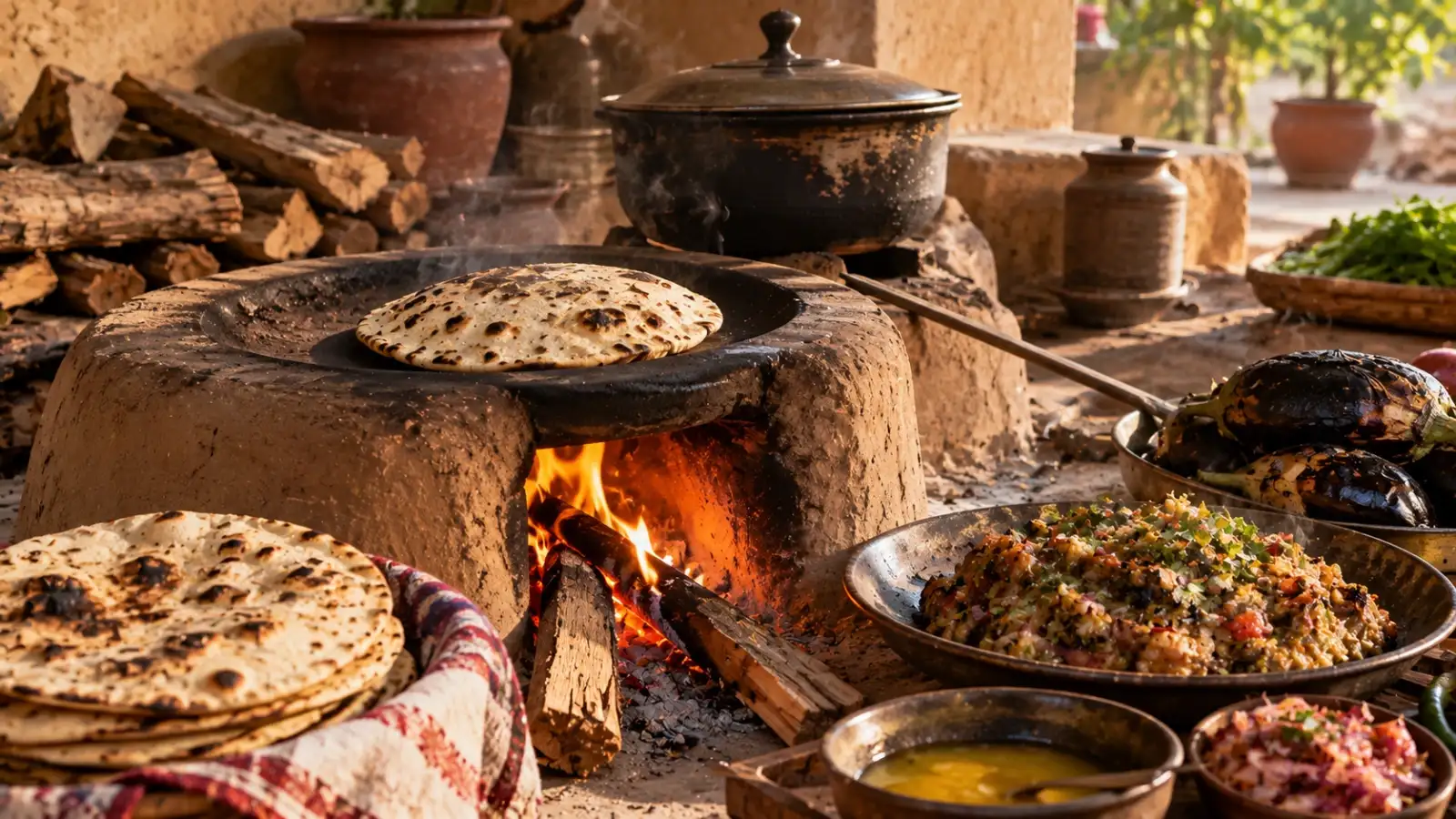
Cooking over wood does more than simply provide heat. The flames, smoke and uneven temperatures can add roasted aromas and a deeper flavour to familiar dishes.
From breads and vegetables to slow cooked curries, several Indian foods can taste noticeably different when prepared over a wood fire.
The intense heat cooks the bread quickly, while the hot walls create charred patches across its surface. When a wood fire is used to heat the cooking space, the bread can also pick up a subtle smoky aroma.
It is especially delicious with dal, vegetable curries or rich gravies.
Instead of cooking the aubergine in a pan, it can be placed directly over a fire until the skin becomes charred and the inside turns soft. The smoky flesh is then mixed with onions, tomatoes, chillies and spices.
That charred flavour gives the finished dish a depth that is difficult to reproduce using ordinary boiling or steaming.
When prepared slowly in a traditional cooking environment, the greens can develop a deeper flavour. Cooking in a heavy pot over a wood fire can also introduce subtle roasted notes.
Served with makki di roti, it makes a hearty meal, particularly during cooler weather.
When lentils are simmered gently for a longer period, their flavours become richer and more rounded. A final tempering of ghee, garlic, cumin and chillies adds another layer of aroma.
The faint smokiness from a wood fire can make a simple bowl of dal taste especially comforting.
The dough is shaped into balls and cooked until the outside becomes firm and browned while the inside remains soft. When prepared over traditional fire, the crust can take on a roasted aroma.
Baati is commonly served with dal and generous amounts of ghee.
Cooking it over a traditional fire can create dark toasted spots and a pleasant roasted aroma. The direct heat also gives the surface a slightly crisp texture while keeping the inside relatively soft.
It is commonly paired with sarson ka saag, butter or ghee.
Traditionally, the dough balls are cooked over a fire until their exterior becomes browned and slightly charred. The smoky crust pairs beautifully with the spicy filling.
Litti is usually served with chokha, a preparation made from mashed vegetables such as aubergine, potato or tomato.
Chicken is marinated with yoghurt and spices before being cooked at high heat in a tandoor. Traditional wood or charcoal fires can contribute to the roasted aroma while the intense heat helps create the characteristic browned surface.
The combination of spices, charred edges and juicy meat makes it one of India's best known fire cooked dishes.
The skin becomes charred while the inside turns soft and naturally sweet. A little black salt, chilli powder and lemon juice can make the flavour even more interesting.
This simple preparation shows how fire can transform an ordinary ingredient without requiring a complicated recipe.
Chunks of paneer can be marinated with yoghurt, spices and vegetables before being cooked at high heat. The edges become slightly charred while the centre remains soft.
Cooking over a traditional wood heated tandoor can give the dish a deeper roasted aroma than pan cooking.
The type of wood, the heat level and the cooking vessel can also affect the final result.
However, good results depend on controlled cooking. Excessive smoke or direct burning can make food bitter or unpleasant.
In many rural areas, cooking around a traditional stove or open fire has historically been part of everyday life. Preparing food this way can take longer than using a modern stove, but the process itself is often an important part of the cooking tradition.
Today, restaurants and home cooks sometimes recreate these flavours using tandoors, clay ovens and controlled wood fires.
Only use clean, untreated wood intended for cooking. Avoid painted, treated or chemically coated wood, as burning these materials can produce harmful fumes.
Keep the heat controlled and make sure the fire is fully extinguished after cooking.
Cooking over wood does more than simply provide heat. The flames, smoke and uneven temperatures can add roasted aromas and a deeper flavour to familiar dishes.
From breads and vegetables to slow cooked curries, several Indian foods can taste noticeably different when prepared over a wood fire.
1. Tandoori Roti
Tandoori roti develops a distinctive roasted flavour when cooked in a traditional clay tandoor.The intense heat cooks the bread quickly, while the hot walls create charred patches across its surface. When a wood fire is used to heat the cooking space, the bread can also pick up a subtle smoky aroma.
It is especially delicious with dal, vegetable curries or rich gravies.
2. Baingan Bharta
Baingan bharta is one of the clearest examples of how fire can transform an ingredient.Instead of cooking the aubergine in a pan, it can be placed directly over a fire until the skin becomes charred and the inside turns soft. The smoky flesh is then mixed with onions, tomatoes, chillies and spices.
That charred flavour gives the finished dish a depth that is difficult to reproduce using ordinary boiling or steaming.
3. Sarson Ka Saag
Sarson ka saag is traditionally associated with Punjab and is made using mustard greens along with other leafy vegetables.When prepared slowly in a traditional cooking environment, the greens can develop a deeper flavour. Cooking in a heavy pot over a wood fire can also introduce subtle roasted notes.
Served with makki di roti, it makes a hearty meal, particularly during cooler weather.
4. Dal Tadka
Dal may seem like a simple dish, but slow cooking over wood can change its character.When lentils are simmered gently for a longer period, their flavours become richer and more rounded. A final tempering of ghee, garlic, cumin and chillies adds another layer of aroma.
The faint smokiness from a wood fire can make a simple bowl of dal taste especially comforting.
5. Baati
Rajasthani baati is traditionally cooked using intense heat and can develop a wonderfully crisp outer layer.The dough is shaped into balls and cooked until the outside becomes firm and browned while the inside remains soft. When prepared over traditional fire, the crust can take on a roasted aroma.
Baati is commonly served with dal and generous amounts of ghee.
6. Makki Di Roti
Makki di roti is a traditional Punjabi flatbread made from maize flour.Cooking it over a traditional fire can create dark toasted spots and a pleasant roasted aroma. The direct heat also gives the surface a slightly crisp texture while keeping the inside relatively soft.
It is commonly paired with sarson ka saag, butter or ghee.
7. Litti
Litti is a traditional dish from Bihar and parts of eastern India made from wheat flour dough filled with a spiced mixture of roasted gram flour.Traditionally, the dough balls are cooked over a fire until their exterior becomes browned and slightly charred. The smoky crust pairs beautifully with the spicy filling.
Litti is usually served with chokha, a preparation made from mashed vegetables such as aubergine, potato or tomato.
8. Tandoori Chicken
Tandoori chicken is famous for its smoky flavour and charred exterior.Chicken is marinated with yoghurt and spices before being cooked at high heat in a tandoor. Traditional wood or charcoal fires can contribute to the roasted aroma while the intense heat helps create the characteristic browned surface.
The combination of spices, charred edges and juicy meat makes it one of India's best known fire cooked dishes.
9. Fire Roasted Sweet Potato
Sweet potatoes are often roasted directly in hot embers or over a fire.The skin becomes charred while the inside turns soft and naturally sweet. A little black salt, chilli powder and lemon juice can make the flavour even more interesting.
This simple preparation shows how fire can transform an ordinary ingredient without requiring a complicated recipe.
10. Tandoori Paneer
Paneer can absorb smoky flavours particularly well.Chunks of paneer can be marinated with yoghurt, spices and vegetables before being cooked at high heat. The edges become slightly charred while the centre remains soft.
Cooking over a traditional wood heated tandoor can give the dish a deeper roasted aroma than pan cooking.
Why Does Wood Fire Change the Taste?
Wood fire cooking combines direct heat with smoke and intense radiant heat. These conditions can encourage browning and charring on the surface of food, creating roasted aromas and flavours.You may also like
- Fake IAS officer dupes people in MP: How a Vidhan Sabha vlog exposed her and led to her arrest
- Tired of Saying 'Just One More Bite', How Picky Eating Stunts Growth and What New Science Reveals
- 8th Pay Commission: Pensioners have high hopes! Full list of 12 major demands, including minimum pension and DR..
- Atal Pension Yojana: Want to withdraw money from the Atal Pension Yojana before maturity? Know these rules first..
- 8th Pay Commission: DA hike four times a year and merger with basic pay at 25%
The type of wood, the heat level and the cooking vessel can also affect the final result.
However, good results depend on controlled cooking. Excessive smoke or direct burning can make food bitter or unpleasant.
Traditional Cooking Is About More Than Flavour
Wood fire cooking is also connected to memories, regional traditions and communal meals.In many rural areas, cooking around a traditional stove or open fire has historically been part of everyday life. Preparing food this way can take longer than using a modern stove, but the process itself is often an important part of the cooking tradition.
Today, restaurants and home cooks sometimes recreate these flavours using tandoors, clay ovens and controlled wood fires.
How to Enjoy Wood Fire Cooking Safely
If you are cooking with wood at home, use a suitable outdoor cooking setup and ensure there is plenty of ventilation.Only use clean, untreated wood intended for cooking. Avoid painted, treated or chemically coated wood, as burning these materials can produce harmful fumes.
Keep the heat controlled and make sure the fire is fully extinguished after cooking.






Loving Newspoint? Download the app now
