
Why Indian Cats Love Rooftops, Courtyards and Quiet Corners

Walk through an Indian neighbourhood and you may notice cats resting in some surprisingly specific places. One might be stretched out on a warm rooftop, another curled up in a quiet courtyard, while a third has found a hidden corner behind a wall or under a staircase.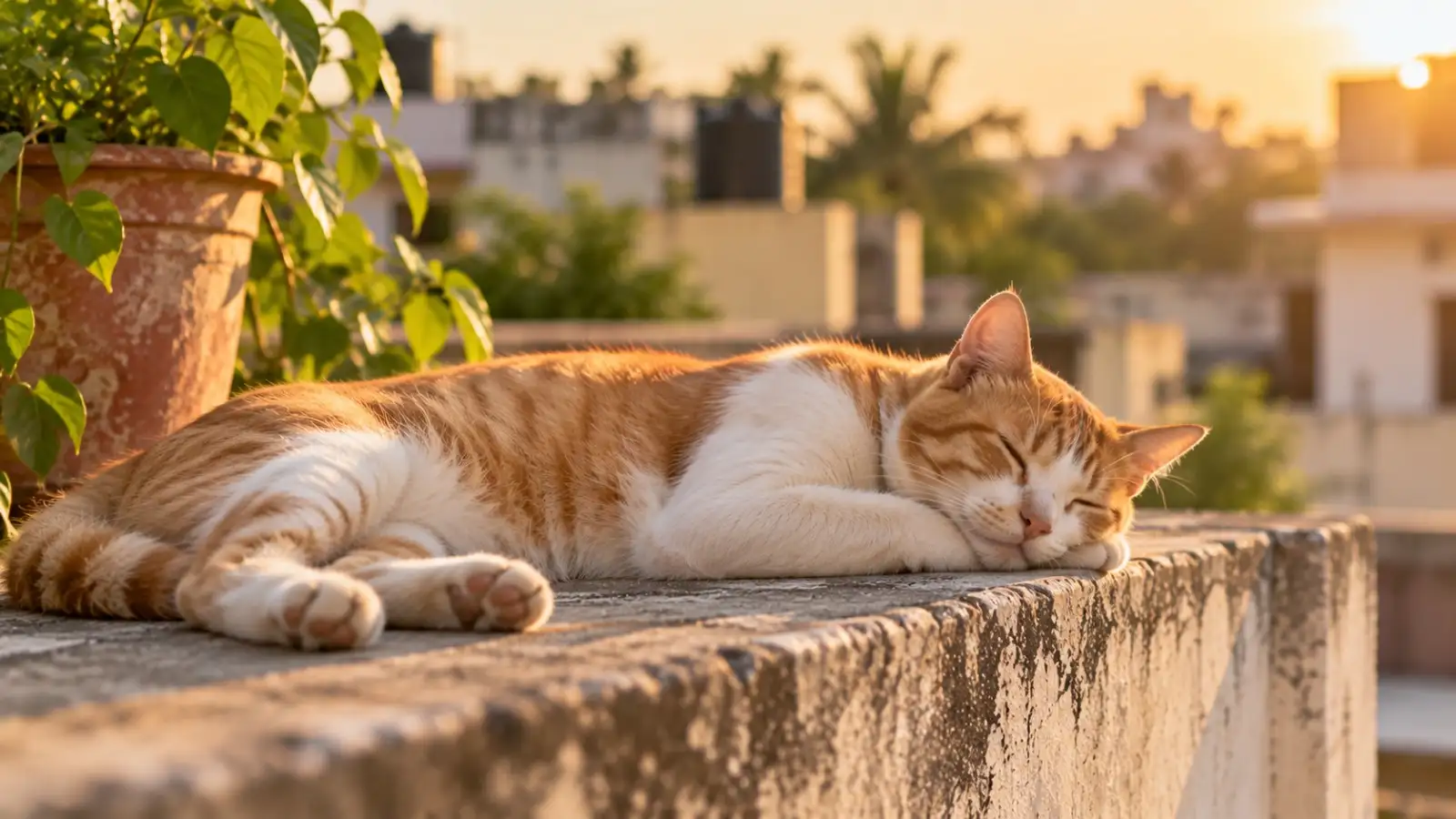
These choices are rarely random. Cats are naturally selective about where they rest, observe their surroundings and feel safe. Their preferred spots often offer a combination of warmth, shelter, privacy and a good view.
Here is why rooftops, courtyards and quiet corners can be so appealing to cats.
A rooftop gives them an elevated position from which they can watch birds, people, other animals and activity in nearby buildings. Being higher up can also make a cat feel less vulnerable to animals approaching from ground level.
For an outdoor cat, a rooftop can therefore serve as both a resting place and an observation point.
During cooler mornings and winter days, a sunlit section of a rooftop can become an ideal resting spot. Cats may move around during the day to follow patches of sunlight as they change position.
This is one reason you might find the same cat sleeping in a different part of the roof later in the afternoon.
They offer enough space to move around while walls and surrounding buildings provide shelter from wind, rain and excessive sunlight.
A quiet courtyard can also be close to food and water, making it particularly convenient for cats living around homes.
A corner beneath furniture, behind stored items, under stairs or beside a wall can provide a sense of privacy.
These locations allow cats to relax while reducing the chances of being approached suddenly by people, dogs or other animals.
Cats often prefer spots where they can quickly leave if something unexpected happens. A courtyard corner, rooftop ledge or sheltered area beside a wall can provide protection while still leaving an escape route.
This may be especially important for cats that spend much of their time outdoors.
A place that smells familiar can become associated with safety and comfort. This could be a particular rooftop, a section of a courtyard or even a corner near a familiar household.
Once a cat has established a preferred resting place, it may return there repeatedly.
Rooftops and enclosed courtyards provide alternatives to staying at ground level, where there may be vehicles, dogs and large numbers of people.
Cats that have access to buildings may naturally choose higher or more protected areas when they want to rest.
When they settle down for a longer rest, they may look for a location where they are unlikely to be disturbed.
A quiet corner behind a plant pot, beneath a staircase or in an unused section of a courtyard can provide exactly that.
On a cool sunny day, it may choose a warm rooftop. During hot weather, a shaded courtyard or ventilated corner may be more appealing.
When rain arrives, cats may move beneath roofs, staircases, balconies or other covered areas.
Their choice is often practical rather than mysterious.
A courtyard, rooftop or quiet corner allows a cat to remain close to a household without having to interact constantly.
This can explain why some cats spend time around a home but disappear when people become too active or noisy.
Cats are creatures of habit. They can establish routines around particular sleeping areas, feeding spots and paths through their territory.
If a rooftop is consistently peaceful or a courtyard always provides shade, the cat may continue returning to it day after day.
Even a small alteration can make a familiar location less comfortable.
Cats are also naturally curious. Sometimes they simply discover a new place that seems better and temporarily make it their favourite.
Keep potentially harmful chemicals, sharp objects and uncovered water containers out of reach. Check vehicles before starting them if cats regularly shelter underneath.
If you provide food or water, keep the area clean and place it somewhere that does not create problems for people or other animals.
Most importantly, give resting cats space. A cat that is quietly sleeping may not appreciate being picked up or disturbed.
What may look like a random decision is often a carefully chosen combination of comfort, safety and familiarity.
So the next time you see a cat peacefully stretched out on a rooftop or tucked into a quiet corner, there is probably a good reason it chose that particular spot.
These choices are rarely random. Cats are naturally selective about where they rest, observe their surroundings and feel safe. Their preferred spots often offer a combination of warmth, shelter, privacy and a good view.
Here is why rooftops, courtyards and quiet corners can be so appealing to cats.
1. Rooftops Give Cats a Clear View
Cats like being able to observe what is happening around them.A rooftop gives them an elevated position from which they can watch birds, people, other animals and activity in nearby buildings. Being higher up can also make a cat feel less vulnerable to animals approaching from ground level.
For an outdoor cat, a rooftop can therefore serve as both a resting place and an observation point.
2. Sunlight Makes Rooftops Comfortable
Cats are naturally attracted to warm places.During cooler mornings and winter days, a sunlit section of a rooftop can become an ideal resting spot. Cats may move around during the day to follow patches of sunlight as they change position.
This is one reason you might find the same cat sleeping in a different part of the roof later in the afternoon.
3. Courtyards Offer Shelter and Space
Traditional courtyards can provide cats with a useful balance between openness and protection.They offer enough space to move around while walls and surrounding buildings provide shelter from wind, rain and excessive sunlight.
A quiet courtyard can also be close to food and water, making it particularly convenient for cats living around homes.
4. Quiet Corners Help Cats Avoid Disturbances
Cats generally prefer places where they can rest without being constantly interrupted.A corner beneath furniture, behind stored items, under stairs or beside a wall can provide a sense of privacy.
These locations allow cats to relax while reducing the chances of being approached suddenly by people, dogs or other animals.
5. Cats Like Places With More Than One Escape Route
A good hiding place is not necessarily completely enclosed.Cats often prefer spots where they can quickly leave if something unexpected happens. A courtyard corner, rooftop ledge or sheltered area beside a wall can provide protection while still leaving an escape route.
This may be especially important for cats that spend much of their time outdoors.
6. Familiar Smells Make a Place Feel Safe
Cats rely heavily on scent when navigating their environment.A place that smells familiar can become associated with safety and comfort. This could be a particular rooftop, a section of a courtyard or even a corner near a familiar household.
Once a cat has established a preferred resting place, it may return there repeatedly.
7. Rooftops Can Keep Cats Away From Street Traffic
Busy streets can be dangerous for cats.Rooftops and enclosed courtyards provide alternatives to staying at ground level, where there may be vehicles, dogs and large numbers of people.
Cats that have access to buildings may naturally choose higher or more protected areas when they want to rest.
8. Quiet Corners Help Cats Sleep
Cats sleep for a large part of the day, although their sleep patterns differ from those of humans.When they settle down for a longer rest, they may look for a location where they are unlikely to be disturbed.
A quiet corner behind a plant pot, beneath a staircase or in an unused section of a courtyard can provide exactly that.
9. Cats Can Choose Different Places in Different Weather
A cat's favourite spot can change with the weather.On a cool sunny day, it may choose a warm rooftop. During hot weather, a shaded courtyard or ventilated corner may be more appealing.
When rain arrives, cats may move beneath roofs, staircases, balconies or other covered areas.
Their choice is often practical rather than mysterious.
10. These Places Let Cats Stay Close Without Feeling Trapped
Cats can enjoy being near people while still wanting their own space.A courtyard, rooftop or quiet corner allows a cat to remain close to a household without having to interact constantly.
This can explain why some cats spend time around a home but disappear when people become too active or noisy.
Why Do Cats Keep Returning to the Same Spot?
Once a cat finds a location that provides warmth, safety and familiarity, there is little reason to abandon it.Cats are creatures of habit. They can establish routines around particular sleeping areas, feeding spots and paths through their territory.
If a rooftop is consistently peaceful or a courtyard always provides shade, the cat may continue returning to it day after day.
Why Do Cats Suddenly Change Their Favourite Spot?
A cat may change its preferred resting place because of temperature, noise, construction, new animals or changes in the household.Even a small alteration can make a familiar location less comfortable.
Cats are also naturally curious. Sometimes they simply discover a new place that seems better and temporarily make it their favourite.
How to Make Outdoor Spaces Safer for Cats
If cats regularly visit your rooftop or courtyard, a few simple changes can make the area safer.Keep potentially harmful chemicals, sharp objects and uncovered water containers out of reach. Check vehicles before starting them if cats regularly shelter underneath.
If you provide food or water, keep the area clean and place it somewhere that does not create problems for people or other animals.
Most importantly, give resting cats space. A cat that is quietly sleeping may not appreciate being picked up or disturbed.
A Cat's Choice of Spot Can Tell You a Lot
The places cats choose around Indian homes are often a reflection of their needs. A sunny rooftop provides warmth and a view. A courtyard offers space and shelter. A hidden corner gives privacy and protection.What may look like a random decision is often a carefully chosen combination of comfort, safety and familiarity.
So the next time you see a cat peacefully stretched out on a rooftop or tucked into a quiet corner, there is probably a good reason it chose that particular spot.
Next Story