
Mysore Pak: The Palace Kitchen Story Behind Mysuru's Famous Sweet

Some sweets are made. Mysore Pak was discovered, inside the kitchens of one of India's grandest palaces, by a cook who was trying something he had never tried before.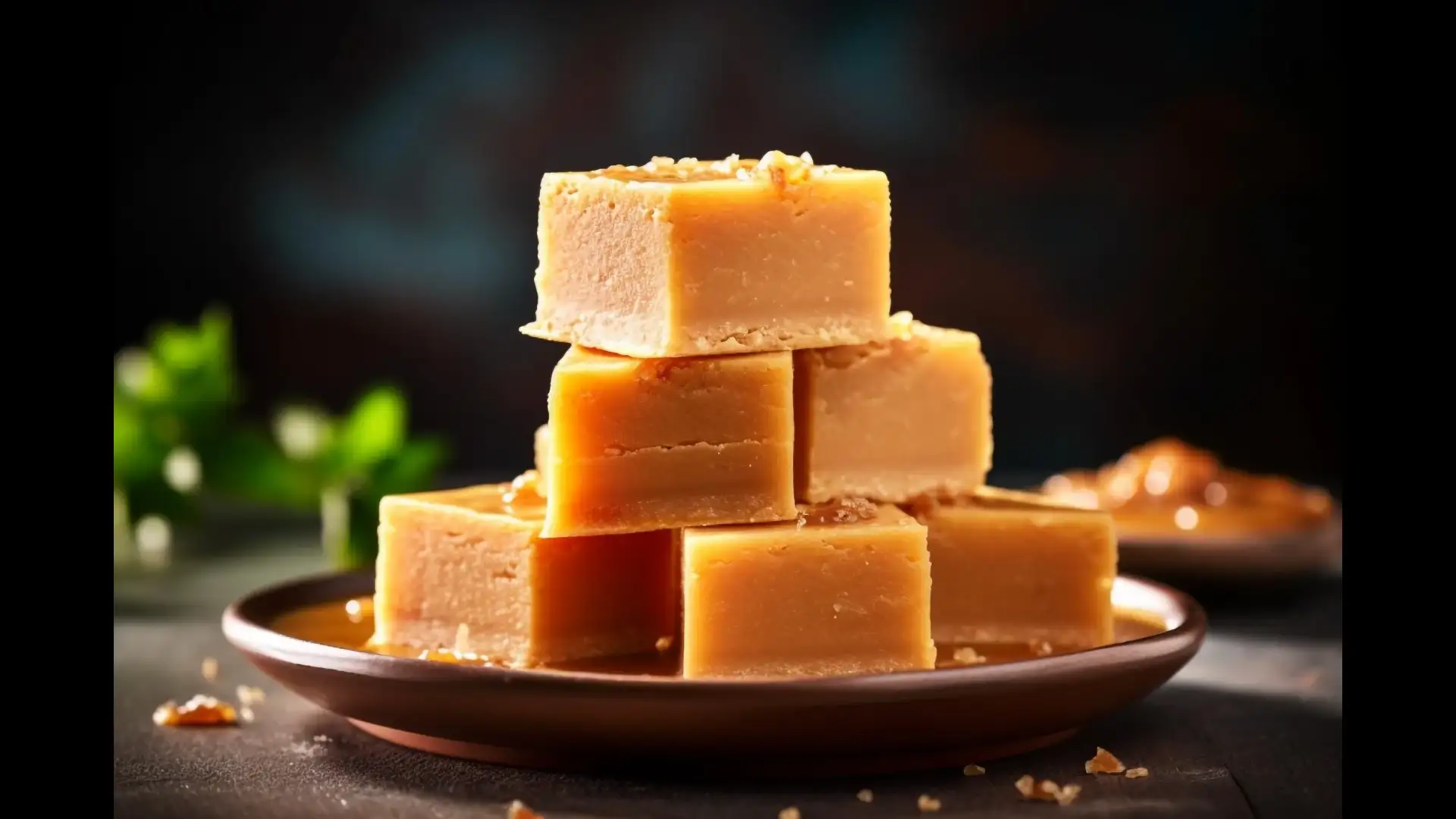
The story that Mysuru carries is specific and consistent. In the early twentieth century, the royal kitchen of the Mysore Palace employed a head cook named Kakasura Madappa. The Wadiyar king of the time, most accounts name Krishnaraja Wadiyar IV, asked for something new. Madappa worked with what the palace kitchen always had in abundance, chickpea flour, clarified butter, and sugar. He combined them in proportions he had not used before, poured the mixture into a tray, and cut it into blocks. The king tasted it, asked what it was called, and Madappa, with the practical honesty of a cook rather than a poet, said it was from Mysore. The name stuck.
The porosity comes from the ghee entering the batter while both are hot. Air pockets form as moisture leaves. If the heat is too low, the ghee sits on top. If the heat is too high, the flour scorches before the ghee can enter. The cooks who have made it for decades read the mixture by eye and sound, not by thermometer.
Devaraja Market, a covered bazaar a short walk from the palace, is where many visitors buy their first Mysore Pak. The sweet is sold by weight, cut fresh, and wrapped in paper. The shops that have operated there for decades do not advertise much. The queue is the advertisement.
This is not a flaw in the original. It is evidence of what it is. A sweet made with that much ghee, cut fresh and eaten within a day or two, is not a product designed for a supply chain. It is a kitchen sweet that happened to become famous.
The cook who made it did not name it after himself. He named it after the place. That instinct, more than the recipe, is what has kept Mysuru at the centre of the sweet's story for over a century.
The story that Mysuru carries is specific and consistent. In the early twentieth century, the royal kitchen of the Mysore Palace employed a head cook named Kakasura Madappa. The Wadiyar king of the time, most accounts name Krishnaraja Wadiyar IV, asked for something new. Madappa worked with what the palace kitchen always had in abundance, chickpea flour, clarified butter, and sugar. He combined them in proportions he had not used before, poured the mixture into a tray, and cut it into blocks. The king tasted it, asked what it was called, and Madappa, with the practical honesty of a cook rather than a poet, said it was from Mysore. The name stuck.
What the Original Is Made Of
The ingredient list is short. Chickpea flour, ghee, and sugar. The difficulty is entirely in the ratio and the heat. The Mysuru version, the one sold near the palace, particularly in the lanes around Devaraja Market, uses a ratio of ghee to flour that seems impossible until you taste the result. The sweet is porous, almost crumbling, with a texture that dissolves rather than chews. This is the mark of enough ghee absorbed at the right temperature. What is sold in most other cities as Mysore Pak is denser, firmer, and sweeter. It is a different sweet wearing the same name.The porosity comes from the ghee entering the batter while both are hot. Air pockets form as moisture leaves. If the heat is too low, the ghee sits on top. If the heat is too high, the flour scorches before the ghee can enter. The cooks who have made it for decades read the mixture by eye and sound, not by thermometer.
The Palace and the Sweet's Public Life
The Mysore Palace, formally the Amba Vilas Palace, sits at the centre of Mysuru's identity in a way few royal buildings do in any Indian city. It draws visitors from across the country, and the lanes around it have carried sweet shops for generations. The sweet that left the palace kitchen did not stay secret. Within the Wadiyar court's lifetime, it moved into the market, and the shops nearest the palace became the reference point for what the original should taste like.You may also like
- Baba Vanga's prediction: Goddess Lakshmi will be kind to these 3 zodiac signs, there will be a rain of money on Diwali
- Why Does Lord Balaji Have a White Mark on His Chin?
- He knew he could never defeat Ravana, yet 60,000-year-old Jatayu risked his life to save Sita; centuries later, the legendary bird's sacrifice lives on through a gigantic 200-ft sculpture in Kerala
- He left India in 1972 with just $8 and worked as a salesman to survive; 54 years later, the Hyderabad-born investor known as 'Canada's Warren Buffett' is making a ₹52,878 crore bank deal
- Why Does Chhath Puja Begin With Just One Lauki?
Devaraja Market, a covered bazaar a short walk from the palace, is where many visitors buy their first Mysore Pak. The sweet is sold by weight, cut fresh, and wrapped in paper. The shops that have operated there for decades do not advertise much. The queue is the advertisement.
Why Mysuru's Version Travels Badly
The authentic Mysuru Mysore Pak has a short life outside a cool room. The ghee content that makes it melt on the tongue also means it softens in heat and turns rancid faster than the denser, commercial version. This is why the sweet sold in Chennai, Bengaluru, or Mumbai, in tins, with a weeks-long shelf life, is a different formulation. It keeps. The original does not, which is why visitors who want the real thing eat it there.This is not a flaw in the original. It is evidence of what it is. A sweet made with that much ghee, cut fresh and eaten within a day or two, is not a product designed for a supply chain. It is a kitchen sweet that happened to become famous.
A Sweet That Stayed Home
Mysore Pak is one of the few Indian sweets that has a fixed address. Rasgulla is from Bengal but made everywhere. Jalebi belongs to no single city. Mysore Pak carries Mysuru in its name and, in its original form, is genuinely harder to find anywhere else. The palace kitchen origin story is not just a marketing claim, it is the reason the sweet exists at all, and the reason Mysuru's sweet shops still carry the authority to say what the real thing is.The cook who made it did not name it after himself. He named it after the place. That instinct, more than the recipe, is what has kept Mysuru at the centre of the sweet's story for over a century.






Loving Newspoint? Download the app now
