
Diwali in Mathura and Vrindavan: Temples, Traditions and the Spiritual Charm of Braj

Diwali in Mathura and Vrindavan has a distinctive charm shaped by devotion, mythology and the cultural traditions of the Braj region. Known for their strong association with Lord Krishna, these destinations offer a festive experience that goes beyond illuminated homes and decorated streets. Temples welcome devotees with special prayers, colourful decorations and devotional music, while local markets become lively with festive shopping and traditional sweets. The celebrations also extend to nearby sacred places, where rituals and religious gatherings bring communities together. For visitors, this period offers an opportunity to experience the spiritual atmosphere and cultural heritage of Braj.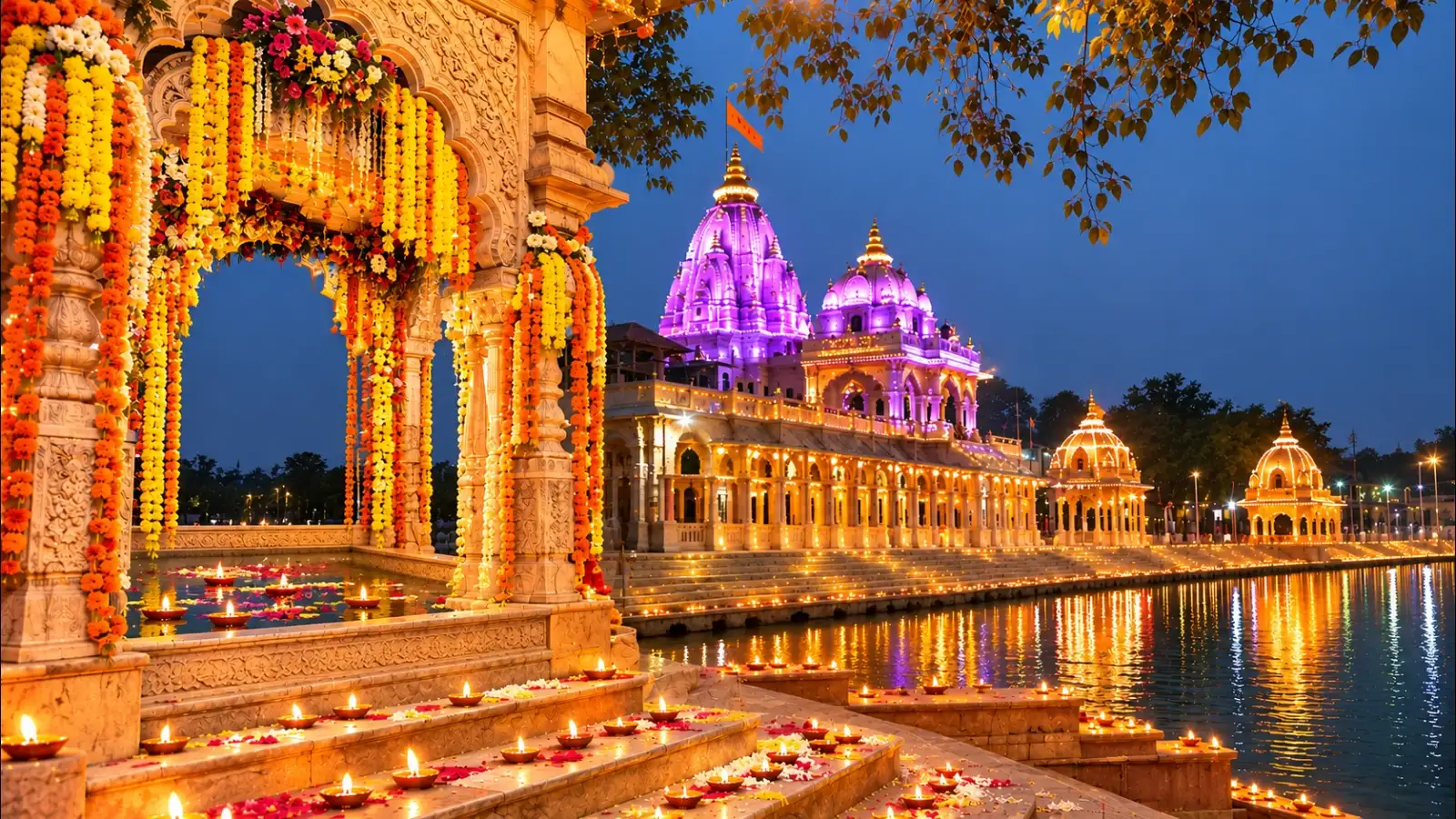
Devotees visit temples to offer prayers, seek blessings and participate in festive rituals. The spiritual significance of these destinations makes the festival particularly meaningful for Krishna devotees.
The Banke Bihari Temple in Vrindavan and Shri Krishna Janmabhoomi in Mathura attract large numbers of devotees. Visitors can experience the festive atmosphere through temple decorations, devotional activities and special worship arrangements. Timings and rituals may vary each year.
Their soft light creates a traditional festive atmosphere, particularly after sunset. For many families, lighting diyas is an important part of welcoming prosperity and positivity into their homes.
Temples organise Annakut offerings, in which a variety of vegetarian dishes are arranged as an offering to the deity. Govardhan, near Mathura, becomes an important destination for devotees who visit to perform the traditional parikrama.
The Govardhan Parikrama route is particularly significant. Devotees traditionally walk around the hill as an expression of faith and devotion. Visitors planning to participate should consider the walking distance, weather and crowd conditions.
These musical traditions bring devotees together and create an atmosphere of collective celebration. The sound of devotional songs adds another dimension to the experience of Diwali in Braj.
The markets also provide an opportunity to explore local handicrafts, devotional souvenirs and traditional decorations. Visitors can experience the region's food culture while enjoying the festive surroundings.
The combination of temple surroundings, river views and devotional activities gives the ghats a distinctive atmosphere. Visitors should follow local instructions and avoid overcrowded or restricted areas.
In Mathura, Shri Krishna Janmabhoomi remains one of the most significant pilgrimage sites. Visitors should plan their temple visits according to local schedules, security arrangements and crowd conditions.
The wider region also observes related occasions such as Govardhan Puja and Bhai Dooj, each with its own customs. Together, these celebrations make the festive period an important time for residents, pilgrims and visitors.
Check temple timings and local traffic arrangements before setting out. Wear comfortable footwear, carry drinking water and follow instructions at religious sites. Visitors should also respect local customs and avoid littering around temples and riverfront areas.
Diwali in Mathura and Vrindavan offers a combination of spirituality, cultural traditions and festive celebrations. The region's connection with Lord Krishna, special temple activities, Govardhan Puja and devotional gatherings make this period particularly meaningful for pilgrims. Whether you are visiting for religious reasons or to explore Braj's cultural heritage, the festive atmosphere provides a memorable way to experience one of India's most significant celebrations.
1. A Strong Connection With Lord Krishna
Mathura is traditionally regarded as the birthplace of Lord Krishna, while Vrindavan is closely associated with his childhood and youthful stories. This connection gives the Diwali celebrations in the region a distinctive religious character.Devotees visit temples to offer prayers, seek blessings and participate in festive rituals. The spiritual significance of these destinations makes the festival particularly meaningful for Krishna devotees.
2. Special Decorations at Krishna Temples
Temples across Mathura and Vrindavan receive festive makeovers during Diwali. Entrances, courtyards and prayer areas are decorated with flowers, lights and traditional ornaments.The Banke Bihari Temple in Vrindavan and Shri Krishna Janmabhoomi in Mathura attract large numbers of devotees. Visitors can experience the festive atmosphere through temple decorations, devotional activities and special worship arrangements. Timings and rituals may vary each year.
3. The Traditional Glow of Earthen Diyas
Like many parts of India, the Braj region celebrates Diwali with the warm glow of earthen lamps. Diyas are placed in homes, shops and permitted temple areas.Their soft light creates a traditional festive atmosphere, particularly after sunset. For many families, lighting diyas is an important part of welcoming prosperity and positivity into their homes.
4. Govardhan Puja and Annakut Celebrations
One of the most significant occasions in the Braj region is Govardhan Puja, generally celebrated the day after Diwali. It commemorates Lord Krishna lifting Govardhan Hill to protect the people of Braj from heavy rainfall.Temples organise Annakut offerings, in which a variety of vegetarian dishes are arranged as an offering to the deity. Govardhan, near Mathura, becomes an important destination for devotees who visit to perform the traditional parikrama.
5. The Spiritual Importance of Govardhan Hill
Govardhan Hill holds a special place in the religious traditions of Braj. During the festive period, pilgrims visit the area to offer prayers and seek blessings.The Govardhan Parikrama route is particularly significant. Devotees traditionally walk around the hill as an expression of faith and devotion. Visitors planning to participate should consider the walking distance, weather and crowd conditions.
6. Devotional Music and Bhajan Gatherings
The festive atmosphere in Mathura and Vrindavan is often accompanied by devotional music. Temples and religious gatherings organise bhajans, kirtans and prayers dedicated to Lord Krishna.These musical traditions bring devotees together and create an atmosphere of collective celebration. The sound of devotional songs adds another dimension to the experience of Diwali in Braj.
7. Festive Markets and Traditional Sweets
Local markets become lively as residents and visitors shop for पूजा essentials, decorative items, clothes, sweets and gifts. Traditional sweet shops offer popular Indian festive treats, including peda, a speciality strongly associated with Mathura.The markets also provide an opportunity to explore local handicrafts, devotional souvenirs and traditional decorations. Visitors can experience the region's food culture while enjoying the festive surroundings.
8. The Yamuna Ghats and Their Peaceful Atmosphere
The ghats along the Yamuna River are important religious spaces in Mathura and Vrindavan. During the festive period, devotees visit these riverfront areas for prayers and other religious observances.The combination of temple surroundings, river views and devotional activities gives the ghats a distinctive atmosphere. Visitors should follow local instructions and avoid overcrowded or restricted areas.
9. Nearby Temples and Sacred Places to Explore
Diwali can also be an opportunity to explore important religious sites across Braj. Prem Mandir and ISKCON Temple in Vrindavan are popular destinations known for their architecture, devotional activities and visitor facilities.In Mathura, Shri Krishna Janmabhoomi remains one of the most significant pilgrimage sites. Visitors should plan their temple visits according to local schedules, security arrangements and crowd conditions.
10. A Festive Experience Rooted in Braj Culture
What makes Diwali in Mathura and Vrindavan distinctive is the way religious traditions blend with everyday local life. From decorated temples and devotional gatherings to traditional sweets and family celebrations, the festival reflects the cultural identity of Braj.The wider region also observes related occasions such as Govardhan Puja and Bhai Dooj, each with its own customs. Together, these celebrations make the festive period an important time for residents, pilgrims and visitors.
Travel Tips for Visiting During Diwali
Mathura and Vrindavan can become extremely crowded during Diwali and the surrounding festival days. Book accommodation and transport in advance, and allow extra time for travelling between temples.Check temple timings and local traffic arrangements before setting out. Wear comfortable footwear, carry drinking water and follow instructions at religious sites. Visitors should also respect local customs and avoid littering around temples and riverfront areas.
Diwali in Mathura and Vrindavan offers a combination of spirituality, cultural traditions and festive celebrations. The region's connection with Lord Krishna, special temple activities, Govardhan Puja and devotional gatherings make this period particularly meaningful for pilgrims. Whether you are visiting for religious reasons or to explore Braj's cultural heritage, the festive atmosphere provides a memorable way to experience one of India's most significant celebrations.
Next Story