
10 Dry Fruits to Include in Your Winter Food Routine for Better Nutrition and Energy

Winter is a good time to pay attention to everyday eating habits and include foods that provide lasting energy and essential nutrients. Dry fruits are convenient, easy to store and can be added to breakfast, snacks, desserts and regular meals. Almonds, walnuts, dates and raisins, for example, contain different combinations of healthy fats, fibre, vitamins and minerals. Although no single food can protect the body from winter illnesses, a balanced diet that includes nuts and dried fruits can support overall health. Here are ten nutritious options worth including in your winter food routine .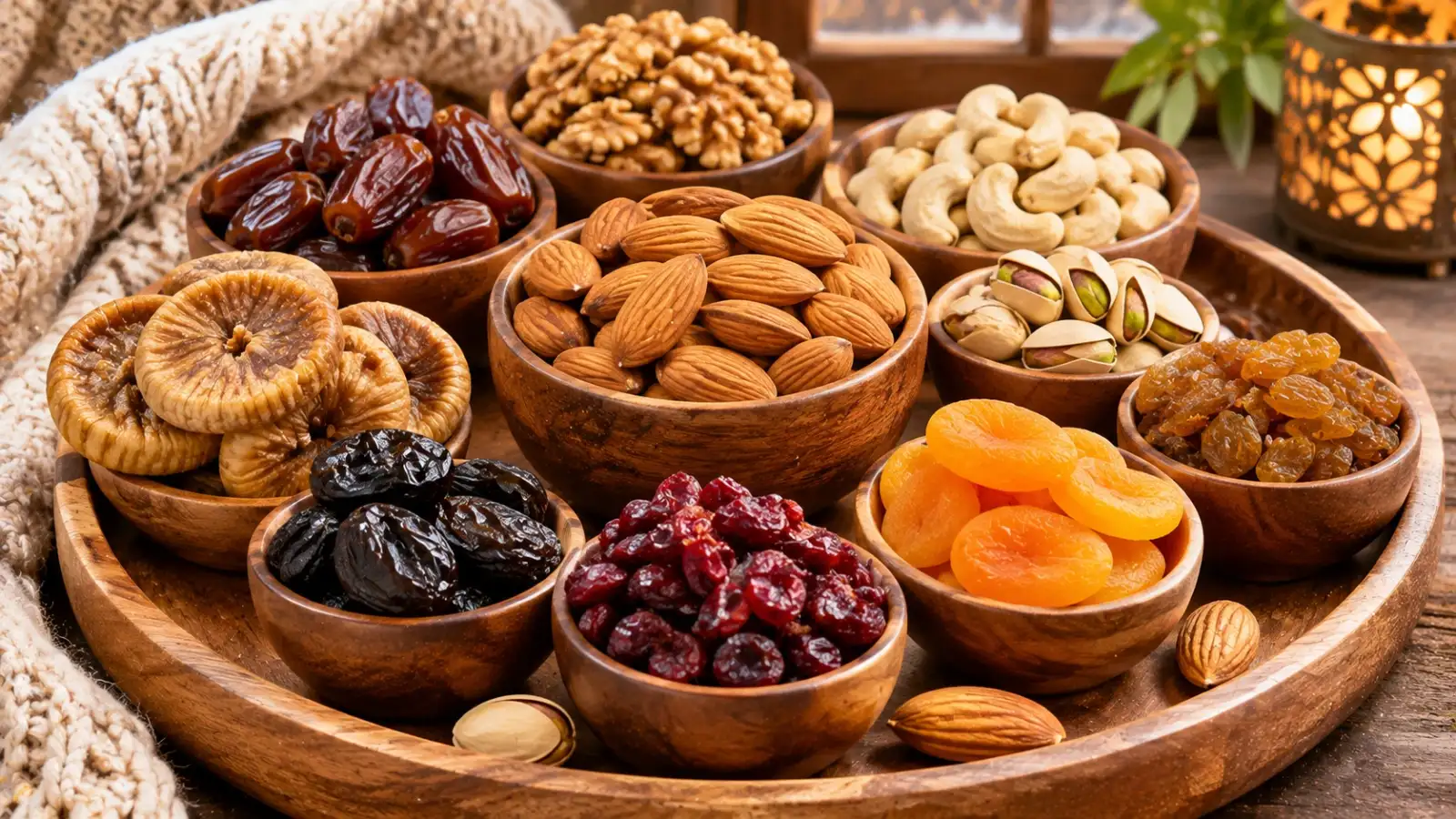
You can soak almonds overnight, add them to your breakfast cereal or enjoy a small handful between meals. Chopped almonds also work well in homemade kheer, porridge and warm badam milk.
Adding walnuts to your winter diet can be simple. Sprinkle chopped kernels over oatmeal, mix them into homemade granola or combine them with raisins for a convenient snack. Their slightly earthy flavour also works well in homemade desserts.
You can enjoy a small portion as a snack or add chopped cashews to vegetable pulao, poha and homemade sweets. They can also be soaked and blended into a creamy base for vegetarian curries.
Add a few raisins to porridge, yoghurt, homemade trail mix or vegetable pulao. Since raisins contain concentrated natural sugars, it is sensible to enjoy them in moderate portions.
You can eat dates on their own, stuff them with almonds or blend them into homemade energy balls. Chopped dates can also be added to warm porridge and smoothies without relying entirely on refined sugar.
A small handful of unsalted pistachios can make a satisfying snack. You can also sprinkle chopped kernels over fruit bowls, homemade desserts or warm milk-based puddings for extra flavour and texture.
Soak one or two dried figs in water overnight if you prefer a softer texture. You can also chop them into porridge, combine them with nuts or use them in homemade date-and-fig energy bites.
Enjoy them as a snack or chop them into breakfast cereal and homemade trail mix. When buying dried apricots, check the ingredient label because some varieties contain added sugar or preservatives.
You can eat a few prunes as a snack, add chopped pieces to oatmeal or mix them with walnuts and almonds. Introduce them gradually if you are not used to eating high-fibre foods.
Add them to homemade granola, oatmeal, fruit bowls or a nut-based trail mix. Many commercially available dried cranberries contain added sugar, so compare labels and choose options with less added sugar when possible.
Dry fruits can add flavour, texture and valuable nutrients to your winter food routine. Almonds, walnuts, pistachios, dates and dried figs are among the options that can fit easily into everyday meals and snacks. However, variety and portion control matter more than eating large quantities. Combine them with fresh fruits, vegetables, whole grains and other nutritious foods to maintain a balanced diet throughout winter.
1. Almonds
Almonds are a popular winter snack because they provide protein, fibre, healthy fats and vitamin E. These nutrients support overall health and make almonds a convenient addition to everyday meals.You can soak almonds overnight, add them to your breakfast cereal or enjoy a small handful between meals. Chopped almonds also work well in homemade kheer, porridge and warm badam milk.
2. Walnuts
Walnuts are known for their plant-based omega-3 fatty acid content, particularly alpha-linolenic acid (ALA). They also provide fibre, protein and several minerals.Adding walnuts to your winter diet can be simple. Sprinkle chopped kernels over oatmeal, mix them into homemade granola or combine them with raisins for a convenient snack. Their slightly earthy flavour also works well in homemade desserts.
3. Cashews
Cashews are a good source of healthy fats, plant-based protein, magnesium and copper. Their creamy texture makes them useful in both sweet and savoury recipes.You can enjoy a small portion as a snack or add chopped cashews to vegetable pulao, poha and homemade sweets. They can also be soaked and blended into a creamy base for vegetarian curries.
4. Raisins
Raisins are naturally sweet dried grapes that provide fibre, potassium and small amounts of iron. They can be a convenient alternative to sweets when you want something naturally sweet.Add a few raisins to porridge, yoghurt, homemade trail mix or vegetable pulao. Since raisins contain concentrated natural sugars, it is sensible to enjoy them in moderate portions.
5. Dates
Dates are naturally sweet and provide fibre, potassium and other minerals. Their soft texture and caramel-like flavour make them a useful ingredient in winter snacks and desserts.You can eat dates on their own, stuff them with almonds or blend them into homemade energy balls. Chopped dates can also be added to warm porridge and smoothies without relying entirely on refined sugar.
6. Pistachios
Pistachios provide plant-based protein, fibre, healthy fats and antioxidants. They also contain nutrients such as vitamin B6 and potassium.A small handful of unsalted pistachios can make a satisfying snack. You can also sprinkle chopped kernels over fruit bowls, homemade desserts or warm milk-based puddings for extra flavour and texture.
7. Dried Figs (Anjeer)
Dried figs are valued for their fibre content and provide minerals such as calcium and potassium. Their naturally sweet flavour makes them suitable for everyday snacks and homemade desserts.Soak one or two dried figs in water overnight if you prefer a softer texture. You can also chop them into porridge, combine them with nuts or use them in homemade date-and-fig energy bites.
8. Dried Apricots
Dried apricots are a convenient source of fibre and beta-carotene, which the body converts into vitamin A. They also provide potassium and natural sweetness.Enjoy them as a snack or chop them into breakfast cereal and homemade trail mix. When buying dried apricots, check the ingredient label because some varieties contain added sugar or preservatives.
9. Prunes
Prunes are dried plums known for their fibre content and naturally occurring compounds called sorbitol. Both contribute to their usefulness in supporting regular bowel movements.You can eat a few prunes as a snack, add chopped pieces to oatmeal or mix them with walnuts and almonds. Introduce them gradually if you are not used to eating high-fibre foods.
10. Dried Cranberries
Dried cranberries add a sweet and slightly tangy flavour to winter meals. They contain plant compounds and can make breakfast dishes and snacks more interesting.Add them to homemade granola, oatmeal, fruit bowls or a nut-based trail mix. Many commercially available dried cranberries contain added sugar, so compare labels and choose options with less added sugar when possible.
How to Include Dry Fruits in Your Daily Winter Diet
You do not need to eat all ten varieties every day. A few simple combinations can help you enjoy their nutritional benefits without making your diet complicated.- With breakfast: Add chopped almonds, walnuts or raisins to porridge and cereal.
- As a mid-morning snack: Combine a small portion of unsalted nuts with dried fruits.
- In warm beverages: Use almonds and pistachios to prepare homemade badam milk.
- With homemade desserts: Add dates, figs and cashews to laddoos or kheer.
- After exercise: Enjoy a small portion of nuts and dried fruits as part of a balanced snack.
Dry fruits can add flavour, texture and valuable nutrients to your winter food routine. Almonds, walnuts, pistachios, dates and dried figs are among the options that can fit easily into everyday meals and snacks. However, variety and portion control matter more than eating large quantities. Combine them with fresh fruits, vegetables, whole grains and other nutritious foods to maintain a balanced diet throughout winter.
Next Story