
5 Eco-Friendly Home Decor Ideas for a Sustainable Space

A sustainable home does not announce itself loudly. It shows up in the grain of an old wooden shelf, the weight of a handwoven cotton throw, the quiet green of a pothos trailing across a windowsill. The shift happens one object at a time, and each choice tends to outlast the trend that made it popular.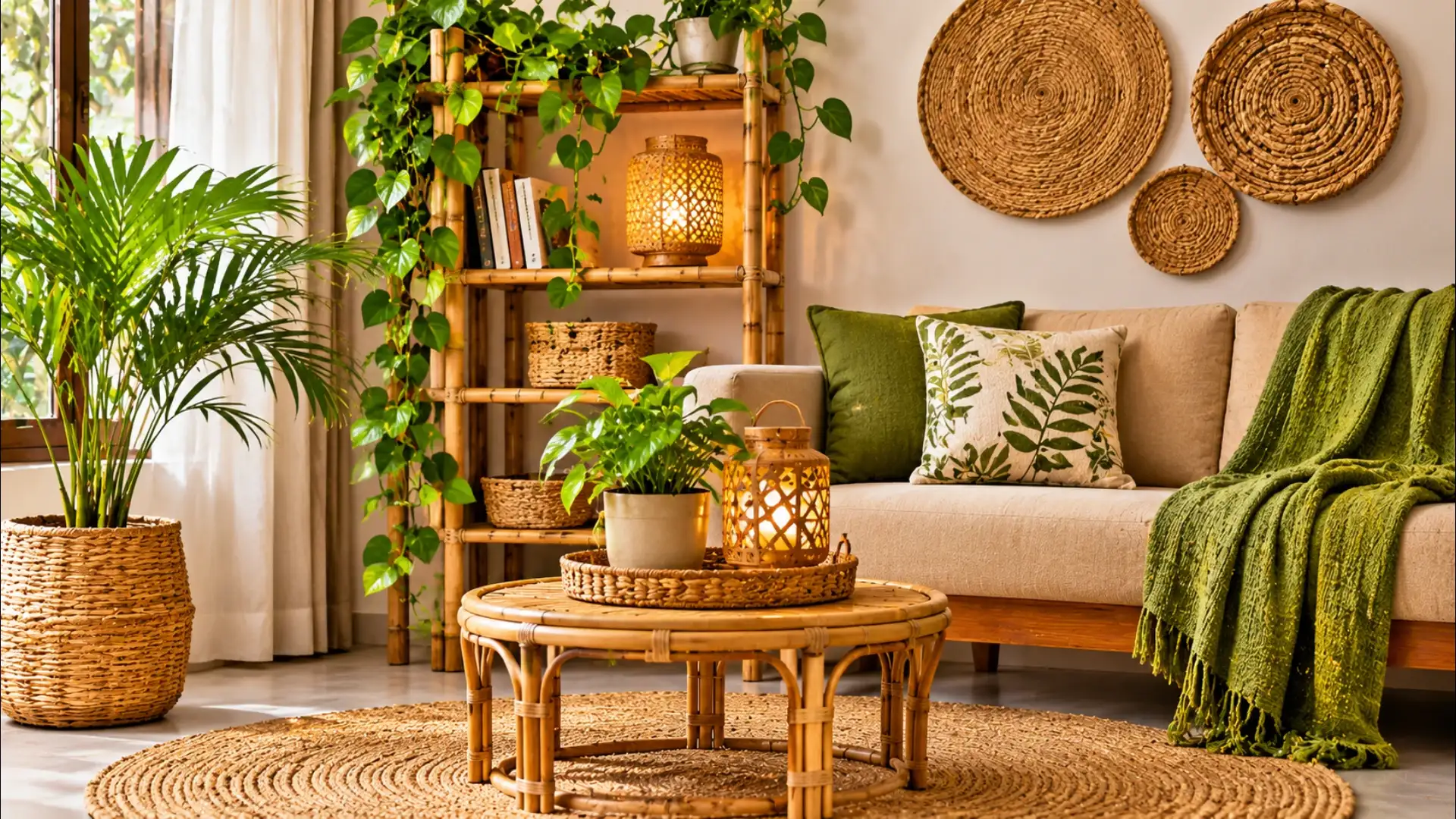
In Indian cities, kabadi markets and salvage yards are reliable sources for old doors, window frames, and structural timber. A carpenter can reshape these into furniture, picture frames, or wall panels. The grain and the imperfections are the point, not a flaw to hide.
Handwoven cotton dhurries, jute baskets, and coir doormats are made by artisan clusters across Rajasthan, Uttar Pradesh, and Tamil Nadu. Buying directly from cooperatives or craft platforms keeps money with the weavers and cuts the supply chain short. A jute storage basket costs roughly the same as a plastic one and holds its shape longer.
Terracotta also has a functional logic in Indian climates. A matka cools water through evaporation as moisture seeps through the porous clay walls, no electricity, no refrigerant. That same porosity makes unglazed pots ideal planters, because roots breathe and excess water escapes rather than pooling.
The more immediate gain is what plants do to a room's character. A snake plant in a corner, a pothos on a high shelf, a money plant in a glass jar of water, these cost very little to maintain and last years. Choose species suited to your actual light conditions rather than the ones that look good in a shop. A peace lily tolerates low light; a succulent needs a south-facing window. Matching the plant to the spot is what keeps it alive.
For fragrance, dried herbs, cloves simmered in water on a stove, or a small clay diffuser with a few drops of essential oil do the same job without aerosol propellants or synthetic fixatives. Agarbatti made from natural resins and herbs, rather than the charcoal-based variety, is another option already familiar in most Indian homes.
The thread running through all five ideas is the same: materials that came from the earth and can return to it, made by hands rather than machines where possible, chosen for how they actually work rather than for how they look in a photograph. Sustainability in a home is less a style and more a habit of asking where something came from and where it will go.
Bring In Reclaimed and Repurposed Wood
Reclaimed wood carries its history in its texture, nail holes, saw marks, the particular colour that only decades of use produce. A beam pulled from a demolished haveli, turned into a bookshelf or a dining table, does two things at once: it keeps timber out of a landfill and brings a material into the home that no new wood can replicate.In Indian cities, kabadi markets and salvage yards are reliable sources for old doors, window frames, and structural timber. A carpenter can reshape these into furniture, picture frames, or wall panels. The grain and the imperfections are the point, not a flaw to hide.
Choose Natural Fibres Over Synthetic Ones
Cotton, jute, coir, bamboo, and wool regulate temperature, breathe with the room, and biodegrade at the end of their life. Synthetic rugs and cushion covers, made from polyester or nylon, shed microplastic fibres with every wash and take centuries to break down.Handwoven cotton dhurries, jute baskets, and coir doormats are made by artisan clusters across Rajasthan, Uttar Pradesh, and Tamil Nadu. Buying directly from cooperatives or craft platforms keeps money with the weavers and cuts the supply chain short. A jute storage basket costs roughly the same as a plastic one and holds its shape longer.
You may also like
- Why Your Face Can Look Overfilled After Years of Filler
- How Long Do Lip, Cheek and Under-Eye Fillers Last?
- HIFU Facial Treatment Explained: What Happens Beneath Your Skin at Each Depth?
- Girl injured in Andhra chainsaw attack gets a big education promise from Anand Mahindra
- Using Retinoids for Everything? 6 Skin Problems They Can't Fix
Use Clay, Terracotta, and Earthenware as Decor Objects
Terracotta is fired earth. It requires no mining of rare materials, no chemical coating, and no industrial finishing. A row of terracotta pots on a balcony, an unglazed clay lamp on a side table, or a handmade earthenware bowl holding fruit, each of these objects is made from a material that returns to the soil when it eventually breaks.Terracotta also has a functional logic in Indian climates. A matka cools water through evaporation as moisture seeps through the porous clay walls, no electricity, no refrigerant. That same porosity makes unglazed pots ideal planters, because roots breathe and excess water escapes rather than pooling.
Bring Plants In, and Choose Ones That Work for Your Light
Indoor plants improve air quality by absorbing carbon dioxide and releasing oxygen as part of their basic photosynthesis cycle. Some species also absorb specific volatile compounds that off-gas from paints and adhesives, though the effect in a real room depends on how many plants are present and how well ventilated the space is.The more immediate gain is what plants do to a room's character. A snake plant in a corner, a pothos on a high shelf, a money plant in a glass jar of water, these cost very little to maintain and last years. Choose species suited to your actual light conditions rather than the ones that look good in a shop. A peace lily tolerates low light; a succulent needs a south-facing window. Matching the plant to the spot is what keeps it alive.
Swap Synthetic Candles and Air Fresheners for Natural Alternatives
Most commercial candles are made from paraffin, a petroleum byproduct, and scented with synthetic fragrance compounds. Burning them in an enclosed room releases particulates and compounds that accumulate in indoor air. Beeswax and soy candles burn cleaner and longer. Beeswax in particular emits a faint natural honey scent without any added fragrance.For fragrance, dried herbs, cloves simmered in water on a stove, or a small clay diffuser with a few drops of essential oil do the same job without aerosol propellants or synthetic fixatives. Agarbatti made from natural resins and herbs, rather than the charcoal-based variety, is another option already familiar in most Indian homes.
The thread running through all five ideas is the same: materials that came from the earth and can return to it, made by hands rather than machines where possible, chosen for how they actually work rather than for how they look in a photograph. Sustainability in a home is less a style and more a habit of asking where something came from and where it will go.






Loving Newspoint? Download the app now
