
10 Edible Seeds Used in Different Regional Cuisines That Add Unique Flavours to Food

Seeds are an important part of traditional cooking across different regions and cultures. While some are used to add crunch, others provide aroma, natural oils, thickness or a distinctive flavour to everyday dishes. From sesame seeds in Asian recipes to mustard seeds in Indian tempering, these small ingredients often play a major role in defining regional food traditions. They are used in chutneys, curries, breads, desserts, spice blends and festive preparations. Many are also valued for their nutritional content. Here are 10 edible seeds that have an interesting place in regional cuisines around the world.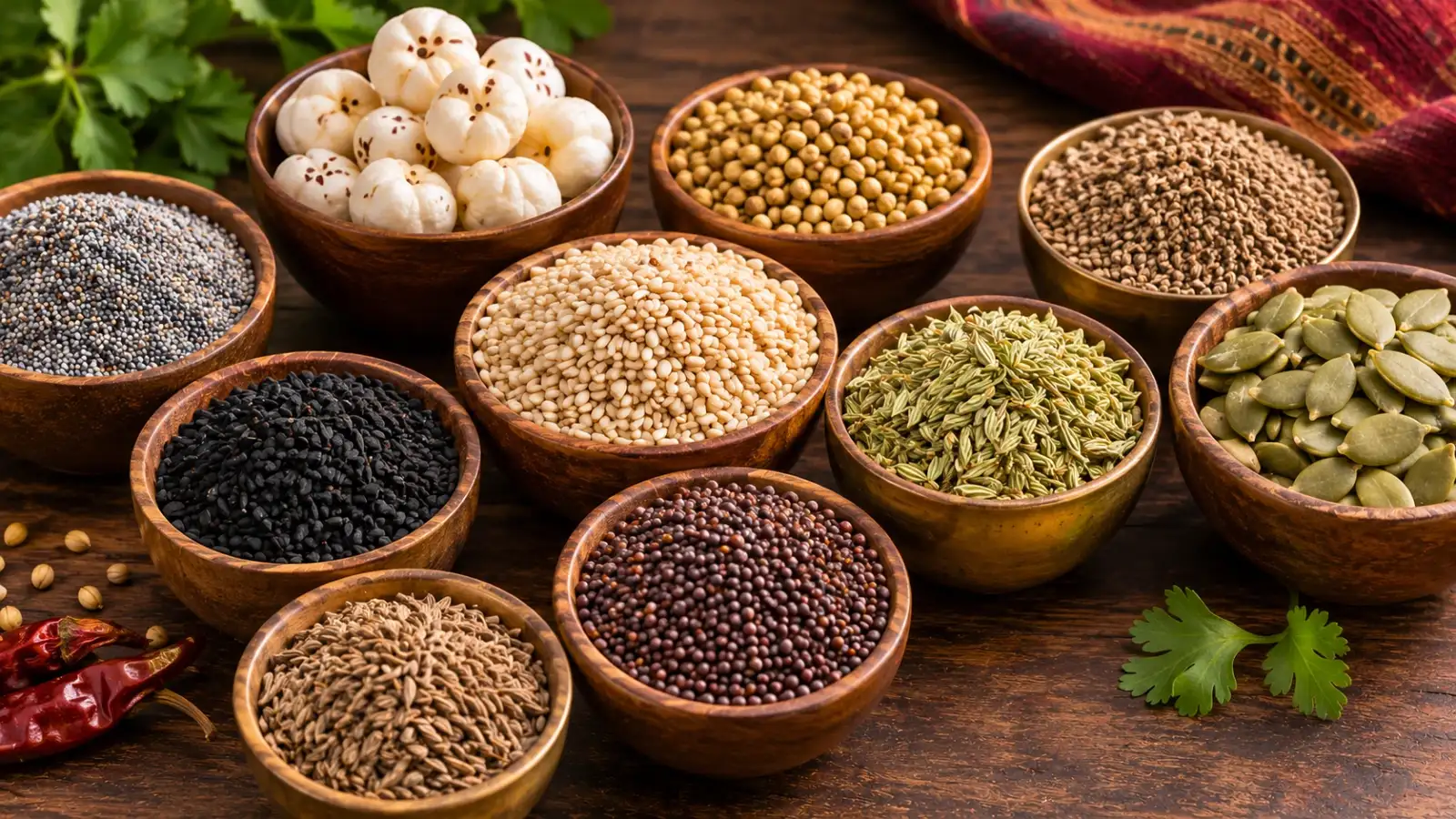
1. Sesame Seeds
Sesame seeds are widely used in Indian, Middle Eastern, East Asian and African cuisines. They have a mild nutty flavour that becomes more pronounced when toasted.
In India, sesame seeds are used in til ladoo, chikki, chutneys and spice mixtures. They are especially popular in winter preparations and traditional sweets. In Japanese cooking, sesame seeds are sprinkled over rice, noodles and salads, while tahini, a paste made from ground sesame seeds, is widely used in Middle Eastern dishes.
2. Mustard Seeds
Mustard seeds are an essential ingredient in several Indian regional cuisines. They are available in different varieties, including black, brown and yellow, each offering a slightly different flavour.
In South Indian cooking, mustard seeds are commonly added to hot oil along with curry leaves, dried chillies and other spices. This tempering is used in dishes such as sambar, vegetable poriyal and coconut chutney. In Bengali cuisine, mustard seeds are also ground into pastes for preparations such as shorshe-based vegetable dishes.
3. Fennel Seeds
Fennel seeds are known for their sweet, mildly liquorice-like flavour. They are commonly used in Indian, Mediterranean and Middle Eastern cooking.
In Rajasthan and Gujarat, fennel is added to spice blends, pickles and vegetable preparations. It is also used in some traditional Indian sweets and savoury snacks. In Mediterranean cuisines, fennel seeds are used to flavour breads, sauces and roasted vegetables.
4. Poppy Seeds
Poppy seeds are small, oil-rich seeds used in several regional cuisines. They have a mild nutty taste and are often ground to create thick, creamy gravies.
In Bengali cuisine, white poppy seeds, known as posto, are used to prepare dishes such as aloo posto, where potatoes are cooked with a ground poppy seed paste. They are also added to breads, pastries and desserts in different parts of Europe and the Middle East.
5. Nigella Seeds
Nigella seeds, also called kalonji, are popular in Indian, Middle Eastern and North African cooking. They have a slightly bitter, peppery flavour with herbal notes.
In Indian kitchens, kalonji is used in pickles, spice blends and vegetable preparations. It is also one of the ingredients in panch phoron, a traditional Bengali five-spice mixture. Nigella seeds are frequently sprinkled over naan and other flatbreads in parts of the Middle East.
6. Cumin Seeds
Cumin seeds are widely used across Indian, Mexican, Middle Eastern and North African cuisines. Their warm, earthy flavour makes them suitable for both whole-spice tempering and ground spice blends.
In India, cumin is used in jeera rice, dals, curries and vegetable dishes. Mexican cooking uses cumin in seasoning blends for beans, vegetables and other traditional preparations. Roasted cumin powder is also commonly added to raita, chaas and chaat.
7. Pumpkin Seeds
Pumpkin seeds, also known as pepitas when sold without their outer shells, are used in several cuisines around the world. They have a mild nutty flavour and can be eaten roasted or ground.
In Mexican cuisine, pumpkin seeds are used to prepare pipian sauces, which are traditionally made by grinding seeds with chillies, spices and other ingredients. They are also added to salads, breads, soups and breakfast bowls in many countries.
8. Lotus Seeds
Lotus seeds are used in several Asian cuisines, particularly in India and China. In India, dried lotus seeds are commonly known as makhana, although the term usually refers to seeds from the prickly water lily.
Makhana is roasted with ghee and spices to make a popular snack. It is also used in kheer, curries and festive preparations. In Chinese cooking, lotus seeds are often used in sweet soups, desserts and traditional fillings.
9. Coriander Seeds
Coriander seeds are an important spice in Indian, Middle Eastern and Mediterranean cooking. They have a warm, citrus-like aroma that becomes more noticeable when lightly roasted.
In Indian cuisine, coriander seeds are ground into powders for curries, dals and vegetable dishes. They are also used whole in pickles and spice blends. In some European cuisines, coriander seeds are added to bread, marinades and pickling mixtures.
10. Carom Seeds
Carom seeds, commonly known as ajwain, are particularly popular in Indian cooking. They have a strong, thyme-like aroma and a slightly sharp flavour.
They are used in parathas, puris, pakoras, savoury biscuits and traditional snacks. In North Indian kitchens, ajwain is often added to dough for its distinctive flavour. It is also used in some regional spice mixtures and homemade savoury preparations.
Why Are Edible Seeds Important in Regional Cuisines?
Edible seeds contribute more than just flavour to traditional dishes. Their natural oils, textures and aromas help create distinctive regional cooking styles. Some are toasted to release their fragrance, while others are ground into pastes or added whole during tempering.
Seeds also provide different nutrients, including plant-based protein, fibre, healthy fats and minerals. However, their nutritional content varies depending on the type and preparation method. Using them in appropriate quantities can add variety to a balanced diet.
Tips for Using Seeds in Everyday Cooking
- Lightly roast seeds such as sesame, cumin and pumpkin seeds to enhance their flavour.
- Store seeds in airtight containers away from heat and direct sunlight.
- Grind only the quantity needed for recipes to preserve freshness.
- Use whole seeds for tempering and ground seeds for spice blends or gravies.
- Check for allergies before introducing unfamiliar seeds into meals.
Next Story