
How Do Elephants Remember Water Sources Years After Visiting Them?

Imagine walking through a huge landscape where temperatures are high, food is scattered and water may be many kilometres away. Now imagine being able to remember where you found water years earlier and finding your way back when you need it most. This is part of what makes elephant memory so fascinating.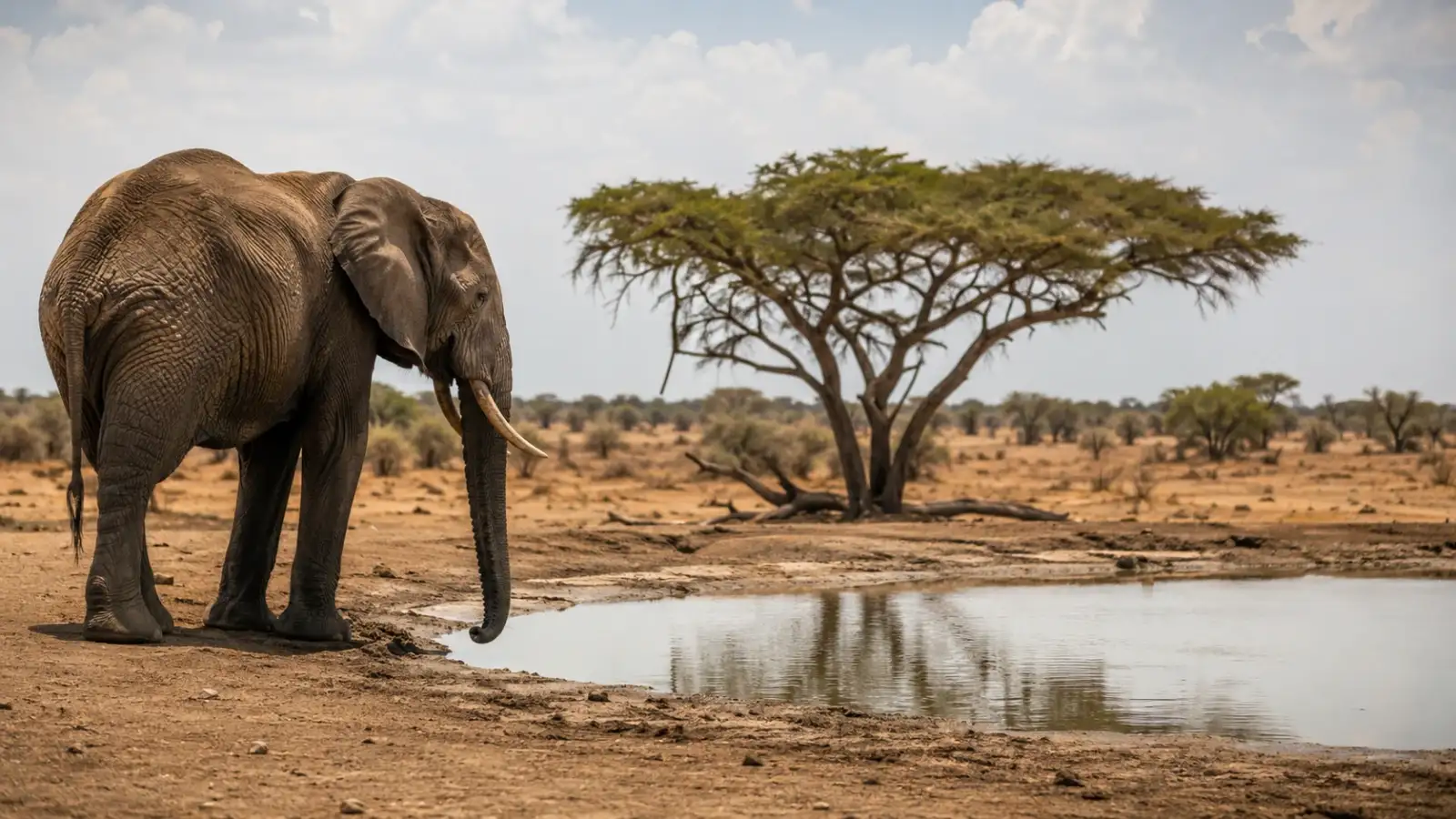
Elephants are famous for their impressive memories, but their ability to remember important places is not simply a matter of having a good memory. Their survival depends on collecting information about their surroundings and using it at the right time. Water sources can be especially important during dry periods, when finding reliable water can mean the difference between surviving and struggling.
So, how do elephants remember water sources for such long periods, and what helps them navigate across large landscapes?
Over time, elephants can build an internal map of their surroundings. This map is not necessarily like a picture in the human mind. Instead, it may involve memories of locations, routes, smells, sounds and other environmental clues.
Older elephants can be particularly valuable to their family groups because they have experienced more seasons and may have encountered places that younger elephants have never visited.
Her experience may help the herd make decisions about where to travel, where to find food and where water may be available. During difficult dry periods, this experience can become particularly valuable.
Studies of elephant behaviour have suggested that older matriarchs can respond differently to threats and environmental challenges than younger elephants. Their accumulated experience may therefore provide advantages to the entire group.
This is one reason elephant memory is more than an interesting biological feature. It can have a direct effect on survival.
Landmarks such as hills, trees, riverbeds and changes in the landscape can help animals navigate. Elephants can also use their senses of smell and hearing to gather information about their surroundings.
When an elephant has travelled the same route repeatedly, the journey may become part of its long-term spatial memory. This can help the animal return to familiar areas when conditions make those locations useful again.
Water itself may sometimes be detectable through environmental smells, particularly when the source is nearby. Vegetation around a water source may also have a distinctive scent.
Elephants use their trunks to investigate their surroundings, constantly collecting information from the air and objects around them. Their powerful sense of smell may therefore work alongside spatial memory when they are searching for important resources.
They can also communicate across surprisingly long distances using low-frequency sounds known as infrasound. These sounds can travel further than many sounds humans can hear.
Communication within a family group may help elephants stay together and share information about their surroundings. While scientists are still studying exactly how elephants communicate information about resources, their complex social behaviour suggests that knowledge can be important at group level.
Rivers may shrink, small pools can disappear and vegetation becomes less abundant. In these conditions, knowing where dependable water sources are located can save enormous amounts of energy.
An experienced elephant may remember locations visited during previous dry periods. This knowledge could help a herd make better movement decisions rather than wandering randomly in search of water.
For elephants in the wild , remembering useful places can therefore be a powerful survival advantage.
During this time, they can observe how experienced elephants behave and follow them across the landscape. A young elephant may gradually learn which areas are useful during different seasons.
This creates an interesting form of social learning. A matriarch's experience can benefit younger elephants, which may eventually use that knowledge themselves.
In this way, important environmental information can remain within an elephant family for many years.
What researchers can observe is how elephants respond to familiar environments, routes and changing conditions. Their behaviour provides strong evidence that they have impressive long-term spatial memories.
The exact length and detail of an individual elephant's memory can vary, and researchers are still learning how these memories are formed and retrieved.
A mature elephant may have travelled through the same landscape across many seasons, experiencing droughts, rainfall, changing vegetation and shifting water sources. That accumulated experience can become valuable knowledge for the whole family.
So, when an elephant appears to know exactly where to go after years away, it is not simply showing off an impressive memory. It may be using a lifetime of environmental information to make one of the most important decisions in the wild.
For an animal that can travel vast distances in search of food and water, remembering the landscape may be one of nature's most valuable survival tools.
Elephants are famous for their impressive memories, but their ability to remember important places is not simply a matter of having a good memory. Their survival depends on collecting information about their surroundings and using it at the right time. Water sources can be especially important during dry periods, when finding reliable water can mean the difference between surviving and struggling.
So, how do elephants remember water sources for such long periods, and what helps them navigate across large landscapes?
Elephants Build Detailed Memories of Their Environment
Elephants live in complex environments where conditions can change from one season to another. A waterhole that is full during the rainy season may become dry months later, while another source may remain available for much longer.Over time, elephants can build an internal map of their surroundings. This map is not necessarily like a picture in the human mind. Instead, it may involve memories of locations, routes, smells, sounds and other environmental clues.
Older elephants can be particularly valuable to their family groups because they have experienced more seasons and may have encountered places that younger elephants have never visited.
Older Elephants Can Carry Valuable Knowledge
An elephant herd is often made up of related females and their young. A mature female known as a matriarch can play an important role in guiding the group.Her experience may help the herd make decisions about where to travel, where to find food and where water may be available. During difficult dry periods, this experience can become particularly valuable.
Studies of elephant behaviour have suggested that older matriarchs can respond differently to threats and environmental challenges than younger elephants. Their accumulated experience may therefore provide advantages to the entire group.
This is one reason elephant memory is more than an interesting biological feature. It can have a direct effect on survival.
They May Remember Routes, Not Just Waterholes
An elephant does not necessarily need to remember only the exact location of a water source. It may also remember the route that leads there.Landmarks such as hills, trees, riverbeds and changes in the landscape can help animals navigate. Elephants can also use their senses of smell and hearing to gather information about their surroundings.
When an elephant has travelled the same route repeatedly, the journey may become part of its long-term spatial memory. This can help the animal return to familiar areas when conditions make those locations useful again.
Their Sense of Smell May Help
Elephants have an exceptional sense of smell, and scent can provide valuable information about their environment.Water itself may sometimes be detectable through environmental smells, particularly when the source is nearby. Vegetation around a water source may also have a distinctive scent.
Elephants use their trunks to investigate their surroundings, constantly collecting information from the air and objects around them. Their powerful sense of smell may therefore work alongside spatial memory when they are searching for important resources.
They Can Detect Information From Other Elephants
Elephants are highly social animals and communicate using a combination of sounds, body movements, touch and chemical signals.They can also communicate across surprisingly long distances using low-frequency sounds known as infrasound. These sounds can travel further than many sounds humans can hear.
Communication within a family group may help elephants stay together and share information about their surroundings. While scientists are still studying exactly how elephants communicate information about resources, their complex social behaviour suggests that knowledge can be important at group level.
Why Water Memory Matters During Droughts
During periods of plentiful rain, water may be relatively easy to find. But drought can completely change the situation.Rivers may shrink, small pools can disappear and vegetation becomes less abundant. In these conditions, knowing where dependable water sources are located can save enormous amounts of energy.
An experienced elephant may remember locations visited during previous dry periods. This knowledge could help a herd make better movement decisions rather than wandering randomly in search of water.
For elephants in the wild , remembering useful places can therefore be a powerful survival advantage.
Young Elephants Can Learn From Older Family Members
Elephant knowledge is not necessarily passed down through genes alone. Young elephants spend years living alongside older members of their family groups.You may also like
- “If we had left 10-15 minutes earlier…”: How a tea break saved 5 Chhattisgarh friends from Nepal floods
- 8th Pay Commission: What is the latest on the fitment factor and salary? Here are the 5 latest updates..
- Kajari Teej Puja Samagri: Tomorrow is the worship of Kajari Teej, note down the list of worship materials..
- How many days after Raksha Bandhan can the Rakhi be removed? Find out the right time and the rules regarding the sacred thread.
- Payment trends have shifted rapidly; UPI is now preferred over cards, leaving credit and debit cards behind.
During this time, they can observe how experienced elephants behave and follow them across the landscape. A young elephant may gradually learn which areas are useful during different seasons.
This creates an interesting form of social learning. A matriarch's experience can benefit younger elephants, which may eventually use that knowledge themselves.
In this way, important environmental information can remain within an elephant family for many years.
Do Elephants Really Remember a Water Source for Years?
It is important not to imagine elephant memory as a perfect recording of every place they have ever visited. Scientists cannot simply ask an elephant whether it remembers a particular waterhole from several years ago.What researchers can observe is how elephants respond to familiar environments, routes and changing conditions. Their behaviour provides strong evidence that they have impressive long-term spatial memories.
The exact length and detail of an individual elephant's memory can vary, and researchers are still learning how these memories are formed and retrieved.
An Incredible Memory Built for Survival
The ability of elephants to remember important water sources is part of a much bigger story about elephant intelligence and memory. Their brains, senses, social relationships and years of experience work together to help them navigate complicated environments.A mature elephant may have travelled through the same landscape across many seasons, experiencing droughts, rainfall, changing vegetation and shifting water sources. That accumulated experience can become valuable knowledge for the whole family.
So, when an elephant appears to know exactly where to go after years away, it is not simply showing off an impressive memory. It may be using a lifetime of environmental information to make one of the most important decisions in the wild.
For an animal that can travel vast distances in search of food and water, remembering the landscape may be one of nature's most valuable survival tools.






Loving Newspoint? Download the app now
