
Ever Tried Surat's Khawsa? Discover the Coconut Noodle Dish Inspired by Khao Suey

Surat is famous for its vibrant street-food culture, but one dish that deserves special attention is khawsa, also spelt khavsa or khausa. At first glance, it looks remarkably similar to Burmese khao suey , with noodles served in a creamy coconut-based curry and finished with crunchy toppings. However, Surat's version has developed its own distinctive personality through Indian spices, chutneys and Gujarati-style accompaniments.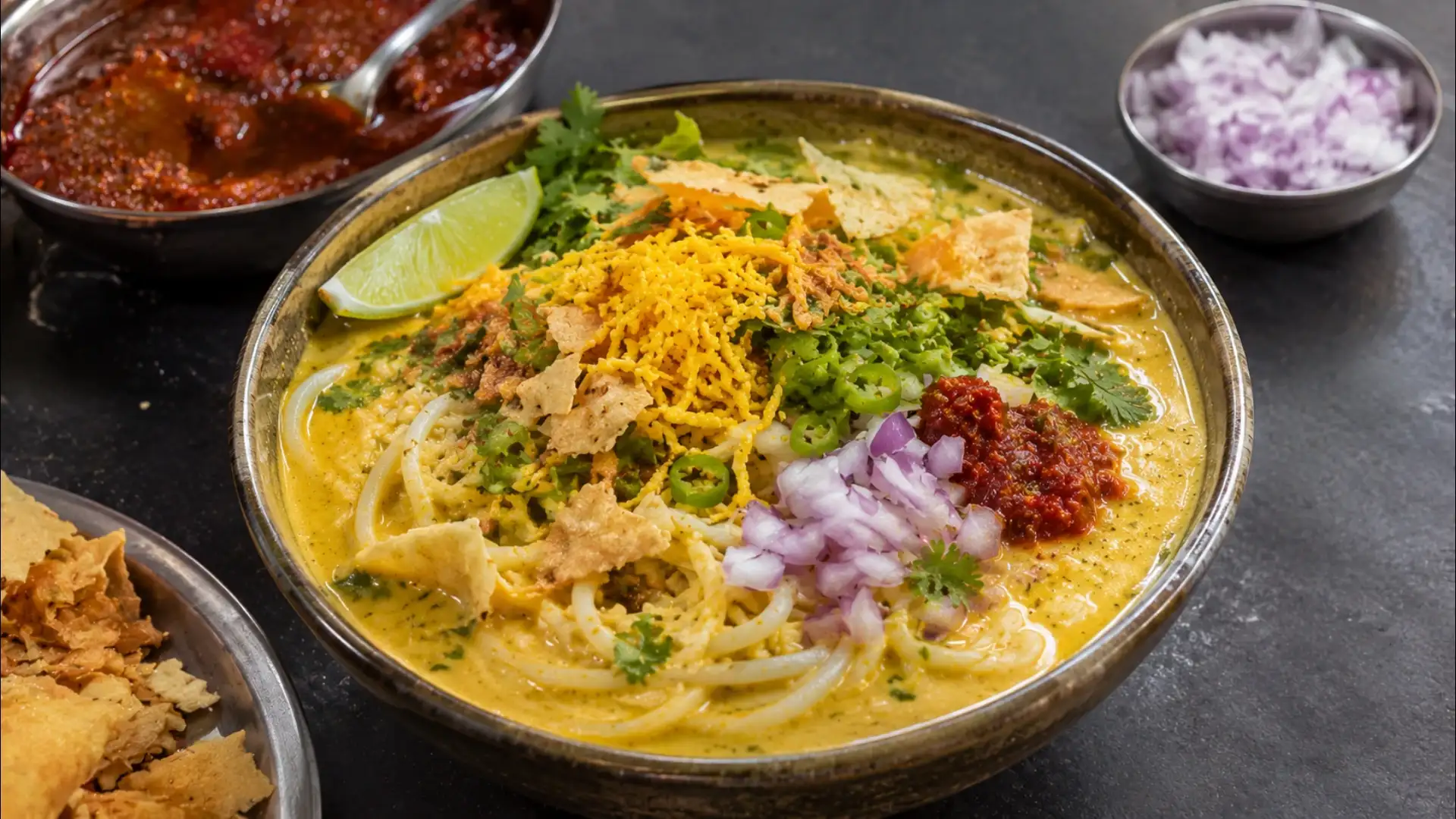
The story behind this dish is just as interesting as its taste. Khawsa reflects the culinary connections between Burma and Gujarat, particularly through communities that travelled between the regions and brought their food traditions back home.
Over time, the dish was adapted to local preferences in Surat, especially around Rander. Coconut gravy and noodles remained its foundation, while Indian spices, garlic chutney, papdi, crushed puri and other crunchy toppings gave it a distinctly Surati character.
The two dishes share a similar concept, but they are not identical. Burmese khao suey traditionally features a coconut-based broth with noodles and accompaniments such as fried noodles, onions and lime. Surat's khawsa is generally more chatpata, with additional chutneys and crunchy Indian toppings.
Cooking Time: 25 minutes
Total Time: 45 minutes
Servings: 3-4
It is this combination of creamy, spicy, tangy and crunchy elements that makes Surat's khawsa so distinctive.
If you enjoy experimenting with regional Indian food, this vegetarian version is worth making at home. It brings together the comforting richness of coconut noodles and the unmistakable chatpata flavours of Gujarati street food.
The story behind this dish is just as interesting as its taste. Khawsa reflects the culinary connections between Burma and Gujarat, particularly through communities that travelled between the regions and brought their food traditions back home.
How Is Surat's Khawsa Connected to Burmese Khao Suey?
Khawsa is believed to have developed from Burmese coconut noodle preparations, particularly ohn no khao swe. Historical accounts connect its journey to Gujarati Memon communities and other trading families who travelled to Burma, now Myanmar, during the early twentieth century.Over time, the dish was adapted to local preferences in Surat, especially around Rander. Coconut gravy and noodles remained its foundation, while Indian spices, garlic chutney, papdi, crushed puri and other crunchy toppings gave it a distinctly Surati character.
The two dishes share a similar concept, but they are not identical. Burmese khao suey traditionally features a coconut-based broth with noodles and accompaniments such as fried noodles, onions and lime. Surat's khawsa is generally more chatpata, with additional chutneys and crunchy Indian toppings.
Easy Vegetarian Surat-Style Khawsa Recipe
Preparation Time: 20 minutesCooking Time: 25 minutes
Total Time: 45 minutes
Servings: 3-4
Ingredients
For the coconut gravy:- 2 cups coconut milk
- 1 cup water or vegetable stock
- 1 medium onion, finely chopped
- 1 tablespoon ginger-garlic paste
- 1 tablespoon gram flour (besan)
- 1/2 teaspoon turmeric powder
- 1 teaspoon red chilli powder
- 1/2 teaspoon coriander powder
- 1 tablespoon oil
- Salt to taste
- 200 g boiled noodles
- 1/2 cup crushed papdi or crispy puri
- 2 tablespoons garlic chutney
- 2 tablespoons chopped spring onions
- 1 small onion, finely chopped
- 1 tablespoon lemon juice
- Chaat masala to taste
- Fresh coriander leaves
- Sev or crispy fried onions (optional)
Method
- Cook the noodles according to the packet instructions, drain and keep aside.
- Heat oil in a pan and sauté chopped onions until translucent. Add ginger-garlic paste and cook briefly.
- Mix gram flour with a little water to make a smooth paste. Add it to the pan and stir continuously.
- Add turmeric, red chilli powder, coriander powder and salt. Cook for a minute.
- Gradually pour in coconut milk and vegetable stock, stirring to avoid lumps.
- Simmer on a low flame for 8-10 minutes until the gravy becomes creamy. Avoid boiling it vigorously.
- Place boiled noodles in serving bowls and pour the hot coconut gravy over them.
- Top with garlic chutney, chopped onions, spring onions, crushed papdi, sev and fresh coriander.
- Finish with lemon juice and a sprinkle of chaat masala.
What Makes Khawsa Different From Regular Noodle Soup?
The magic of khawsa lies in its combination of textures and flavours. The coconut gravy provides a creamy base, the noodles make it filling, and the garlic chutney adds a spicy kick. Papdi, puri and sev bring the crunch, while lemon juice adds a refreshing tang.It is this combination of creamy, spicy, tangy and crunchy elements that makes Surat's khawsa so distinctive.
A Delicious Example of Food Travelling Across Cultures
Khawsa is more than just another street-food recipe. It tells a story of migration, trade and culinary adaptation. A Burmese-inspired preparation travelled across communities and gradually became a much-loved part of Surat's food identity.If you enjoy experimenting with regional Indian food, this vegetarian version is worth making at home. It brings together the comforting richness of coconut noodles and the unmistakable chatpata flavours of Gujarati street food.
Next Story