
Everyday Foods You Think Are Indian But Are Not: From Coffee to Tomatoes, Their Real Origins

Many ingredients that define everyday Indian cooking feel so familiar that it is easy to assume they originated in India. From spicy curries to the morning cup of coffee, these foods seem deeply rooted in the country’s culture. However, the truth is quite surprising. Several everyday foods you think are Indian but are not actually travelled thousands of miles through ancient trade routes before becoming part of Indian kitchens.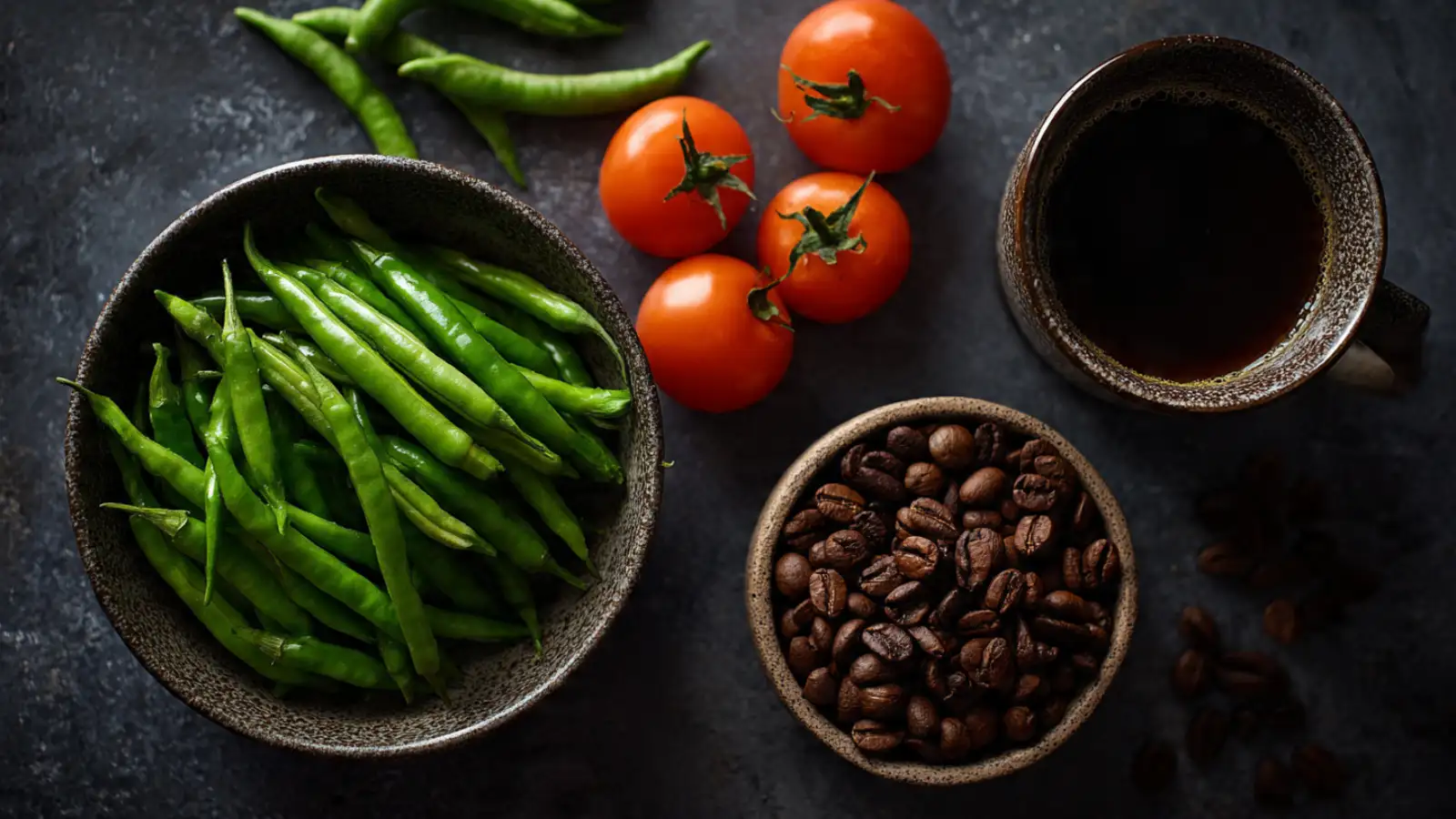
Over centuries, traders, explorers and colonial exchanges introduced many ingredients to the subcontinent. With time, these foods blended seamlessly into Indian cuisine, becoming essential parts of daily meals and traditions. Here are some popular foods widely used in India that originally came from different parts of the world.
Coffee: A Global Beverage That Found a Home in India
For many Indians, the day begins with a refreshing cup of coffee. But coffee did not originate in India. The drink is believed to have its roots in Ethiopia and later spread across Yemen and the Middle East.
According to legend, a Sufi saint named Baba Budan secretly brought seven coffee beans from Yemen to India in the 17th century. He planted them in the hills of Karnataka, which eventually led to coffee cultivation in the region. Today, places like Coorg and Chikmagalur are famous for producing high-quality Indian coffee.
Potatoes: The Humble Tuber from South America
Potatoes are now an inseparable part of Indian meals. From crispy samosas to aloo parathas and rich curries, the vegetable is used in countless dishes across the country.
Interestingly, potatoes are native to the Andes region of South America, particularly present-day Peru and Bolivia. Portuguese traders introduced them to India in the 17th century. Over time, this simple tuber became one of the most versatile and widely used ingredients in Indian cuisine.
Chillies: The Spice That Redefined Indian Heat
Indian food is famous worldwide for its bold and spicy flavours, and chillies play a major role in that identity. Yet, chillies are not native to India.
They originally came from Central and South America. Portuguese traders brought chillies to India in the late 15th and early 16th centuries after global trade routes connected the Americas with Asia. Because chillies were cheaper and easier to grow than black pepper, they quickly became the preferred way to add spice to Indian dishes.
Tamarind: A Tangy Fruit from Africa
Tamarind is a key ingredient in many Indian dishes, especially in South Indian cuisine. It is commonly used in chutneys, sambhar, rasam and several curries to add a distinctive sour flavour.
Despite its strong association with Indian cooking, tamarind actually originated in tropical Africa. Ancient trade networks brought the fruit to India centuries ago, where it became widely accepted and integrated into local culinary traditions.
Betel Leaves: A Tradition with Southeast Asian Roots
Betel leaves are commonly used to prepare paan, a traditional mouth freshener often consumed after meals and during cultural ceremonies.
Although paan is closely linked with Indian customs and rituals, the betel plant is believed to have originated in Southeast Asia, particularly regions around Malaysia and Indonesia. Over time, the practice of chewing betel leaves spread across South and Southeast Asia, eventually becoming a deeply embedded part of Indian social traditions.
Tomatoes: A Modern Staple in Indian Kitchens
Tomatoes are now a fundamental ingredient in Indian cooking. They form the base of many gravies, curries, chutneys and sauces across different regional cuisines.
However, tomatoes are native to western South America and were first domesticated in Mexico. Portuguese traders brought them to India in the 16th century. Despite arriving relatively late in the country’s culinary history, tomatoes quickly became indispensable in Indian kitchens.
How Global Trade Shaped Indian Cuisine
The story of these ingredients shows how Indian cuisine has evolved through centuries of cultural exchange and global trade. While these foods may not have originated in India, they have been embraced so deeply that they now feel completely Indian.
This fascinating blend of local traditions and global influences is what makes Indian cuisine one of the most diverse and dynamic food cultures in the world.
Over centuries, traders, explorers and colonial exchanges introduced many ingredients to the subcontinent. With time, these foods blended seamlessly into Indian cuisine, becoming essential parts of daily meals and traditions. Here are some popular foods widely used in India that originally came from different parts of the world.
Coffee: A Global Beverage That Found a Home in India
For many Indians, the day begins with a refreshing cup of coffee. But coffee did not originate in India. The drink is believed to have its roots in Ethiopia and later spread across Yemen and the Middle East.
According to legend, a Sufi saint named Baba Budan secretly brought seven coffee beans from Yemen to India in the 17th century. He planted them in the hills of Karnataka, which eventually led to coffee cultivation in the region. Today, places like Coorg and Chikmagalur are famous for producing high-quality Indian coffee.
Potatoes: The Humble Tuber from South America
Potatoes are now an inseparable part of Indian meals. From crispy samosas to aloo parathas and rich curries, the vegetable is used in countless dishes across the country.
Interestingly, potatoes are native to the Andes region of South America, particularly present-day Peru and Bolivia. Portuguese traders introduced them to India in the 17th century. Over time, this simple tuber became one of the most versatile and widely used ingredients in Indian cuisine.
Chillies: The Spice That Redefined Indian Heat
Indian food is famous worldwide for its bold and spicy flavours, and chillies play a major role in that identity. Yet, chillies are not native to India.
They originally came from Central and South America. Portuguese traders brought chillies to India in the late 15th and early 16th centuries after global trade routes connected the Americas with Asia. Because chillies were cheaper and easier to grow than black pepper, they quickly became the preferred way to add spice to Indian dishes.
Tamarind: A Tangy Fruit from Africa
Tamarind is a key ingredient in many Indian dishes, especially in South Indian cuisine. It is commonly used in chutneys, sambhar, rasam and several curries to add a distinctive sour flavour.
You may also like
- WhatsApp Introduces Video Messaging for iPhone Users
- WhatsApp Video Messages on iPhone: How to Record and Send 60-Second Video Replies in Chats
- Health Benefits of Soaked Pumpkin Seeds with Milk
- How to Block Unwanted YouTube Channels from Your Recommendations
- Discovering the Indian Pariah Dog: A 15,000-Year-Old Companion
Despite its strong association with Indian cooking, tamarind actually originated in tropical Africa. Ancient trade networks brought the fruit to India centuries ago, where it became widely accepted and integrated into local culinary traditions.
Betel Leaves: A Tradition with Southeast Asian Roots
Betel leaves are commonly used to prepare paan, a traditional mouth freshener often consumed after meals and during cultural ceremonies.
Although paan is closely linked with Indian customs and rituals, the betel plant is believed to have originated in Southeast Asia, particularly regions around Malaysia and Indonesia. Over time, the practice of chewing betel leaves spread across South and Southeast Asia, eventually becoming a deeply embedded part of Indian social traditions.
Tomatoes: A Modern Staple in Indian Kitchens
Tomatoes are now a fundamental ingredient in Indian cooking. They form the base of many gravies, curries, chutneys and sauces across different regional cuisines.
However, tomatoes are native to western South America and were first domesticated in Mexico. Portuguese traders brought them to India in the 16th century. Despite arriving relatively late in the country’s culinary history, tomatoes quickly became indispensable in Indian kitchens.
How Global Trade Shaped Indian Cuisine
The story of these ingredients shows how Indian cuisine has evolved through centuries of cultural exchange and global trade. While these foods may not have originated in India, they have been embraced so deeply that they now feel completely Indian.
This fascinating blend of local traditions and global influences is what makes Indian cuisine one of the most diverse and dynamic food cultures in the world.






More from our partners


Loving Newspoint? Download the app now
