
From Ragi to Sesame Seeds: 8 Calcium-Rich Indian Foods Worth Adding to Your Diet

Calcium is an essential mineral that helps maintain strong bones and teeth, supports muscle movement and plays an important role in nerve function. While milk is often considered the first source of calcium, several everyday Indian foods also provide this important nutrient. From traditional grains and leafy vegetables to seeds, pulses and dairy products, many familiar ingredients can contribute to daily calcium intake. Including a variety of these foods in regular meals can help support overall nutrition without depending on a single source. Here are eight commonly available Indian foods that naturally contain calcium.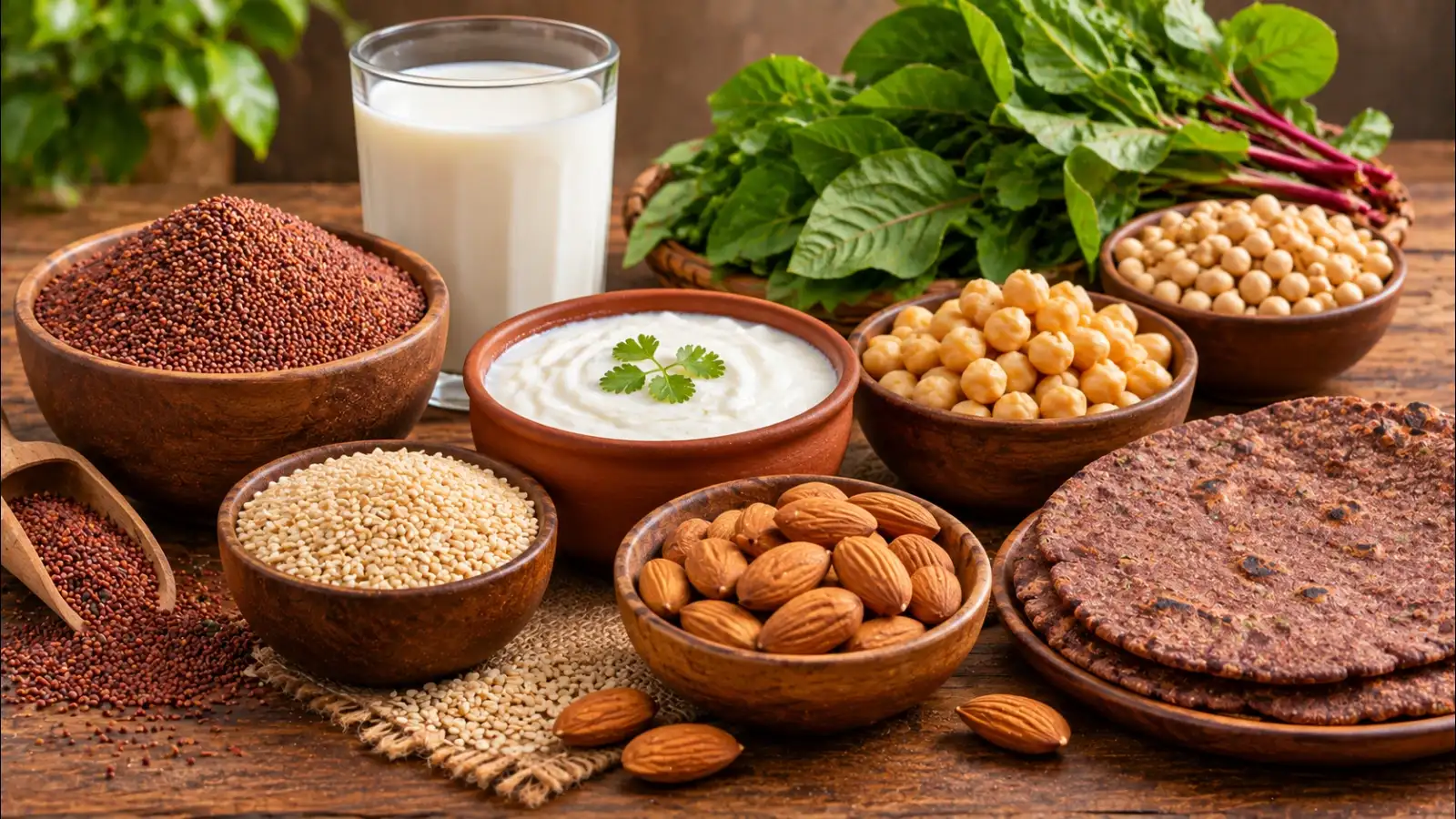
It can be prepared as ragi roti, dosa, porridge, idli or traditional mudde. Regularly including ragi in a balanced diet can contribute significantly to calcium intake. Its fibre content also makes it a useful grain for everyday meals.
White and black sesame seeds can be added to chutneys, salads, vegetable dishes and homemade laddoos. Sesame-based preparations are particularly popular during winter and festivals such as Makar Sankranti.
Whole sesame seeds contain compounds that can limit mineral absorption, so grinding or crushing them may help make their nutrients more accessible.
It can be included in everyday meals as plain milk, porridge, smoothies or homemade curd. Fortified milk may also provide vitamin D, depending on the product.
People who are lactose intolerant can explore alternatives such as lactose-free milk or other calcium-rich foods.
It provides calcium along with protein and other nutrients. The live cultures found in many types of curd also support gut health.
A bowl of plain homemade curd can be a simple way to add calcium to lunch or dinner.
They contain calcium, iron, fibre and vitamins. They can be cooked with garlic and spices, added to dal or prepared as a simple leafy vegetable dish.
However, amaranth leaves also contain oxalates, which can reduce calcium absorption. Cooking them and eating a varied diet are sensible ways to include them.
They can be prepared as kala chana curry, chana masala, roasted snacks or fresh salads. Although chickpeas are not as calcium-rich as ragi or sesame seeds, they can contribute to overall mineral intake when included regularly.
Boiled soybeans can be added to salads, while soy chunks can be used in curries and pulao. Calcium content varies between soy products, so calcium-set tofu can be another useful option for those looking to increase their intake.
A small handful can be added to breakfast bowls, porridge, smoothies or homemade snacks. Although almonds provide calcium, they should be considered one part of a varied diet rather than the main source.
1. Ragi: A Traditional Grain With High Calcium Content
Ragi, also known as finger millet, is one of the richest plant-based sources of calcium among commonly consumed grains. It is widely used in Karnataka, Tamil Nadu and other parts of India.It can be prepared as ragi roti, dosa, porridge, idli or traditional mudde. Regularly including ragi in a balanced diet can contribute significantly to calcium intake. Its fibre content also makes it a useful grain for everyday meals.
2. Sesame Seeds: Small Seeds With Impressive Nutritional Value
Sesame seeds, commonly called til, are frequently used in Indian cooking and traditional sweets. They contain calcium, healthy fats, protein and other minerals.White and black sesame seeds can be added to chutneys, salads, vegetable dishes and homemade laddoos. Sesame-based preparations are particularly popular during winter and festivals such as Makar Sankranti.
Whole sesame seeds contain compounds that can limit mineral absorption, so grinding or crushing them may help make their nutrients more accessible.
3. Milk: A Familiar Source of Calcium
Milk remains one of the most convenient and widely consumed sources of dietary calcium in India. It also provides protein, phosphorus and vitamin B12.It can be included in everyday meals as plain milk, porridge, smoothies or homemade curd. Fortified milk may also provide vitamin D, depending on the product.
People who are lactose intolerant can explore alternatives such as lactose-free milk or other calcium-rich foods.
4. Curd: A Calcium-Rich Addition to Indian Meals
Curd is a popular part of Indian food traditions and is commonly served with rice, parathas, pulao and everyday meals.It provides calcium along with protein and other nutrients. The live cultures found in many types of curd also support gut health.
A bowl of plain homemade curd can be a simple way to add calcium to lunch or dinner.
5. Amaranth Leaves: A Nutritious Green Vegetable
Amaranth leaves, known by different regional names such as chaulai, are commonly used in Indian vegetable preparations.They contain calcium, iron, fibre and vitamins. They can be cooked with garlic and spices, added to dal or prepared as a simple leafy vegetable dish.
You may also like
- In 2016, a Mumbai businessman with no farming experience lost his first strawberry crop; 10 years later, Ketan Sodha's soilless Mahabaleshwar farm reports 8,000 kg of fruit and Rs 44 lakh in sales
- A Vadodara engineer left his corporate career in 2012 to take travellers beyond hotels and into villages; 14 years later, Chirag Munjani's rural travel venture runs 70 to 80 trips a year across 16 to 17 destinations
- 5 DIY ideas to create a beautiful mini aquarium at home: simple ways to set up a charming aquatic corner on a budget
- Less controversial, more 'extraOrdinary'
- BTS' V Learns About Diwali From Indian Fans, His 'Diwali Mubarak' Wish Wins Hearts
However, amaranth leaves also contain oxalates, which can reduce calcium absorption. Cooking them and eating a varied diet are sensible ways to include them.
6. Chickpeas: A Useful Plant-Based Calcium Source
Chickpeas, known as chana, are widely used in Indian kitchens. They provide plant-based protein, fibre, iron and some calcium.They can be prepared as kala chana curry, chana masala, roasted snacks or fresh salads. Although chickpeas are not as calcium-rich as ragi or sesame seeds, they can contribute to overall mineral intake when included regularly.
7. Soybeans: A Protein-Rich Food With Calcium
Soybeans provide plant-based protein and minerals, including calcium. They can be used in a variety of Indian dishes, making them useful for people following vegetarian diets.Boiled soybeans can be added to salads, while soy chunks can be used in curries and pulao. Calcium content varies between soy products, so calcium-set tofu can be another useful option for those looking to increase their intake.
8. Almonds: A Convenient Calcium-Containing Snack
Almonds are commonly eaten in Indian households, either soaked overnight or enjoyed as a snack. They contain calcium, magnesium, healthy fats, protein and vitamin E.A small handful can be added to breakfast bowls, porridge, smoothies or homemade snacks. Although almonds provide calcium, they should be considered one part of a varied diet rather than the main source.
Tips to Get More Calcium From Your Everyday Diet
- Include different calcium-rich foods rather than depending on one ingredient.
- Combine calcium-containing foods with a balanced diet that provides adequate vitamin D.
- Include protein-rich foods to support overall bone health.
- Add ragi, sesame seeds and leafy vegetables to traditional recipes.
- Choose fortified foods when appropriate and check their nutrition labels.
- Consult a healthcare professional if you are concerned about calcium deficiency or need supplements.






Loving Newspoint? Download the app now
