
8 Common Seeds That Can Make Your Everyday Meals More Nutritious

Seeds may be small, but they can contribute valuable nutrients to everyday meals. Many commonly available seeds contain fibre, healthy fats, plant-based protein, vitamins and minerals. They can also add different textures and flavours to breakfast bowls, salads, smoothies and homemade snacks. From chia and flaxseeds to pumpkin and sesame seeds, there are several easy options to explore without making major changes to your eating routine. Including a variety of seeds in moderate portions can help make meals more interesting and balanced. Here are eight everyday seeds that are worth adding to your regular diet.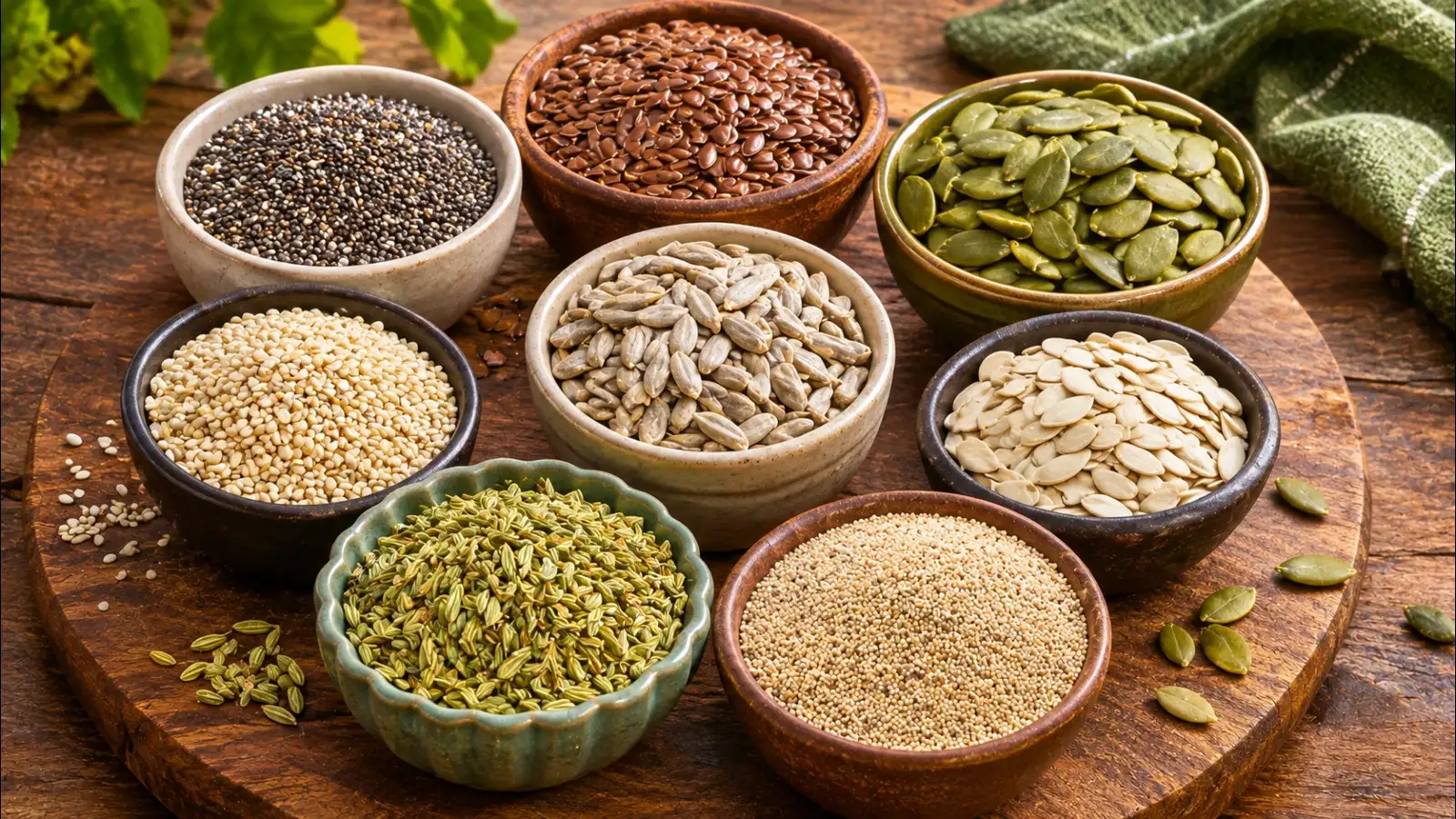
You can add soaked chia seeds to smoothies, yoghurt, overnight oats and homemade puddings. They are also useful for preparing refreshing drinks. Soaking them before consumption makes them easier to incorporate into different recipes.
Ground flaxseeds are generally easier for the body to digest than whole seeds. You can sprinkle them over porridge, mix them into roti dough or add them to smoothies and homemade energy balls.
You can roast them lightly with a little salt and enjoy them as a snack. They also work well in salads, vegetable soups, trail mixes and homemade granola.
White and black sesame seeds can be added to vegetable stir-fries, chutneys, salads and homemade breads. In Indian kitchens, they are also used to prepare til laddoos and other traditional snacks, particularly during winter.
Their mild, slightly nutty flavour makes them suitable for breakfast cereals, salads and homemade snack mixes. You can also blend them into spreads or sprinkle them over roasted vegetables.
Roasted watermelon seeds can be eaten on their own or mixed with other nuts and seeds. They can also be used as a crunchy topping for salads and breakfast bowls.
You can use fennel seeds in vegetable curries, spice blends, homemade pickles and herbal infusions. Many people also chew a small quantity after meals as a traditional digestive habit.
They can be soaked and ground into a paste to add thickness and texture to vegetable curries. Poppy seeds are also used in traditional sweets, bakery preparations and some regional dishes.
Introduce fibre-rich seeds gradually and drink enough water, particularly when adding chia or flaxseeds to your diet. People with seed allergies should avoid the relevant varieties. If you have a medical condition or follow a specific dietary plan, seek individual advice from a qualified professional.
Everyday seeds can be an easy addition to a balanced diet. Chia, flax, pumpkin, sesame, sunflower, watermelon, fennel and poppy seeds each offer different nutrients and culinary uses. You can add them to breakfast dishes, salads, curries and homemade snacks without changing your regular eating habits. Choosing a variety and enjoying moderate portions is a practical way to make everyday meals more interesting and nutritious.
1. Chia Seeds
Chia seeds are known for their high fibre content and ability to absorb water, forming a gel-like texture when soaked. They also contain plant-based omega-3 fatty acids, protein and minerals such as calcium and magnesium.You can add soaked chia seeds to smoothies, yoghurt, overnight oats and homemade puddings. They are also useful for preparing refreshing drinks. Soaking them before consumption makes them easier to incorporate into different recipes.
2. Flaxseeds
Flaxseeds are a popular source of plant-based omega-3 fatty acids, particularly alpha-linolenic acid (ALA). They also provide dietary fibre and lignans, which are natural plant compounds.Ground flaxseeds are generally easier for the body to digest than whole seeds. You can sprinkle them over porridge, mix them into roti dough or add them to smoothies and homemade energy balls.
3. Pumpkin Seeds
Pumpkin seeds, also called pepitas, are packed with nutrients, including magnesium, zinc, iron and plant-based protein. Their mild nutty flavour makes them suitable for both sweet and savoury dishes.You can roast them lightly with a little salt and enjoy them as a snack. They also work well in salads, vegetable soups, trail mixes and homemade granola.
4. Sesame Seeds
Sesame seeds are commonly used in Indian cooking and traditional sweets. They contain healthy fats, protein, fibre and minerals such as calcium, iron and copper.White and black sesame seeds can be added to vegetable stir-fries, chutneys, salads and homemade breads. In Indian kitchens, they are also used to prepare til laddoos and other traditional snacks, particularly during winter.
5. Sunflower Seeds
Sunflower seeds are a convenient source of vitamin E, healthy fats, magnesium and plant-based protein. Vitamin E acts as an antioxidant that helps protect cells from oxidative damage.Their mild, slightly nutty flavour makes them suitable for breakfast cereals, salads and homemade snack mixes. You can also blend them into spreads or sprinkle them over roasted vegetables.
6. Watermelon Seeds
Watermelon seeds are often discarded while eating the fruit, but the dried and roasted kernels can be enjoyed as a nutritious snack. They provide protein, healthy fats, magnesium and iron.Roasted watermelon seeds can be eaten on their own or mixed with other nuts and seeds. They can also be used as a crunchy topping for salads and breakfast bowls.
7. Fennel Seeds
Fennel seeds, commonly known as saunf, are widely used in Indian households. They contain fibre and small amounts of minerals, along with naturally occurring aromatic compounds that give them their distinctive flavour.You can use fennel seeds in vegetable curries, spice blends, homemade pickles and herbal infusions. Many people also chew a small quantity after meals as a traditional digestive habit.
8. Poppy Seeds
Poppy seeds, known as khus khus in India, are tiny seeds commonly used in Indian gravies, sweets and desserts. They contain healthy fats, fibre, calcium and other minerals.They can be soaked and ground into a paste to add thickness and texture to vegetable curries. Poppy seeds are also used in traditional sweets, bakery preparations and some regional dishes.
How to Add Seeds to Your Everyday Diet
Including seeds in your meals does not require complicated recipes. A few simple changes can help you enjoy their flavour and nutritional value.- Add chia or ground flaxseeds to morning porridge or smoothies.
- Sprinkle pumpkin or sunflower seeds over salads and soups.
- Use sesame seeds in vegetable dishes, chutneys and homemade snacks.
- Mix roasted watermelon seeds into homemade trail mixes.
- Add fennel seeds to spice blends and everyday cooking.
- Use poppy seed paste in suitable traditional recipes.
A Few Things to Remember Before Eating Seeds
Although seeds contain useful nutrients, they are also energy-dense. Eating large quantities can increase overall calorie intake, so moderate portions are sensible.Introduce fibre-rich seeds gradually and drink enough water, particularly when adding chia or flaxseeds to your diet. People with seed allergies should avoid the relevant varieties. If you have a medical condition or follow a specific dietary plan, seek individual advice from a qualified professional.
Everyday seeds can be an easy addition to a balanced diet. Chia, flax, pumpkin, sesame, sunflower, watermelon, fennel and poppy seeds each offer different nutrients and culinary uses. You can add them to breakfast dishes, salads, curries and homemade snacks without changing your regular eating habits. Choosing a variety and enjoying moderate portions is a practical way to make everyday meals more interesting and nutritious.






Loving Newspoint? Download the app now
