
Everyday Travel Essentials You Should Always Carry on Every Trip

A good trip can change quickly when you need something you left at home. A dead phone, misplaced document, sudden headache or unexpected delay can turn a simple journey into a stressful experience. That is why knowing what to carry while travelling is less about filling your bag and more about choosing the right essentials. From identification and medicines to a power bank and a little emergency cash, a few ordinary items can make a surprising difference. Travel authorities also recommend keeping copies of important documents, carrying medicines appropriately and having backup ways to stay connected.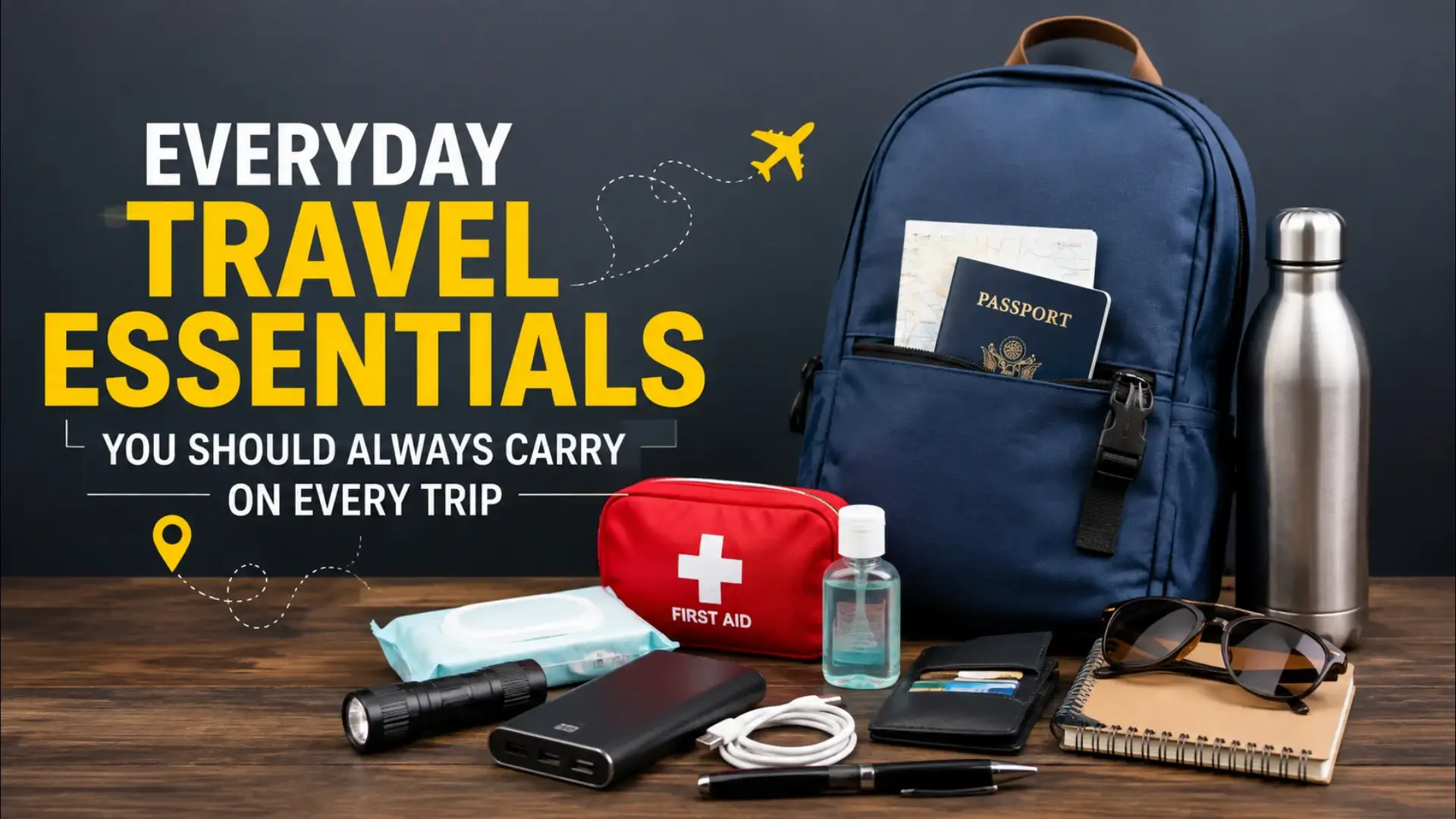
The US Department of State recommends making copies of important travel documents and keeping one set separately from the originals. This simple precaution can be extremely useful if your wallet or bag is lost or stolen.
For international travel, check whether your medicines are permitted at your destination, as regulations can differ between countries.
A reliable charging cable, wall charger and power bank can therefore be among the most practical travel essentials . It is also worth saving important phone numbers offline because mobile connectivity can fail or become unavailable.
Other everyday items such as tissues, hand sanitiser, a reusable water bottle, sunglasses and a light layer of clothing can also prove useful, depending on the destination and season.
Ultimately, the smartest traveller is not the person carrying the biggest bag. It is the person who carries a few carefully chosen things that keep an ordinary inconvenience from becoming a memorable problem.
Keep Your Important Documents Close
Your passport, identity card, driving licence, tickets, hotel details and travel insurance information should be easy to access. Avoid keeping every important document in one place. Carry the originals securely while keeping digital copies on your phone and a separate backup where possible.The US Department of State recommends making copies of important travel documents and keeping one set separately from the originals. This simple precaution can be extremely useful if your wallet or bag is lost or stolen.
Carry Essential Medicines
Even if you rarely need medication, a small personal medical kit can be useful. Regular prescription medicines should be packed in their original labelled packaging, along with copies of prescriptions where appropriate. It is also sensible to carry enough medicine for the journey and some extra in case delays extend your trip.For international travel, check whether your medicines are permitted at your destination, as regulations can differ between countries.
You may also like
- Veg Schezwan Fried Rice Recipe: Make Spicy Restaurant-Style Fried Rice at Home
- Kalonji Bhindi Masala Recipe: Make This Tangy and Flavourful Okra Dish in Just a Few Minutes
- Chanakya Niti: Never Feel Ashamed of These 3 Things in Life, Says Chanakya
- Do You Really Need to Shower Every Day? Your Skin Type and Lifestyle Matter More Than You Think
- Start Your Day With Protein: 4 Easy Chickpea and Paneer Breakfast Recipes
Do Not Forget Your Phone and Power Backup
A smartphone now works as a map, boarding pass, camera, communication tool and emergency contact device. But all of that becomes useless when its battery reaches zero.A reliable charging cable, wall charger and power bank can therefore be among the most practical travel essentials . It is also worth saving important phone numbers offline because mobile connectivity can fail or become unavailable.
Keep Some Cash and Basic Personal Items
Cards and digital payments are convenient, but carrying a modest amount of local cash can help when a small shop, transport service or roadside facility does not accept electronic payments.Other everyday items such as tissues, hand sanitiser, a reusable water bottle, sunglasses and a light layer of clothing can also prove useful, depending on the destination and season.
A Small Backup Can Prevent a Big Problem
The best travel packing is not necessarily the most extensive. It is about anticipating small problems before they happen. A spare charging cable, photocopy of an important document or an extra day of essential medicine may occupy very little space but become invaluable when plans change.Ultimately, the smartest traveller is not the person carrying the biggest bag. It is the person who carries a few carefully chosen things that keep an ordinary inconvenience from becoming a memorable problem.






Loving Newspoint? Download the app now
