
8 Coastal Destinations Surrounded by Forests and Wild Landscapes

There is something especially captivating about a landscape where dense forest stretches almost directly towards the sea. Instead of choosing between a woodland escape and a coastal holiday, these destinations offer both in the same place.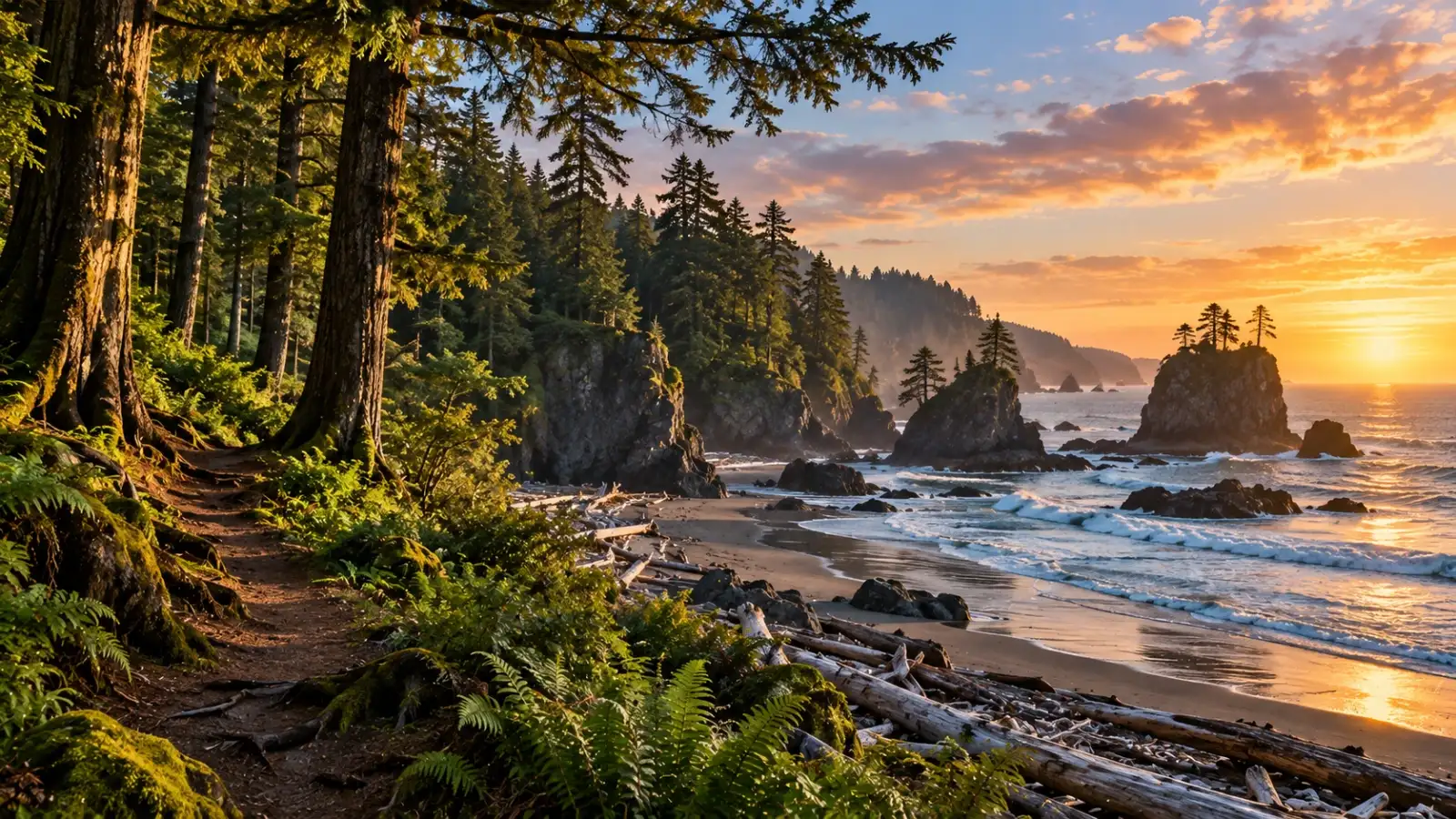
You might spend the morning walking beneath tall trees and the afternoon beside a rocky shoreline. In some locations, forests reach down to hidden coves, while elsewhere enormous trees stand against dramatic cliffs and open ocean.
These landscapes are also home to rich wildlife and unusual plant life. The meeting of land and sea creates habitats that can feel remarkably different from those found further inland.
For travellers who enjoy hiking, photography, quiet beaches and nature-focused holidays, these eight destinations offer a chance to experience the forest and coast together.
In the Hoh Rain Forest, moss-covered trees and dense vegetation create a completely different atmosphere from the beaches found elsewhere in the park. Along the coast, driftwood-covered beaches sit beneath forested hills and rocky cliffs.
The variety means you can combine woodland walks with coastal exploration without travelling far between the two. The weather can be wet and changeable, but that moisture is part of what gives the forests their lush appearance.
The Pacific Rim region combines temperate rainforest with beaches, rocky shores and small coastal communities. Trails pass through enormous trees before reaching the ocean, creating a memorable transition from forest to coast.
The island is also known for opportunities to see wildlife. Depending on the season and location, visitors may encounter whales, sea lions, bald eagles and other coastal species.
Milford Sound is the best-known part of the region, but the wider Fiordland landscape offers plenty of opportunities to experience the combination of forest, mountains and water.
Rain is common, and that helps create numerous temporary waterfalls along the cliffs. On a calm day, the dark green forests reflected in the water can make the landscape look almost unreal.
Boat trips provide one way to experience the fjords, while hiking trails offer a closer look at the forests.
The hills around Sintra are covered with vegetation and include walking routes through shaded forests. As you travel towards the coast, the landscape opens towards dramatic cliffs and beaches.
This destination works particularly well for travellers who want to combine nature with culture. You can explore Sintra's historic attractions before heading towards the Atlantic for a coastal walk.
The contrast between cool woodland paths and windswept ocean viewpoints makes the area feel surprisingly varied despite being close to Lisbon.
Walking trails lead through forests filled with ferns and tall trees before opening towards beaches and cliffs. The Great Ocean Road also passes through the wider region, making it convenient for a road trip.
The combination of forest and sea creates plenty of opportunities for photography. Misty mornings in the rainforest can feel completely different from the bright open views along the coast.
At beaches such as Rialto Beach and Second Beach, enormous pieces of driftwood sit along the shore while dense forest rises behind them.
The landscape feels wild and largely untouched. Rocky sea stacks stand offshore, waves crash against the coastline and towering trees create a dramatic backdrop.
It is an excellent choice for travellers who enjoy atmospheric beaches rather than traditional sandy resort destinations.
The island's forests are particularly atmospheric because of the moss, humidity and enormous old trees. Hiking through them can feel like stepping into another world.
After spending time in the mountains, visitors can return towards the coast and experience the island's warmer, more open environment. This dramatic change in scenery is one of Yakushima's greatest attractions.
Much of this region is difficult to reach, which is part of its appeal. Travellers may explore sections by boat, while longer expeditions can take them deeper into the Patagonian wilderness.
The scenery combines mountains, forests, glaciers and ocean in ways that make the region feel almost untouched. It is particularly suited to adventurous travellers looking for remote nature rather than conventional sightseeing.
This combination also means that a single destination can offer several types of outdoor experience. You might hike through woodland in the morning, explore a beach in the afternoon and watch the sunset over the ocean in the evening.
For photographers, the contrast is particularly appealing. Dark green trees against blue water, mist rising through forests and driftwood scattered across beaches can create dramatic natural scenes without the need for elaborate compositions.
Pack waterproof clothing, comfortable walking shoes and layers that can handle changing conditions. Coastal winds can also make temperatures feel much lower than expected.
It is worth allowing extra time for walks rather than treating the forest as something to drive through on the way to the beach. Some of the best experiences come from taking a trail that connects the two environments.
If wildlife is an important part of your trip, research seasonal opportunities and follow local guidance. Coastal forests can contain fragile ecosystems, so staying on marked trails and avoiding disturbance is important.
From the rainforests of Washington and Vancouver Island to the fjords of New Zealand and the ancient forests of Japan, each destination has its own character. Some are easy to explore on a short holiday, while others reward travellers willing to venture deeper into remote landscapes.
If your ideal trip involves walking beneath towering trees before reaching a wild shoreline, these destinations offer exactly that combination. They prove that sometimes you do not have to choose between the forest and the sea. The most memorable landscapes can be found where the two meet.
You might spend the morning walking beneath tall trees and the afternoon beside a rocky shoreline. In some locations, forests reach down to hidden coves, while elsewhere enormous trees stand against dramatic cliffs and open ocean.
These landscapes are also home to rich wildlife and unusual plant life. The meeting of land and sea creates habitats that can feel remarkably different from those found further inland.
For travellers who enjoy hiking, photography, quiet beaches and nature-focused holidays, these eight destinations offer a chance to experience the forest and coast together.
1. Olympic National Park, United States: Rainforest Beside the Pacific
Washington state's Olympic National Park offers one of the most impressive combinations of forest and coastline in North America. The park contains temperate rainforest, mountains and a rugged Pacific shoreline.In the Hoh Rain Forest, moss-covered trees and dense vegetation create a completely different atmosphere from the beaches found elsewhere in the park. Along the coast, driftwood-covered beaches sit beneath forested hills and rocky cliffs.
The variety means you can combine woodland walks with coastal exploration without travelling far between the two. The weather can be wet and changeable, but that moisture is part of what gives the forests their lush appearance.
2. Vancouver Island, Canada: Wild Coast and Ancient Trees
Vancouver Island is known for its dramatic coastline and extensive forests. The western side of the island is particularly appealing for travellers looking for rugged scenery and a sense of wilderness.The Pacific Rim region combines temperate rainforest with beaches, rocky shores and small coastal communities. Trails pass through enormous trees before reaching the ocean, creating a memorable transition from forest to coast.
The island is also known for opportunities to see wildlife. Depending on the season and location, visitors may encounter whales, sea lions, bald eagles and other coastal species.
3. Fiordland, New Zealand: Forests Around Deep Fjords
New Zealand's Fiordland is a spectacular example of forest meeting water. Steep mountains rise dramatically from deep fjords, with dense vegetation covering many of the slopes.Milford Sound is the best-known part of the region, but the wider Fiordland landscape offers plenty of opportunities to experience the combination of forest, mountains and water.
Rain is common, and that helps create numerous temporary waterfalls along the cliffs. On a calm day, the dark green forests reflected in the water can make the landscape look almost unreal.
Boat trips provide one way to experience the fjords, while hiking trails offer a closer look at the forests.
4. Sintra-Cascais, Portugal: Forested Hills Above the Atlantic
The area between Sintra and Cascais offers an attractive combination of woodland, historic landscapes and Atlantic coastline.The hills around Sintra are covered with vegetation and include walking routes through shaded forests. As you travel towards the coast, the landscape opens towards dramatic cliffs and beaches.
This destination works particularly well for travellers who want to combine nature with culture. You can explore Sintra's historic attractions before heading towards the Atlantic for a coastal walk.
The contrast between cool woodland paths and windswept ocean viewpoints makes the area feel surprisingly varied despite being close to Lisbon.
5. Great Otway National Park, Australia: Rainforest to Ocean
Victoria's Great Otway National Park is a beautiful place to experience Australia's southern coastline. The region contains lush rainforest, waterfalls and long stretches of rugged coast.Walking trails lead through forests filled with ferns and tall trees before opening towards beaches and cliffs. The Great Ocean Road also passes through the wider region, making it convenient for a road trip.
The combination of forest and sea creates plenty of opportunities for photography. Misty mornings in the rainforest can feel completely different from the bright open views along the coast.
6. Olympic Peninsula, United States: Beaches Beneath Forested Cliffs
The Olympic Peninsula deserves another look beyond its famous rainforest because its coastline offers some of the most unusual forest-meets-sea scenery in the region.At beaches such as Rialto Beach and Second Beach, enormous pieces of driftwood sit along the shore while dense forest rises behind them.
The landscape feels wild and largely untouched. Rocky sea stacks stand offshore, waves crash against the coastline and towering trees create a dramatic backdrop.
It is an excellent choice for travellers who enjoy atmospheric beaches rather than traditional sandy resort destinations.
7. Yakushima, Japan: Ancient Forests and Coastal Waters
Yakushima is a Japanese island famous for its ancient cedar forests. Much of the island is mountainous and covered in lush vegetation, while the coastline provides a contrasting landscape of beaches, rocky shores and clear waters.The island's forests are particularly atmospheric because of the moss, humidity and enormous old trees. Hiking through them can feel like stepping into another world.
After spending time in the mountains, visitors can return towards the coast and experience the island's warmer, more open environment. This dramatic change in scenery is one of Yakushima's greatest attractions.
8. Olympic Coast, Chilean Patagonia: Forests Along a Remote Shoreline
The coastal areas of Chilean Patagonia offer some of the world's most dramatic combinations of forest and sea. Dense temperate forests extend towards fjords, channels and remote stretches of coastline.Much of this region is difficult to reach, which is part of its appeal. Travellers may explore sections by boat, while longer expeditions can take them deeper into the Patagonian wilderness.
The scenery combines mountains, forests, glaciers and ocean in ways that make the region feel almost untouched. It is particularly suited to adventurous travellers looking for remote nature rather than conventional sightseeing.
Why Forest and Coastal Destinations Feel So Different
The meeting of forests and seas creates landscapes with unusual variety. Forests provide shade, moisture and shelter, while the coast introduces wind, open horizons and changing weather.This combination also means that a single destination can offer several types of outdoor experience. You might hike through woodland in the morning, explore a beach in the afternoon and watch the sunset over the ocean in the evening.
For photographers, the contrast is particularly appealing. Dark green trees against blue water, mist rising through forests and driftwood scattered across beaches can create dramatic natural scenes without the need for elaborate compositions.
You may also like
- PPF vs SSY: Which scheme is best for your daughter's future, and where will you get massive returns? Full calculation..
- Angelina Jolie's unusual parenting choice: In 2016, she revealed her six children were learning Khmer, Vietnamese, German, Arabic and sign language
- Modern Parenting Tips: 5 Ways to Raise Confident Kids Without Making Marks and Rank Everything
- Living Room Makeover: 5 Vastu-Inspired Decor Ideas for a Fresh, Calm and Welcoming Home
- Ganesh Chaturthi Rangoli Ideas: 7 Beautiful Designs to Give Your Home a Festive Makeover
Planning a Forest and Sea Holiday
Weather should be one of the first things to consider. Many forests near the coast receive high rainfall, which helps create lush landscapes but can make trails muddy and visibility unpredictable.Pack waterproof clothing, comfortable walking shoes and layers that can handle changing conditions. Coastal winds can also make temperatures feel much lower than expected.
It is worth allowing extra time for walks rather than treating the forest as something to drive through on the way to the beach. Some of the best experiences come from taking a trail that connects the two environments.
If wildlife is an important part of your trip, research seasonal opportunities and follow local guidance. Coastal forests can contain fragile ecosystems, so staying on marked trails and avoiding disturbance is important.
Where Two Worlds Meet
Destinations where forests meet the sea offer a rare kind of travel experience. They combine the peaceful atmosphere of woodland with the openness and drama of the coast.From the rainforests of Washington and Vancouver Island to the fjords of New Zealand and the ancient forests of Japan, each destination has its own character. Some are easy to explore on a short holiday, while others reward travellers willing to venture deeper into remote landscapes.
If your ideal trip involves walking beneath towering trees before reaching a wild shoreline, these destinations offer exactly that combination. They prove that sometimes you do not have to choose between the forest and the sea. The most memorable landscapes can be found where the two meet.






Loving Newspoint? Download the app now
