
How to Explore the Colourful Streets and Markets of Valparaíso, Chile: A Complete Travel Guide

Valparaíso is one of Chile's most distinctive coastal cities, known for its brightly painted houses, winding staircases, historic funiculars and striking street art. Its hillside neighbourhoods overlook the Pacific Ocean, creating a setting where everyday urban life meets impressive coastal scenery. The city's historic quarter became a UNESCO World Heritage Site in 2003, reflecting its architectural and cultural importance. For travellers who enjoy exploring on foot, browsing local shops and discovering authentic neighbourhood experiences, Valparaíso offers plenty to see beyond its famous viewpoints.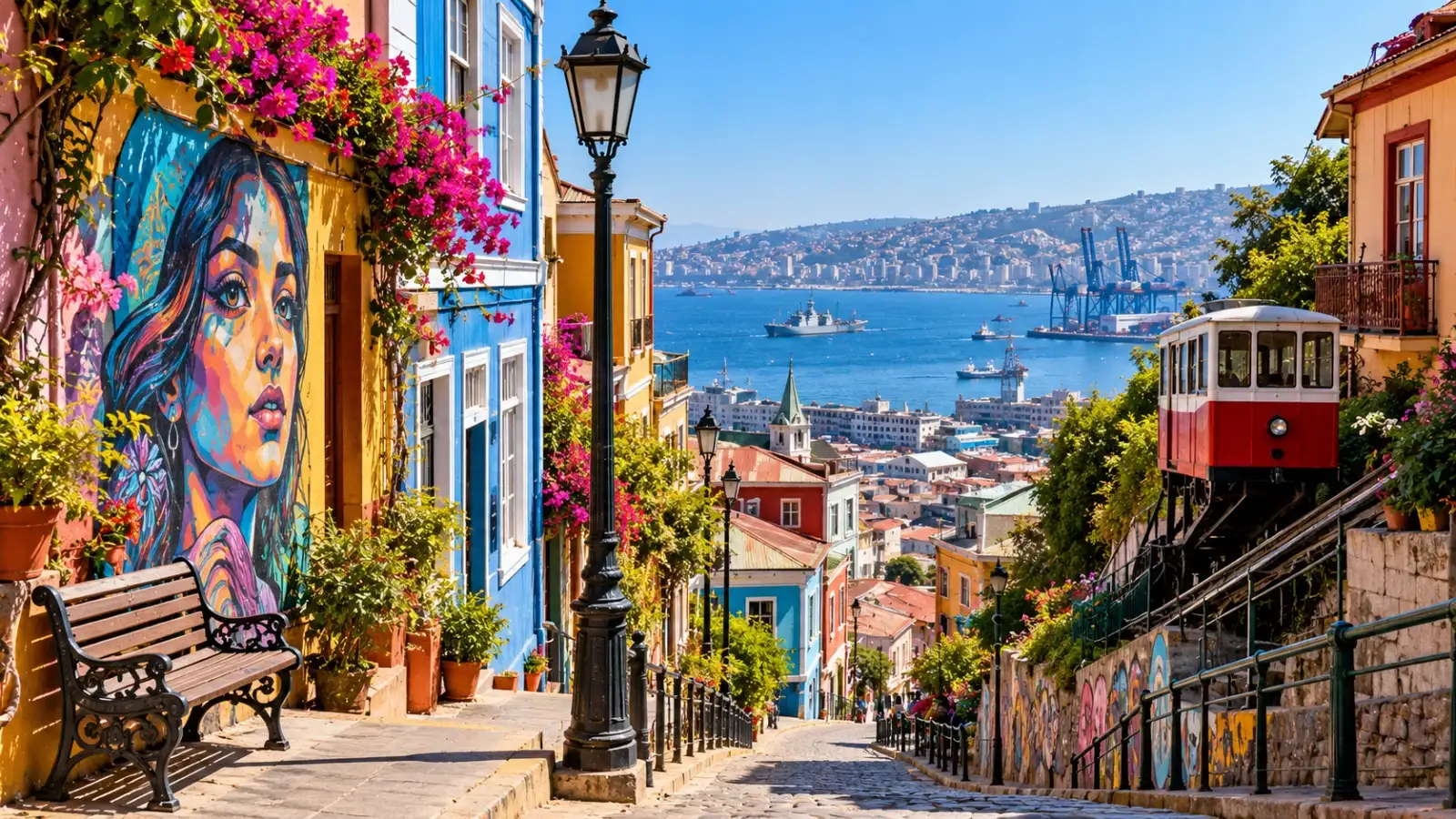
Take your time exploring the side streets rather than following only the busiest routes. You may come across independent galleries, creative murals, decorative staircases and small shops selling locally made souvenirs.
Look out for viewpoints where you can pause and admire the city's rooftops and harbour. Comfortable walking shoes are essential because many streets are steep, uneven or paved with cobblestones.
Walk through its narrow passages and look carefully at the walls. Murals and smaller painted details can transform an ordinary street corner into an unexpected photo opportunity.
Paseo Gervasoni and Paseo Atkinson are particularly appealing places to enjoy views across the city. You can also stop at a local café for coffee or a light meal before continuing your walk.
Remember that street art is part of the city's public culture. Avoid touching painted surfaces or leaving marks on walls, and respect private property when taking photographs.
Consider riding the El Peral or Reina Victoria funicular as part of your exploration, depending on which area you plan to visit. The journey can save you some uphill walking while offering a different perspective on the city.
Before travelling, check which funiculars are operating, as services and opening arrangements can change. Carry some Chilean pesos in cash because payment options may vary.
The Mercado Puerto area and nearby streets have long been associated with local commerce and food businesses. You can explore the surrounding shops, look for traditional Chilean ingredients and find places serving everyday local meals. The historic district includes the commercial Serrano Street and Echaurren Square area, which has links to the city's port-market heritage.
Markets and individual businesses may have different opening hours, so visit earlier in the day when possible. Ask before photographing stallholders or their goods, and carry smaller cash denominations for modest purchases.
Walk around the square, notice the architecture and continue towards the port area to observe the city's working waterfront from permitted public viewpoints.
If you enjoy photography, this part of the city offers a contrast to the colourful residential hills. Here, historic buildings, urban activity and the port's maritime character create a different visual story.
Stay within areas open to visitors and follow any signs restricting access near operational port facilities.
Explore small galleries, craft shops and independent businesses in Cerro Alegre and Cerro Concepción. Depending on availability, you may find original artwork, prints, handmade accessories, ceramics and locally designed products.
If you buy artwork, ask about the artist and the story behind the piece. A small print or handmade object can make a more personal souvenir than a generic tourist item.
Check prices before purchasing and carry reusable bags for your shopping. If you are interested in a particular gallery or shop, confirm its opening hours before making a special journey.
Unlike a conventional gallery, this experience unfolds along public streets and walkways. The murals provide an opportunity to appreciate different artistic styles while discovering another part of the city.
Wear comfortable shoes and allow time for the slopes and staircases. Since the artworks are spread across the neighbourhood, a map or guided walking tour can help you plan a manageable route.
Look for local cafés, bakeries and restaurants serving traditional meals. Empanadas, fresh bread, seasonal produce and Chilean-style sandwiches are options you may encounter, depending on the establishment.
If you prefer vegetarian food, ask about fillings, stocks, cooking fats and sauces before ordering. Some dishes that appear vegetable-based may contain meat or animal-derived ingredients.
Choose a busy local establishment with clear menus, and take a break during the middle of the day if you are covering several hills on foot.
For a first visit, spend the morning around Cerro Alegre and Cerro Concepción, including their viewpoints and galleries. After lunch, explore the lower historic centre, Plaza Sotomayor and the port-market area.
If you have another day, consider visiting Cerro Bellavista and its open-air murals. Use local buses, taxis or functioning funiculars where appropriate to reduce unnecessary uphill walking.
Check maps before setting out, and do not assume that two nearby places will be connected by an easy walking route.
Explore well-used streets during daylight, and ask your accommodation or local tourism staff for current advice about neighbourhoods and routes. After dark, favour busy, well-lit streets and use trusted transport if you are unsure about walking between areas.
Wear layers because coastal conditions can be windy, carry water and sunscreen, and keep some cash for small purchases and transport. Check the weather and local operating information before heading out.
Combine the hillside neighbourhoods with the historic centre to understand different sides of the city. Leave room for spontaneous stops, respect local residents and choose routes that match your fitness and available time.
With comfortable shoes, a flexible itinerary and a little preparation, you can experience Valparaíso as more than a collection of colourful photo spots. It becomes a place to discover Chilean art, port history and neighbourhood life at your own pace.
1. Start With the Colourful Streets of Cerro Alegre
Cerro Alegre is one of the best places to begin exploring Valparaíso. Its narrow streets, colourful buildings, small cafés and painted walls create an inviting atmosphere for a relaxed walking tour.Take your time exploring the side streets rather than following only the busiest routes. You may come across independent galleries, creative murals, decorative staircases and small shops selling locally made souvenirs.
Look out for viewpoints where you can pause and admire the city's rooftops and harbour. Comfortable walking shoes are essential because many streets are steep, uneven or paved with cobblestones.
2. Discover Street Art in Cerro Concepción
Cerro Concepción sits close to Cerro Alegre and is another important stop for anyone interested in Valparaíso's artistic character. The neighbourhood combines historic architecture, colourful façades, art galleries and panoramic viewpoints.Walk through its narrow passages and look carefully at the walls. Murals and smaller painted details can transform an ordinary street corner into an unexpected photo opportunity.
Paseo Gervasoni and Paseo Atkinson are particularly appealing places to enjoy views across the city. You can also stop at a local café for coffee or a light meal before continuing your walk.
Remember that street art is part of the city's public culture. Avoid touching painted surfaces or leaving marks on walls, and respect private property when taking photographs.
3. Ride the Historic Funiculars
Valparaíso's historic funiculars, locally known as ascensores, are more than tourist attractions. They connect parts of the lower city with its steep hillside neighbourhoods and reflect the city's development as a major port.Consider riding the El Peral or Reina Victoria funicular as part of your exploration, depending on which area you plan to visit. The journey can save you some uphill walking while offering a different perspective on the city.
Before travelling, check which funiculars are operating, as services and opening arrangements can change. Carry some Chilean pesos in cash because payment options may vary.
4. Explore the Traditional Market Area
To experience a different side of Valparaíso, head towards the lower city and the historic port neighbourhoods.The Mercado Puerto area and nearby streets have long been associated with local commerce and food businesses. You can explore the surrounding shops, look for traditional Chilean ingredients and find places serving everyday local meals. The historic district includes the commercial Serrano Street and Echaurren Square area, which has links to the city's port-market heritage.
Markets and individual businesses may have different opening hours, so visit earlier in the day when possible. Ask before photographing stallholders or their goods, and carry smaller cash denominations for modest purchases.
5. Visit the Port and Plaza Sotomayor
Plaza Sotomayor is an important public space in Valparaíso and makes a useful starting point for exploring the historic centre. The surrounding area reflects the city's maritime past through its civic buildings, public spaces and connections to the waterfront.Walk around the square, notice the architecture and continue towards the port area to observe the city's working waterfront from permitted public viewpoints.
If you enjoy photography, this part of the city offers a contrast to the colourful residential hills. Here, historic buildings, urban activity and the port's maritime character create a different visual story.
Stay within areas open to visitors and follow any signs restricting access near operational port facilities.
6. Browse Independent Shops and Art Galleries
Valparaíso is a good place to look for souvenirs that reflect its artistic identity rather than buying mass-produced items.Explore small galleries, craft shops and independent businesses in Cerro Alegre and Cerro Concepción. Depending on availability, you may find original artwork, prints, handmade accessories, ceramics and locally designed products.
If you buy artwork, ask about the artist and the story behind the piece. A small print or handmade object can make a more personal souvenir than a generic tourist item.
Check prices before purchasing and carry reusable bags for your shopping. If you are interested in a particular gallery or shop, confirm its opening hours before making a special journey.
7. Take a Walk Through the Open-Air Museum
For more street art, explore Cerro Bellavista, home to Valparaíso's Museo a Cielo Abierto, or Open-Air Museum. This area features a collection of murals created on walls and buildings across the hillside.Unlike a conventional gallery, this experience unfolds along public streets and walkways. The murals provide an opportunity to appreciate different artistic styles while discovering another part of the city.
Wear comfortable shoes and allow time for the slopes and staircases. Since the artworks are spread across the neighbourhood, a map or guided walking tour can help you plan a manageable route.
8. Sample Local Food Along the Way
Food is an important part of exploring a city, and Valparaíso offers opportunities to try Chilean dishes while taking breaks between walks.Look for local cafés, bakeries and restaurants serving traditional meals. Empanadas, fresh bread, seasonal produce and Chilean-style sandwiches are options you may encounter, depending on the establishment.
If you prefer vegetarian food, ask about fillings, stocks, cooking fats and sauces before ordering. Some dishes that appear vegetable-based may contain meat or animal-derived ingredients.
Choose a busy local establishment with clear menus, and take a break during the middle of the day if you are covering several hills on foot.
9. Plan Your Route Around the Hills
Valparaíso is best explored at a comfortable pace. Trying to visit every neighbourhood in a few hours can be tiring because the city has steep slopes, staircases and winding streets.For a first visit, spend the morning around Cerro Alegre and Cerro Concepción, including their viewpoints and galleries. After lunch, explore the lower historic centre, Plaza Sotomayor and the port-market area.
If you have another day, consider visiting Cerro Bellavista and its open-air murals. Use local buses, taxis or functioning funiculars where appropriate to reduce unnecessary uphill walking.
Check maps before setting out, and do not assume that two nearby places will be connected by an easy walking route.
10. Keep Safety and Practical Details in Mind
Like any busy city, Valparaíso requires awareness of your surroundings. Keep your phone, wallet and camera secure, particularly in crowded areas, markets and public transport.Explore well-used streets during daylight, and ask your accommodation or local tourism staff for current advice about neighbourhoods and routes. After dark, favour busy, well-lit streets and use trusted transport if you are unsure about walking between areas.
Wear layers because coastal conditions can be windy, carry water and sunscreen, and keep some cash for small purchases and transport. Check the weather and local operating information before heading out.
Make the Most of Valparaíso's Colourful Character
Valparaíso rewards travellers who explore slowly. Its appeal lies not only in brightly painted houses and famous murals, but also in the everyday details: a small gallery, a lively market street, a historic funicular or a viewpoint overlooking the harbour.Combine the hillside neighbourhoods with the historic centre to understand different sides of the city. Leave room for spontaneous stops, respect local residents and choose routes that match your fitness and available time.
With comfortable shoes, a flexible itinerary and a little preparation, you can experience Valparaíso as more than a collection of colourful photo spots. It becomes a place to discover Chilean art, port history and neighbourhood life at your own pace.
Next Story