
5 Indian Beaches with Rare Black Sand Worth Visiting

Stand at the waterline of Yarada Beach near Visakhapatnam and the sand beneath your feet is not white. It is dark, almost charcoal, and it holds heat differently than the pale shores most travellers expect. Black sand is not a quirk of one coastline. Several stretches of the Indian coast carry it, and the reason is always geological: basalt from old volcanic flows, iron-rich minerals eroded from the Western Ghats, heavy deposits of ilmenite and magnetite carried down by rivers over millennia. The colour is not dirt. It is the coast's actual composition, and it makes these beaches look unlike anything else in the country.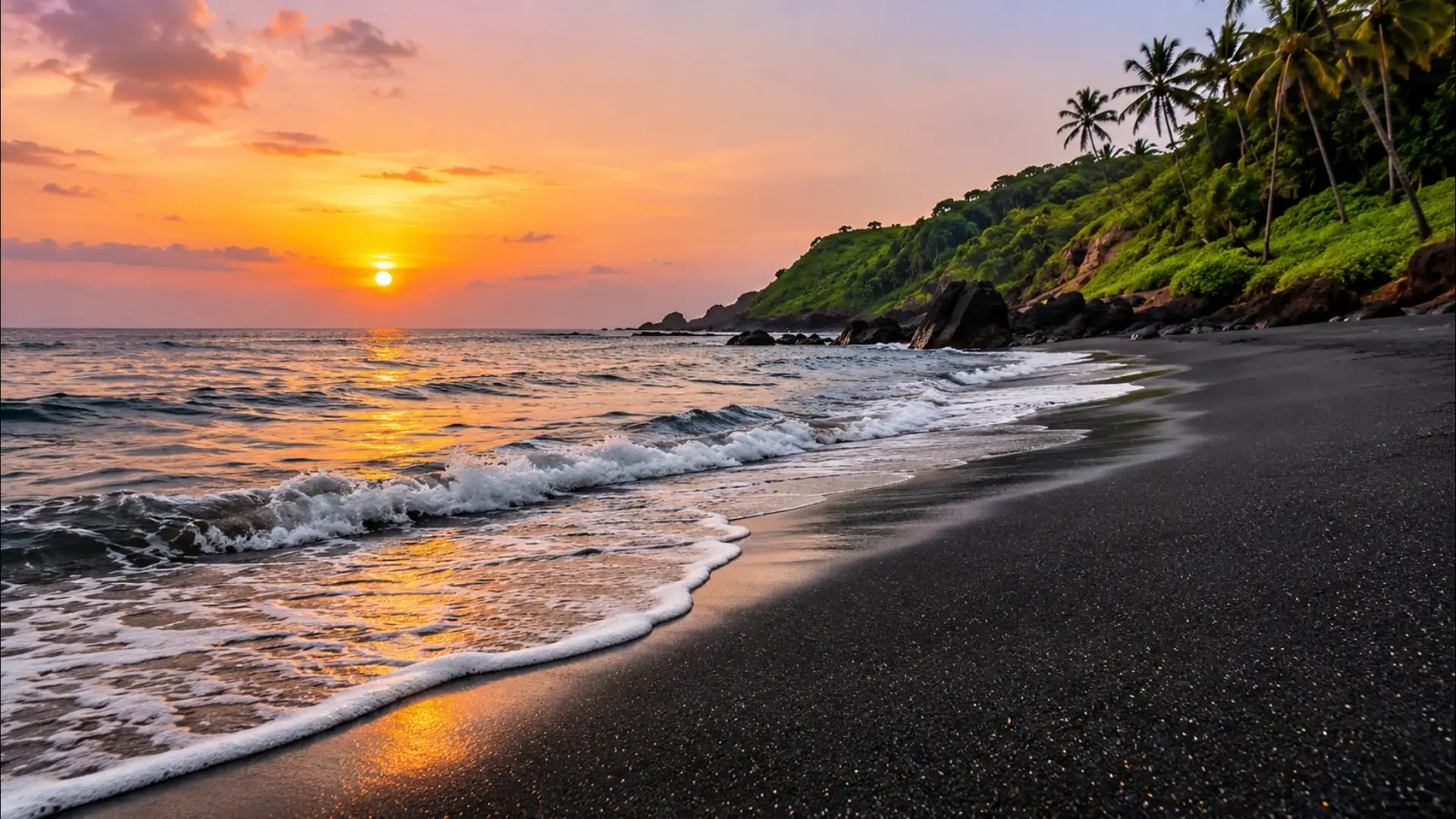
What connects these five places is not rarity for its own sake. It is the fact that the colour of the sand is a readable record of the land behind the coast. Basalt, ilmenite, laterite, magnetite, each mineral tells you something about the rock that formed it, the river that carried it, and the geological event, volcanic or tectonic, that put it there in the first place. A black-sand beach is not an anomaly. It is the coast being honest about what it is made of.
Yarada Beach, Visakhapatnam
Tucked between two hills on the southern edge of Visakhapatnam, Yarada sits at the end of a road that climbs through forest before dropping to the water. The sand here is a deep grey-black, made up of heavy mineral deposits including ilmenite, a titanium-bearing ore found in abundance along Andhra Pradesh's coast. The beach is relatively uncrowded, partly because reaching it requires effort. The contrast between the dark sand, the green hills, and the turquoise water of the Bay of Bengal is the kind of thing that stops people mid-step.Malvan's Mineral-Dark Shores, Maharashtra
Parts of the Sindhudurg coast near Malvan carry sand that ranges from dark grey to near-black depending on the stretch. The colour comes from basalt, the volcanic rock that forms much of the Deccan Plateau and meets the sea here. The same rock that built the Sindhudurg fort, which sits on an island just offshore, is what gives the surrounding shoreline its unusual tone. The fort and the dark-sanded beach together make this a stretch of coast that carries both geology and history in the same view.You may also like
- Justin Timberlake steals the show with sons Silas And Phineas at Niece Zaya's special fashion show
- Meet Aadvik Jain, the 18-year-old Delhi student who started Team Period after seeing a friend's struggle, helped install a school pad dispenser and won the 2026 Diana Award
- Ration Card Complaint: Having trouble getting rations? Now file your complaint using these 5 ways, including WhatsApp
- Hematosalpinx: Can Blood-Filled Fallopian Tubes Affect Fertility?
- 7 Reasons Losing Someone Can Be the Best Thing for You
Varkala's Cliffside Dark Patches, Kerala
Varkala is known for its red laterite cliffs, but the sand at the base of those cliffs, particularly away from the main tourist strip, carries a noticeably darker mineral content. The cliffs are actively eroding, and the minerals they release, including iron oxides and heavy silicates, mix into the sand below. The result is a beach that shifts in colour as you walk along it, from pale near the water's edge to distinctly dark where the cliff face meets the shore. The mineral springs that seep through the cliff face here have been noted in local tradition for generations.Gangavaram Beach, Andhra Pradesh
North of Visakhapatnam, Gangavaram sits in the shadow of a port but the stretch of shore accessible to visitors carries the same heavy mineral signature as Yarada. Ilmenite, rutile, and zircon deposits are found along this part of the Andhra coast, and they give the sand a dark, almost metallic quality in certain light. Early morning, when the sun is low and the sand is still damp from the tide, the colour deepens to something close to iron-black. It is not a beach built for crowds, which means the experience of standing on it is unusually quiet for a coastline this close to a city.Murdeshwar's Basalt Shore, Karnataka
The Karnataka coast near Murdeshwar sits on the same basaltic geology that defines much of coastal Karnataka and Goa. The sand at several beaches in this area carries a dark, coarse texture from weathered basalt and heavy minerals washed down from the Western Ghats. Murdeshwar itself is better known for its temple and the large Shiva statue visible from the sea, but the shore around it rewards a closer look at what is underfoot. The coarse dark grains are a direct record of the Ghats eroding into the Arabian Sea, grain by grain, over an enormous span of time.What connects these five places is not rarity for its own sake. It is the fact that the colour of the sand is a readable record of the land behind the coast. Basalt, ilmenite, laterite, magnetite, each mineral tells you something about the rock that formed it, the river that carried it, and the geological event, volcanic or tectonic, that put it there in the first place. A black-sand beach is not an anomaly. It is the coast being honest about what it is made of.






Loving Newspoint? Download the app now
