
Why Some Beaches Have Black Sand: The Science Explained

Stand on a black-sand beach for the first time and the instinct is to look for an explanation. The colour feels wrong, almost theatrical. It is not wrong at all, it is simply honest about where the sand came from.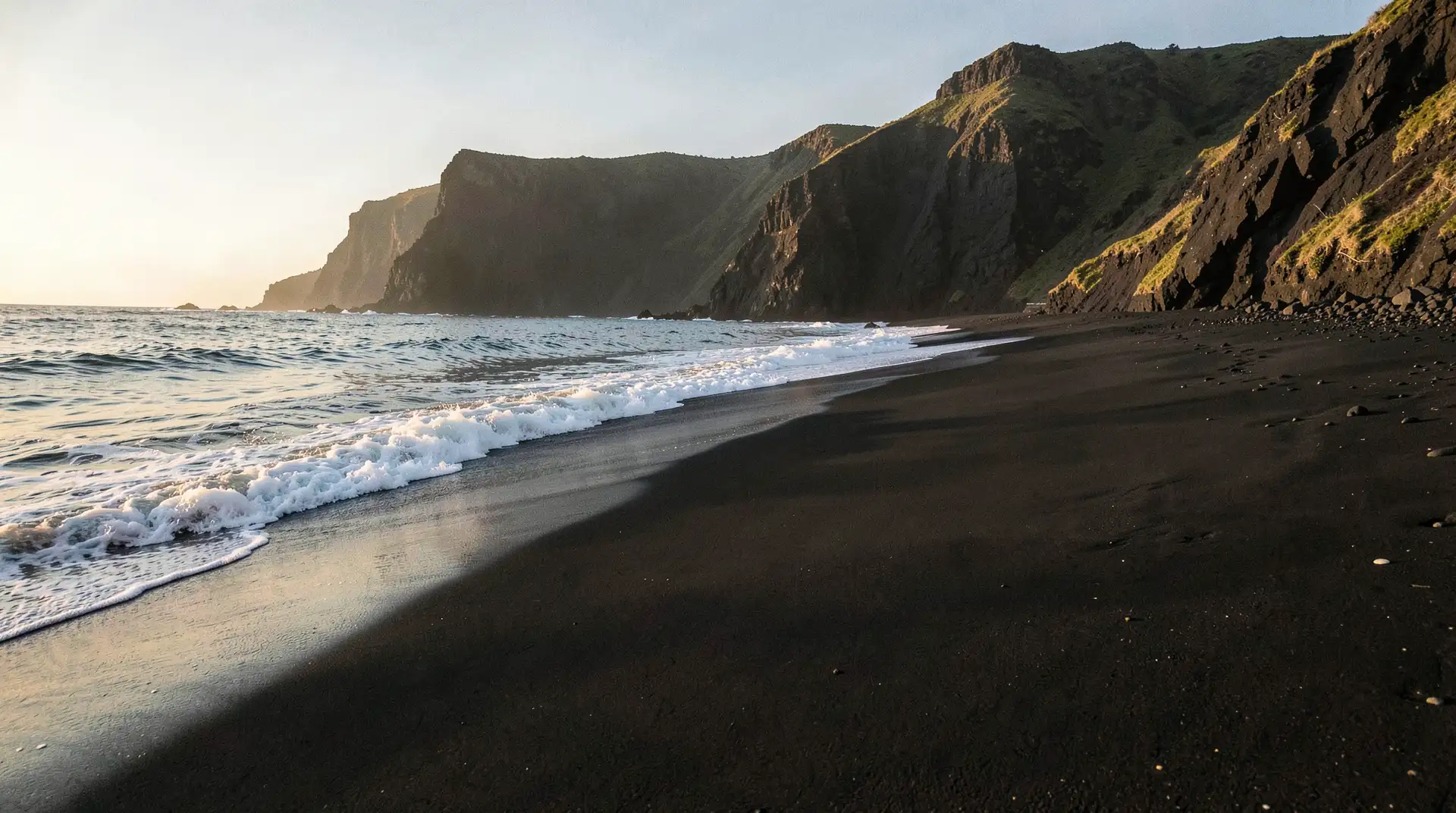
Sand Is Just Rock That Lost a Fight With Time
Every grain of sand on any beach is a fragment of something larger that got broken down. On most coastlines, the source rock is quartz-rich granite or sandstone, pale minerals that produce the white and golden beaches most people picture. Waves, wind, and rain spend thousands of years grinding those rocks into the fine grains that pile up at the waterline. The colour of the sand is essentially the colour of the rock it came from, compressed into something small enough to sit between your toes.Volcanoes Make Different Rock
Black-sand beaches exist almost exclusively where volcanic activity has shaped the coastline. When lava, particularly basalt, the dark, iron-rich rock that most volcanoes produce, reaches the ocean or a river, it cools almost instantly. That rapid cooling shatters the molten rock into tiny fragments. Waves and surf then grind those fragments smaller over time, and what accumulates on the shore is basalt-derived sand: dark grey to jet black, sometimes with a faint glassy sheen from volcanic glass called obsidian mixed in. The black colour comes directly from the high iron and magnesium content of basalt, minerals that are nearly absent from the quartz-heavy rocks behind white-sand beaches. Iceland, Hawaii, the Canary Islands, and parts of coastal New Zealand all sit on or near volcanic geology, which is why their beaches look so different from a beach in Goa or the Maldives.Why Black Sand Feels Hotter Underfoot
Dark surfaces absorb more solar radiation than pale ones, the same physics that makes a black car hotter than a white one on a sunny afternoon. Black sand holds heat efficiently and releases it slowly, which means a black-sand beach at midday can be genuinely painful to walk on barefoot. Visitors who expect the same experience as a white-sand beach often get a surprise. This is not a quirk of one location; it is a consistent physical property of dark-coloured materials, and it applies to every black-sand beach regardless of which volcano produced it.Not All Dark Beaches Come From Lava
Volcanic origin is the most common explanation, but not the only one. Some beaches get their dark colour from magnetite , a naturally magnetic iron mineral that concentrates in certain coastal areas through a process called placer sorting, waves and currents separate heavy minerals from lighter ones, and the heavy dark minerals collect together. A handful of magnetite-rich sand will visibly stick to a magnet, which is one of the more memorable things a person can do on a beach. Other beaches carry dark sand from eroded black limestone or from organic material like decomposed seaweed, though these tend to be patchier and less dramatic than volcanic beaches . The clearest indicator of volcanic origin is the grain itself: basalt sand is angular and glassy under a magnifying lens, unlike the rounded, frosted grains of quartz sand that have been tumbling in water for much longer.Young Coastlines, Coarse Grains
One detail that surprises people is that black-sand beaches are often coarser than white-sand beaches. The reason is age. White quartz sand has typically been in circulation for a very long time, worn smooth and fine through thousands of years of wave action. Basalt sand from a relatively recent lava flow has had far less time to be ground down, so the grains are larger and sharper. Some black-sand beaches are geologically very young, formed from lava flows that reached the sea within the last few centuries. The coastline is still being shaped, which is part of why these beaches can shift noticeably over decades in a way that ancient quartz beaches do not. The sand underfoot is, in a real sense, new rock, the most recent chapter in a landscape that is still being written by the same forces that built it.Next Story