
The Story Behind India’s Regional Flatbreads

India’s food culture is incredibly diverse, and its flatbreads are a perfect example of how local traditions can create completely different versions of a familiar food.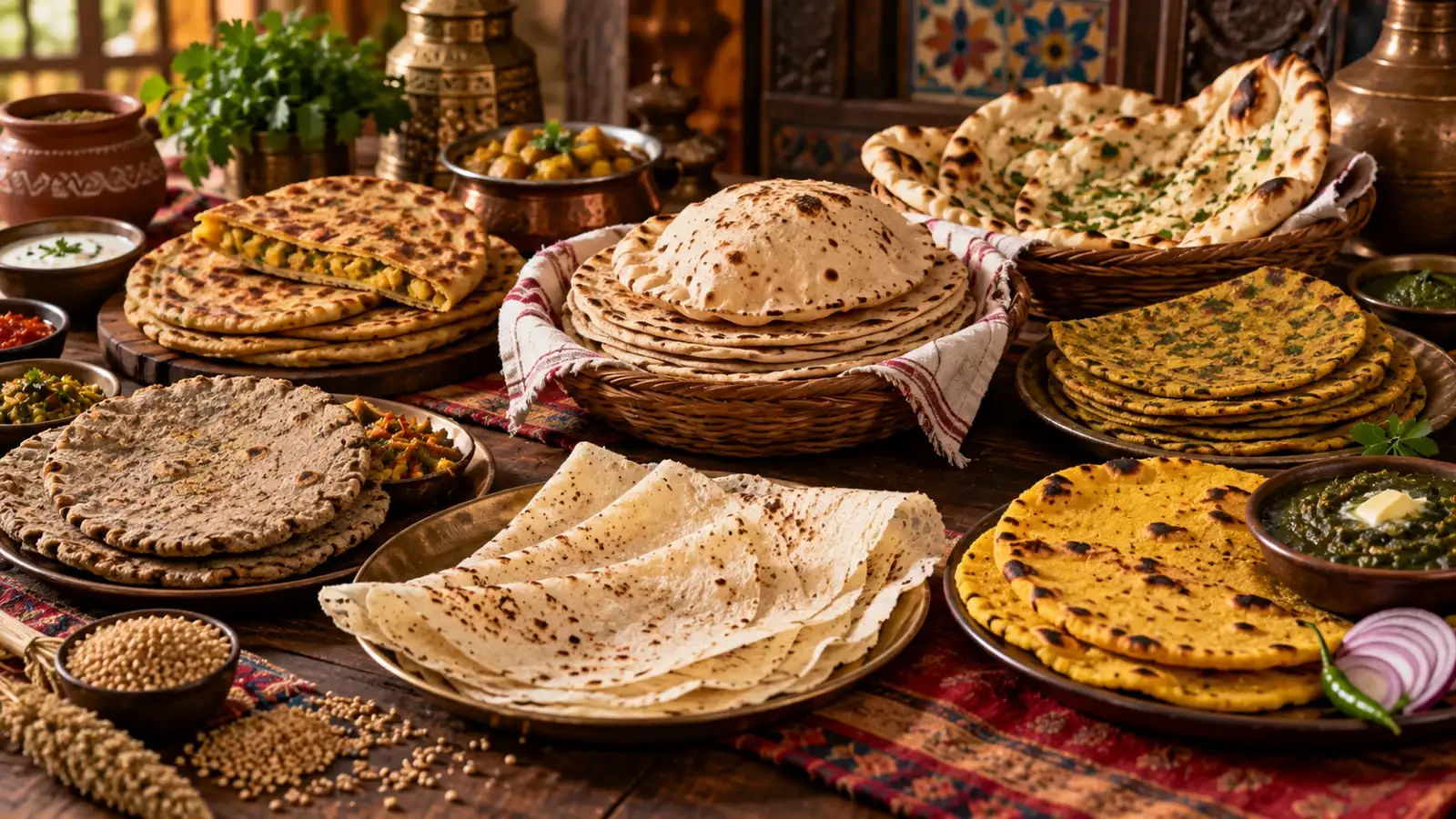
Roti , paratha, naan , bhakri, thepla and many other flatbreads are eaten across the country. While they may look simple, each one has a connection to the region where it developed. The choice of grain, cooking method, climate and local food habits all helped shape these breads over generations.
From soft wheat rotis in northern India to millet based breads in parts of western and central India, flatbreads tell a fascinating story about the country’s food traditions.
The dough is cooked on a hot tawa, and the roti may sometimes be placed directly over a flame so that it puffs up.
Its simplicity is one of its greatest strengths. Roti can be served with vegetables, lentils, curries and many other dishes, making it an important part of everyday meals in many Indian homes.
It can be cooked with oil or ghee and may be stuffed with ingredients such as potatoes, cauliflower, radish or paneer.
Different regions and families have their own methods of preparing parathas. Some are crisp and flaky, while others are soft and thick.
The high heat allows the dough to cook quickly, giving naan its characteristic texture and slightly charred surface.
Today, naan is widely served in restaurants alongside rich curries and other dishes. Garlic naan, butter naan and stuffed versions have also become popular.
The use of these grains reflects the agricultural traditions of the regions where bhakri is popular. The bread can be thicker and more rustic than a typical wheat roti.
Bhakri is often served with vegetables, lentils, chutneys or other hearty dishes.
The result is a thin flatbread that can remain enjoyable even after cooling, making it particularly convenient for travel and packed meals.
Different versions can include vegetables and other local ingredients, giving families plenty of ways to prepare it.
It has a distinctive texture and is often served with sarson da saag, a preparation made with mustard greens.
The pairing has become one of the most recognised combinations of Punjabi cuisine and is especially popular during the colder months.
The dough is stretched into a very thin sheet before being cooked on a large, hot surface. When prepared properly, it is soft, light and flexible.
Roomali roti is commonly served with kebabs and rich meat or vegetable dishes.
Wheat became particularly important across many northern regions, while millet, sorghum, maize and other grains have long been used in areas where they grow well.
Cooking methods also vary. Some breads are cooked on a tawa, some over direct heat and others inside a tandoor.
Millets, for example, are well suited to several parts of India and have been an important food source for generations.
This means that a traditional flatbread is not simply a recipe. It can also reflect the crops available to a community and the way people have adapted their food to their surroundings.
Recipes are often passed from one generation to another. Small differences in the amount of water, thickness of the bread or cooking time can give each family's version its own character.
That is why the same type of flatbread may taste slightly different from one home to another.
Restaurants have introduced creative versions, while home cooks experiment with healthier ingredients and different combinations.
Despite these changes, the basic idea remains the same. A simple combination of flour, water and local ingredients can become an important part of a region's food identity.
Each flatbread has its own texture, flavour and story, but together they demonstrate one of the most interesting aspects of Indian cuisine : simple ingredients can create extraordinary variety.
Roti , paratha, naan , bhakri, thepla and many other flatbreads are eaten across the country. While they may look simple, each one has a connection to the region where it developed. The choice of grain, cooking method, climate and local food habits all helped shape these breads over generations.
From soft wheat rotis in northern India to millet based breads in parts of western and central India, flatbreads tell a fascinating story about the country’s food traditions.
Roti: A Simple Everyday Staple
Roti is one of the most familiar Indian flatbreads . Traditionally made with wheat flour, it is prepared by mixing flour with water, shaping the dough into small balls and rolling them into thin circles.The dough is cooked on a hot tawa, and the roti may sometimes be placed directly over a flame so that it puffs up.
Its simplicity is one of its greatest strengths. Roti can be served with vegetables, lentils, curries and many other dishes, making it an important part of everyday meals in many Indian homes.
Paratha: A More Indulgent Flatbread
Paratha is another popular flatbread, particularly associated with northern India. Unlike a basic roti, paratha often contains layers created by folding and rolling the dough.It can be cooked with oil or ghee and may be stuffed with ingredients such as potatoes, cauliflower, radish or paneer.
Different regions and families have their own methods of preparing parathas. Some are crisp and flaky, while others are soft and thick.
Naan: The Bread of the Tandoor
Naan has a distinctive cooking method that sets it apart from many everyday flatbreads. It is traditionally cooked against the hot inner wall of a tandoor.The high heat allows the dough to cook quickly, giving naan its characteristic texture and slightly charred surface.
Today, naan is widely served in restaurants alongside rich curries and other dishes. Garlic naan, butter naan and stuffed versions have also become popular.
Bhakri: The Bread of Rural Traditions
Bhakri is closely associated with several parts of western and central India. It is often made from grains such as millet, sorghum or maize rather than refined wheat flour.The use of these grains reflects the agricultural traditions of the regions where bhakri is popular. The bread can be thicker and more rustic than a typical wheat roti.
Bhakri is often served with vegetables, lentils, chutneys or other hearty dishes.
Thepla: A Gujarati Favourite
Thepla is strongly associated with Gujarat and is known for its flavourful dough. Wheat flour is commonly combined with ingredients such as fenugreek leaves, spices and yoghurt.The result is a thin flatbread that can remain enjoyable even after cooling, making it particularly convenient for travel and packed meals.
Different versions can include vegetables and other local ingredients, giving families plenty of ways to prepare it.
Makki Di Roti: A Punjabi Classic
Makki di roti is traditionally made from maize flour and is especially associated with Punjab.It has a distinctive texture and is often served with sarson da saag, a preparation made with mustard greens.
The pairing has become one of the most recognised combinations of Punjabi cuisine and is especially popular during the colder months.
Roomali Roti: Thin as a Handkerchief
The name roomali roti comes from the Hindi and Urdu word for handkerchief, referring to the bread's extremely thin appearance.The dough is stretched into a very thin sheet before being cooked on a large, hot surface. When prepared properly, it is soft, light and flexible.
Roomali roti is commonly served with kebabs and rich meat or vegetable dishes.
Why Are Indian Flatbreads So Different?
The variety of Indian flatbreads is closely connected to local agriculture. Different parts of the country have traditionally grown different grains depending on soil, rainfall and climate.Wheat became particularly important across many northern regions, while millet, sorghum, maize and other grains have long been used in areas where they grow well.
Cooking methods also vary. Some breads are cooked on a tawa, some over direct heat and others inside a tandoor.
Climate Also Influenced Food Traditions
Local climate and lifestyles played a role in shaping traditional foods. In some regions, people developed breads using grains that could grow successfully in relatively dry conditions.Millets, for example, are well suited to several parts of India and have been an important food source for generations.
This means that a traditional flatbread is not simply a recipe. It can also reflect the crops available to a community and the way people have adapted their food to their surroundings.
Flatbreads Bring Families Together
Many Indian flatbreads are closely connected with home cooking. Making dough, rolling breads and cooking them on a tawa can be part of everyday family routines.Recipes are often passed from one generation to another. Small differences in the amount of water, thickness of the bread or cooking time can give each family's version its own character.
That is why the same type of flatbread may taste slightly different from one home to another.
A Food Tradition That Keeps Changing
Indian flatbreads continue to evolve. Traditional recipes are now being prepared with new grains, fillings and cooking techniques.Restaurants have introduced creative versions, while home cooks experiment with healthier ingredients and different combinations.
Despite these changes, the basic idea remains the same. A simple combination of flour, water and local ingredients can become an important part of a region's food identity.
More Than Just Bread
India's regional flatbreads are a reflection of the country's geography, agriculture and cultural diversity. Roti, paratha, bhakri, thepla, naan and countless other varieties show how communities have adapted basic ingredients into foods that suit their local traditions.Each flatbread has its own texture, flavour and story, but together they demonstrate one of the most interesting aspects of Indian cuisine : simple ingredients can create extraordinary variety.
Next Story