
The Indian Towns Built Around Rivers That Changed Their Entire Identity

A river can do much more than pass through a town.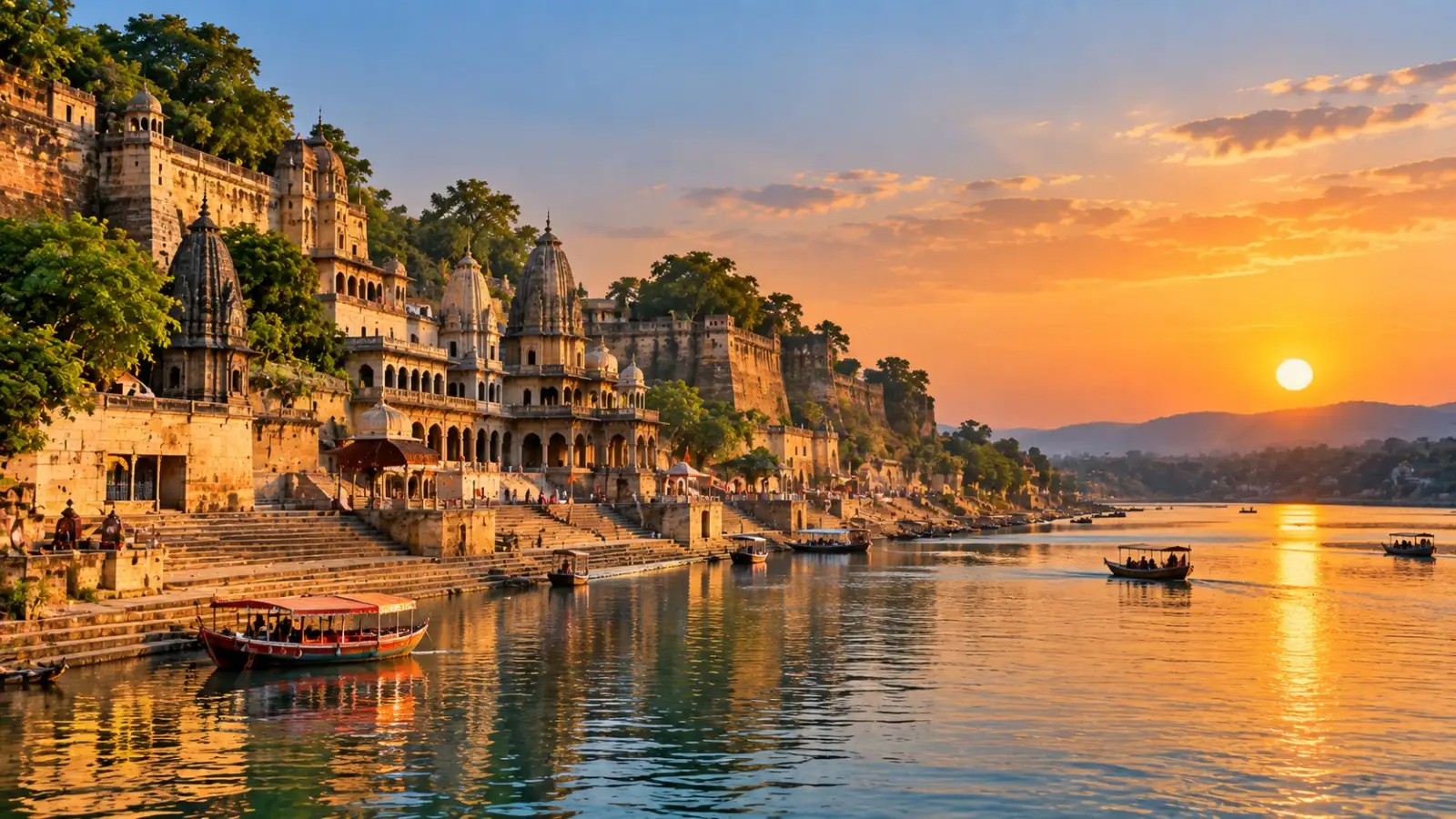
In India, rivers have determined where settlements developed, where people traded, where temples were built and where communities gathered. Over centuries, a waterway could become so deeply connected with a settlement that it shaped the town's architecture, economy, festivals and cultural identity.
Some towns became pilgrimage centres because of their sacred riverbanks. Others grew because boats and traders could move along the water. In a few places, the river influenced everything from royal architecture to local handicrafts.
That is why visiting a historic river town can feel different from visiting an ordinary heritage destination. The river is often not simply part of the scenery. It is part of the town's story.
The town is associated with the ancient settlement of Mahishmati and became particularly important under the Holkar ruler Ahilyabai Holkar during the 18th century. The riverfront was developed with temples, ghats and other structures, creating the distinctive landscape that visitors see today.
But Maheshwar's river connection goes beyond architecture.
The town became a major centre for Maheshwari textiles. The handloom tradition was promoted during Ahilyabai Holkar's period, and Maheshwari sarees eventually became closely associated with the town. Their designs include motifs and borders inspired by the fort and Narmada.
Walk along the Narmada ghats today and several parts of Maheshwar's identity come together in one view.
The fort stands above the river.
Temples line the waterfront.
Boats move across the water.
And somewhere behind the historic buildings, generations of weaving continue.
The Betwa flows beside the historic settlement, with the Orchha Fort complex occupying an island-like setting and the famous royal cenotaphs standing along the riverbank.
The river also influenced how Orchha's monuments are experienced.
The Bundela rulers built their memorial chhatris beside the Betwa, creating one of India's most recognisable riverfront heritage landscapes. The river, temples, palaces and cenotaphs now appear almost like one architectural composition.
The Betwa also contributes to the area's ecological character. The river and surrounding habitat support birds and connect with the Orchha Wildlife Sanctuary.
Orchha therefore has several identities at once, royal town, pilgrimage destination, heritage settlement and riverside landscape.
The town sits along the Mandakini, also known as the Payasvini, and its riverfront contains several important ghats. Ram Ghat is one of the most active parts of the town, where pilgrims gather for rituals and evening aarti.
The river is also woven into the town's mythology.
Chitrakoot's identity is strongly connected with the Ramayana, and the surrounding landscape contains temples, caves, hills and ashrams associated with stories of Rama, Sita and Lakshmana.
As a result, the river is not merely a natural attraction.
It is part of the pilgrimage itself.
People come to the ghats to bathe, pray, perform rituals and participate in evening ceremonies. The town's daily rhythm is consequently tied to the river.
The historic settlement stands on the banks of the Ganga, while Chunar Fort occupies a prominent rocky position overlooking the river. The location gave the town considerable strategic significance over different historical periods.
The fort's history includes connections with Afghan, Mughal, Maratha and British periods.
But Chunar developed another distinctive identity through its crafts.
The town is known for Chunar Glaze Pottery, an artisan tradition that has been passed down through generations. The craft incorporates Mughal, Persian and indigenous influences and remains part of the area's cultural economy.
Here, the river helped create a strategic landscape while the town's later identity grew through heritage and craftsmanship.
Located where the Narmada reaches the Arabian Sea, Bharuch developed as an important port. Incredible India describes it as one of the western region's oldest ports, with activity dating back to the first century AD.
Its position gave it access to both inland and maritime trade.
Over time, this helped make Bharuch a meeting point of different cultures and commercial networks.
Today, the town has a very different economic character and is part of one of Gujarat's major industrial belts. Yet the older river-based identity remains visible through landmarks such as Bharuch Fort, the Golden Bridge and historic religious structures.
The modern industrial town therefore still carries traces of the river port that helped establish its historical importance.
The historic town developed on an island formed by the Kaveri, creating a naturally protected setting. Its island fort became associated with Tipu Sultan and the political history of the Kingdom of Mysore.
The river was therefore part of the town's defence as well as its landscape.
Inside and around the historic settlement are monuments including the Ranganathaswamy Temple, Tipu Sultan's summer palace and the fortifications associated with the Anglo-Mysore period.
The Kaveri did not simply make Srirangapatna beautiful.
It helped determine the physical form that made the settlement strategically important.
The Ganga is central to the city's spiritual and cultural identity. Its riverfront is lined with historic ghats, each associated with different religious, social and historical traditions.
The river has shaped daily life in ways that go far beyond tourism.
Pilgrims come for ritual bathing.
Priests conduct ceremonies.
Boatmen work along the waterfront.
Visitors watch sunrise from the river.
Artists, musicians and craftspeople continue traditions that have developed around the city's broader cultural landscape.
The ghats visible today were largely rebuilt from the 18th century onwards under different regional patrons, including Marathas, Holkars, Scindias, Peshwas and Bhonsles.
In Varanasi, the riverfront is effectively part of the city's central public space.
The city is home to numerous temples and hosts major religious gatherings along the river. Incredible India describes Ujjain as a temple city and notes that Simhastha, one of the world's major religious gatherings, takes place on the banks of the Kshipra every 12 years.
The river therefore becomes especially important during major religious occasions, when large numbers of pilgrims arrive.
Ujjain's identity combines temple traditions, astronomy, pilgrimage and the river landscape.
The Kshipra is one of the threads connecting these different parts of the city's history.
The Narmada provided the setting for the town's ghats, but the riverfront also became the backdrop for royal architecture, temples and public spaces during the Holkar period.
At the same time, the development of Maheshwari weaving gave the town a completely different economic and cultural association.
Today, someone mentioning Maheshwar may immediately think of the Narmada ghats, Ahilyabai Holkar and Maheshwari sarees.
That combination did not emerge from a single monument.
It developed through the relationship between the river, royal patronage, religion and local craft.
A river can provide water.
It can support agriculture.
It can carry boats and goods.
It can create a defensive boundary.
It can become a sacred site.
It can inspire architecture.
And eventually, it can become the symbol by which an entire town is recognised.
This is why the identity of places such as Maheshwar, Orchha, Chitrakoot, Chunar and Srirangapatna cannot be understood simply by looking at their monuments.
The river explains why many of those monuments are where they are.
Maheshwar's Narmada ghats and weaving traditions, Orchha's Betwa and royal cenotaphs, Chitrakoot's Mandakini and pilgrimage culture, Chunar's Ganga and fortress landscape, and Srirangapatna's Kaveri and island fort all tell different versions of the same story.
The river does not always create a town by itself.
But once generations begin building lives around it, the waterway can become part of the settlement's identity.
That is why these places feel different from heritage towns located away from major rivers.
Here, history does not simply sit inside museums, forts and temples.
It continues along the water.
In India, rivers have determined where settlements developed, where people traded, where temples were built and where communities gathered. Over centuries, a waterway could become so deeply connected with a settlement that it shaped the town's architecture, economy, festivals and cultural identity.
Some towns became pilgrimage centres because of their sacred riverbanks. Others grew because boats and traders could move along the water. In a few places, the river influenced everything from royal architecture to local handicrafts.
That is why visiting a historic river town can feel different from visiting an ordinary heritage destination. The river is often not simply part of the scenery. It is part of the town's story.
1. Maheshwar grew into a town of ghats, royalty and handlooms
On the banks of the Narmada in Madhya Pradesh, Maheshwar has developed an identity that combines spirituality, royal history and weaving.The town is associated with the ancient settlement of Mahishmati and became particularly important under the Holkar ruler Ahilyabai Holkar during the 18th century. The riverfront was developed with temples, ghats and other structures, creating the distinctive landscape that visitors see today.
But Maheshwar's river connection goes beyond architecture.
The town became a major centre for Maheshwari textiles. The handloom tradition was promoted during Ahilyabai Holkar's period, and Maheshwari sarees eventually became closely associated with the town. Their designs include motifs and borders inspired by the fort and Narmada.
Walk along the Narmada ghats today and several parts of Maheshwar's identity come together in one view.
The fort stands above the river.
Temples line the waterfront.
Boats move across the water.
And somewhere behind the historic buildings, generations of weaving continue.
2. Orchha became inseparable from the Betwa
Orchha in Madhya Pradesh is one of the clearest examples of a town whose landscape and history are difficult to separate from its river.The Betwa flows beside the historic settlement, with the Orchha Fort complex occupying an island-like setting and the famous royal cenotaphs standing along the riverbank.
The river also influenced how Orchha's monuments are experienced.
The Bundela rulers built their memorial chhatris beside the Betwa, creating one of India's most recognisable riverfront heritage landscapes. The river, temples, palaces and cenotaphs now appear almost like one architectural composition.
The Betwa also contributes to the area's ecological character. The river and surrounding habitat support birds and connect with the Orchha Wildlife Sanctuary.
Orchha therefore has several identities at once, royal town, pilgrimage destination, heritage settlement and riverside landscape.
3. Chitrakoot became a pilgrimage town around the Mandakini
Chitrakoot's relationship with the Mandakini River is deeply connected with its religious identity.The town sits along the Mandakini, also known as the Payasvini, and its riverfront contains several important ghats. Ram Ghat is one of the most active parts of the town, where pilgrims gather for rituals and evening aarti.
The river is also woven into the town's mythology.
Chitrakoot's identity is strongly connected with the Ramayana, and the surrounding landscape contains temples, caves, hills and ashrams associated with stories of Rama, Sita and Lakshmana.
As a result, the river is not merely a natural attraction.
It is part of the pilgrimage itself.
People come to the ghats to bathe, pray, perform rituals and participate in evening ceremonies. The town's daily rhythm is consequently tied to the river.
4. Chunar found power in its position above the Ganga
Chunar, in Uttar Pradesh, demonstrates another way rivers can shape a town.The historic settlement stands on the banks of the Ganga, while Chunar Fort occupies a prominent rocky position overlooking the river. The location gave the town considerable strategic significance over different historical periods.
The fort's history includes connections with Afghan, Mughal, Maratha and British periods.
But Chunar developed another distinctive identity through its crafts.
The town is known for Chunar Glaze Pottery, an artisan tradition that has been passed down through generations. The craft incorporates Mughal, Persian and indigenous influences and remains part of the area's cultural economy.
Here, the river helped create a strategic landscape while the town's later identity grew through heritage and craftsmanship.
5. Bharuch became a gateway between river and sea
Bharuch in Gujarat shows how a river can influence a settlement far beyond religious life.Located where the Narmada reaches the Arabian Sea, Bharuch developed as an important port. Incredible India describes it as one of the western region's oldest ports, with activity dating back to the first century AD.
Its position gave it access to both inland and maritime trade.
Over time, this helped make Bharuch a meeting point of different cultures and commercial networks.
Today, the town has a very different economic character and is part of one of Gujarat's major industrial belts. Yet the older river-based identity remains visible through landmarks such as Bharuch Fort, the Golden Bridge and historic religious structures.
The modern industrial town therefore still carries traces of the river port that helped establish its historical importance.
6. Srirangapatna was shaped by the Kaveri itself
Srirangapatna in Karnataka has an unusual relationship with its river.The historic town developed on an island formed by the Kaveri, creating a naturally protected setting. Its island fort became associated with Tipu Sultan and the political history of the Kingdom of Mysore.
The river was therefore part of the town's defence as well as its landscape.
Inside and around the historic settlement are monuments including the Ranganathaswamy Temple, Tipu Sultan's summer palace and the fortifications associated with the Anglo-Mysore period.
The Kaveri did not simply make Srirangapatna beautiful.
It helped determine the physical form that made the settlement strategically important.
7. Varanasi became almost impossible to imagine without the Ganga
Varanasi is much larger than the other towns on this list, but its transformation through its river is too significant to leave out.The Ganga is central to the city's spiritual and cultural identity. Its riverfront is lined with historic ghats, each associated with different religious, social and historical traditions.
The river has shaped daily life in ways that go far beyond tourism.
Pilgrims come for ritual bathing.
Priests conduct ceremonies.
Boatmen work along the waterfront.
Visitors watch sunrise from the river.
Artists, musicians and craftspeople continue traditions that have developed around the city's broader cultural landscape.
The ghats visible today were largely rebuilt from the 18th century onwards under different regional patrons, including Marathas, Holkars, Scindias, Peshwas and Bhonsles.
In Varanasi, the riverfront is effectively part of the city's central public space.
8. Ujjain grew around the sacred Kshipra
Ujjain's identity is strongly connected with the Kshipra River and its long history as a religious centre.The city is home to numerous temples and hosts major religious gatherings along the river. Incredible India describes Ujjain as a temple city and notes that Simhastha, one of the world's major religious gatherings, takes place on the banks of the Kshipra every 12 years.
The river therefore becomes especially important during major religious occasions, when large numbers of pilgrims arrive.
Ujjain's identity combines temple traditions, astronomy, pilgrimage and the river landscape.
The Kshipra is one of the threads connecting these different parts of the city's history.
9. The river turned Maheshwar into more than a royal capital
Maheshwar deserves another look because its transformation was unusually comprehensive.The Narmada provided the setting for the town's ghats, but the riverfront also became the backdrop for royal architecture, temples and public spaces during the Holkar period.
At the same time, the development of Maheshwari weaving gave the town a completely different economic and cultural association.
Today, someone mentioning Maheshwar may immediately think of the Narmada ghats, Ahilyabai Holkar and Maheshwari sarees.
That combination did not emerge from a single monument.
It developed through the relationship between the river, royal patronage, religion and local craft.
10. These towns show why rivers can become cultural identities
The most fascinating thing about India's river towns is that the waterway rarely has only one role.A river can provide water.
It can support agriculture.
It can carry boats and goods.
It can create a defensive boundary.
It can become a sacred site.
It can inspire architecture.
And eventually, it can become the symbol by which an entire town is recognised.
This is why the identity of places such as Maheshwar, Orchha, Chitrakoot, Chunar and Srirangapatna cannot be understood simply by looking at their monuments.
You may also like
- Har shaks yahan apna sa lage': Jeetendra wins hearts with shayari during his visit to Pune to seek Ganpati Bappa's blessings
- Altaf Raja turns back the clock in Pune, one heartbreak song at a time
- Bank accounts are being drained under the guise of offering web series for just one rupee; find out about this new method of online fraud.
- Heart Attack During Exercise: Why Some People Collapse at the Gym or While Playing Sports
- Psychology says panic-cleaning before parents visit may reveal more than a messy home: Why adults worry about judgement and family expectations
The river explains why many of those monuments are where they are.
When the river becomes the town's memory
India's historic river towns demonstrate how geography can shape culture over centuries.Maheshwar's Narmada ghats and weaving traditions, Orchha's Betwa and royal cenotaphs, Chitrakoot's Mandakini and pilgrimage culture, Chunar's Ganga and fortress landscape, and Srirangapatna's Kaveri and island fort all tell different versions of the same story.
The river does not always create a town by itself.
But once generations begin building lives around it, the waterway can become part of the settlement's identity.
That is why these places feel different from heritage towns located away from major rivers.
Here, history does not simply sit inside museums, forts and temples.
It continues along the water.






Loving Newspoint? Download the app now
