
The Real Environmental Trade-offs of Electric Cars in Indian Cities

Electric cars wear their green credentials on the outside. No exhaust pipe, no visible fumes, no engine noise at the traffic light. In a country where urban air quality is a daily health concern, that silence feels like progress. But the environmental ledger of an electric vehicle does not close at the tailpipe, it opens there.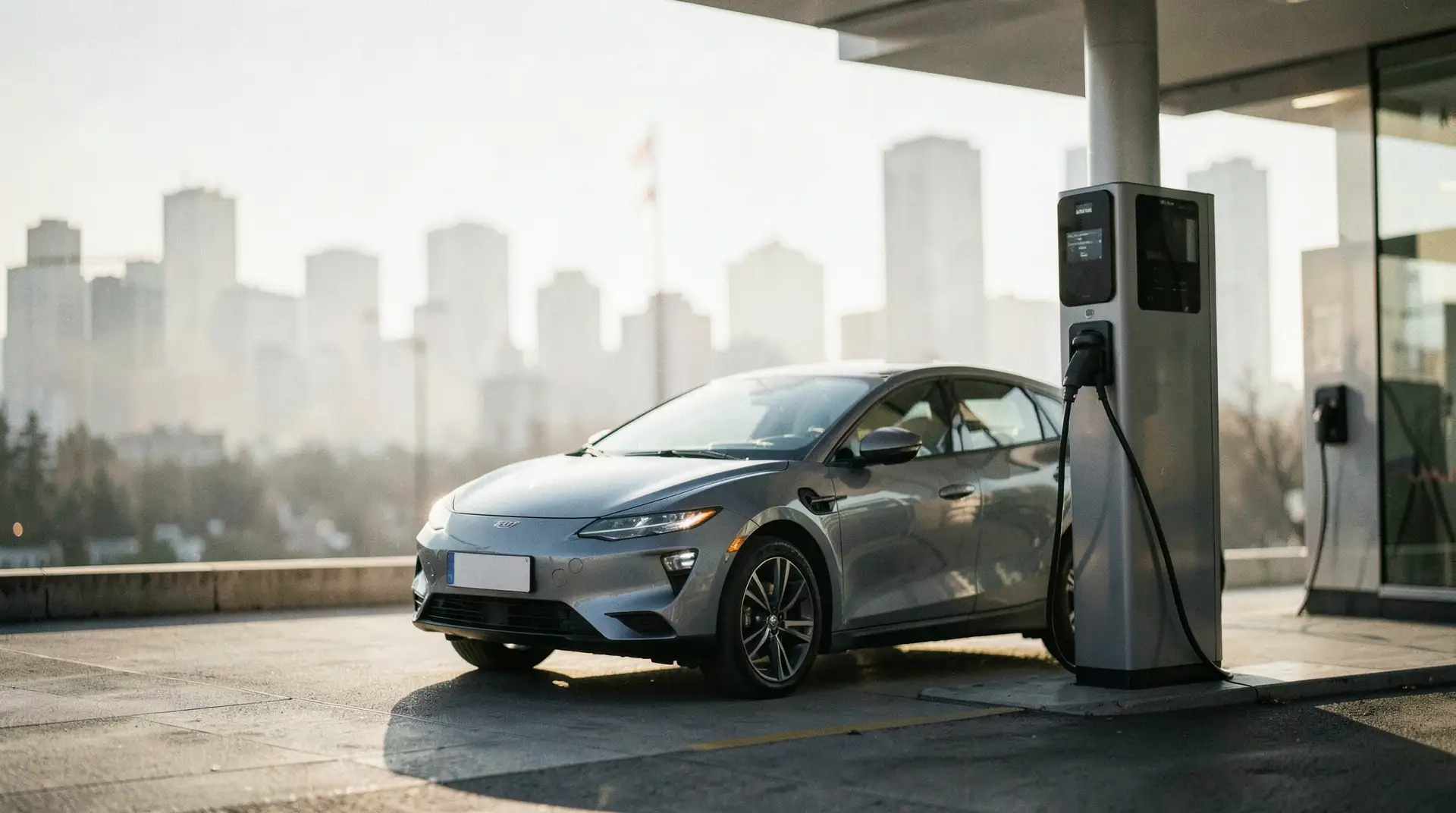
This does not cancel the EV's advantage, it qualifies it. A car charged on a coal-heavy grid still produces fewer lifecycle emissions than a comparable petrol car, because electric motors convert energy far more efficiently than internal combustion engines do. But the margin is smaller than a zero-emission label suggests, and it narrows further in states where the grid is dirtier. The environmental benefit of an EV in India is real, but it is tied to the grid it draws from, and that grid is still changing.
Cobalt mining, concentrated in the Democratic Republic of Congo, carries well-documented social and environmental costs. None of this is unique to electric vehicles, every technology has a supply chain, but it is a cost that does not appear in the urban air quality numbers. The battery also has a finite life. What happens to it at end-of-use matters enormously. Battery recycling infrastructure in India is still developing, which means the question of where these packs go after their useful life is not yet answered cleanly.
An EV emits none of these at the point of use. In cities where ground-level pollution regularly exceeds safe thresholds, shifting a meaningful share of the vehicle fleet to electric does reduce the concentration of harmful pollutants in the breathing zone. Tyre and brake wear still produce particulate matter, this is true of any wheeled vehicle, but the combustion emissions disappear entirely. For urban lungs, that is a real and measurable gain.
For someone without access to home charging, the convenience gap is real, and public fast chargers draw large amounts of power in short bursts, which stresses the local grid differently than overnight slow charging does. None of this makes electric vehicles the wrong choice for Indian cities. It makes the choice more conditional than the advertising suggests.
It is strongest in dense urban environments where it displaces the most combustion emissions at street level, and less compelling as a replacement for a rarely-used second car. The vehicle is not the whole system. The grid it connects to, the infrastructure behind it, and the supply chain that built it are all part of the same environmental account. Reading that account honestly is more useful than either the optimistic brochure or the cynical dismissal.
Where the Electricity Actually Comes From
India's power grid is still heavily dependent on coal. The exact share shifts as renewable capacity is added, but in most Indian cities, a significant portion of the electricity flowing into a charging cable at night was generated by burning coal at a thermal plant hundreds of kilometres away.This does not cancel the EV's advantage, it qualifies it. A car charged on a coal-heavy grid still produces fewer lifecycle emissions than a comparable petrol car, because electric motors convert energy far more efficiently than internal combustion engines do. But the margin is smaller than a zero-emission label suggests, and it narrows further in states where the grid is dirtier. The environmental benefit of an EV in India is real, but it is tied to the grid it draws from, and that grid is still changing.
The Battery Behind the Promise
Lithium-ion batteries are the core of every modern electric vehicle. Extracting lithium, cobalt, and nickel, the minerals that make these batteries work, is an industrial process with its own environmental footprint. Lithium mining in South America and Australia disturbs large areas of land and consumes significant volumes of water in regions where water is scarce.Cobalt mining, concentrated in the Democratic Republic of Congo, carries well-documented social and environmental costs. None of this is unique to electric vehicles, every technology has a supply chain, but it is a cost that does not appear in the urban air quality numbers. The battery also has a finite life. What happens to it at end-of-use matters enormously. Battery recycling infrastructure in India is still developing, which means the question of where these packs go after their useful life is not yet answered cleanly.
You may also like
- Sales of lookalike mineral water brands fall after FSSAI report
- High jewellery turns statement rings into sculptural art
- Understanding Knee Pain in Younger Adults: Causes and Prevention
- Morning Beverages: Choosing the Healthiest Option for Your Day
- Understanding Tooth Decay: Causes, Symptoms, and Prevention Tips
Urban Air Quality: Where EVs Do Deliver
Whatever the upstream complexity, the local air quality argument for electric vehicles in dense Indian cities is straightforward. A petrol or diesel vehicle emits nitrogen oxides, particulate matter, and hydrocarbons directly into the street-level air that pedestrians, cyclists, and children breathe.An EV emits none of these at the point of use. In cities where ground-level pollution regularly exceeds safe thresholds, shifting a meaningful share of the vehicle fleet to electric does reduce the concentration of harmful pollutants in the breathing zone. Tyre and brake wear still produce particulate matter, this is true of any wheeled vehicle, but the combustion emissions disappear entirely. For urban lungs, that is a real and measurable gain.
Weight, Infrastructure, and the Bigger Picture
Electric cars, particularly large ones, tend to be heavier than their petrol equivalents, because battery packs are dense. Greater weight means more tyre wear, more road wear, and more particulate matter from both. It also means more energy required to move the vehicle, which partially offsets the efficiency advantage. Charging infrastructure in Indian cities is expanding but remains uneven, concentrated in metros, thin in smaller cities.For someone without access to home charging, the convenience gap is real, and public fast chargers draw large amounts of power in short bursts, which stresses the local grid differently than overnight slow charging does. None of this makes electric vehicles the wrong choice for Indian cities. It makes the choice more conditional than the advertising suggests.
How the Calculus Actually Works
The environmental case for an electric vehicle in India is strongest when the car is charged using renewable energy, rooftop solar, for instance, and weakest when it draws entirely from a coal-heavy grid. It is strongest when the battery is used for its full designed lifespan and recycled responsibly at end-of-use, and weakest when it is replaced early or discarded without recovery.It is strongest in dense urban environments where it displaces the most combustion emissions at street level, and less compelling as a replacement for a rarely-used second car. The vehicle is not the whole system. The grid it connects to, the infrastructure behind it, and the supply chain that built it are all part of the same environmental account. Reading that account honestly is more useful than either the optimistic brochure or the cynical dismissal.






Loving Newspoint? Download the app now
