
Why Are Jodhpur's Houses Painted Blue? The Real Reasons Behind It

From the ramparts of Mehrangarh Fort, the city below looks like a spill of ink on pale desert stone. The blue is so uniform, so deliberate, that a first-time visitor assumes someone once issued a decree. The truth is stranger and more human than that.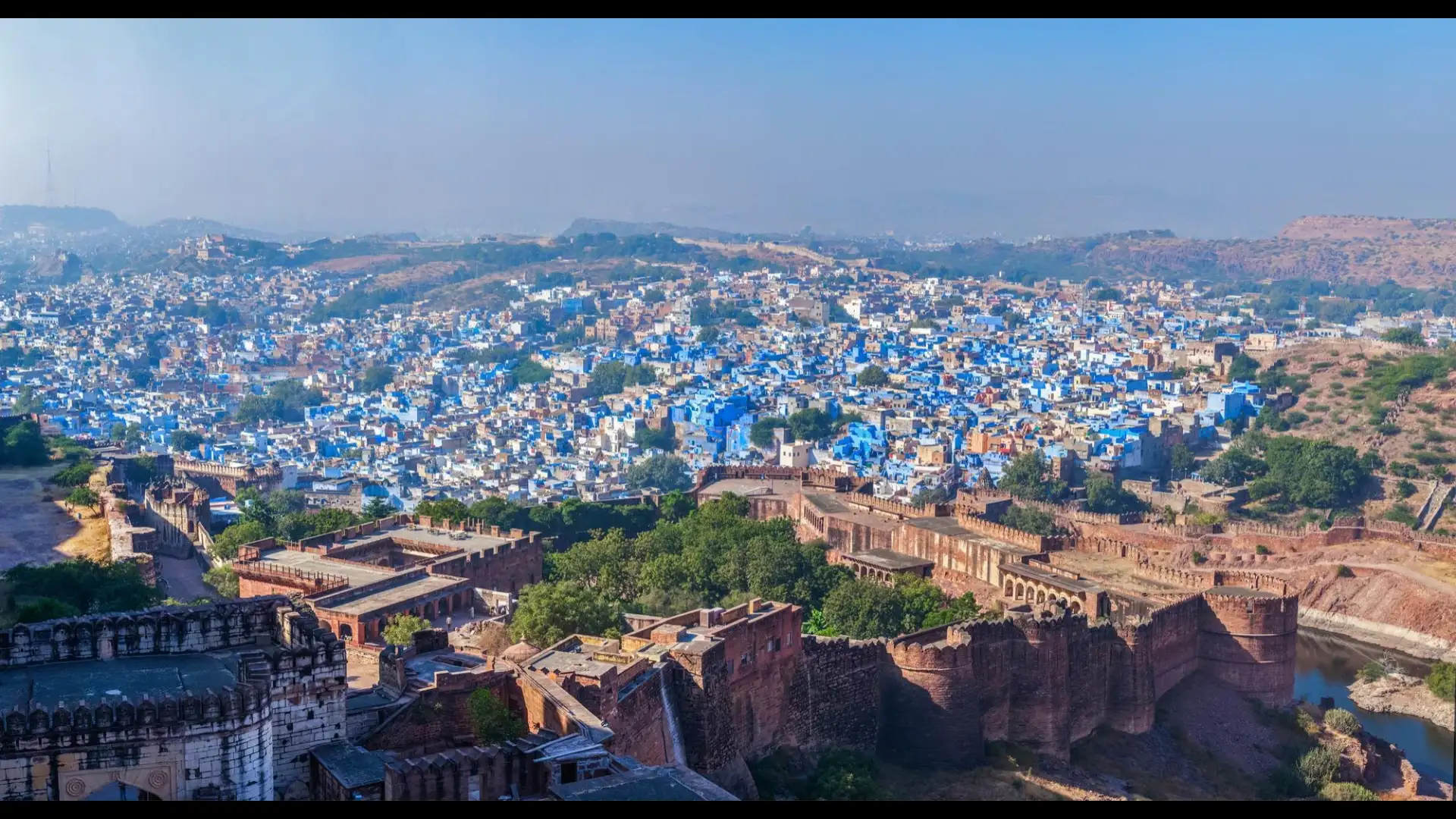
Over generations, the practice spread beyond Brahmin households. Neighbours adopted the colour, partly from aesthetic habit, partly because the dye was by then a familiar part of local commerce. By the time the walled city had fully settled into its present shape, the blue had ceased to be an exclusive marker and had become simply the colour of the place.
Copper sulphate also has a secondary property that the builders valued, it discourages termites and insects from settling into the lime plaster of the walls. Whether this was the primary reason anyone first reached for a blue pigment or a convenient discovery that reinforced the habit, it gave the colour a practical argument that outlasted the caste one.
The dye trade collapsed in the late nineteenth century when synthetic aniline dyes arrived from Germany and undercut natural indigo's price catastrophically. But the colour had already been absorbed into the city's identity. People continued to paint in blue not because indigo was cheap any longer, but because the city was blue and had always been blue within living memory.
The newer parts of Jodhpur, built outside the old walled city, are not blue. They are the ordinary off-white and cream of any Rajasthani town. The blue is specific to the old city, to the lanes that run below the fort, to the neighbourhoods that were already settled when the Marwar kingdom was at its height. It is a colour that belongs to a particular geography within the city, not to the city as a whole, though the name has made the part stand for the whole.
The blue of Jodhpur is not a single story. It is three stories laid over each other: a social marker that spread beyond its original meaning, a practical adaptation to a desert climate, and the residue of a trade that no longer exists. Each coat of paint applied to a wall in the old city sits on top of all of them at once.
The Brahmin Quarter and the Colour of Rank
The oldest explanation, and the one most residents of the old city still repeat, ties the blue to Jodhpur's Brahmin community. Brahmin households in the walled city traditionally painted their homes blue to signal their caste standing, a visible marker in a neighbourhood where social hierarchy was read off walls as readily as off clothing. The dye used was indigo, which was both locally available and expensive enough to carry meaning. A blue house said something about who lived inside.Over generations, the practice spread beyond Brahmin households. Neighbours adopted the colour, partly from aesthetic habit, partly because the dye was by then a familiar part of local commerce. By the time the walled city had fully settled into its present shape, the blue had ceased to be an exclusive marker and had become simply the colour of the place.
What the Heat Has to Do With It
A second explanation runs alongside the first, and it is grounded in physics rather than hierarchy. Jodhpur sits at the edge of the Thar Desert. Summer temperatures climb hard and stay there for months. Traditional Rajasthani builders understood, without formalising it as science, that lighter colours reflect solar radiation and keep interior walls cooler. Blue, particularly the copper sulphate-based blue that became common in the region, reflects more heat than the terracotta and ochre of the surrounding landscape.Copper sulphate also has a secondary property that the builders valued, it discourages termites and insects from settling into the lime plaster of the walls. Whether this was the primary reason anyone first reached for a blue pigment or a convenient discovery that reinforced the habit, it gave the colour a practical argument that outlasted the caste one.
Indigo, Trade, and the Dye That Coloured a City
Rajasthan sat at the centre of a trade network that moved indigo from fields in the Gangetic plains westward through Rajput territories toward the ports of Gujarat. Jodhpur's merchants handled the dye in bulk. It was cheap for them in a way it was not cheap elsewhere, which meant that painting a wall with it was a local economy of scale rather than an act of extravagance. Cities take on the colours of their commerce. Jodhpur took on indigo.The dye trade collapsed in the late nineteenth century when synthetic aniline dyes arrived from Germany and undercut natural indigo's price catastrophically. But the colour had already been absorbed into the city's identity. People continued to paint in blue not because indigo was cheap any longer, but because the city was blue and had always been blue within living memory.
The Fort, the View, and the Name That Stuck
Mehrangarh Fort gave Jodhpur its popular name: the Blue City. From the fort's high walls, the colour reads as a single continuous wash, which is partly an effect of distance and partly because the densely packed havelis of the old walled city genuinely do share the same narrow palette. The name arrived with tourism and photography. Once the image circulated, the fort's honey-coloured sandstone against the blue city below, it became the city's primary visual identity, which in turn encouraged residents to repaint in blue when walls faded, reinforcing the pattern.The newer parts of Jodhpur, built outside the old walled city, are not blue. They are the ordinary off-white and cream of any Rajasthani town. The blue is specific to the old city, to the lanes that run below the fort, to the neighbourhoods that were already settled when the Marwar kingdom was at its height. It is a colour that belongs to a particular geography within the city, not to the city as a whole, though the name has made the part stand for the whole.
The blue of Jodhpur is not a single story. It is three stories laid over each other: a social marker that spread beyond its original meaning, a practical adaptation to a desert climate, and the residue of a trade that no longer exists. Each coat of paint applied to a wall in the old city sits on top of all of them at once.
Next Story