
Fascinating Things You Probably Didn’t Know About Solar Eclipses

Solar eclipses are among the most spectacular astronomical events visible from Earth, often turning day into night and captivating millions. While many people enjoy watching them, few are aware of the strange, surprising, and scientific details behind these celestial shows. From historical superstitions to rare atmospheric effects, solar eclipses have intrigued humanity for centuries. Here are ten lesser-known facts that reveal just how extraordinary solar eclipses really are.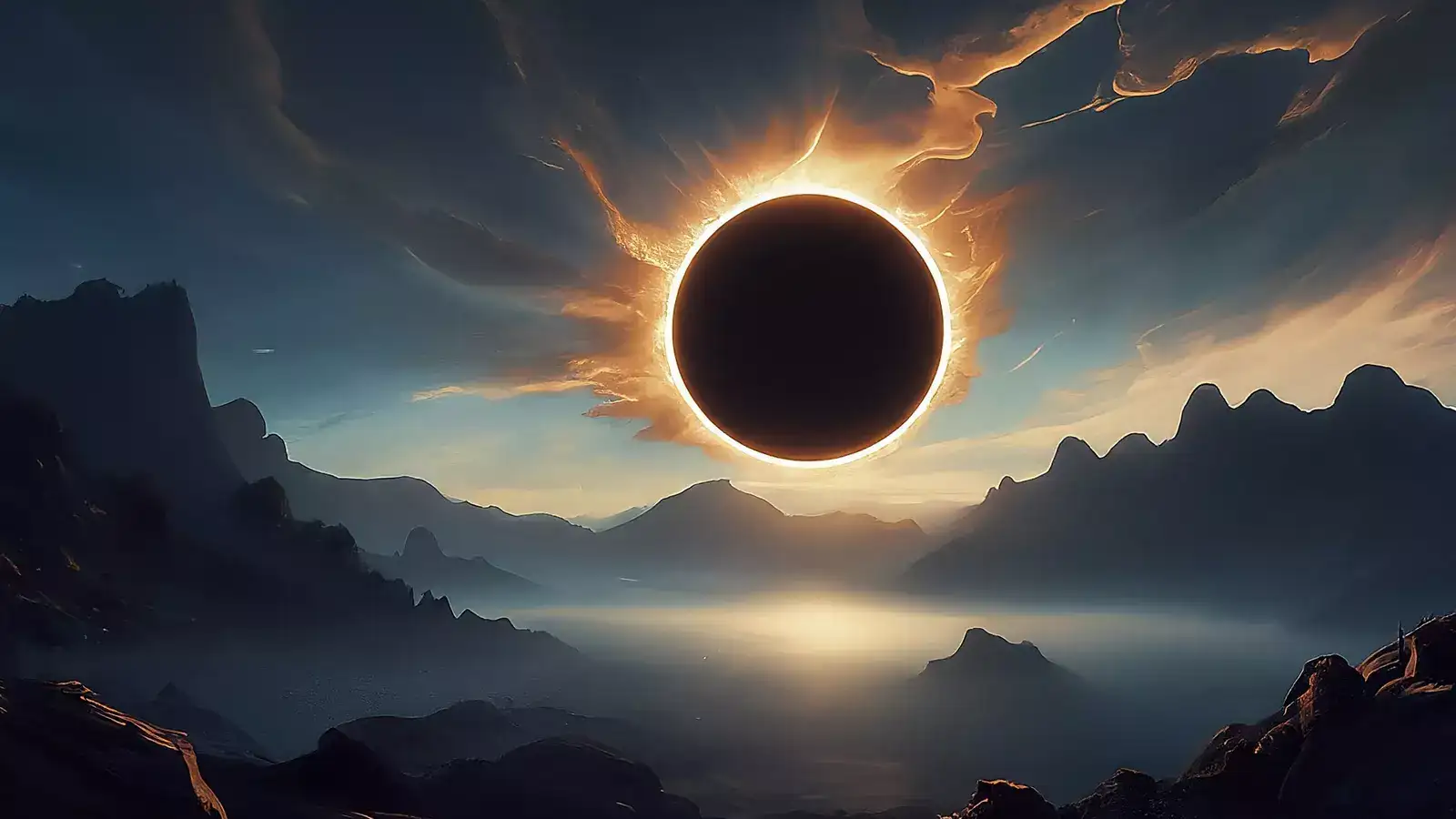
1. Total Solar Eclipses Happen Somewhere Every 18 Months
Although a total solar eclipse might feel like a once-in-a-lifetime event, they actually occur approximately every 18 months somewhere on Earth. However, because the path of totality is narrow—often only 160 kilometres wide—each specific location may only witness one every few hundred years. That rarity in any single location is what makes them seem so elusive.2. Ancient Cultures Thought Eclipses Were Omens
Before the science of astronomy explained them, solar eclipses were often seen as bad omens. In ancient China, people believed a celestial dragon was devouring the Sun. In India, eclipses were thought to result from the demon Rahu swallowing the Sun. These myths often led to rituals, loud noises, and prayers aimed at “scaring away” the dark forces.3. You Can See Stars and Planets During Totality
During the brief moments of totality—when the Moon completely blocks the Sun—the sky darkens enough for stars and planets to become visible. It's an eerie and beautiful moment where daytime transforms into twilight, allowing observers to spot planets like Venus and Jupiter with the naked eye.4. The Sun’s Corona Becomes Visible Only During a Total Eclipse
The corona, the Sun’s outer atmosphere, is usually hidden by the Sun’s intense light. But during a total eclipse, when the Sun is completely obscured, this glowing, wispy halo becomes visible to the naked eye. Studying the corona during eclipses has helped scientists understand solar winds and the behaviour of plasma in space.5. Animals Often React Strangely to Eclipses
Many animals behave as if it’s nighttime during a total solar eclipse. Birds stop singing, cows lie down, and insects fall silent. Nocturnal creatures may even become active. This sudden confusion in nature is one of the more curious side effects of the sudden darkness brought on by an eclipse.6. Solar Eclipses Helped Prove Einstein’s Theory of Relativity
One of the most important scientific validations of Albert Einstein’s general theory of relativity came during a solar eclipse in 1919. Astronomers used the eclipse to measure the apparent position of stars near the Sun and found that their light had indeed been bent by the Sun’s gravity—just as Einstein had predicted.7. A Rare Eclipse Can Occur Without Total Darkness
During what's known as an annular eclipse, the Moon covers the centre of the Sun but leaves a bright ring—known as the “ring of fire”—around the edges. This happens when the Moon is farther from Earth in its orbit and appears smaller than the Sun. It’s striking, but the sky doesn’t go fully dark.8. Solar Eclipses Occur in Predictable Cycles
Eclipses follow a repeating pattern known as the Saros cycle, which lasts approximately 18 years, 11 days, and 8 hours. This cycle helps astronomers predict when and where future eclipses will occur with remarkable precision—even hundreds of years in advance.9. You Should Never Look Directly at a Solar Eclipse Without Protection
Even during partial eclipses, the Sun’s rays can cause serious eye damage. Proper solar viewing glasses or certified eclipse viewers are essential. Looking directly at the Sun through ordinary sunglasses or binoculars without filters can result in permanent vision loss.10. Eclipses Don’t Just Happen on Earth
While solar eclipses are stunning here, they’re not exclusive to our planet. Eclipses also happen on other planets. On Mars, for example, the moons Phobos and Deimos regularly pass in front of the Sun, though they are not large enough to completely cover it. NASA’s rovers have captured several of these alien eclipses.The Magic of Celestial Shadows
Solar eclipses are more than just a beautiful spectacle—they’re windows into cosmic mechanics, natural wonder, and historical awe. Whether you watch from a crowded park or a remote hilltop, the next eclipse you see will connect you to centuries of curiosity, science, and wonder. So next time one is on the horizon, prepare to be amazed—not just by what you see, but by everything you now know about it.Next Story