
Alberobello Travel Guide: Discover Italy's Unique Cone-Roofed Stone Houses

Imagine walking through a small Italian town where rows of whitewashed stone houses have unusual cone-shaped roofs that look almost like something from a fairy tale. This is Alberobello, a distinctive destination in Italy's Puglia region, famous for its traditional trulli houses . With winding lanes, limestone buildings and a strong connection to local history, the town offers a different experience from Italy's better-known cities.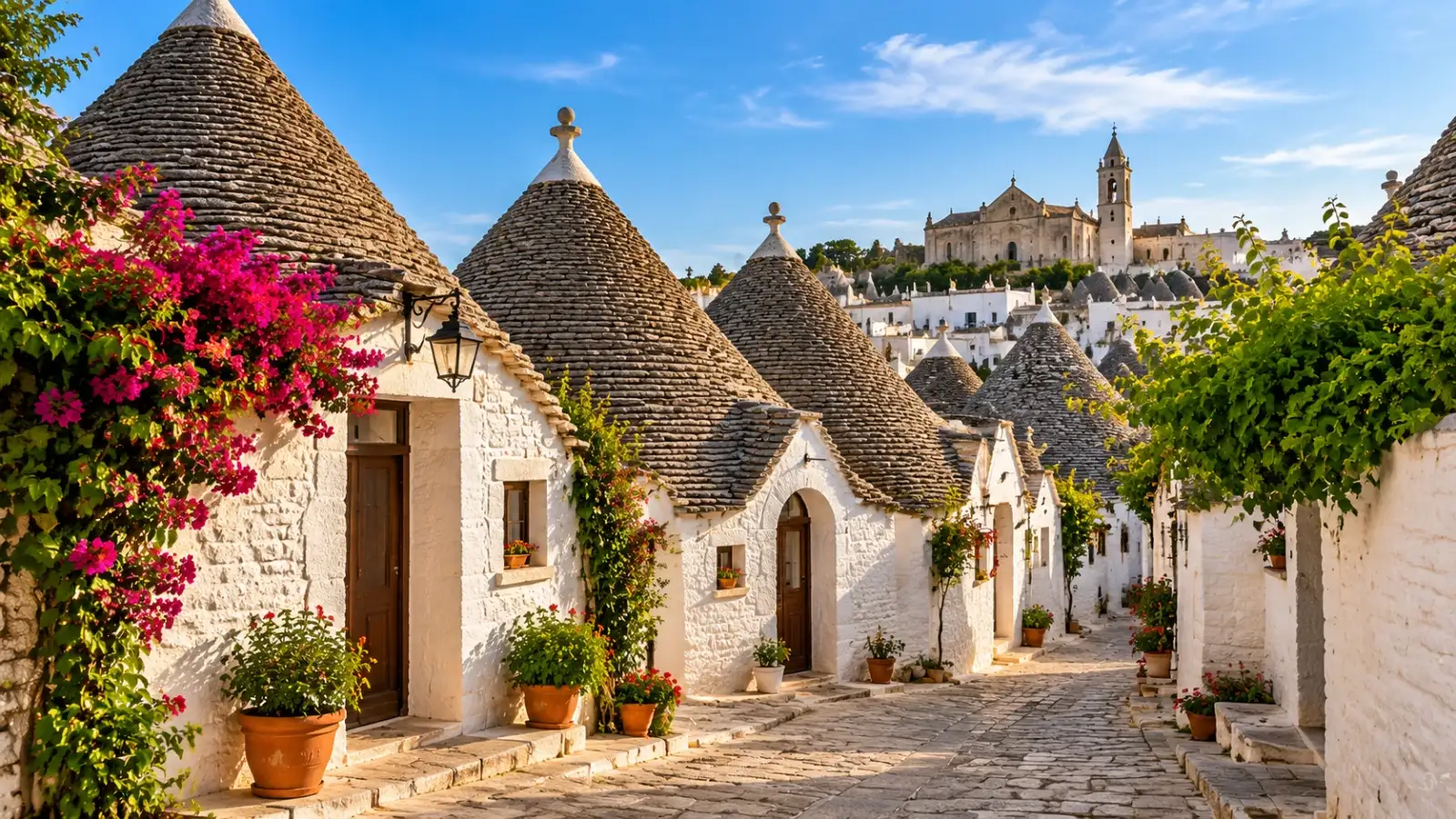
For first-time visitors, Alberobello is an opportunity to discover how practical rural architecture became a celebrated cultural landmark. Its historic trulli districts are recognised as a UNESCO World Heritage Site, preserving an architectural tradition that has survived for centuries.
The buildings were traditionally constructed using dry-stone masonry, meaning the stones were fitted together without mortar. Local limestone was readily available, making it a practical material for rural communities.
Trulli originally served several purposes, including farm shelters, storage spaces and permanent homes for agricultural workers and small landowners. Over time, clusters of these buildings developed into settlements.
Alberobello is especially notable because so many trulli remain together in a historic urban landscape. The town's traditional architecture is not simply a collection of isolated old houses. It forms entire neighbourhoods that reflect how people once lived and worked in the region.
The construction technique is known as corbelled dry-stone building. Stone layers are placed progressively inward until they form a roof-like structure. The outer covering helps shed rainwater, while the thick walls and roof provide a solid enclosure.
Some roofs display painted symbols, crosses or other markings. Their meanings vary, and not every symbol has a clearly established interpretation. Some are associated with religious or folk traditions, while others may have decorative or protective significance.
The buildings also incorporated practical features. Traditional rainwater collection systems directed water towards underground cisterns, helping households store water in an area where local conditions made water management important.
Walking through the district gives first-time visitors an immediate sense of the town's unusual architectural character. The changing rooflines, narrow streets and whitewashed walls provide plenty of opportunities for photography.
Because this area attracts many visitors, it can become busy during peak travel periods. Arriving earlier in the day can make it easier to explore at a relaxed pace.
Although many buildings now serve commercial purposes, the district remains an important part of Alberobello's historic landscape.
Walking through its lanes can reveal details that are easy to overlook in busier streets, from small doorways to stone roof patterns and modest gardens.
Visitors should remember that many trulli are private homes. Respecting residents' privacy, avoiding entry into unauthorised spaces and keeping noise down are important when exploring this district.
For first-time travellers interested in the history and lived character of Alberobello, visiting both neighbourhoods provides a more complete experience.
Its interior offers a closer look at historic domestic spaces and the way these unusual buildings were arranged. Check current opening information before visiting, as access arrangements can change.
Its design shows how the traditional building style continued to influence local architecture beyond its original agricultural and residential uses.
The church also provides a useful contrast to the smaller houses in the surrounding streets, demonstrating how a familiar architectural language can be adapted for a different purpose.
A museum visit can add context to what visitors see outdoors, including the construction methods, household arrangements and practical needs that shaped these buildings.
Check local information for current exhibitions and opening hours before planning your visit.
Summer is also popular, but it may bring higher temperatures and larger crowds, particularly around the best-known streets and viewpoints. Visitors travelling in July or August should consider starting early, carrying water and taking breaks during the warmest hours.
Winter can offer a quieter experience, although weather conditions may be cooler and some businesses may operate on reduced schedules.
There is no single best time for everyone. The ideal season depends on whether you prefer lively streets, comfortable walking conditions or a quieter visit.
Begin with a walk through Rione Monti, then continue towards Aia Piccola for a quieter look at the traditional residential landscape. Add Trullo Sovrano or Casa Pezzolla if you want to learn more about the architecture and local history.
Travellers with extra time can use Alberobello as a base for exploring the surrounding Itria Valley, which is known for its countryside, olive groves and other historic towns.
A slower visit also allows time to appreciate the small details of the buildings instead of simply photographing the most recognisable streets.
The town is a living community, not an open-air museum. Some trulli are homes, while others are businesses or visitor attractions. Always check whether a building is open to the public before entering.
If you plan to stay overnight in a converted trullo, confirm the facilities and access arrangements in advance. Traditional buildings can differ considerably in size, layout and modern amenities.
It is also worth allowing time for local food. Puglia is known for regional dishes made with ingredients such as olive oil, vegetables, pulses and pasta. A meal can add another dimension to a visit beyond sightseeing.
For first-time visitors, the appeal lies in more than the unusual rooftops. Exploring Rione Monti and Aia Piccola, learning how the stone structures were built and seeing how the town continues to function today offer a richer understanding of the place.
A visit to Alberobello is a chance to experience a distinctive corner of southern Italy where historic architecture remains part of the landscape and everyday life.
For first-time visitors, Alberobello is an opportunity to discover how practical rural architecture became a celebrated cultural landmark. Its historic trulli districts are recognised as a UNESCO World Heritage Site, preserving an architectural tradition that has survived for centuries.
What Are Trulli Houses?
Trulli is the plural of trullo, the Italian name for a traditional stone building found in Puglia, particularly around the Itria Valley. These structures are recognised by their thick walls, whitewashed exteriors and distinctive conical roofs made from overlapping limestone slabs.The buildings were traditionally constructed using dry-stone masonry, meaning the stones were fitted together without mortar. Local limestone was readily available, making it a practical material for rural communities.
Trulli originally served several purposes, including farm shelters, storage spaces and permanent homes for agricultural workers and small landowners. Over time, clusters of these buildings developed into settlements.
Alberobello is especially notable because so many trulli remain together in a historic urban landscape. The town's traditional architecture is not simply a collection of isolated old houses. It forms entire neighbourhoods that reflect how people once lived and worked in the region.
Why Are the Roofs Cone-Shaped?
The most striking feature of a trullo is its roof. Built from carefully arranged limestone slabs, the roof rises into a cone and often ends in a decorative stone pinnacle.The construction technique is known as corbelled dry-stone building. Stone layers are placed progressively inward until they form a roof-like structure. The outer covering helps shed rainwater, while the thick walls and roof provide a solid enclosure.
Some roofs display painted symbols, crosses or other markings. Their meanings vary, and not every symbol has a clearly established interpretation. Some are associated with religious or folk traditions, while others may have decorative or protective significance.
The buildings also incorporated practical features. Traditional rainwater collection systems directed water towards underground cisterns, helping households store water in an area where local conditions made water management important.
Exploring Alberobello's Two Main Trulli Districts
Rione Monti
Rione Monti is the larger and more visitor-focused of Alberobello's two best-known trulli districts. Its sloping lanes are lined with numerous cone-roofed buildings, many of which now house shops, cafés, restaurants and visitor accommodation.Walking through the district gives first-time visitors an immediate sense of the town's unusual architectural character. The changing rooflines, narrow streets and whitewashed walls provide plenty of opportunities for photography.
Because this area attracts many visitors, it can become busy during peak travel periods. Arriving earlier in the day can make it easier to explore at a relaxed pace.
Although many buildings now serve commercial purposes, the district remains an important part of Alberobello's historic landscape.
Rione Aia Piccola
Aia Piccola offers a different atmosphere. It is generally quieter and retains a stronger residential character, allowing visitors to see the trulli as part of an everyday neighbourhood rather than solely as tourist attractions.Walking through its lanes can reveal details that are easy to overlook in busier streets, from small doorways to stone roof patterns and modest gardens.
Visitors should remember that many trulli are private homes. Respecting residents' privacy, avoiding entry into unauthorised spaces and keeping noise down are important when exploring this district.
For first-time travellers interested in the history and lived character of Alberobello, visiting both neighbourhoods provides a more complete experience.
Places to See Beyond the Streets
Trullo Sovrano
Trullo Sovrano is one of Alberobello's best-known historic buildings and a notable example of a two-storey trullo. It helps visitors understand how the traditional building style could be adapted beyond the smaller, single-storey structures seen throughout the town.Its interior offers a closer look at historic domestic spaces and the way these unusual buildings were arranged. Check current opening information before visiting, as access arrangements can change.
Church of Sant'Antonio
The Church of Sant'Antonio is another distinctive landmark. Built in the early twentieth century, it uses the characteristic conical forms associated with trulli architecture.Its design shows how the traditional building style continued to influence local architecture beyond its original agricultural and residential uses.
The church also provides a useful contrast to the smaller houses in the surrounding streets, demonstrating how a familiar architectural language can be adapted for a different purpose.
Casa Pezzolla and the Territory Museum
Casa Pezzolla is a complex of interconnected trulli associated with the Museo del Territorio. It is a useful stop for visitors who want to understand the region's traditional architecture, local history and rural way of life.A museum visit can add context to what visitors see outdoors, including the construction methods, household arrangements and practical needs that shaped these buildings.
Check local information for current exhibitions and opening hours before planning your visit.
When Is the Best Time to Visit Alberobello?
Spring and early autumn are often comfortable periods for exploring Alberobello on foot. Temperatures are generally more moderate than during the hottest part of summer, and walking between the town's districts can be more pleasant.Summer is also popular, but it may bring higher temperatures and larger crowds, particularly around the best-known streets and viewpoints. Visitors travelling in July or August should consider starting early, carrying water and taking breaks during the warmest hours.
Winter can offer a quieter experience, although weather conditions may be cooler and some businesses may operate on reduced schedules.
There is no single best time for everyone. The ideal season depends on whether you prefer lively streets, comfortable walking conditions or a quieter visit.
How Much Time Should First-Time Visitors Spend?
A day is generally enough to explore Alberobello's main trulli districts, visit a museum or historic building and enjoy a meal in town.Begin with a walk through Rione Monti, then continue towards Aia Piccola for a quieter look at the traditional residential landscape. Add Trullo Sovrano or Casa Pezzolla if you want to learn more about the architecture and local history.
Travellers with extra time can use Alberobello as a base for exploring the surrounding Itria Valley, which is known for its countryside, olive groves and other historic towns.
A slower visit also allows time to appreciate the small details of the buildings instead of simply photographing the most recognisable streets.
You may also like
- Loud DJ Music During Dussehra Can Harm More Than Your Ears! Heart Patients, Children and Elderly People Need to Be Extra Careful
- Osteoporosis in Children: Can Kids Develop This Bone Disease Too? Experts Reveal the Warning Signs Parents Should Never Ignore
- Reels Addiction Is Silently Hurting Your Spine! Experts Reveal the Hidden Dangers of Hours Spent on Your Phone
- Some people can't stop talking about others behind their backs; psychologists found the most frequent gossipers tend to score high on one dark trait, and it isn't narcissism, as many might assume
- Merchants to Moguls by Sarojesh Mukerjee: The forgotten business pioneers who shaped Bengal's economic legacy
What Should You Know Before Visiting?
Alberobello is best explored on foot, but its old streets can include slopes, uneven paving and steps. Comfortable walking shoes are useful, particularly if you plan to explore both main districts.The town is a living community, not an open-air museum. Some trulli are homes, while others are businesses or visitor attractions. Always check whether a building is open to the public before entering.
If you plan to stay overnight in a converted trullo, confirm the facilities and access arrangements in advance. Traditional buildings can differ considerably in size, layout and modern amenities.
It is also worth allowing time for local food. Puglia is known for regional dishes made with ingredients such as olive oil, vegetables, pulses and pasta. A meal can add another dimension to a visit beyond sightseeing.
Why Alberobello's Trulli Houses Are Worth Discovering
Alberobello stands out because its architecture tells a story about the relationship between local materials, rural life and traditional building knowledge. The trulli were created for practical reasons, yet their distinctive shapes and construction methods have made them internationally recognised heritage.For first-time visitors, the appeal lies in more than the unusual rooftops. Exploring Rione Monti and Aia Piccola, learning how the stone structures were built and seeing how the town continues to function today offer a richer understanding of the place.
A visit to Alberobello is a chance to experience a distinctive corner of southern Italy where historic architecture remains part of the landscape and everyday life.






Loving Newspoint? Download the app now
