
10 Nutritious Foods to Add to Your Winter Breakfast for a Healthy Start

Winter mornings often make people crave warm, filling and comforting meals. A balanced breakfast can help you start the day with energy while providing important nutrients to support your everyday activities. Seasonal fruits, whole grains, nuts, seeds and protein-rich foods offer plenty of options for creating satisfying morning meals. Instead of relying on heavy or overly sugary choices, you can combine different ingredients to make your breakfast both nourishing and enjoyable. From a warm bowl of porridge to fresh fruit and homemade vegetable dishes, here are ten foods worth including in your winter breakfast routine.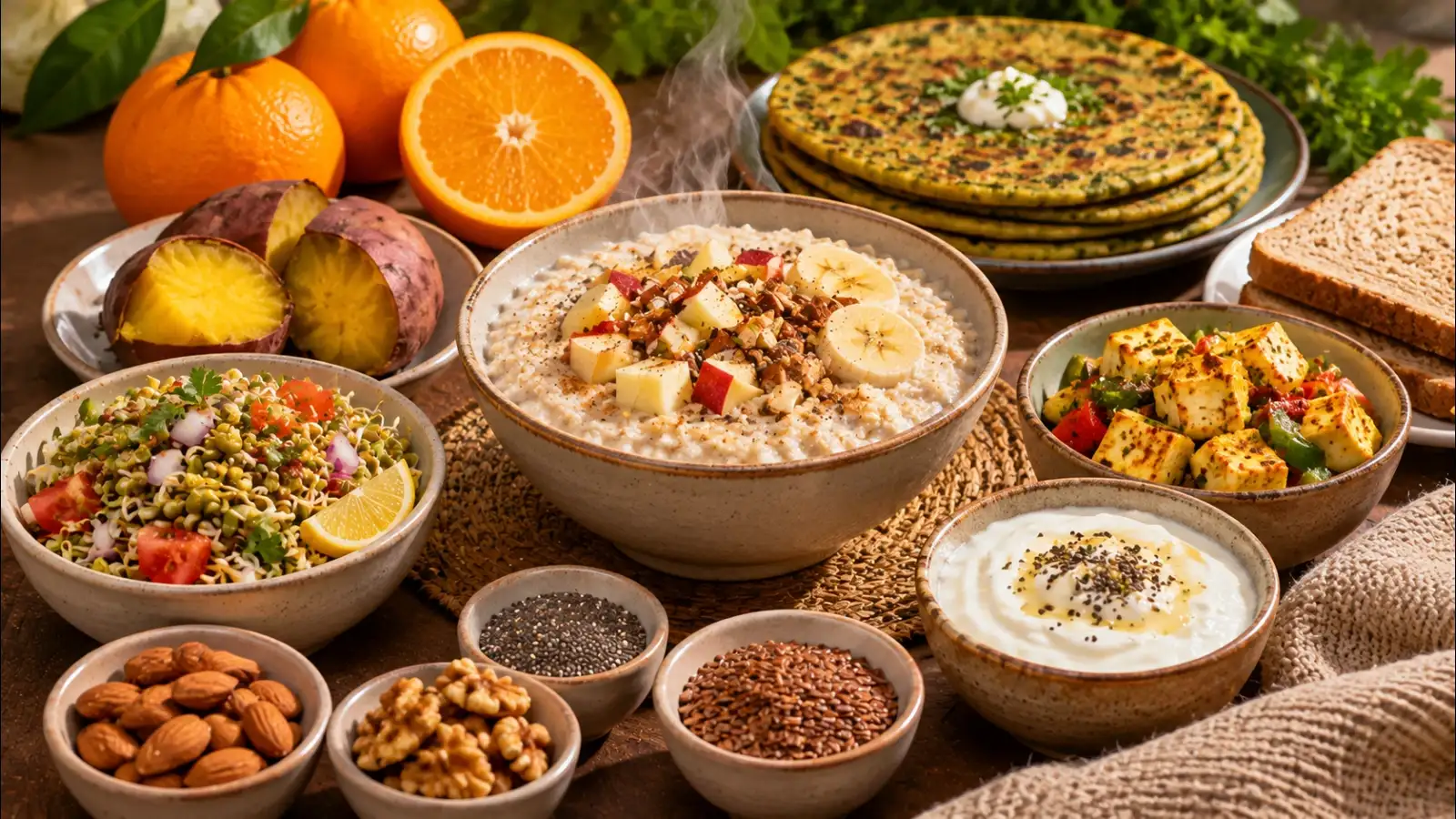
You can cook oats with milk or water and add chopped apples, bananas, dates or nuts. A pinch of cinnamon can provide extra flavour without requiring much added sugar. For a savoury version, prepare oats with carrots, peas and other vegetables.
You can enjoy them whole, prepare a simple fruit bowl or pair orange segments with yoghurt and nuts. Eating whole fruit also provides fibre, making it a useful addition to a balanced morning meal.
A small handful can be added to porridge, yoghurt or homemade breakfast mixes. You can also soak almonds overnight if you prefer their softer texture. Keep portions moderate because nuts are energy-dense.
You can prepare a simple sprouts chaat with chopped tomatoes, cucumber, lemon juice and coriander. Alternatively, lightly steam the sprouts and add them to poha or savoury vegetable bowls. Cooking sprouts thoroughly is advisable, particularly for children, older adults and people with weakened immunity.
You can roast or boil sweet potatoes and serve them with yoghurt, nuts or a little cinnamon. They can also be added to vegetable parathas or homemade breakfast patties.
During winter, you can allow curd to lose its chill before eating if you prefer it closer to room temperature. A bowl of plain yoghurt with banana, apple pieces and crushed almonds makes an easy morning option.
Serve it with peanut butter, paneer, hummus or mashed avocado. You can also prepare vegetable sandwiches with cucumber, tomato and lettuce. Choose bread that lists wholegrain flour as a main ingredient.
Try paneer bhurji with whole-wheat toast, a paneer vegetable sandwich or lightly seasoned paneer cubes with sautéed vegetables. Combining it with whole grains and fresh produce can make breakfast more balanced.
Add ground flaxseeds to porridge or sprinkle chia seeds over yoghurt and fruit. Chia seeds can also be soaked in milk to prepare a simple pudding. Use moderate portions and drink enough water throughout the day.
You can prepare methi paratha, spinach chilla, vegetable poha or savoury oats with leafy greens. Pair these dishes with curd or paneer to include a source of protein.
1. Oats
Oats are a convenient whole-grain option for winter mornings. They contain dietary fibre, including beta-glucan, and can be prepared as a warm porridge that feels comforting during colder weather.You can cook oats with milk or water and add chopped apples, bananas, dates or nuts. A pinch of cinnamon can provide extra flavour without requiring much added sugar. For a savoury version, prepare oats with carrots, peas and other vegetables.
2. Seasonal Citrus Fruits
Oranges, sweet lime and other citrus fruits are widely available during the Indian winter season. They provide vitamin C and add natural freshness to your breakfast.You can enjoy them whole, prepare a simple fruit bowl or pair orange segments with yoghurt and nuts. Eating whole fruit also provides fibre, making it a useful addition to a balanced morning meal.
3. Almonds and Walnuts
Almonds and walnuts are nutrient-rich additions that provide healthy unsaturated fats, plant protein and fibre. Walnuts also contain alpha-linolenic acid, a plant-based omega-3 fatty acid.A small handful can be added to porridge, yoghurt or homemade breakfast mixes. You can also soak almonds overnight if you prefer their softer texture. Keep portions moderate because nuts are energy-dense.
4. Sprouts
Sprouts are a useful vegetarian breakfast ingredient because they provide plant-based protein, fibre and several essential nutrients. Green gram and mixed lentil sprouts are commonly used in Indian breakfast preparations.You can prepare a simple sprouts chaat with chopped tomatoes, cucumber, lemon juice and coriander. Alternatively, lightly steam the sprouts and add them to poha or savoury vegetable bowls. Cooking sprouts thoroughly is advisable, particularly for children, older adults and people with weakened immunity.
5. Sweet Potatoes
Sweet potatoes are naturally rich in carbohydrates, fibre and beta-carotene, which the body can convert into vitamin A. Their mild sweetness makes them suitable for both savoury and lightly sweet breakfast preparations.You can roast or boil sweet potatoes and serve them with yoghurt, nuts or a little cinnamon. They can also be added to vegetable parathas or homemade breakfast patties.
6. Yoghurt and Curd
Plain yoghurt and curd provide protein, calcium and other nutrients. They are versatile ingredients that can be combined with fruits, nuts and seeds for a simple breakfast.During winter, you can allow curd to lose its chill before eating if you prefer it closer to room temperature. A bowl of plain yoghurt with banana, apple pieces and crushed almonds makes an easy morning option.
7. Wholegrain Bread
Wholegrain bread can provide more fibre than refined white bread, depending on the ingredients and how it is made. It is also a convenient base for quick breakfast combinations.You may also like
- One year, many milestones: OutStation celebrates its debut era with a new mixtape
- Donate these 5 things on Kartiki Ekadashi, this will bring happiness and prosperity to your home
- Fatty Liver Is Not Just a Digestive Problem: Doctors Warn of Serious Risks to Heart Health
- Psychology says people who reach railway stations hours before their train arrives may be managing more than punctuality: How anticipatory anxiety, fear of missing out and the need for control make some travellers arrive unusually early
- Psychology says people who feel guilty asking friends to return money they borrowed may be struggling with the fear of making a relationship uncomfortable; research across three countries examined why lenders avoid asking for repayment
Serve it with peanut butter, paneer, hummus or mashed avocado. You can also prepare vegetable sandwiches with cucumber, tomato and lettuce. Choose bread that lists wholegrain flour as a main ingredient.
8. Paneer
Paneer is a useful vegetarian source of protein and calcium. It can be included in breakfast through simple preparations that do not require much cooking time.Try paneer bhurji with whole-wheat toast, a paneer vegetable sandwich or lightly seasoned paneer cubes with sautéed vegetables. Combining it with whole grains and fresh produce can make breakfast more balanced.
9. Flaxseeds and Chia Seeds
Flaxseeds and chia seeds are small ingredients that can add fibre and plant-based omega-3 fats to your breakfast. They also provide minerals and can be easily mixed into everyday foods.Add ground flaxseeds to porridge or sprinkle chia seeds over yoghurt and fruit. Chia seeds can also be soaked in milk to prepare a simple pudding. Use moderate portions and drink enough water throughout the day.
10. Seasonal Green Vegetables
Spinach, fenugreek leaves, mustard greens and other seasonal vegetables can add fibre, vitamins and minerals to your morning meal. They are particularly useful for making breakfast more varied and colourful.You can prepare methi paratha, spinach chilla, vegetable poha or savoury oats with leafy greens. Pair these dishes with curd or paneer to include a source of protein.
How to Build a Balanced Winter Breakfast
Choosing nutritious ingredients is important, but combining them thoughtfully can make your breakfast more balanced. Consider these simple ideas:- Include a source of protein, such as paneer, curd, sprouts or nuts.
- Choose whole grains such as oats or whole-wheat bread for fibre.
- Add seasonal fruits or vegetables for vitamins and minerals.
- Include a small portion of nuts or seeds for healthy fats.
- Limit excessive added sugar in breakfast cereals, drinks and spreads.
- Drink enough water, even when colder weather makes you feel less thirsty.






Loving Newspoint? Download the app now
