
Rajasthan’s Lesser-Known Traditional Arts You Should Know About

Rajasthan is often associated with grand forts, colourful turbans, folk music and intricate handicrafts. However, beyond its popular cultural symbols lies a rich collection of traditional art forms that have been preserved by local communities for generations.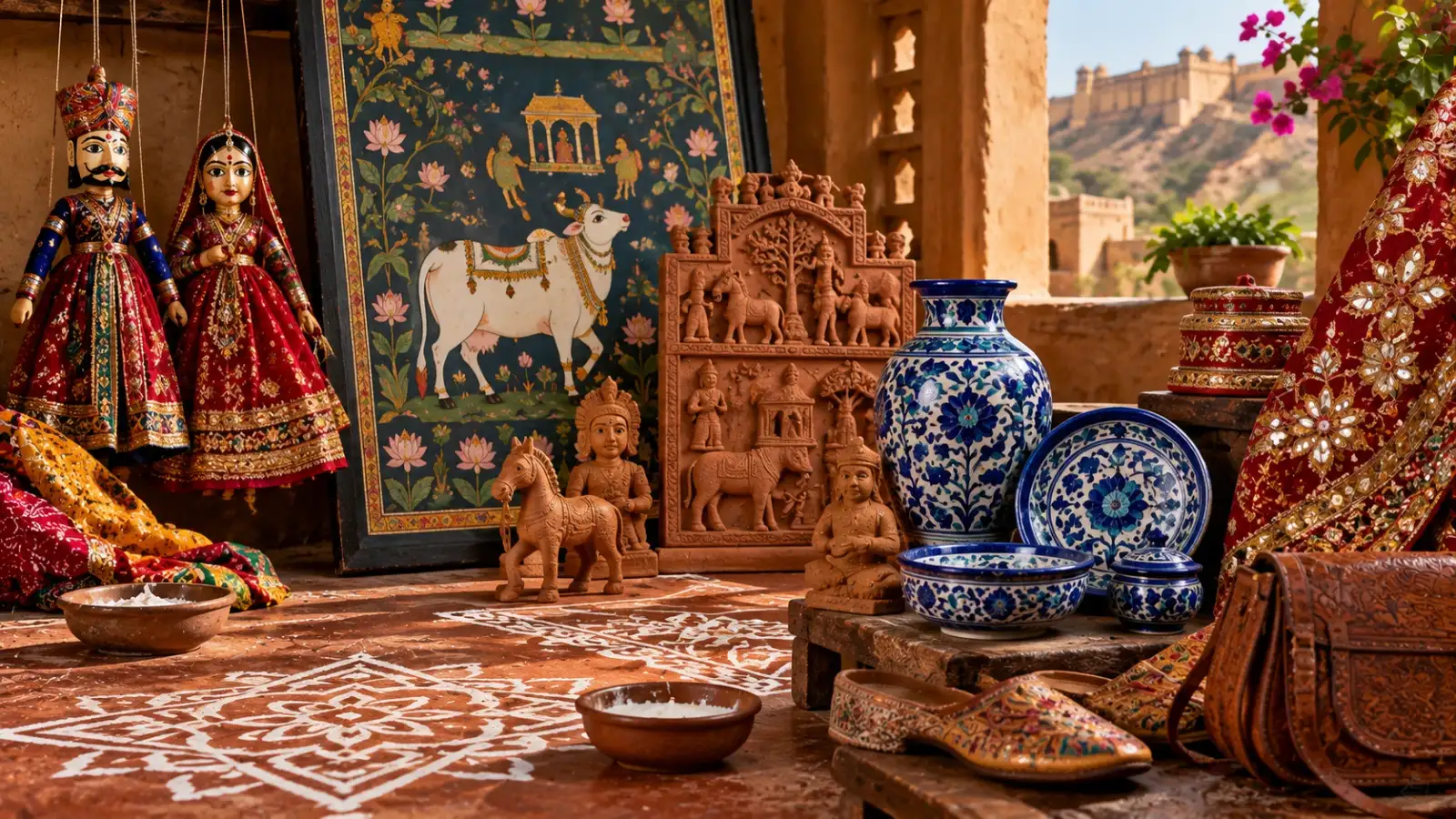
Many of these crafts developed in villages, artisan settlements and royal workshops. They were shaped by the region’s desert landscape, religious beliefs, local materials and everyday life.
Some folk art forms are now less visible because of changing lifestyles, mass-produced products and limited commercial opportunities. Yet, skilled artists and craft communities continue to practise them, keeping Rajasthan’s cultural identity alive.
The designs are usually made using white chalk or lime against a red or earthy background. Geometric patterns, animals, flowers, birds and symbolic shapes are often included.
Mandana is not simply a decorative activity. In many communities, it is connected with welcoming prosperity, marking celebrations and preparing the home for religious ceremonies.
The designs are usually created by hand, without the use of detailed sketches or modern tools. Although the practice remains alive in several villages, it receives less attention than Rajasthan’s more commercial art forms.
Although Sanjhi is more strongly identified with regions around Mathura, related stencil and devotional paper-cutting traditions have also travelled through different parts of northern India, including Rajasthan.
Artists create detailed designs using careful cuts and then arrange them to form elaborate patterns. The process requires patience, precision and considerable skill.
Sanjhi is often displayed during religious occasions. Its delicate nature and time-consuming production have made it less common in everyday decorative practices.
These paintings are usually created on cloth and feature themes such as cows, lotus flowers, festivals, temple rituals and devotional scenes. Artists use detailed patterns and rich colours to represent religious stories and sacred environments.
Although Pichwai is recognised among collectors and art enthusiasts, many traditional techniques are at risk of being simplified for mass production.
Artisans who continue to work in the traditional style preserve knowledge of natural pigments, detailed brushwork and religious symbolism.
Pichwai is not entirely forgotten, but its older forms of painstaking craftsmanship deserve greater appreciation.
Traditional leatherwork often involves hand-cutting, stitching, embossing and decorating leather. In some regions, artisans create colourful designs using vegetable dyes and locally inspired patterns.
The craft has been influenced by desert life, where durable materials were important for everyday use. Leather products were designed to be practical while also reflecting regional artistic styles.
Today, factory-made footwear and synthetic materials have reduced the demand for some traditional leather products. However, skilled craftspeople continue to preserve these techniques through handmade goods and craft markets.
Traditionally, these terracotta panels were created for devotional use, particularly among communities that displayed them in shrines. Designs may feature local deities, folk heroes, animals and scenes from village life.
Artists shape the clay by hand before drying and firing it. The work often includes raised figures and detailed surface decoration.
Molela terracotta is an important example of how clay can be used not only for household objects but also for storytelling and religious expression.
The tradition has historically been practised by travelling performer communities who used puppet shows to entertain audiences and share stories.
Although kathputli is not unknown, the traditional craft and performance culture surrounding it face challenges. Digital entertainment, changing audience habits and reduced performance opportunities have affected many artists.
Some puppeteers now create puppets mainly for decoration or tourism markets. Others continue to perform at cultural festivals and community events.
Supporting traditional puppet makers and performers can help preserve both the craft and the stories connected with it.
In some areas, artisans practise traditional decorative painting on wooden objects, clay surfaces and textiles. These designs often feature flowers, animals, folk figures and geometric patterns.
The names and techniques of these local traditions may differ between communities. Some remain largely undocumented outside their home regions.
Their survival often depends on family-based teaching, local demand and the willingness of younger generations to continue learning the craft.
The technique involves attaching narrow strips or shapes of metallic ribbon to fabric to create floral, geometric and decorative patterns. It is often used on sarees, lehengas, dupattas and wedding garments.
Gota patti is still visible during weddings and festivals, but traditional handwork faces competition from machine-made embellishments.
The craft requires patience and precision, particularly when artisans create detailed motifs by hand. Preserving the technique also means protecting the knowledge of fabric preparation, pattern placement and stitching methods.
The craft is known for its blue, turquoise and white designs, often featuring flowers, leaves, birds and traditional decorative patterns.
Although blue pottery is popular among visitors, the older methods of production are labour-intensive. Artisans must prepare the material, shape the object, apply designs and fire it carefully.
The craft continues to survive through workshops, family businesses and artisan training programmes. However, preserving its authenticity requires continued interest in handmade products rather than only inexpensive imitations.
Many traditional techniques are taught through observation and practice rather than formal institutions. If younger generations do not receive opportunities to learn, important knowledge may gradually disappear.
Supporting artisans through responsible purchases, cultural events and craft workshops can help maintain these traditions. It is also important to recognise the individual communities behind each art form instead of treating their work as anonymous souvenirs.
Some art forms may adapt to modern tastes, while others may remain closely connected with rituals and community life. Both approaches can help preserve cultural practices when changes are made with care.
From Mandana floor designs and Molela terracotta to Pichwai painting and handmade puppets, Rajasthan’s lesser-known arts reveal the creativity of communities that have shaped the region for centuries.
These traditions deserve attention not only because they are beautiful, but because they keep local stories, skills and memories alive.
Many of these crafts developed in villages, artisan settlements and royal workshops. They were shaped by the region’s desert landscape, religious beliefs, local materials and everyday life.
Some folk art forms are now less visible because of changing lifestyles, mass-produced products and limited commercial opportunities. Yet, skilled artists and craft communities continue to practise them, keeping Rajasthan’s cultural identity alive.
1. Mandana Art and the Beauty of Traditional Floor Designs
Mandana is a traditional form of floor and wall decoration practised in parts of Rajasthan and neighbouring regions. It is commonly created by women during festivals, weddings and other auspicious occasions.The designs are usually made using white chalk or lime against a red or earthy background. Geometric patterns, animals, flowers, birds and symbolic shapes are often included.
Mandana is not simply a decorative activity. In many communities, it is connected with welcoming prosperity, marking celebrations and preparing the home for religious ceremonies.
The designs are usually created by hand, without the use of detailed sketches or modern tools. Although the practice remains alive in several villages, it receives less attention than Rajasthan’s more commercial art forms.
2. Sanjhi Art and the Tradition of Paper Stencils
Sanjhi is a delicate art form involving the cutting of intricate patterns into paper. It is traditionally associated with devotional art and is particularly connected with representations of Lord Krishna and scenes from Braj culture.Although Sanjhi is more strongly identified with regions around Mathura, related stencil and devotional paper-cutting traditions have also travelled through different parts of northern India, including Rajasthan.
Artists create detailed designs using careful cuts and then arrange them to form elaborate patterns. The process requires patience, precision and considerable skill.
Sanjhi is often displayed during religious occasions. Its delicate nature and time-consuming production have made it less common in everyday decorative practices.
3. Pichwai-Inspired Folk Painting in Rajasthan
Pichwai painting is traditionally associated with Nathdwara in Rajasthan and is closely connected with the worship of Shrinathji, a form of Lord Krishna.These paintings are usually created on cloth and feature themes such as cows, lotus flowers, festivals, temple rituals and devotional scenes. Artists use detailed patterns and rich colours to represent religious stories and sacred environments.
Although Pichwai is recognised among collectors and art enthusiasts, many traditional techniques are at risk of being simplified for mass production.
Artisans who continue to work in the traditional style preserve knowledge of natural pigments, detailed brushwork and religious symbolism.
Pichwai is not entirely forgotten, but its older forms of painstaking craftsmanship deserve greater appreciation.
4. Theka and Traditional Leather Craft
Rajasthan has a long history of leather craftsmanship, with artisan communities producing footwear, musical instruments, bags and household objects.Traditional leatherwork often involves hand-cutting, stitching, embossing and decorating leather. In some regions, artisans create colourful designs using vegetable dyes and locally inspired patterns.
The craft has been influenced by desert life, where durable materials were important for everyday use. Leather products were designed to be practical while also reflecting regional artistic styles.
Today, factory-made footwear and synthetic materials have reduced the demand for some traditional leather products. However, skilled craftspeople continue to preserve these techniques through handmade goods and craft markets.
5. Molela Terracotta and the Art of Clay Storytelling
Molela terracotta is a distinctive clay art tradition associated with Molela village in Rajasthan’s Rajsamand district. It is especially known for its sculpted clay plaques depicting religious, cultural and social themes.Traditionally, these terracotta panels were created for devotional use, particularly among communities that displayed them in shrines. Designs may feature local deities, folk heroes, animals and scenes from village life.
Artists shape the clay by hand before drying and firing it. The work often includes raised figures and detailed surface decoration.
Molela terracotta is an important example of how clay can be used not only for household objects but also for storytelling and religious expression.
6. Kathputli Craft and the Art of Handmade Puppets
Rajasthani kathputli puppetry is one of the region’s most recognisable folk traditions. It combines storytelling, music, colourful costumes and wooden or cloth puppets controlled by strings.The tradition has historically been practised by travelling performer communities who used puppet shows to entertain audiences and share stories.
Although kathputli is not unknown, the traditional craft and performance culture surrounding it face challenges. Digital entertainment, changing audience habits and reduced performance opportunities have affected many artists.
Some puppeteers now create puppets mainly for decoration or tourism markets. Others continue to perform at cultural festivals and community events.
Supporting traditional puppet makers and performers can help preserve both the craft and the stories connected with it.
7. Theka Painting and Traditional Decorative Art
Rajasthan has several local painting traditions that use bold lines, natural colours and simple motifs to decorate household objects, walls and religious spaces.In some areas, artisans practise traditional decorative painting on wooden objects, clay surfaces and textiles. These designs often feature flowers, animals, folk figures and geometric patterns.
The names and techniques of these local traditions may differ between communities. Some remain largely undocumented outside their home regions.
Their survival often depends on family-based teaching, local demand and the willingness of younger generations to continue learning the craft.
8. Gota Patti and the Art of Decorative Embroidery
Gota patti is a traditional form of appliqué embroidery associated with Rajasthan, particularly in festive and ceremonial clothing.The technique involves attaching narrow strips or shapes of metallic ribbon to fabric to create floral, geometric and decorative patterns. It is often used on sarees, lehengas, dupattas and wedding garments.
Gota patti is still visible during weddings and festivals, but traditional handwork faces competition from machine-made embellishments.
The craft requires patience and precision, particularly when artisans create detailed motifs by hand. Preserving the technique also means protecting the knowledge of fabric preparation, pattern placement and stitching methods.
9. Blue Pottery and Its Delicate Craftsmanship
Jaipur blue pottery is one of Rajasthan’s most distinctive craft traditions. Unlike ordinary pottery, it is generally made using a quartz-based material rather than conventional clay.The craft is known for its blue, turquoise and white designs, often featuring flowers, leaves, birds and traditional decorative patterns.
Although blue pottery is popular among visitors, the older methods of production are labour-intensive. Artisans must prepare the material, shape the object, apply designs and fire it carefully.
The craft continues to survive through workshops, family businesses and artisan training programmes. However, preserving its authenticity requires continued interest in handmade products rather than only inexpensive imitations.
10. The Importance of Preserving Rajasthan’s Folk Arts
Rajasthan’s folk art traditions represent more than decorative beauty. They carry stories about local communities, religious beliefs, occupations, landscapes and everyday life.Many traditional techniques are taught through observation and practice rather than formal institutions. If younger generations do not receive opportunities to learn, important knowledge may gradually disappear.
Supporting artisans through responsible purchases, cultural events and craft workshops can help maintain these traditions. It is also important to recognise the individual communities behind each art form instead of treating their work as anonymous souvenirs.
Keeping Rajasthan’s Artistic Heritage Alive
The survival of Rajasthan’s folk art depends on more than tourism. Artists need fair payment, access to markets, training opportunities and respect for their traditional knowledge.Some art forms may adapt to modern tastes, while others may remain closely connected with rituals and community life. Both approaches can help preserve cultural practices when changes are made with care.
From Mandana floor designs and Molela terracotta to Pichwai painting and handmade puppets, Rajasthan’s lesser-known arts reveal the creativity of communities that have shaped the region for centuries.
These traditions deserve attention not only because they are beautiful, but because they keep local stories, skills and memories alive.
Next Story