
Foundation Clinging to Dry Patches in Winter: What's Actually Happening


Cold air holds less moisture than warm air, and heated indoor air strips what little remains. By the time foundation touches your face in November, the skin's outermost layer, the stratum corneum, is working with a compromised lipid matrix, the fatty network that holds cells together and slows water loss. When that matrix is disrupted, cells lift at the edges, surface texture becomes uneven, and any pigmented formula applied on top clings to the raised edges while sliding off the smooth areas between them.
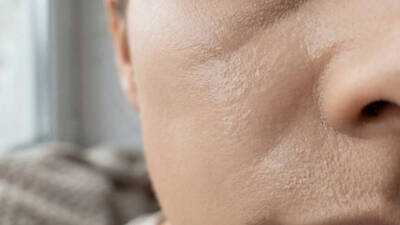
Why Dry Patches Form Where They Do The face doesn't dry uniformly. The areas around the nose, the outer corners of the mouth, and the brow bone are naturally thinner in the lipid layer and see more movement, facial expressions repeatedly stretch and compress the skin there. The T-zone, by contrast, often stays oilier even in winter, which is why the same face can show flaking at the cheeks and shine at the forehead simultaneously. Foundation reads all of this and amplifies it: it adds colour to the contrast that was already there.
What Foundation Is Actually Reacting To Most foundations, whether liquid, powder, or cushion, contain ingredients that bind to the skin surface for coverage. On smooth, hydrated skin, that binding is even. On dehydrated skin with raised cell edges, the formula catches on the texture the way paint catches on a rough wall. Matte and full-coverage formulas tend to worsen this because they contain higher concentrations of film-forming polymers and less slip. Dewy or serum foundations behave slightly better on dry skin because the emollient content gives the formula more movement, but they don't solve the underlying texture problem, they just make it less visible at first application.
The Prep Sequence That Actually Changes the Result Applying more moisturiser immediately before foundation does not reliably fix this. A moisturiser applied minutes before makeup hasn't had time to influence the stratum corneum's structure, it sits on top and can actually cause foundation to slip rather than adhere. Skin that accepts foundation evenly has been consistently hydrated over days, not minutes. The relevant actives are humectants like hyaluronic acid and glycerin, which draw water into the skin from below, and occlusives like squalane or ceramide-containing formulas, which slow the water from leaving. Used in a consistent evening routine, humectant first, then occlusive, they gradually restore enough barrier integrity that the surface texture normalises. This takes several days of consistency, not one application.
Application Adjustments That Help in the Meantime While the skin catches up, a few technique changes reduce visible clinging. Buffing foundation into dry patches tends to make them more visible by forcing product into the crevices between lifted cells. A damp sponge pressed and lifted, not dragged, deposits less product and doesn't disturb the texture further. Applying a very small amount of a non-silicone face oil to the driest areas before foundation, then letting it absorb for ten minutes, adds slip without the slippage problem of a full moisturiser applied immediately before. Colour-correcting dry patches with a separate concealer after foundation, rather than layering more foundation, keeps the overall coverage lighter and less likely to settle into texture. None of these replaces consistent barrier repair, they are adjustments for the days when the skin hasn't caught up yet.
Discover expert advice and the latest updates in Skin Care, Hair Care, Wellness, Dermatology, and more at Stay Young guide to lasting beauty and holistic health!
Next Story