
From Artists To Astronauts: The Incredible Journey Of The Pencil Through History

Often tucked behind an ear or rolling off desks unnoticed, the pencil is one of those rare objects that’s both ordinary and extraordinary. While it may seem simple—just wood, graphite and a rubber tip—it has a rich and rather fascinating past that spans centuries, continents, and even outer space. From fuelling great works of art to surviving zero gravity, the pencil has quietly left its mark—quite literally—on human civilisation. Here are ten eye-opening facts that prove there’s more to the pencil than meets the eye.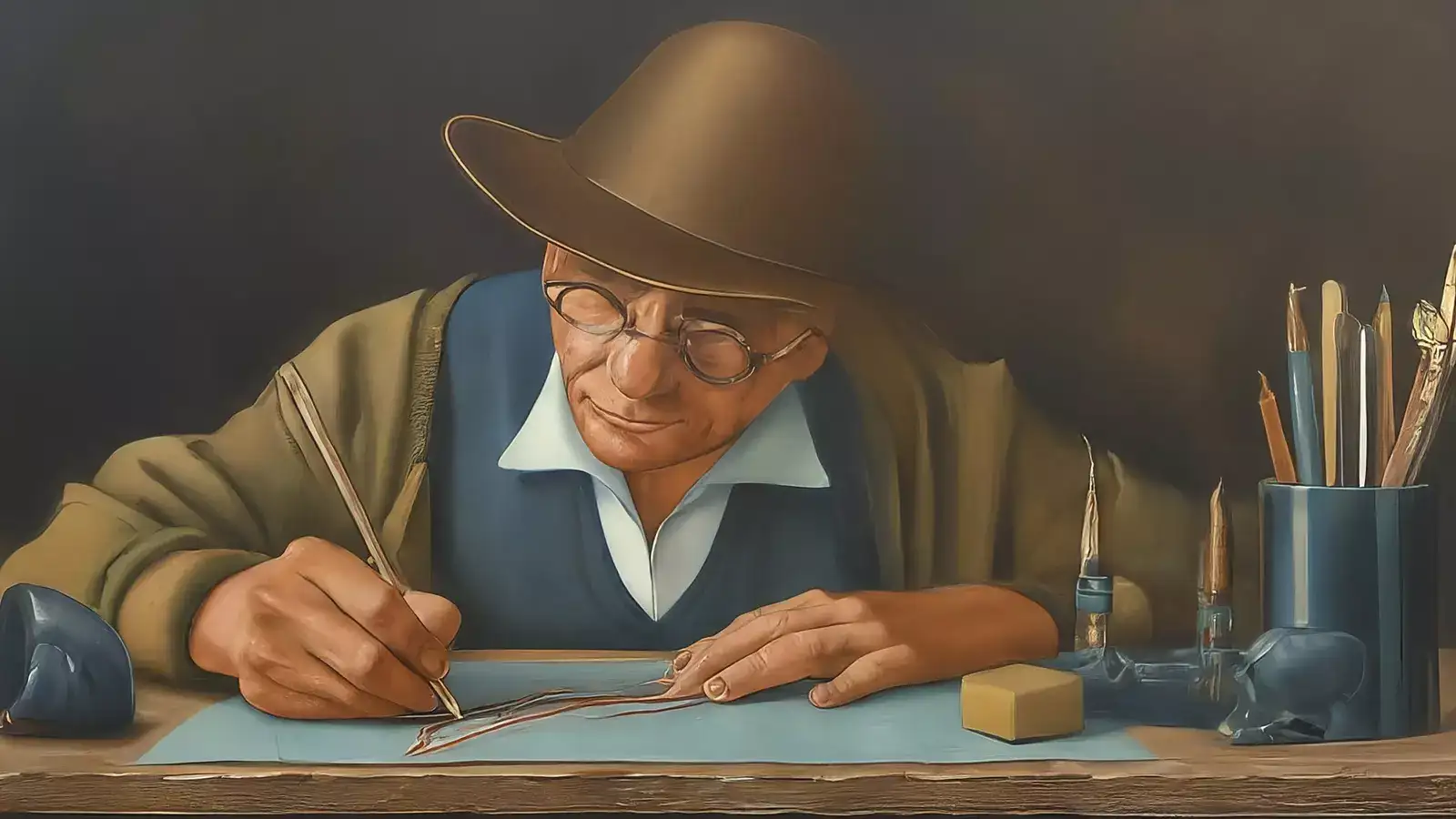
They Never Had Lead In The First Place
Despite being called ‘lead pencils’, they’ve never actually contained lead. The confusion stems from a historic mistake when graphite was first discovered in England in the 1500s. It looked like lead, but was actually a much safer form of carbon. And good news: if you’ve ever accidentally poked yourself with a pencil, you weren’t poisoned—just slightly embarrassed.The Pencil Was Born After A Storm
It all began in Borrowdale, Cumbria, where a heavy storm uprooted trees and exposed a strange, dark substance beneath—solid graphite. Locals quickly realised it could make bold marks, perfect for writing or marking sheep. That odd discovery laid the foundation for the pencil as we know it today.Napoleon Sparked A Pencil Revolution
Blocked from British graphite during war times, the French needed a workaround. Enter Nicolas-Jacques Conté, who mixed graphite with clay and baked it to produce consistent, durable pencil cores. This technique allowed pencils to be graded from soft to hard and is still used in modern manufacturing.One Pencil Can Write a Mini Novel
A single, average-length pencil can write up to 45,000 words or draw a line around 56 kilometres long. That’s the equivalent of a short novel—or several days' worth of school notes, depending on how dramatic your handwriting is.You may also like
- New passport rules for Indian travellers: Latest validity periods to fees explained for children to senior citizens; what changes if you are under 15, 18 or above
- 'Manage that legacy of yours': Suniel Shetty on why children shouldn't let family businesses go- 'People might call it nepotism, but…'
- At 90, this doctor still starts work at 8 AM and climbs steep hills to treat patients: Why he refuses to retire
- 'Bihari kahan nahi hain bhai': Meet Rohtas-born Abhishek Anand who went from IIT Kanpur and an IT job to Japan's national cricket team
- Meet Suchika Tariyal, the 36-year-old who had 'given up' on her sporting career and is now India's first MMA Asian Games Medalist
Erasers Weren’t Always Attached
Before rubbers came along, people used balls of soft bread to erase their mistakes. It wasn’t until 1858 that an American, Hymen Lipman, patented the idea of attaching an eraser to the pencil’s end—something we now consider completely standard. Imagine doing your homework with a baguette.Artists Still Swear By Them
From van Gogh’s sketches to Da Vinci’s designs, pencils have always been loved by artists. Their flexibility, shading capabilities and simplicity make them ideal for both spontaneous creativity and detailed drafts. Even today, many professional illustrators begin with pencil before going digital.That Yellow Colour Was a Bold Statement
Ever wondered why so many pencils are yellow? In the late 19th century, premium graphite was being imported from China, where yellow symbolised royalty and respect. To show off their high-quality materials, manufacturers started painting their pencils yellow—and the trend stuck.Pencils Come In More Varieties Than You Think
There are over 20 grades of pencil lead, ranging from the very soft 9B (great for deep shading) to the very hard 9H (excellent for precision). Writers, designers, engineers and artists all have different favourites, depending on whether they want smooth lines or sharp, crisp marks.Pencils Went To Space Before Space Pens
Although the famous ‘space pen’ was invented to work in zero gravity, astronauts first used pencils. They worked just fine—until concerns were raised about broken graphite bits floating around the cabin and posing a hazard. Still, it proves pencils really are out of this world.The World’s Biggest Pencil Is Absolutely Massive
The record for the largest pencil ever made goes to a colossal creation over 65 feet long, built in the United States. It weighs more than an elephant and is fully functional—though you might need a forklift to sharpen it.





Loving Newspoint? Download the app now
