From Pink Beaches to Ice Caves: 10 Otherworldly Places to Visit

Earth does not always look like Earth. In some corners of the planet, unusual geology, extreme climates and rare natural phenomena create landscapes that seem better suited to a science-fiction film. There are salt flats that turn into enormous mirrors, deserts sculpted into strange shapes and beaches tinted pink by crushed shells. Some places appear frozen in time, while others seem to have been painted by hand. The fascinating part is that none of them require a trip into space. They are real landscapes, shaped over thousands or millions of years by water, wind, volcanic activity, minerals and changing climates.
Hero Image


Iceland's Blue Ice Caves

Iceland's glacier caves are among the most extraordinary natural formations on Earth. Meltwater carves passages through glacial ice, creating walls of intense blue and unusual translucent patterns. Because glaciers constantly move and melt, the caves change from year to year. Guided visits are essential because conditions can be unpredictable.

Salar de Uyuni , Bolivia

Bolivia's Salar de Uyuni is the world's largest salt flat. During the rainy season, a thin layer of water can turn its vast, incredibly flat surface into a giant natural mirror, making the horizon almost disappear. Beneath the salt crust also lies mineral-rich brine containing significant lithium resources.


Elafonissi, Greece

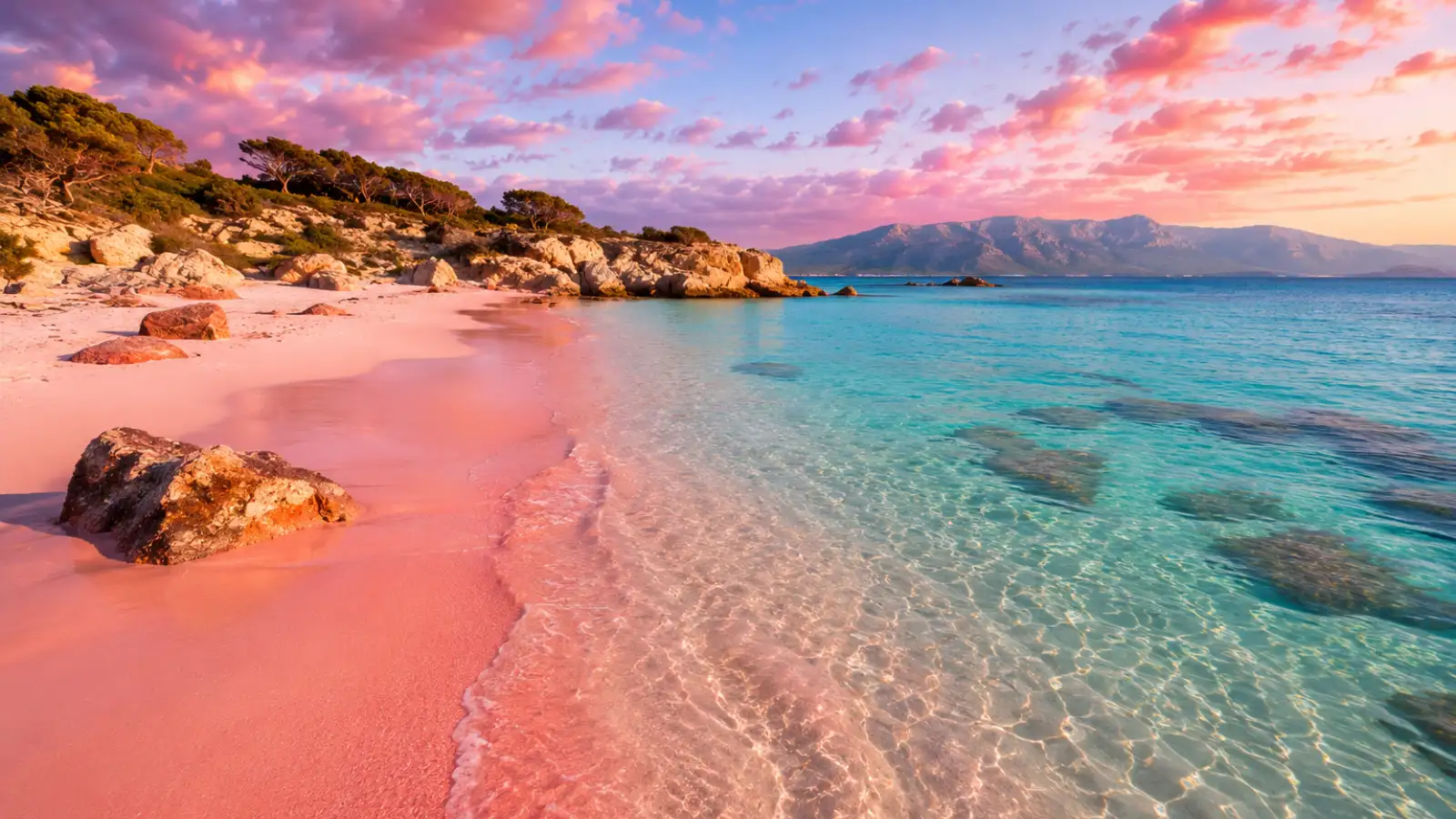
Elafonissi in Crete is famous for its unusual pink-tinted beaches and shallow turquoise water. The colour comes partly from tiny shells and marine material mixed into the sand. Its unusual combination of pale sand, pink tones and clear water makes it look almost artificially designed.

Valle de la Luna, Chile

Chile's Moon Valley lives up to its name. Wind and time have carved the Atacama Desert into dunes, ridges, salt formations and craters. At sunset, the landscape shifts through shades of red, violet and gold. The area is so barren and unusual that it genuinely resembles an extraterrestrial landscape.


Wadi Rum, Jordan

Towering sandstone formations and red desert create Wadi Rum's famous Mars-like appearance. The landscape has featured in several films and has long been associated with enormous horizons and silence. It is also culturally important, with ancient inscriptions and a long connection to Bedouin communities.

Pamukkale, Türkiye

Pamukkale looks like a hillside covered in frozen waterfalls. Its white terraces formed as calcium-rich thermal water flowed over the landscape and deposited minerals. The nearby ancient city of Hierapolis adds another layer of history to this unusual natural setting.

Lake Hillier, Australia

Western Australia's Lake Hillier is famous for its striking pink appearance. Located on Middle Island near Esperance, it belongs to a region known for unusually colourful lakes and spectacular coastal scenery. Its bubblegum-like colour has made it one of Australia's most recognisable natural oddities.

Waitomo Glowworm Caves, New Zealand

Deep underground in New Zealand, thousands of glowworms illuminate cave ceilings like a star-filled night sky. Visitors travel quietly by boat beneath them, creating an experience that feels more like entering a planetarium than a cave. The region's limestone geology began forming more than 30 million years ago.


Atacama's Altiplano Lagoons, Chile

High-altitude lagoons surrounded by volcanic peaks create an almost surreal contrast of colours. Deep blue water, white salt, reddish rocks and snow-capped mountains can appear within the same landscape. The region also supports specially adapted wildlife, including flamingos and vicuñas.

Deadvlei, Namibia

The stark clay pan of Deadvlei is famous for its ancient, blackened camel thorn trees standing against orange dunes and a pale desert floor. The trees died centuries ago but have been preserved by the extremely dry conditions, creating a landscape that looks almost unreal.

These places are reminders that the strangest landscapes do not always belong to distant planets. Earth has its own collection of extremes, shaped by ice, salt, fire, water and time. Seeing them in person can feel otherworldly, but their real story is even more fascinating because every strange detail has a geological or biological explanation.