
From Pumpkin to Pomegranate: 10 Foods for the Monsoon-Autumn Shift

The change from monsoon to autumn can be subtle. Rainy days gradually become brighter, humidity begins to fall and mornings may feel noticeably different. Our food habits often change with the weather too. Heavy fried snacks that felt irresistible during a rainy afternoon may become less appealing as temperatures shift. Seasonal fruits, vegetables, grains and warm preparations begin to make more sense. Indian food traditions have long reflected this connection between the kitchen and the calendar. The monsoon-to-autumn transition is therefore a useful reminder that eating seasonally does not have to mean following complicated rules. It can simply mean paying attention to what is fresh, available and comfortable to eat.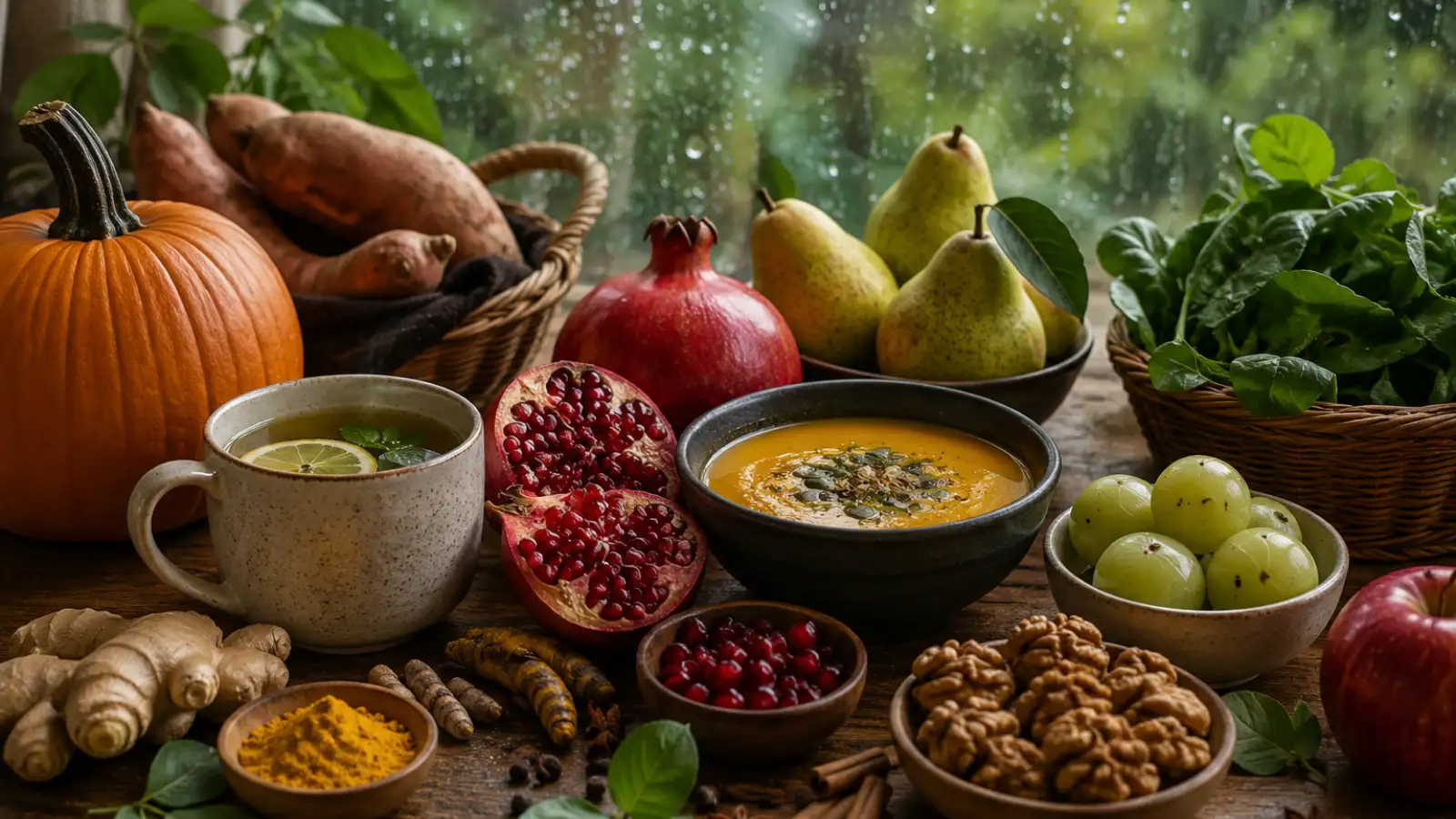
Indian food traditions have long adapted to changing weather, with different ingredients becoming more prominent as the seasons shift. Recent seasonal food guidance has similarly highlighted ingredients such as pumpkin, pomegranate and whole grains during the September transition.
Add a seasonal fruit to breakfast, replace one heavy snack with roasted sweet potato or include pumpkin in a familiar curry.
The most useful seasonal diet may simply be one that listens to the weather. As nature changes pace, our plates can quietly change with it.
1. Pumpkin
Pumpkin becomes particularly useful as the weather begins to change. It can be roasted, turned into soup, added to curries or cooked with lentils.2. Pomegranate
Bright, refreshing and easy to add to meals, pomegranate provides a useful way to bring fruit into salads, yoghurt bowls and savoury dishes.3. Bottle Gourd
Bottle gourd is commonly used in Indian cooking and can be prepared as a light curry, soup or dal-based dish.4. Pears
As the fruit season changes, pears can become a convenient snack. They work equally well in porridge, salads and simple desserts.5. Sweet Potato
Sweet potatoes are filling and versatile. Roasted slices can become a snack, while boiled versions can be added to chaat or breakfast dishes.6. Millets
Millets can be used in rotis, porridges, khichdi and savoury bowls. Their versatility makes them useful when people begin moving towards warmer, more substantial meals.7. Apples
The arrival of cooler weather makes apples especially appealing. They can be eaten raw or cooked with cinnamon and oats.8. Lentils
Dal is one of the easiest ways to make meals feel warming without becoming excessively heavy. Different varieties also bring different flavours and textures.You may also like
- This small mistake by children could lead to serious trouble; learn about safety before latching the room door..
- Why are children more interested in boxes, spoons, and remote controls than in toys? There is a reason behind this..
- We have both matured over time: Dev & Subhashree
- Newlywed woman takes off her dupatta to save biker trapped in Himachal flash flood; dramatic rescue by a family caught in camera; video viral
- 8th CPC Salary Calculator: Grade Pay ₹1,800 to ₹2,800… What will the salary of central government employees be? Check the calculation structure.
9. Ginger
Fresh ginger works particularly well during seasonal changes. It can be used in tea, soups, curries and stir-fries.10. Sesame
Sesame seeds and tahini-style preparations can add flavour, texture and healthy fats to everyday dishes.Why Seasonal Eating Makes Sense
Seasonal eating is not simply about following tradition. Produce that is naturally available at a particular time can be fresher, more affordable and easier to incorporate into meals.Indian food traditions have long adapted to changing weather, with different ingredients becoming more prominent as the seasons shift. Recent seasonal food guidance has similarly highlighted ingredients such as pumpkin, pomegranate and whole grains during the September transition.
A Better Way to Think About the Transition
There is no need to suddenly change your entire diet when the calendar moves into autumn. Small adjustments are enough.Add a seasonal fruit to breakfast, replace one heavy snack with roasted sweet potato or include pumpkin in a familiar curry.
The most useful seasonal diet may simply be one that listens to the weather. As nature changes pace, our plates can quietly change with it.






Loving Newspoint? Download the app now
