
Want a Budget-Friendly Garden? Here Is How to Reuse Wooden Crates Creatively

You do not need expensive planters or elaborate landscaping to create an attractive garden. With a little creativity, old wooden crates can become useful and decorative gardening accessories. They can be transformed into plant containers, vertical gardens, herb holders and even compact garden shelves. This is a practical way to reuse discarded materials while making better use of balconies, terraces and small outdoor spaces. Whether you have a large backyard or just a sunny corner, recycled wooden crates can help you build a garden that looks organised, colourful and inviting.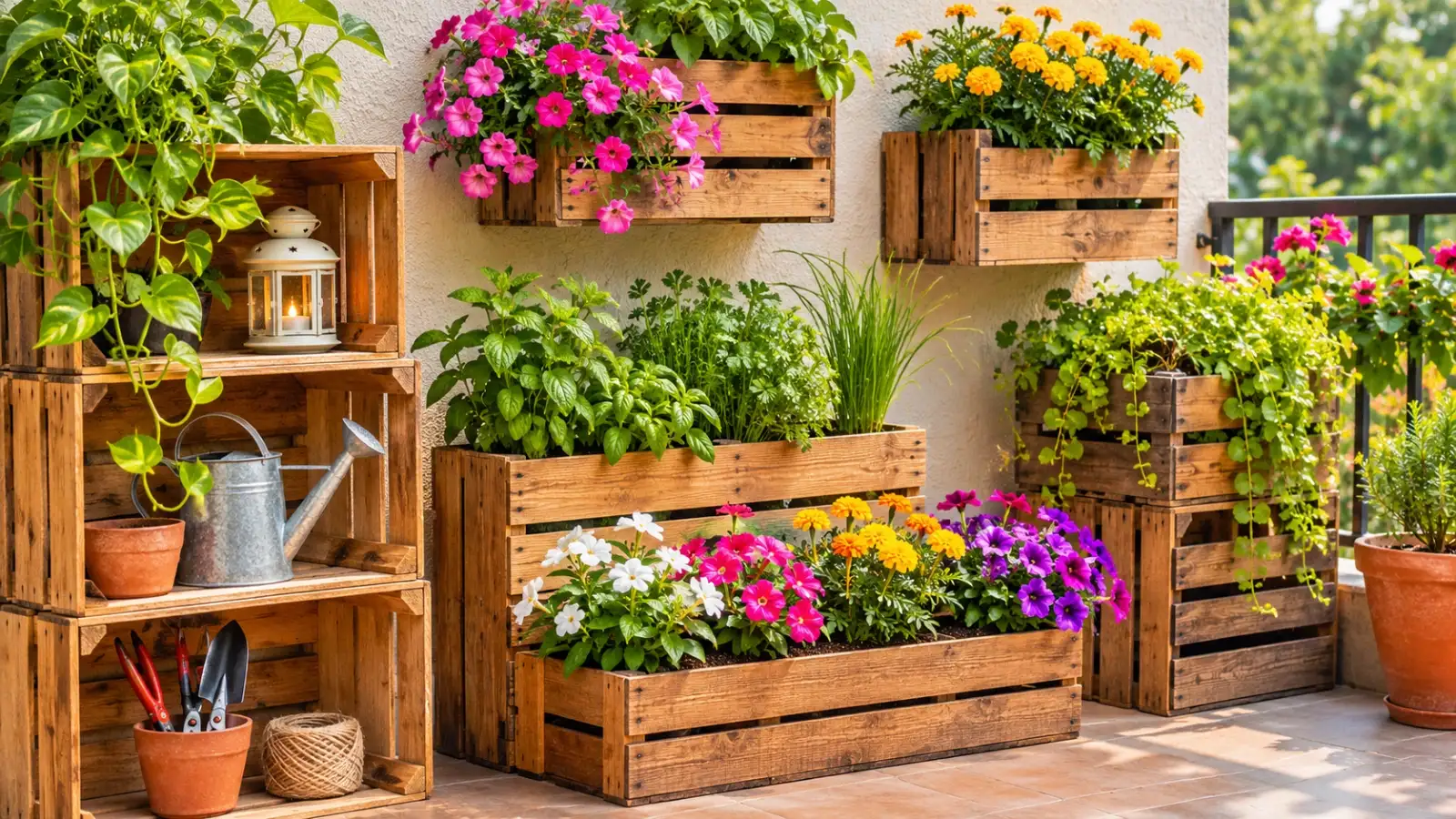
1. Choose the Right Wooden Crates
Start by collecting wooden crates that are sturdy and in good condition. Fruit and vegetable crates can work well, provided they are clean and strong enough to hold soil and plants.
Avoid crates with loose boards, sharp nails, cracks or signs of rot. Check whether the wood has been treated with chemicals, especially if you plan to grow herbs or edible vegetables. Untreated, food-safe wood is a better choice for growing edible plants.
2. Clean and Prepare the Crates
Before using a crate, remove dirt, dust, stickers and loose wood fragments. Scrub it with a brush and mild soapy water, then allow it to dry completely.
Smooth rough edges with sandpaper to prevent splinters. If the crate will remain outdoors, consider applying a plant-safe, non-toxic wood sealant to help protect it from moisture and weather damage. Make sure the coating is fully dry before adding plants.
3. Add a Suitable Lining and Drainage
Wooden crates have gaps between their slats, so they need a suitable lining if you want to use them as planters. Line the inside with breathable landscape fabric or gardening cloth to hold the potting mix while allowing excess water to escape.
Keep drainage holes or gaps unobstructed. Avoid using plastic sheets without proper drainage, as trapped water can damage plant roots and cause the wood to deteriorate.
4. Create a Compact Herb Garden
A wooden crate can become a convenient herb planter for your kitchen balcony or terrace. Fill it with a suitable potting mix and grow herbs such as mint, coriander, parsley, basil and chives.
Choose plants with similar sunlight and watering requirements. Mint spreads quickly, so growing it in a separate pot placed inside the crate can help prevent it from taking over other herbs.
5. Build a Vertical Crate Garden
If floor space is limited, arrange several crates vertically to create a compact garden display. Secure them firmly to a suitable wall or support structure, ensuring the arrangement can safely carry the weight of wet soil and mature plants.
Use smaller pots inside the crates for flowers, trailing plants and compact foliage varieties. Avoid stacking heavy, soil-filled crates without proper support.
6. Make a Colourful Flower Display
Wooden crates can also be used to create attractive seasonal flower arrangements. Place flowering plants such as petunias, marigolds, pansies and vincas in individual pots inside the crates.
Choose flowers according to the available sunlight and local climate. You can arrange plants of different heights to create a layered display, with trailing varieties placed near the edges.
7. Use Crates as Garden Storage Shelves
Not every crate needs to hold soil. A few can be converted into simple shelves for storing gardening gloves, small tools, watering cans and empty pots.
Secure the crates together or attach them to a stable wall. Keep the storage area dry and avoid placing heavy equipment on shelves that are not designed to support it.
8. Add Personal Decorative Touches
Give your crate garden a coordinated appearance by painting the wooden surfaces in colours that complement your outdoor space. Earthy shades, soft pastels and natural wood finishes can all work well.
You can also add small plant labels, decorative stones or solar-powered lights nearby. Keep the design simple so that the plants remain the main attraction.
Tips for Maintaining a Wooden Crate Garden
Check the wooden structure regularly for signs of moisture damage, mould or loose boards. Water plants according to their individual needs rather than following one fixed schedule. Ensure excess water drains freely and avoid placing crates directly on surfaces where moisture can remain trapped.
Rotate plants occasionally if they receive uneven sunlight. Replace damaged lining and refresh the potting mix when needed to keep the garden healthy.
Creating a garden with recycled wooden crates is an affordable way to reuse old materials and add greenery to your home. From herb planters and colourful flower displays to vertical gardens and storage shelves, these crates offer several practical possibilities. With proper preparation, drainage and regular maintenance, you can turn simple wooden boxes into a useful and attractive garden space.
Next Story