
Gujarati Patra Recipe: How to Make Spiced Colocasia Leaf Rolls at Home

Gujarati patra is a steamed snack made by spreading a spiced gram-flour paste over colocasia leaves, rolling them tightly and cooking the rolls before slicing. The finished pieces are usually tempered with mustard seeds, sesame and curry leaves, creating a contrast between the soft leaf layers and the lightly crisp edges. Sweet, sour and savoury flavours are often balanced with tamarind and jaggery.
The preparation takes a little time, but the method is manageable once the leaves are cleaned and stacked correctly. Thorough cooking is essential because raw or undercooked colocasia leaves can irritate the mouth and throat quite severely.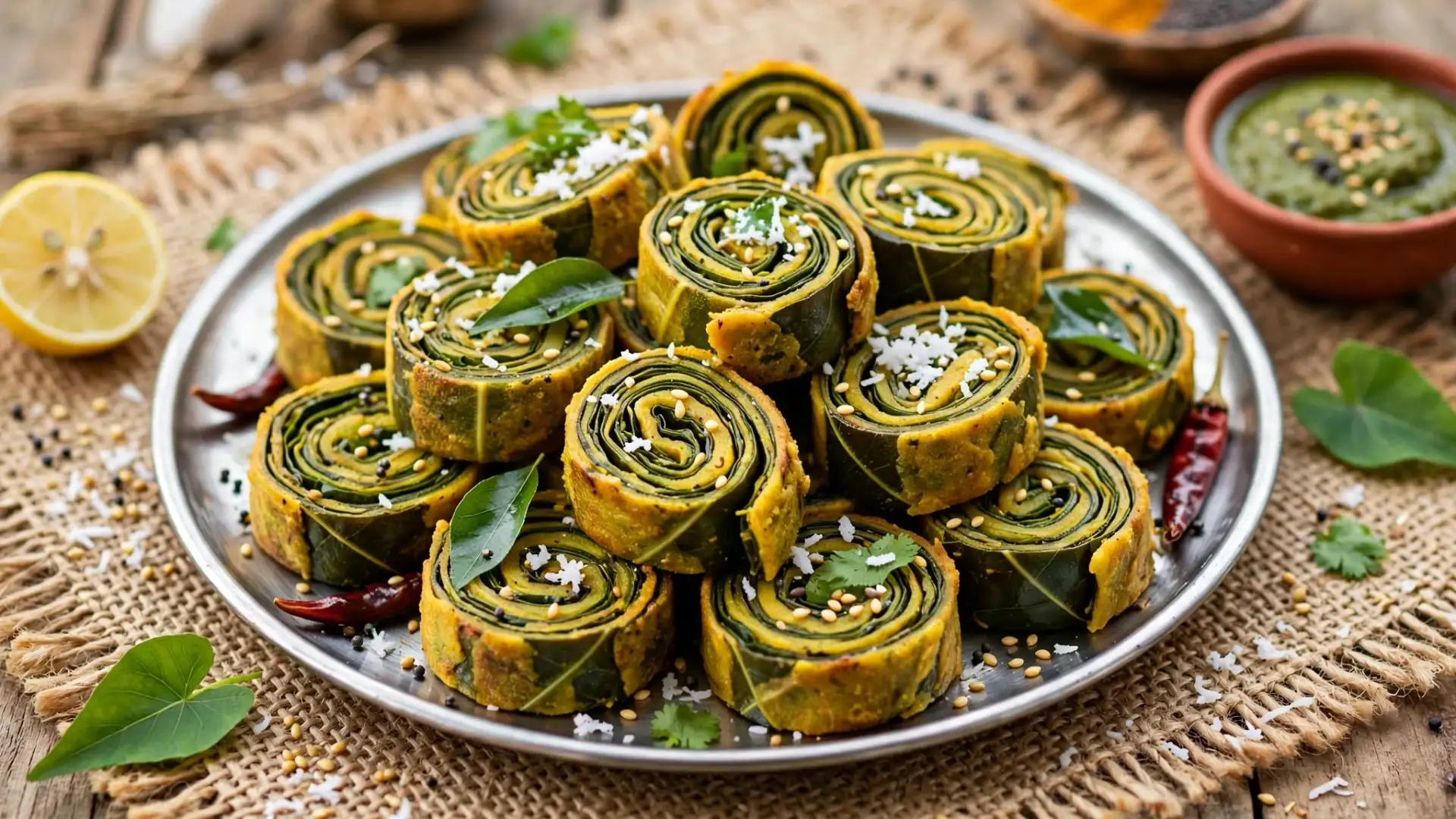
For the paste, mix gram flour with tamarind pulp, a little jaggery, turmeric, chilli powder, ground coriander, cumin, salt and enough water to make a thick, spreadable mixture. It should coat the back of a spoon without running off. Taste the paste before applying it and adjust the sweet-sour balance.
Steam the rolls until fully cooked through. The exact time depends on their size and thickness, so check the centre rather than relying only on the outside appearance. Colocasia leaves must be thoroughly cooked; do not taste the paste-covered leaves raw or serve rolls that remain undercooked.
Let the rolls cool until firm enough to handle, then slice them into rounds. If the centre is still soft or wet, return the roll to the steamer and cook it longer.
The preparation takes a little time, but the method is manageable once the leaves are cleaned and stacked correctly. Thorough cooking is essential because raw or undercooked colocasia leaves can irritate the mouth and throat quite severely.
Prepare the leaves and paste
Choose fresh colocasia leaves without tears or signs of decay. Wash them carefully and dry them completely. Trim the thick central veins if they prevent the leaves from folding, taking care not to cut through the surface. Use gloves if the leaves make your skin itchy.For the paste, mix gram flour with tamarind pulp, a little jaggery, turmeric, chilli powder, ground coriander, cumin, salt and enough water to make a thick, spreadable mixture. It should coat the back of a spoon without running off. Taste the paste before applying it and adjust the sweet-sour balance.
You may also like
- A 19-year-old Mumbai student raised Rs 22 lakh for a 40-year-old Dharavi school serving 560 children; as redevelopment puts its future in question, he is now trying to raise Rs 1.5 crore to secure its land
- Embrace the Hybrid Beauty Trend for Effortless Skincare and Makeup
- Dehradun Literature Festival 2026 to bring A.R. Rahman, Imtiaz Ali and Vishal Bhardwaj together for three days of literature, music, cinema and social change
- November 30 is the deadline for pensioners; complete this important task easily from the comfort of your home..
- Are Keratin Hair Treatments Safe During Pregnancy?
Roll and steam thoroughly
Place one leaf with its veined side facing up. Spread a thin, even layer of paste over it, then place another leaf on top in the opposite direction. Repeat with several leaves, applying paste between each layer. Fold the sides in and roll tightly from the stem end to create a parcel.Steam the rolls until fully cooked through. The exact time depends on their size and thickness, so check the centre rather than relying only on the outside appearance. Colocasia leaves must be thoroughly cooked; do not taste the paste-covered leaves raw or serve rolls that remain undercooked.
Let the rolls cool until firm enough to handle, then slice them into rounds. If the centre is still soft or wet, return the roll to the steamer and cook it longer.
Add the tempering
Heat a little oil in a pan. Add mustard seeds and let them splutter, then add sesame seeds, curry leaves and a pinch of asafoetida. Arrange the patra slices in the pan and cook briefly on both sides until lightly golden. Handle them gently so the spirals remain intact.Serving and storage
Serve warm with coriander chutney or as part of a Gujarati meal. Patra can be prepared ahead, steamed and sliced, then tempered shortly before serving. Refrigerate leftovers promptly in a covered container and reheat thoroughly. Use suitable colocasia leaves and cook them completely; if you are unsure about the leaf variety, do not use it for this preparation.





Loving Newspoint? Download the app now
