
Gulmarg: How a Kashmir Meadow Became India's Skiing Ground

A meadow named for its wildflowers seems an unlikely place to build a ski culture. Yet Gulmarg, sitting at roughly 2,650 metres in the Pir Panjal range of Jammu and Kashmir, has done exactly that, quietly becoming the highest point at which most Indians will ever strap on a pair of skis.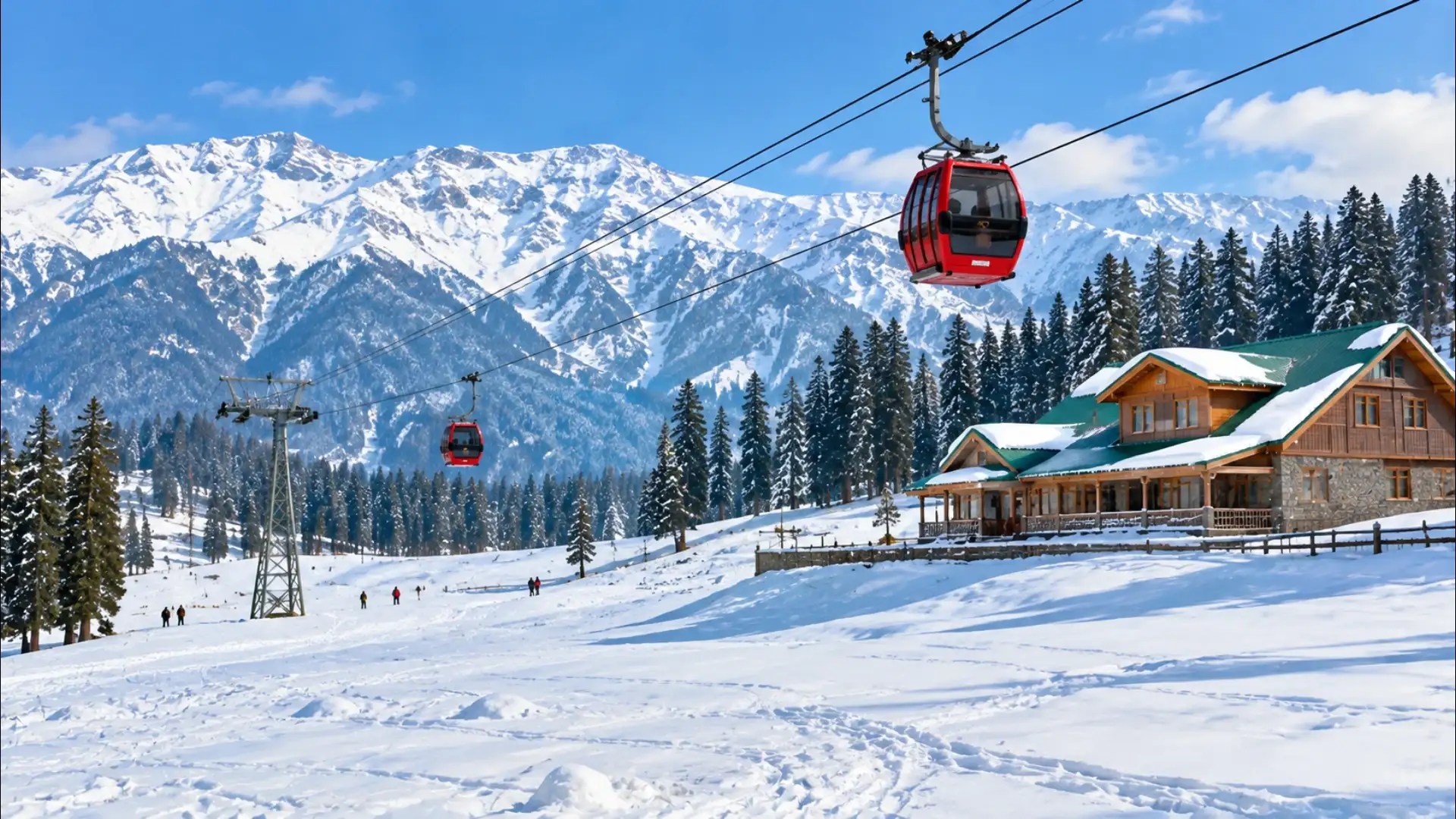
From Royal Retreat to Colonial Playground
Originally known as Gaurimarg, the meadow of the goddess Gauri, the valley was renamed Gulmarg, the 'meadow of flowers,' by the sixteenth-century Kashmiri ruler Sultan Yusuf Shah Chak. Later, the Mughal emperor Jahangir frequented the valley for its wildflowers. The British came centuries after, drawn by the altitude and the cool summer air. By the 1890s, British officers had laid out a golf course, later formalized into one of the highest green courses in the world, alongside a polo ground that still exists. The British also introduced skiing. Stationed officers began organizing ski meets in the late 1920s, establishing the Ski Club of India in 1927 and making Gulmarg one of the earliest centres for organized recreational skiing in Asia.What the Terrain Actually Offers
Skiing needs three things: reliable snow, vertical drop, and a slope that does not overwhelm beginners before they learn to stop. Gulmarg has all three. The mountain above the meadow rises to Apharwat Peak at around 4,200 metres. The lift-served vertical difference, roughly 1,330 metres from the base to the upper gondola station at nearly 3,980 metres, with another 200 metres accessible to hikers, is comparable to major European resorts. The snow arrives from western disturbances, weather systems that push moisture in from the west through winter, and it tends to fall deep and dry, the kind that skiers describe as powder. Beginners work the gentler slopes near the gondola base. More experienced skiers take the upper gondola stage to Apharwat, where off-piste terrain opens across wide bowls and couloirs.The Gondola That Changed Everything
Before the Gulmarg Gondola opened, getting to the upper mountain meant a long hike or a horse ride. The gondola, built in two stages, changed the arithmetic entirely. The first stage carries riders from the meadow to Kongdoori, a mid-mountain shoulder. The second continues above the treeline toward Apharwat. Together they give access to terrain that would otherwise require serious mountaineering fitness just to reach. For the ski industry, the gondola was the turning point. It made the upper mountain accessible to recreational skiers on a day trip, allowing Gulmarg to serve a much wider range of visitors than the handful of serious alpinists who had come before.How Indian Skiing Grew Here
Gulmarg is where most of India's competitive skiers learned the sport. The Winter Games Federation of India has long used the slopes for national championships, and the Indian Army runs its High Altitude Warfare School here to train soldiers in mountain warfare and skiing, a practical use of the terrain that has the side effect of producing some of the country's most technically capable skiers. Beginner courses are also run through government institutes like the Indian Institute of Skiing and Mountaineering and by local ski instructors, many of them Kashmiri, Gujjar, and Bakarwal men whose families have moved through these mountains seasonally for generations. They know the snow and the slope in a way that no imported instruction manual can replicate.The Meadow in Summer
Skiing is a winter story, but Gulmarg does not disappear when the snow melts. The meadow reverts to the landscape that drew royalty centuries ago: a wide green bowl ringed by pine and fir, with the high peaks still white above. The golf course reopens. Ponies cross the grass. The gondola runs for sightseers. This seasonal double life matters for the local economy, and it matters for understanding what Gulmarg is. The ski resort is one layer laid over a much older landscape, a place that has been drawing people to its altitude for centuries, long before anyone thought to point themselves downhill and let gravity do the work.Next Story