
Gurgaon’s Air Crisis Deepens: City Tops India’s Pollution Rankings in March 2026

Gurgaon Records Alarming Pollution Levels: Gurgaon ranked as the most polluted city in India in March 2026, based on monthly average PM2.5 concentrations recorded by air quality monitoring agencies. PM2.5 levels in the city were significantly higher than the National Ambient Air Quality Standards, which recommend a safe limit of 40 µg/m³ annually. Such high concentrations indicate hazardous air quality that can severely impact public health.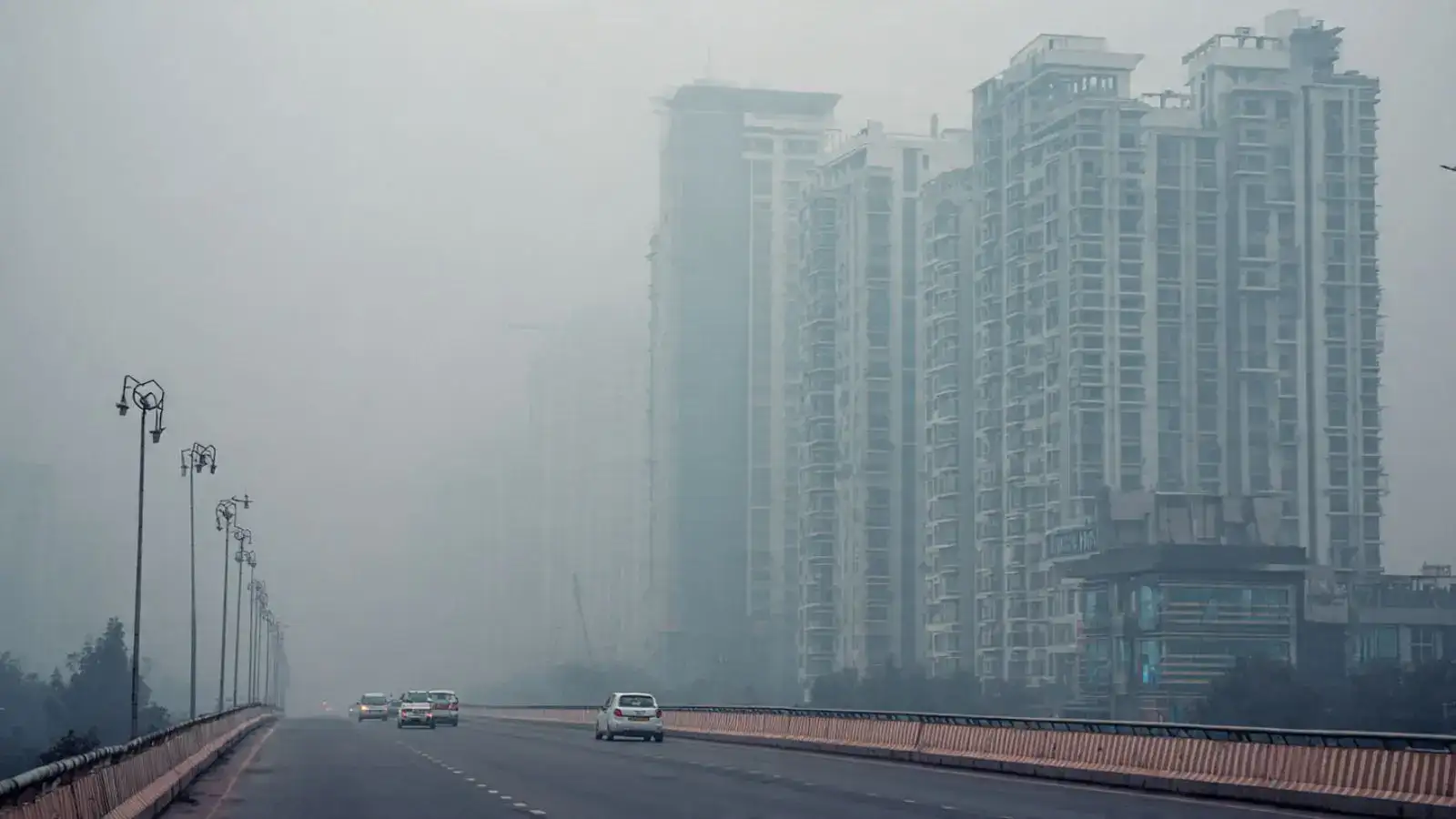
The data reflect not just a temporary spike but a continuing trend of poor air quality in urban centers within and around the NCR. Gurgaon, a rapidly growing corporate and residential hub, has been grappling with pollution for years, but topping the list again brings renewed attention to the severity of the problem.
Understanding PM2.5 and Its Health Impact
PM2.5 refers to fine particulate matter smaller than 2.5 micrometers in diameter. These particles are small enough to penetrate deep into the lungs and even enter the bloodstream. Prolonged exposure is linked to respiratory illnesses such as asthma, bronchitis, and chronic obstructive pulmonary disease, as well as cardiovascular complications.
For vulnerable groups, including children, the elderly, and individuals with pre-existing health conditions, the risks are even greater. Studies have also associated long-term exposure to high PM2.5 levels with reduced lung function and increased mortality rates.
Regional Pattern: NCR and Haryana Under Stress
The pollution crisis is not limited to Gurgaon alone. Several cities in Haryana and the NCR consistently feature among the most polluted in India. Faridabad, Bahadurgarh, and Manesar have also reported high pollution levels, indicating a broader regional issue rather than an isolated urban challenge.
Cities like Ghaziabad, Noida, and Bhiwadi, located close to Delhi, often experience similar air quality conditions due to shared environmental factors. The geographic clustering of polluted cities suggests that regional coordination is essential for effective pollution control.
Key Factors Driving Gurgaon’s Pollution
Multiple sources contribute to Gurgaon’s deteriorating air quality. Vehicular emissions remain one of the primary causes, as the city has witnessed a sharp rise in the number of private vehicles. Traffic congestion further worsens emissions, especially during peak hours.
Construction activity is another significant contributor. With continuous infrastructure development, dust from construction sites often becomes airborne, adding to particulate pollution. Industrial emissions from nearby areas also play a role, especially when regulatory compliance is weak.
Seasonal factors amplify the problem. During certain months, low wind speeds and temperature inversions trap pollutants close to the ground, preventing their dispersion. Additionally, crop residue burning in neighboring states during certain periods can further elevate pollution levels across the NCR.
Why March Pollution Levels Matter
While winter months are typically associated with severe pollution in North India, high pollution levels in March are particularly concerning. This indicates that poor air quality is not limited to a specific season but is becoming a year-round issue.
Rising temperatures combined with stagnant atmospheric conditions can still allow pollutants to accumulate. This trend suggests that structural issues such as urban planning gaps, emission control failures, and inadequate enforcement are contributing to persistent pollution levels.
Government Measures and Challenges
Authorities have introduced several measures to combat air pollution, including stricter emission norms, the promotion of cleaner fuels, and regulations on construction activities. Initiatives like the Graded Response Action Plan (GRAP) are activated during severe pollution episodes to control emissions temporarily.
However, experts argue that these measures often provide short-term relief rather than addressing the root causes. Implementation gaps, lack of coordination between states, and limited public participation continue to hinder long-term progress.
The Way Forward
Improving air quality in Gurgaon and across the NCR requires a multi-pronged approach. Strengthening public transport systems can help reduce reliance on private vehicles. Strict enforcement of dust control measures at construction sites and better regulation of industrial emissions are equally important.
Public awareness also plays a key role. Encouraging behavioral changes, such as carpooling and reducing energy consumption, can contribute to overall emission reduction. At the policy level, coordinated action among neighboring states is essential to tackle cross-border pollution sources.
Gurgaon topping India’s pollution chart in March 2026 is a clear warning sign of a deepening environmental crisis. The persistence of high pollution levels beyond winter months highlights the need for sustained and systemic solutions. Without urgent and collective action, air pollution will continue to pose a serious threat to public health and urban living in India.
The data reflect not just a temporary spike but a continuing trend of poor air quality in urban centers within and around the NCR. Gurgaon, a rapidly growing corporate and residential hub, has been grappling with pollution for years, but topping the list again brings renewed attention to the severity of the problem.
Understanding PM2.5 and Its Health Impact
PM2.5 refers to fine particulate matter smaller than 2.5 micrometers in diameter. These particles are small enough to penetrate deep into the lungs and even enter the bloodstream. Prolonged exposure is linked to respiratory illnesses such as asthma, bronchitis, and chronic obstructive pulmonary disease, as well as cardiovascular complications.
For vulnerable groups, including children, the elderly, and individuals with pre-existing health conditions, the risks are even greater. Studies have also associated long-term exposure to high PM2.5 levels with reduced lung function and increased mortality rates.
Regional Pattern: NCR and Haryana Under Stress
The pollution crisis is not limited to Gurgaon alone. Several cities in Haryana and the NCR consistently feature among the most polluted in India. Faridabad, Bahadurgarh, and Manesar have also reported high pollution levels, indicating a broader regional issue rather than an isolated urban challenge.
Cities like Ghaziabad, Noida, and Bhiwadi, located close to Delhi, often experience similar air quality conditions due to shared environmental factors. The geographic clustering of polluted cities suggests that regional coordination is essential for effective pollution control.
Key Factors Driving Gurgaon’s Pollution
Multiple sources contribute to Gurgaon’s deteriorating air quality. Vehicular emissions remain one of the primary causes, as the city has witnessed a sharp rise in the number of private vehicles. Traffic congestion further worsens emissions, especially during peak hours.
Construction activity is another significant contributor. With continuous infrastructure development, dust from construction sites often becomes airborne, adding to particulate pollution. Industrial emissions from nearby areas also play a role, especially when regulatory compliance is weak.
Seasonal factors amplify the problem. During certain months, low wind speeds and temperature inversions trap pollutants close to the ground, preventing their dispersion. Additionally, crop residue burning in neighboring states during certain periods can further elevate pollution levels across the NCR.
You may also like
- AIIMS Dry Eye Treatment: Cow's milk will alleviate dry eyes, proven in a trial conducted by Delhi AIIMS.
- Eye drops side effects: Do you use eye drops without consulting a doctor? It can lead to loss of vision.
- The Mystical Benefits of Lemons: Remedies for Health and Prosperity
- The Incredible Health Benefits of Green Flax Seeds
- Neem Karoli Baba: The urn containing the ashes of Neem Karoli Baba has been preserved for 53 years, revealing a spiritual secret.
Why March Pollution Levels Matter
While winter months are typically associated with severe pollution in North India, high pollution levels in March are particularly concerning. This indicates that poor air quality is not limited to a specific season but is becoming a year-round issue.
Rising temperatures combined with stagnant atmospheric conditions can still allow pollutants to accumulate. This trend suggests that structural issues such as urban planning gaps, emission control failures, and inadequate enforcement are contributing to persistent pollution levels.
Government Measures and Challenges
Authorities have introduced several measures to combat air pollution, including stricter emission norms, the promotion of cleaner fuels, and regulations on construction activities. Initiatives like the Graded Response Action Plan (GRAP) are activated during severe pollution episodes to control emissions temporarily.
However, experts argue that these measures often provide short-term relief rather than addressing the root causes. Implementation gaps, lack of coordination between states, and limited public participation continue to hinder long-term progress.
The Way Forward
Improving air quality in Gurgaon and across the NCR requires a multi-pronged approach. Strengthening public transport systems can help reduce reliance on private vehicles. Strict enforcement of dust control measures at construction sites and better regulation of industrial emissions are equally important.
Public awareness also plays a key role. Encouraging behavioral changes, such as carpooling and reducing energy consumption, can contribute to overall emission reduction. At the policy level, coordinated action among neighboring states is essential to tackle cross-border pollution sources.
Gurgaon topping India’s pollution chart in March 2026 is a clear warning sign of a deepening environmental crisis. The persistence of high pollution levels beyond winter months highlights the need for sustained and systemic solutions. Without urgent and collective action, air pollution will continue to pose a serious threat to public health and urban living in India.






More from our partners


Loving Newspoint? Download the app now
