
Handloom vs Powerloom: How Are These Fabrics Different and Which One Should You Choose?

India has a rich textile tradition , with fabrics that reflect regional craftsmanship, cultural heritage and changing fashion preferences. Among the many choices available, handloom and powerloom textiles often attract attention for their different production methods and characteristics. While both can be used to create sarees, dupattas, dress materials and everyday clothing, the way they are woven sets them apart. Understanding these differences can help shoppers make informed decisions, appreciate traditional weaving skills and choose fabrics according to their preferences, budget and intended use.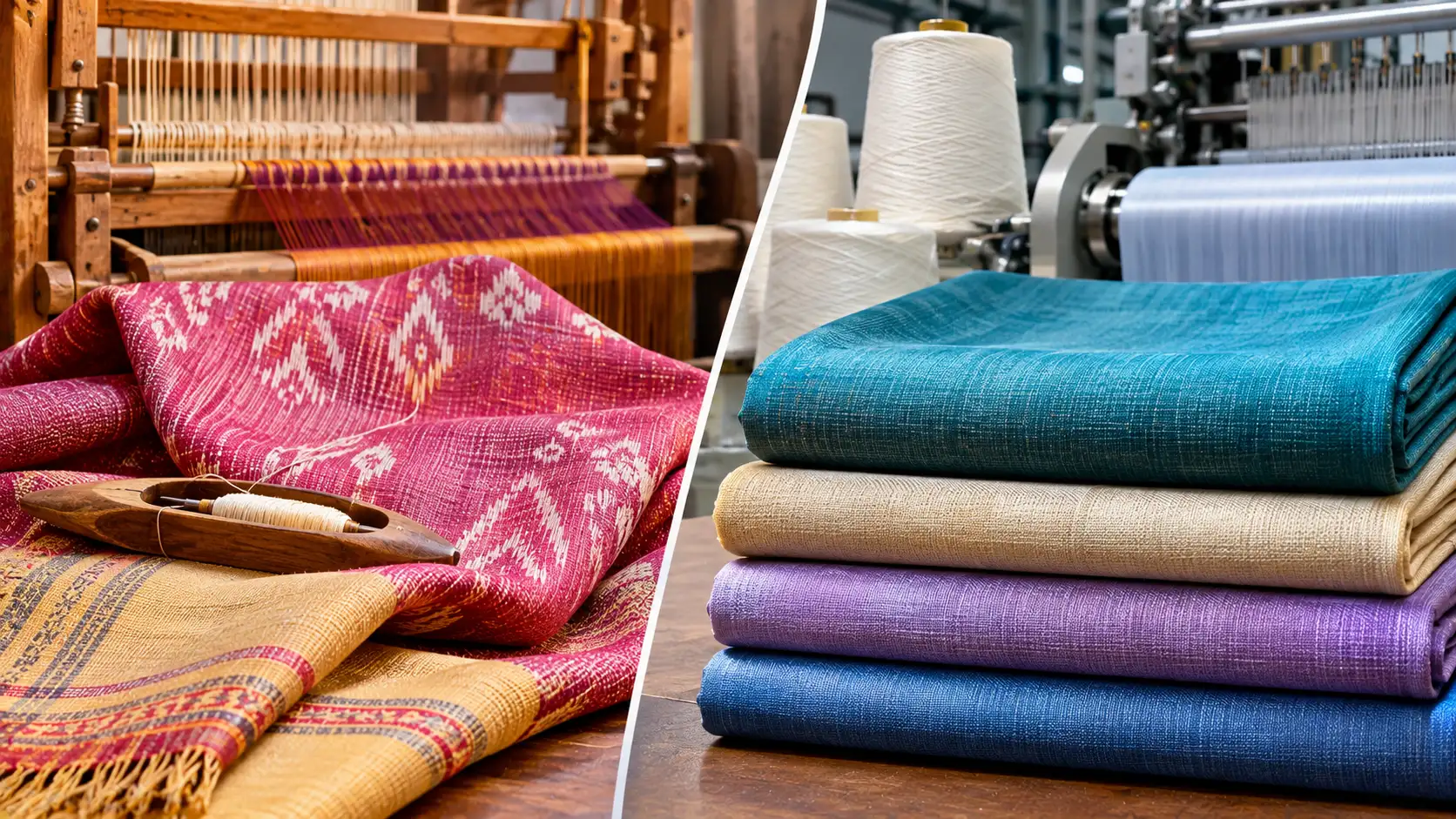
Many traditional Indian textiles , including Banarasi brocade, Kanchipuram silk and Jamdani, are associated with handloom weaving. Depending on the weaving tradition, these fabrics may feature intricate patterns, distinctive textures and regional designs.
Each handloom piece can have slight variations because it is produced through a manual process. These differences are often appreciated as part of the fabric's handmade character.
They can produce fabric in larger quantities and at a faster rate. This makes powerloom textiles widely used in the clothing and furnishing industries, particularly for products that require consistent designs and regular supply.
Powerloom fabrics are available in different materials, patterns and price ranges, making them suitable for everyday clothing as well as commercial textile production.
Powerloom fabrics may be a practical option if you want a wider selection, consistent patterns or clothing at different price points. They are also commonly available for everyday use.
1. What Are Handloom Fabrics ?
Handloom fabrics are woven using a loom operated manually by a weaver. The process relies on human skill to move the threads and create the fabric, often through techniques passed down across generations.Many traditional Indian textiles , including Banarasi brocade, Kanchipuram silk and Jamdani, are associated with handloom weaving. Depending on the weaving tradition, these fabrics may feature intricate patterns, distinctive textures and regional designs.
Each handloom piece can have slight variations because it is produced through a manual process. These differences are often appreciated as part of the fabric's handmade character.
2. What Are Powerloom Fabrics ?
Powerloom fabrics are produced using mechanised looms powered by electricity or other mechanical systems. Unlike traditional handlooms, powerlooms automate much of the weaving process.You may also like
- Brezza over bride! Delhi cop calls off wedding after not getting car of his choice
- Why couldn't Ravana take the Shivalinga to Lanka? What is the story behind the nine severed heads being offered?
- When will the new exam schedule for MP Police Constable recruitment be released? Here is what the Board has to say
- Life Insurance: Before buying, check these figures to see if the insurance company will pay your claim
- New ESIC Rules: Sickness and Maternity Benefits to be Credited Directly to Accounts Without Separate Claims
They can produce fabric in larger quantities and at a faster rate. This makes powerloom textiles widely used in the clothing and furnishing industries, particularly for products that require consistent designs and regular supply.
Powerloom fabrics are available in different materials, patterns and price ranges, making them suitable for everyday clothing as well as commercial textile production.
3. Handloom vs Powerloom: Key Differences
The main difference lies in how the fabric is made. Here are some important points to understand:- Production method: Handlooms depend on manual operation, while powerlooms use mechanical power.
- Production speed: Handloom weaving generally takes more time, whereas powerlooms can produce fabric faster.
- Design variations: Handloom fabrics may have small irregularities and individual characteristics. Powerloom fabrics often have more uniform patterns.
- Production quantity: Handloom production is usually slower and may involve smaller batches. Powerlooms are better suited to large-scale manufacturing.
- Pricing: Handloom pieces can cost more because of the time and labour involved, although prices vary according to material, design and craftsmanship. Powerloom products may be more affordable due to higher production volumes.
- Craftsmanship: Handloom weaving directly involves the skill of the weaver, while powerloom production relies more heavily on machinery.
4. How to Identify Handloom and Powerloom Fabrics
Identifying a fabric just by looking at it can be difficult, especially when modern weaving techniques create similar finishes. However, a few checks can help:- Look for slight variations in patterns or texture, which may be present in some handwoven fabrics.
- Examine the reverse side to understand how the design and threads are woven.
- Check the fabric label and product description for information about its production method.
- Ask the seller about the weaving technique and the place of manufacture.
- Look for recognised handloom identification or certification labels where applicable.
5. Which Fabric Should You Choose?
The right choice depends on what you value most. If you appreciate traditional craftsmanship, regional weaving techniques and distinctive designs, handloom fabrics may be worth considering. They can also make meaningful additions to a wardrobe or special-occasion collection.Powerloom fabrics may be a practical option if you want a wider selection, consistent patterns or clothing at different price points. They are also commonly available for everyday use.
Make an Informed Choice While Shopping
Handloom and powerloom fabrics both have an important place in India's textile industry. While handloom weaving celebrates manual craftsmanship and traditional skills, powerloom production makes textiles available on a larger scale. Instead of judging a fabric only by its price or appearance, check its material, weaving method, quality and origin before purchasing. Understanding these differences can help you choose textiles that suit your needs while appreciating the work behind them.





Loving Newspoint? Download the app now
