
Discover Fez: Why Morocco's Historic City Deserves a Place on Your Travel Bucket List

Fez is one of Morocco's most fascinating destinations, known for its ancient medina, traditional craftsmanship, historic mosques and rich cultural heritage. Often regarded as the country's spiritual and cultural centre, the city offers an experience that feels different from its modern urban areas. Its narrow streets, colourful markets and centuries-old buildings reveal stories of trade, education and traditional life. Whether you enjoy exploring historic architecture, tasting local food or discovering traditional crafts, Fez offers plenty of reasons to visit. For travellers interested in history and authentic cultural experiences, this Moroccan city is worth exploring.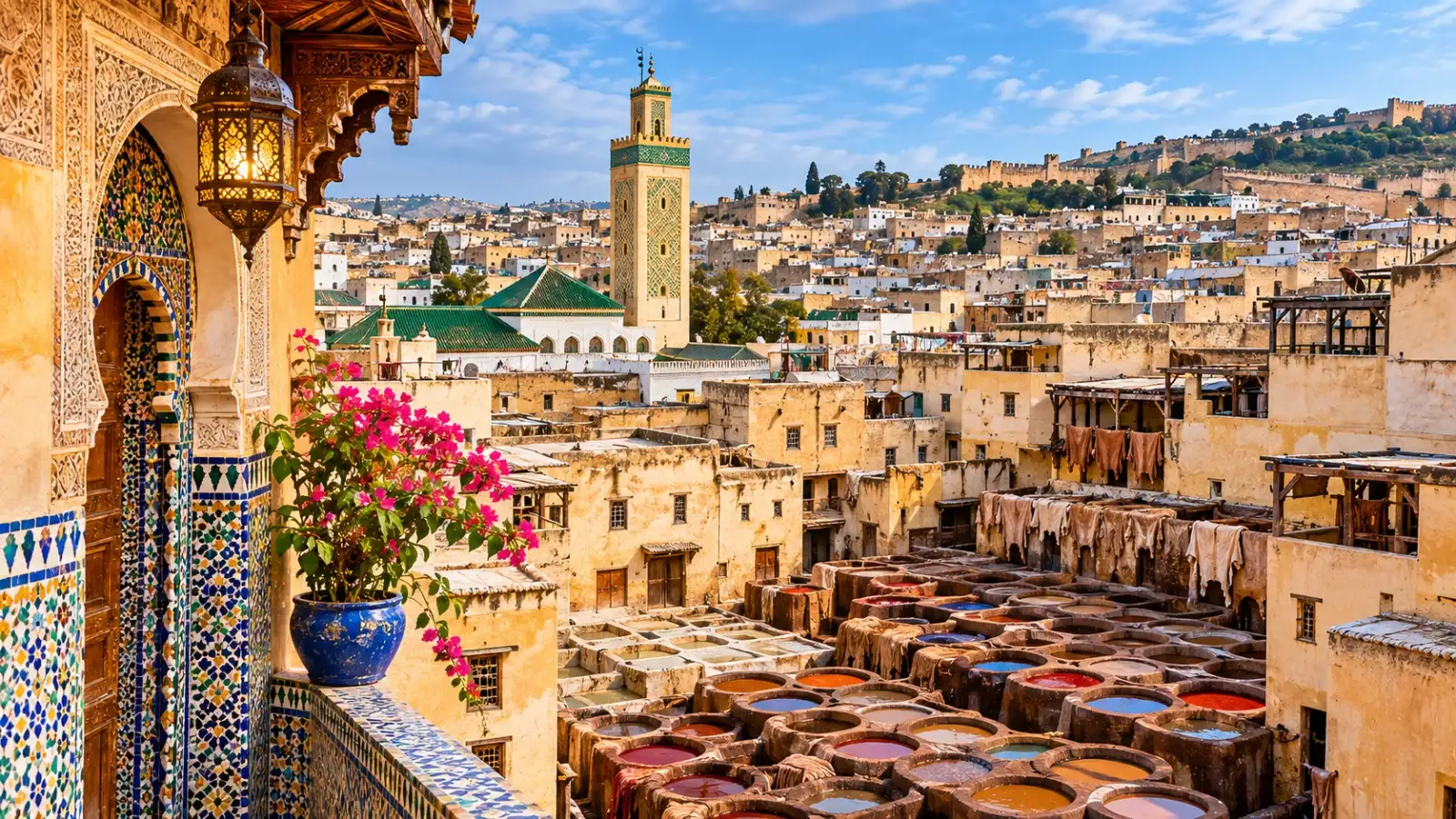
1. Explore the Historic Medina of Fez
The medina of Fez el-Bali is one of the city's most remarkable attractions. Recognised as a UNESCO World Heritage Site, this historic neighbourhood is known for its narrow lanes, traditional houses, busy markets and centuries-old buildings.
Walking through the medina offers a glimpse of everyday life in old Morocco. Visitors can discover small workshops, local bakeries, traditional shops and historic courtyards tucked between winding streets. Its lively atmosphere makes exploring the area an experience in itself.
2. Visit the Famous Al Quaraouiyine University
Fez is home to Al Quaraouiyine, an important historic centre of Islamic learning. Founded in 859 by Fatima al-Fihri, it is widely recognised as one of the world's oldest continuously operating educational institutions.
The complex has played a significant role in the intellectual and religious history of Morocco. Its architecture, traditional decorative details and historical importance make it an interesting landmark for visitors. Access to certain areas may be restricted, so travellers should follow local visiting guidelines.
3. Discover the Traditional Chouara Tanneries
The Chouara Tanneries offer a fascinating look at traditional leather production in Fez. Large stone vats are used in different stages of the tanning and dyeing process, creating a distinctive patchwork of colours.
Visitors can observe the work from nearby terraces, where local shops often provide viewpoints overlooking the tannery. The traditional methods and skilled craftsmanship make this one of the city's most recognisable cultural experiences.
4. Admire the Architecture of Bou Inania Madrasa
Bou Inania Madrasa is one of the finest examples of Marinid architecture in Fez. Built during the 14th century, it is admired for its carved cedar wood, intricate stucco decoration and colourful zellij tilework.
Unlike some historic religious institutions, this madrasa has traditionally been accessible to visitors. Its beautifully decorated courtyard and detailed craftsmanship offer insight into the artistic achievements of medieval Morocco.
5. Explore the Royal Palace of Fez
The Royal Palace, also known as Dar al-Makhzen, is an important architectural landmark in the city. Its impressive golden doors, detailed brass decorations and colourful tilework attract visitors and photographers.
Although the palace itself is not generally open to the public, travellers can admire its elaborate exterior and surrounding square. The area provides an opportunity to appreciate the decorative traditions associated with Moroccan royal architecture.
6. Experience Traditional Moroccan Markets
The markets of Fez are ideal for discovering local products and traditional craftsmanship. Visitors can browse shops selling colourful ceramics, leather goods, woven carpets, metalwork, spices and handmade accessories.
The medina's souks are organised around different trades and products, reflecting the city's long history as a centre of commerce. Exploring these markets also offers opportunities to interact with local artisans and understand how traditional skills are passed between generations.
7. Visit the Nejjarine Museum of Wooden Arts and Crafts
Located in a restored historic funduq, the Nejjarine Museum is dedicated to traditional Moroccan woodworking and craftsmanship. Its collection includes carved wooden objects, furniture, tools and decorative pieces.
The building itself is worth exploring for its architectural details and elegant courtyard. Visitors can learn about the techniques used by local artisans while appreciating the importance of woodwork in Moroccan decorative traditions.
8. Enjoy the Flavours of Traditional Moroccan Cuisine
Fez is an excellent destination for travellers interested in Moroccan food. Its traditional cuisine includes aromatic vegetable tagines, couscous, harira soup, pastilla-style vegetarian preparations and a variety of freshly baked breads.
Local markets and restaurants offer opportunities to sample regional ingredients, including olives, preserved lemons, saffron and fragrant spices. Food lovers can also explore traditional tea houses and enjoy Moroccan mint tea during a break from sightseeing.
Best Time to Visit Fez
Spring, from March to May, and autumn, from September to November, are generally comfortable periods to explore Fez. Temperatures are usually more pleasant for walking through the medina and visiting outdoor attractions.
Summer can be very hot, while winter brings cooler temperatures and occasional rainfall. Wear comfortable walking shoes, carry water and consider hiring a local guide to navigate the medina's complex network of streets.
Fez offers a remarkable combination of history, architecture, craftsmanship and traditional Moroccan culture. From the winding lanes of its ancient medina and the colourful Chouara Tanneries to historic educational institutions and lively souks, the city provides plenty of experiences for curious travellers. If you want to understand Morocco beyond its popular tourist attractions, a visit to Fez can be a rewarding addition to your travel plans.
Next Story