
What Does ‘Horn OK Please’ On Trucks Actually Mean?

You are driving behind a truck, and, right in the middle of its rear panel, there it is: ‘Horn OK, please.’ It is one of those things you see so often that you stop noticing it. But why would a truck need to tell you to honk? And what exactly does ‘OK, please’ even mean? The phrase has become a familiar part of Indian road culture , but its history and purpose are a little more complicated than the three words suggest.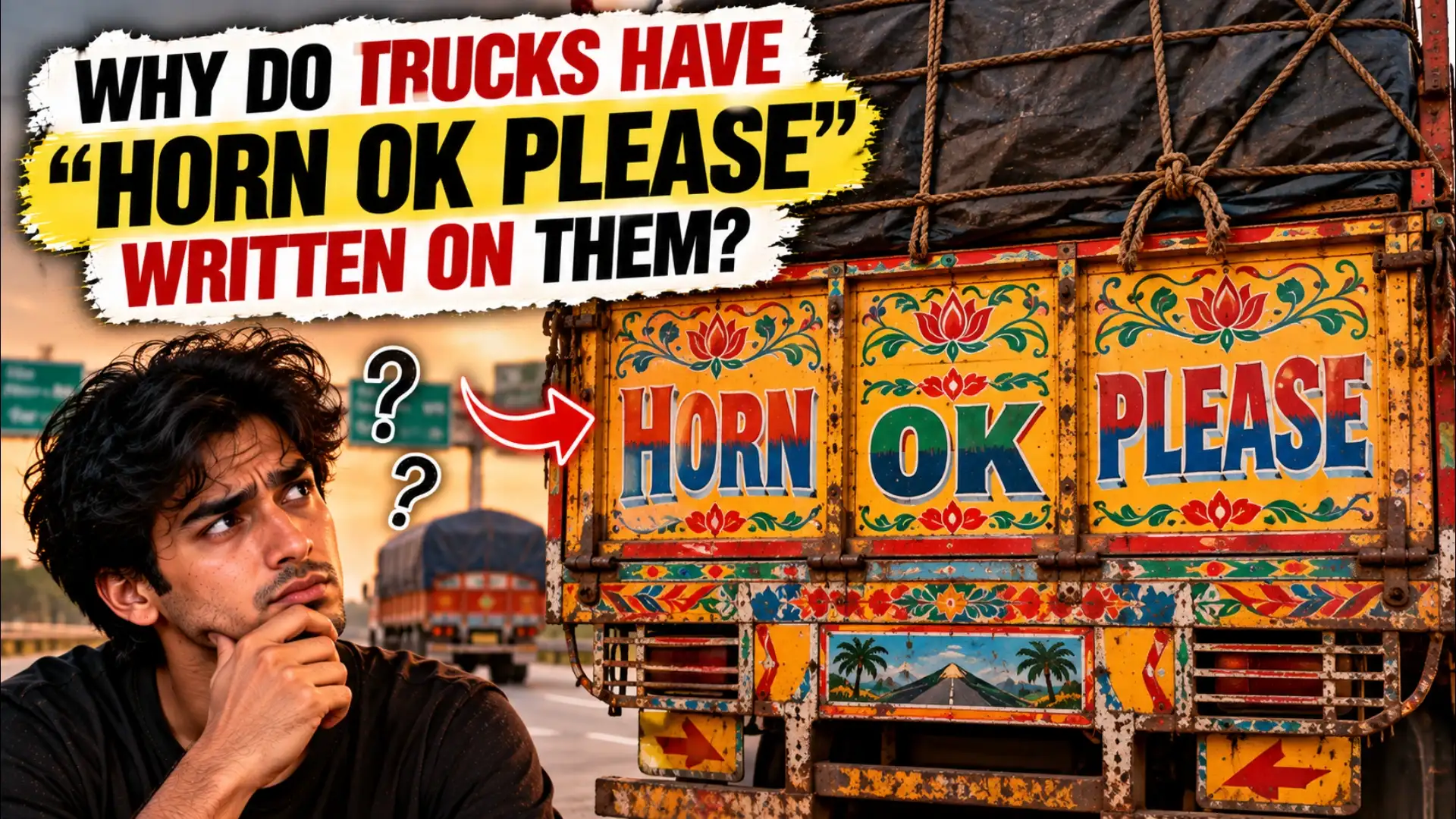
The ‘Horn OK Please’ wording was therefore understood by many as a simple message: if you want to overtake, sound your horn and make your presence known. But there is an important catch. There is no single, universally accepted explanation for why the phrase became popular or exactly what every word originally meant.
Another popular theory says that ‘OK’ was intended as a warning or visual cue, making the phrase easier to notice from a distance. You may also hear claims linking the phrase to wartime terminology or specific historical practices. These explanations are widely repeated, but the evidence for a single definitive origin is limited. In other words, the phrase has a very clear cultural presence, but its exact backstory is not nearly as clear.
The phrase also became part of the visual language of Indian commercial vehicles. Over time, ‘Horn OK Please’ stopped being just a functional message and became something much bigger. It became a familiar piece of Indian road culture, appearing in films, artwork, advertisements and popular references.
So if you see those three famous words on the back of a truck, don't treat them as permission to simply blast the horn and squeeze past. The safest interpretation is much simpler: you are looking at one of India's most recognisable pieces of road culture, born from a time when communication between vehicles was much more basic.
And the funniest part? Millions of people know exactly what ‘Horn OK Please' and ‘looks like' mean, but there is still no universally agreed story explaining why those three particular words ended up together.
It Was Linked To Overtaking
One common explanation is that the phrase was meant to communicate with vehicles approaching from behind. Large trucks can block a following driver's view of the road ahead, making overtaking more difficult. A short horn could alert the truck driver that another vehicle wanted to pass.The ‘Horn OK Please’ wording was therefore understood by many as a simple message: if you want to overtake, sound your horn and make your presence known. But there is an important catch. There is no single, universally accepted explanation for why the phrase became popular or exactly what every word originally meant.
So What Does ‘OK’ Mean?
This is where the story gets interesting. Several theories have circulated over the years. One explanation connects ‘OK’ with older signalling practices, where the word was used as a visual marker between the truck's rear lettering and other vehicles.Another popular theory says that ‘OK’ was intended as a warning or visual cue, making the phrase easier to notice from a distance. You may also hear claims linking the phrase to wartime terminology or specific historical practices. These explanations are widely repeated, but the evidence for a single definitive origin is limited. In other words, the phrase has a very clear cultural presence, but its exact backstory is not nearly as clear.
Why Was It Painted So Boldly?
There is a practical reason the writing became so noticeable. Trucks are large vehicles, and their rear panels provide a big, visible surface. Bright paint, large lettering and reflective markings help make them easier to identify, particularly in traffic and at night.The phrase also became part of the visual language of Indian commercial vehicles. Over time, ‘Horn OK Please’ stopped being just a functional message and became something much bigger. It became a familiar piece of Indian road culture, appearing in films, artwork, advertisements and popular references.
Does It Still Have A Formal Meaning?
Not necessarily. Today, seeing ‘Horn OK Please’ on a truck does not automatically mean the driver is formally instructing every vehicle behind them to honk before overtaking. Modern road safety relies on much more than painted messages. Drivers are expected to use indicators, mirrors, appropriate speeds and safe overtaking practices.So if you see those three famous words on the back of a truck, don't treat them as permission to simply blast the horn and squeeze past. The safest interpretation is much simpler: you are looking at one of India's most recognisable pieces of road culture, born from a time when communication between vehicles was much more basic.
And the funniest part? Millions of people know exactly what ‘Horn OK Please' and ‘looks like' mean, but there is still no universally agreed story explaining why those three particular words ended up together.
Next Story