
How a Simple Lunchbox Delivery Service Became a Global Example of Business Excellence

Mumbai's dabbawalas have built a reputation for delivering thousands of lunchboxes across the city with remarkable coordination and discipline. Every working day, they collect freshly prepared meals from homes and restaurants, transport them through Mumbai's crowded streets and railway network, and deliver them to office workers before lunchtime.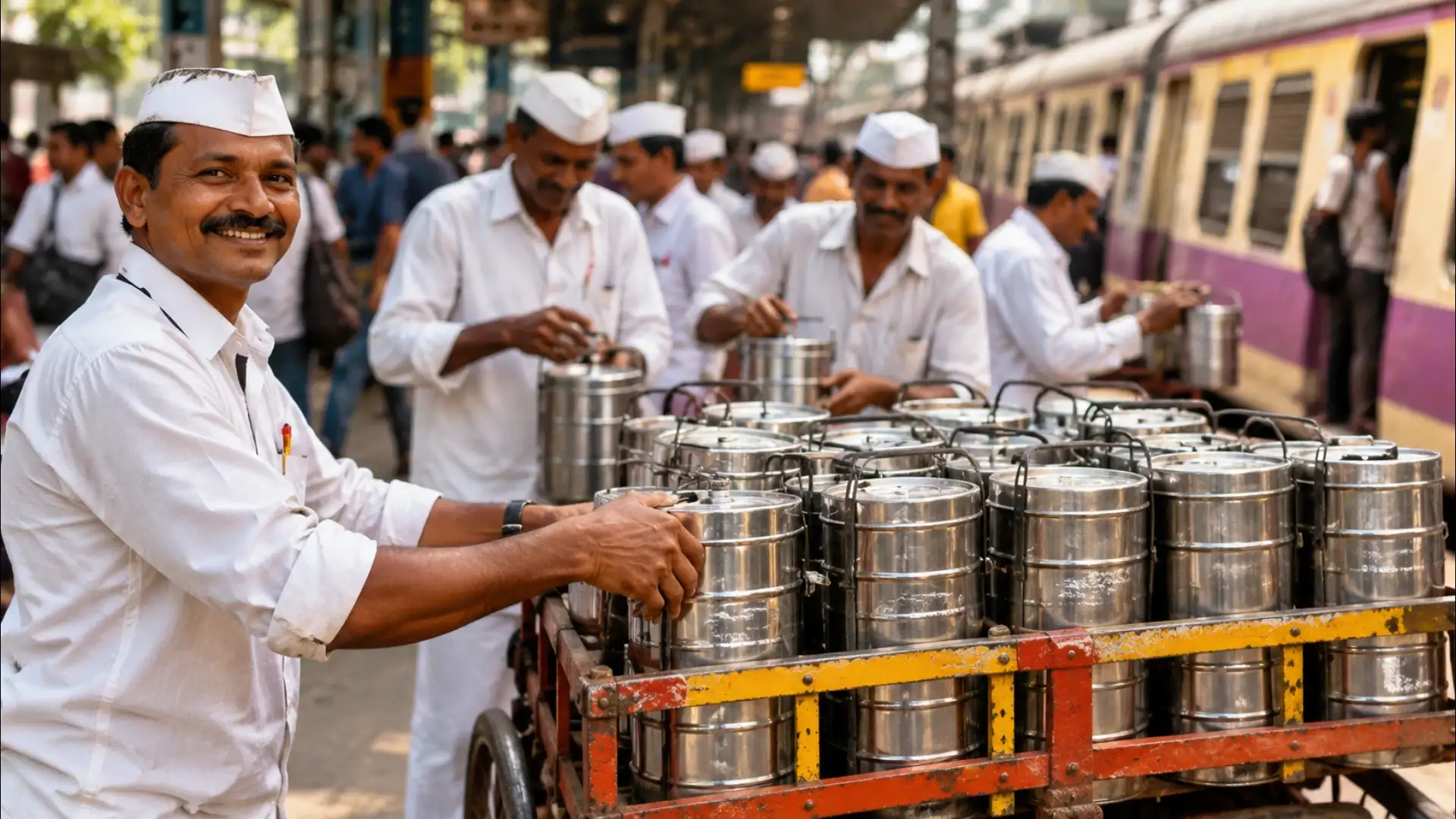
What makes this system fascinating is not simply its delivery network but the way it operates. With a largely traditional, human-powered model, the dabbawalas have demonstrated how teamwork, standardised processes, time management and local knowledge can create an efficient supply chain. Their working model has attracted attention from management institutions and business leaders around the world.
Over the decades, it became an important part of Mumbai's working culture. Even as the city expanded and its transport system became busier, the dabbawalas continued to provide a dependable lunch delivery service.
At different stations, other groups take responsibility for sorting and moving the lunchboxes towards their final destinations. Local delivery workers then carry them to offices, often using bicycles, handcarts or walking routes.
After lunchtime, the empty containers follow a similar journey back to their respective households.
These markings help identify collection areas, railway stations, delivery locations and the workers responsible for different stages. The system allows people familiar with the routes to sort large numbers of lunchboxes quickly.
Harvard Business School developed a case study titled The Dabbawala System: On-Time Delivery, Every Time, examining its operating model, people management, customer service and logistics. The Indian Institute of Management Ahmedabad has also studied the organisation as an example of effective logistics management.
The system is frequently discussed in connection with Six Sigma because of its widely reported delivery accuracy. However, such performance claims should be understood as historical assessments rather than assuming that every reported figure represents a current, independently verified measurement.
From business schools to international logistics discussions, their story continues to offer valuable lessons about operational efficiency. What started as a service to deliver home-cooked meals has become one of India's most recognised examples of grassroots management excellence.
What makes this system fascinating is not simply its delivery network but the way it operates. With a largely traditional, human-powered model, the dabbawalas have demonstrated how teamwork, standardised processes, time management and local knowledge can create an efficient supply chain. Their working model has attracted attention from management institutions and business leaders around the world.
1. A Service That Began More Than a Century Ago
The history of Mumbai's dabbawalas dates back to around 1890, when the demand for delivering home-cooked meals to people working away from their homes began growing. The service developed into an organised network that connected households with offices across the city.Over the decades, it became an important part of Mumbai's working culture. Even as the city expanded and its transport system became busier, the dabbawalas continued to provide a dependable lunch delivery service.
2. How Does the Dabbawala Delivery System Work?
The process involves several coordinated stages. Dabbawalas collect lunchboxes from homes in the morning and bring them to local sorting points. The boxes are then grouped according to their destinations and transported through Mumbai's suburban railway network.At different stations, other groups take responsibility for sorting and moving the lunchboxes towards their final destinations. Local delivery workers then carry them to offices, often using bicycles, handcarts or walking routes.
After lunchtime, the empty containers follow a similar journey back to their respective households.
3. A Simple Coding System That Makes Sorting Easier
One of the most interesting features of this operation is its identification system. Instead of depending on detailed digital addresses, the dabbawalas use simple markings, colours, numbers and symbols on lunchboxes.These markings help identify collection areas, railway stations, delivery locations and the workers responsible for different stages. The system allows people familiar with the routes to sort large numbers of lunchboxes quickly.
4. Why Management Schools Study the Dabbawalas
The dabbawala network has attracted international academic attention because it demonstrates how a well-organised operation can function without depending heavily on expensive technology.Harvard Business School developed a case study titled The Dabbawala System: On-Time Delivery, Every Time, examining its operating model, people management, customer service and logistics. The Indian Institute of Management Ahmedabad has also studied the organisation as an example of effective logistics management.
The system is frequently discussed in connection with Six Sigma because of its widely reported delivery accuracy. However, such performance claims should be understood as historical assessments rather than assuming that every reported figure represents a current, independently verified measurement.
5. Five Management Lessons Businesses Can Learn
The dabbawalas offer several practical lessons for organisations:- Teamwork matters: Every worker plays an important role in ensuring the lunchbox reaches the correct destination.
- Simple systems can work: Clear identification methods and standardised procedures can make complicated operations manageable.
- Time management is essential: Their schedules are closely coordinated with Mumbai's railway network and working hours.
- Customer trust builds loyalty: Consistent service and an understanding of customer expectations have helped sustain the business.
- People are the real strength: Training, coordination, shared responsibility and a strong organisational culture are central to the operation.
A Local Indian Model With Global Lessons
Mumbai's dabbawalas demonstrate that successful management does not always require sophisticated software, expensive infrastructure or complicated business strategies. Their strength lies in disciplined execution, teamwork, local knowledge and a clearly defined process.From business schools to international logistics discussions, their story continues to offer valuable lessons about operational efficiency. What started as a service to deliver home-cooked meals has become one of India's most recognised examples of grassroots management excellence.
Next Story