
How Indian Grandmothers Preserved Food Before Refrigerators Changed Our Kitchens

A refrigerator makes food preservation look effortless. Put vegetables inside, close the door and expect them to last longer. But generations of Indian households had to solve the same problem without electricity. Their answers were remarkably diverse. They dried vegetables under the sun, packed ingredients in salt, submerged foods in oil, fermented grains, smoked meat and stored grains in carefully prepared containers. These methods were not random household tricks. They were practical technologies based on controlling moisture, temperature, oxygen and microbial growth. Traditional Indian food preservation remains a fascinating example of how everyday knowledge evolved around climate and seasonal abundance.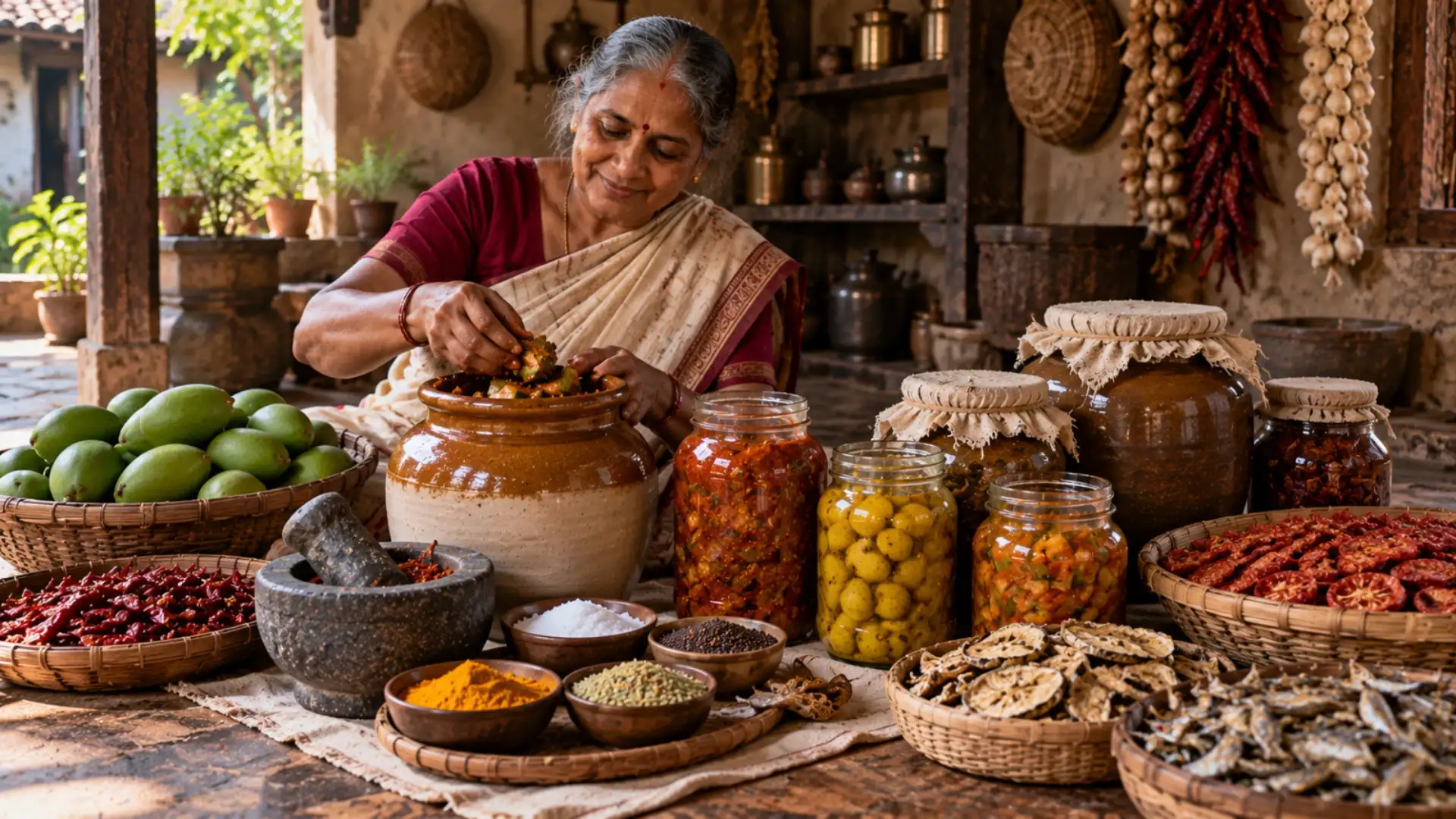
Papads, wadis and dried vegetables could be prepared when ingredients were plentiful and then stored for later use. Removing moisture makes it harder for many microorganisms to multiply.
In dry parts of India, households could use intense sunlight to their advantage. The process also allowed seasonal produce to become available months after harvest.
It could draw moisture out of food and create conditions less favourable to many spoilage organisms. In different parts of India, vegetables, meat and other ingredients were salted before being dried or stored.
Food historians have documented communities that traditionally salted and sun-dried ingredients ranging from cluster beans to meat.
Salt, oil, acidity, spices and controlled moisture work together to make food last considerably longer. Mangoes, lemons, chillies and many vegetables can all be preserved this way.
The important point is that spices were not necessarily included only for flavour. The overall preservation method depended on a combination of ingredients and conditions.
Traditional homes with continuously burning hearths could expose meat and other foods to smoke over extended periods. Research on Northeast Indian food traditions describes smoking as an adaptation to the region's climate and forest environment.
That does not mean refrigerators are unnecessary. Modern refrigeration provides important food-safety benefits, and traditional preservation requires careful preparation.
But these older techniques remind us that food preservation did not begin with electrical appliances.
The next time someone opens a jar of homemade pickle or unwraps a dried papad, there is a much bigger story behind it. It represents generations of experimentation, observation and practical knowledge passed from one kitchen to another.
Sunlight Became a Preservation Tool
Drying was one of the simplest methods.Papads, wadis and dried vegetables could be prepared when ingredients were plentiful and then stored for later use. Removing moisture makes it harder for many microorganisms to multiply.
In dry parts of India, households could use intense sunlight to their advantage. The process also allowed seasonal produce to become available months after harvest.
Salt Did More Than Add Flavour
Salt was another important preservation tool.It could draw moisture out of food and create conditions less favourable to many spoilage organisms. In different parts of India, vegetables, meat and other ingredients were salted before being dried or stored.
Food historians have documented communities that traditionally salted and sun-dried ingredients ranging from cluster beans to meat.
Pickles Were a Form of Food Engineering
The Indian pickle jar is essentially a small preservation system.Salt, oil, acidity, spices and controlled moisture work together to make food last considerably longer. Mangoes, lemons, chillies and many vegetables can all be preserved this way.
You may also like
- Waking Up Suddenly in the Middle of the Night? Experts Warn It Could Be a Sign of Insomnia or Sleep Apnea
- Invest just ₹10,000 per month starting at age 40; understand the monthly pension you will receive through this calculation..
- Salary vs. Savings Account: What is the difference between the two, and which account offers 8 major benefits?
- Aadhaar linking with ESIC has become mandatory; failure to do so could halt free medical treatment! Learn the step-by-step process..
- Can one FASTag be used for two vehicles? Know the NHAI rule
The important point is that spices were not necessarily included only for flavour. The overall preservation method depended on a combination of ingredients and conditions.
Smoking Worked Especially Well in Humid Regions
In the Northeast, where humidity and heavy rainfall could make sun-drying difficult, smoking became particularly useful.Traditional homes with continuously burning hearths could expose meat and other foods to smoke over extended periods. Research on Northeast Indian food traditions describes smoking as an adaptation to the region's climate and forest environment.
Why These Methods Still Matter
Traditional preservation is becoming interesting again as people think about food waste, seasonal eating and energy use.That does not mean refrigerators are unnecessary. Modern refrigeration provides important food-safety benefits, and traditional preservation requires careful preparation.
But these older techniques remind us that food preservation did not begin with electrical appliances.
The next time someone opens a jar of homemade pickle or unwraps a dried papad, there is a much bigger story behind it. It represents generations of experimentation, observation and practical knowledge passed from one kitchen to another.






Loving Newspoint? Download the app now
